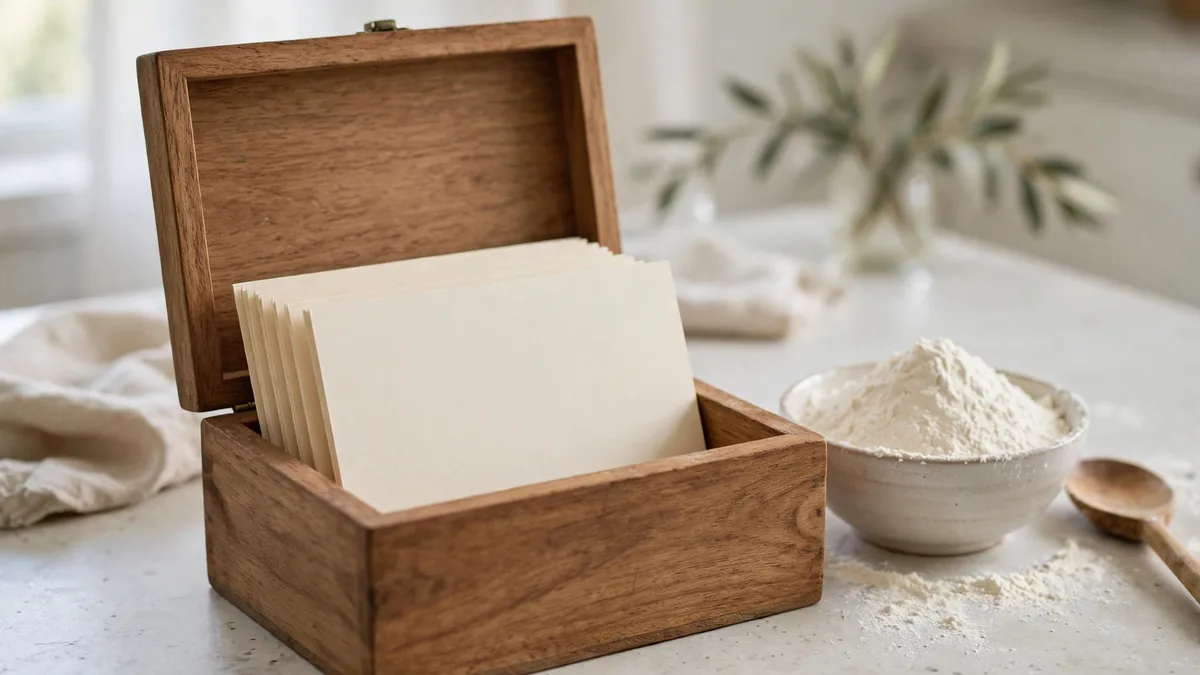
Some recipes live in your head, some live on your phone, and the ones that matter most usually live on a card stained with butter and tomato sauce. The best recipe boxes in 2026 exist for those cards: the handwritten ones from a grandmother, the clipped ones from magazines, and the ones you finally wrote down properly after making the same dish a dozen times. A good box keeps them safe, sorted, and easy to find when your hands are covered in flour and dinner is already half an hour late.
A recipe box is a simple thing, and that is the point. It does not need charging, updating, or a password. It sits on a shelf or a counter, opens with one hand, and holds the recipes you actually cook. The trick is choosing one that fits your cards, your kitchen, and the way you cook, because a box that is too small or too fiddly will end up in a cupboard while your cards drift back into drawers.
Key Takeaways
- Match the box to your card size first: most recipe cards are 4 by 6 inches, but older and larger cards are often 5 by 7 inches.
- Wooden boxes with a hinged lid protect cards best from splashes, steam, and dust, and they look at home on a shelf.
- Dividers matter more than decoration: a box without clear sections is just a drawer with a lid.
- Keep your most cooked recipes at the front, and move the ones you never use to the back or out of the box.
- Write new recipes on the same size card, in the same style, so the box stays easy to flick through.
Why Recipe Cards Still Beat a Phone in the Kitchen
Phones are wonderful for finding a recipe and terrible for cooking from one. The screen locks, your hands are wet, and the page scrolls away at the worst moment. A card stays put. You can prop it against the backsplash and wipe it clean when you are done.
Cards also carry something a phone never will: the handwriting of the person who taught you the dish. A recipe box is, for many families, a small archive. It holds the Christmas cake recipe in your mother’s writing, the soup your neighbour shared twenty years ago, and the notes in the margins that say “add more garlic” or “half the sugar, trust me.”
The Main Types of Recipe Box
Most recipe boxes fall into a few clear types, and each suits a different kitchen. Wooden boxes are the classic choice. They are sturdy, they age well, and a hinged lid keeps dust and steam out. Look for smooth joins, a lid that closes flat, and a finish that can be wiped clean.
Metal boxes, usually tin or stainless steel, are lighter and easier to clean, and they suit a modern kitchen. They can dent if dropped, but a well-made one will outlast most other kitchen storage. Acrylic boxes look neat and let you see the cards from the side, which helps when you are hunting for a particular section. They scratch more easily than wood or metal, and they can look cloudy after a few years of wiping.
Bamboo boxes are a good middle ground: light, warm-looking, and tougher than they appear, with a natural finish that suits most kitchens. Some boxes come with a built-in card stand on the lid, so you can prop a card up while you cook. Avoid boxes with fiddly clasps or lids that need two hands to open, because you will often be opening the box with one hand while holding a pan in the other.
Recipe Box Comparison
| Type | Best for | Durability | Cleaning |
|---|---|---|---|
| Wooden | Family recipes, display | High | Wipe clean |
| Metal | Busy kitchens | High | Easy |
| Acrylic | Seeing cards at a glance | Medium | Easy, scratches |
| Bamboo | Light, everyday use | Medium to high | Wipe clean |
| Card or tin keepsake | Gifts, light use | Low | Keep dry |
What to Look for Before You Buy
Start with card size, because it is the mistake most people make. Measure your cards before you shop. Standard recipe cards are 4 by 6 inches, and most boxes are built for them, but many older cards, printed recipes, and handwritten sheets are 5 by 7 inches. A box that is even a fraction too small will bend the corners of every card you put in it, and bent cards are the first step toward a messy box.
Next, check capacity honestly. Count your cards, then add room for the ones you will write this year. A box stuffed to the brim is hard to flick through. If your collection is large, two smaller boxes often work better than one enormous one.
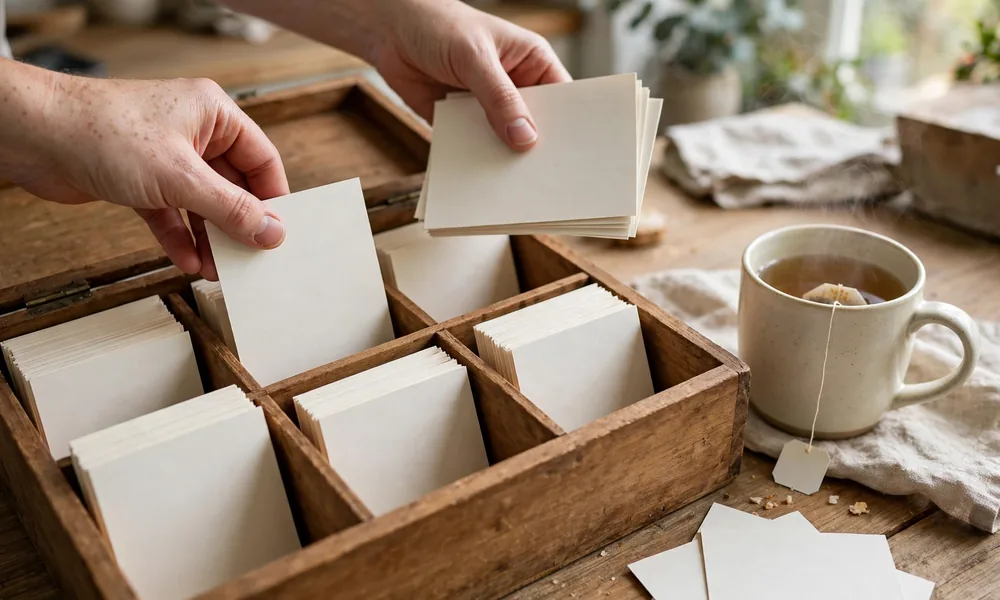
Dividers are the heart of a recipe box. Look for sturdy dividers with tabs you can read at a glance, and check that they stand upright rather than flopping forward. Plain dividers are fine if you label them yourself, but pre-printed ones for starters, mains, baking, and desserts save time. If the box comes with blank cards, check their thickness: thin cards curl in a steamy kitchen, while thick cards stay flat and survive years of handling.
How to Organise a Recipe Box So It Actually Works
Organisation is where most recipe boxes fail, and it has nothing to do with the box itself. The system that works best is the simplest one you will actually keep up. Start by sorting your cards into broad groups: everyday mains, slow weekend cooking, baking, desserts, and sauces or sides. Five or six groups are plenty.
Within each group, put the recipes you cook most often at the front. This sounds obvious, but most people file alphabetically and then never see their favourites. If you make the same chicken dish every other week, it should be the first card you meet when you open that section. Recipes you have not cooked in a year go to the back of their section, and recipes you will never cook again should leave the box altogether.
Recipe Boxes, Cookbooks, and Apps: What Each Does Best
A recipe box does not replace a cookbook, and it should not try to. Cookbooks that teach you to cook are best for learning techniques, understanding a cuisine, and finding inspiration when you do not know what to make. A recipe box is best for the recipes you have already chosen: the ones you trust, the ones your family asks for, and the ones you have adjusted to your own taste over years.
Apps and websites are best for searching. If you need a recipe for aubergines at short notice, a search engine will find one in seconds. But the recipe it finds is a stranger’s recipe, and you will not know until you have cooked it whether it suits your oven, your pans, or your family. The cards in your box are proven. They have survived the test of being cooked, eaten, and asked for again, which is a stronger recommendation than any star rating.
Keeping Cards Safe and the Box in Good Shape
Recipe cards are paper, and kitchens are full of water, steam, and grease. The lid is your first line of defence, so close it when you are not using the box, and keep the box away from the hob and the sink. If a card gets splashed, wipe it straight away and let it dry flat before you put it back.
For your most precious cards, the handwritten ones that cannot be replaced, consider a simple precaution: copy them onto a fresh card and cook from the copy. Keep the original at the back of the box, or in a folder elsewhere. It takes ten minutes, and it means a splash of stock will never erase your grandmother’s handwriting. Some cooks also photograph their oldest cards as a backup, which is sensible, but a photograph is not a replacement for the card itself.
Common Mistakes to Avoid
The most common mistake is buying a box for the kitchen you wish you had instead of the one you have. Measure your space, measure your cards, and buy the box that fits both.
The second mistake is over-organising. Colour-coded tabs for every course, cuisine, and cooking method look wonderful on the day you set them up and collapse within a month, because real cooking does not sort itself neatly. A chicken curry can be a weeknight dinner, a weekend project, and a dish for guests, all at once. Broad groups and a willingness to let a recipe live in one place are far more durable than a perfect system.
Checklist: Choosing the Best Recipe Box
- Measure your cards first, and buy a box that fits them with room to spare.
- Count your cards and leave about a fifth of the box empty for new recipes.
- Choose sturdy, readable dividers, and keep to five or six broad sections.
- Pick a lid that closes flat and keeps out dust, steam, and splashes.
- Check the build: smooth joins, a flat base, and a finish you can wipe clean.
- Put your most cooked recipes at the front of each section, not buried alphabetically.
Frequently Asked Questions
What size recipe box should I buy?
Buy for the cards you have, not the cards you think you have. Most recipe cards are 4 by 6 inches, so a box made for that size suits most people. If your cards are 5 by 7 inches, or you print recipes on larger sheets, you need a bigger box, and it is worth measuring before you order.
How many cards does a recipe box hold?
Most boxes hold between 100 and 200 cards, depending on the thickness of the cards and the depth of the box. Count your collection before you buy, and leave room to grow.
Are wooden recipe boxes better than metal ones?
Neither is better in every kitchen. Wooden boxes protect cards well, age gracefully, and look good on a shelf, but they can warp in steam and need wiping dry. Metal boxes are lighter, easier to clean, and harder to damage, but they can dent. Choose the one that suits your kitchen and the way you cook.
Should I use dividers or sort cards alphabetically?
Use dividers for broad groups, and put your most cooked recipes at the front of each group. Alphabetical order sounds tidy, but it buries your favourites behind dishes you rarely make. A simple system you keep up beats a perfect system you abandon.
How do I protect handwritten family recipes?
Cook from a copy and keep the original safe at the back of the box or elsewhere. Write the recipe out on a fresh card, use that card in the kitchen, and keep the handwritten original away from splashes and steam. Photographing the original as a backup is also a sensible precaution.
Can a recipe box work alongside cooking apps?
Yes, and that is how most cooks use one. Apps are best for finding new recipes, while a box is best for keeping the ones that work. When a recipe from an app or a book proves itself, copy it onto a card and file it, so your best recipes are always in one place.
The Bottom Line
The best recipe boxes in 2026 are not the fanciest or the most expensive. They are the ones that fit your cards, keep them safe from the mess of a working kitchen, and make the recipe you want findable in seconds. Choose a sturdy box with a good lid and clear dividers, organise it simply, and keep adding to it. A recipe box that is used every week becomes something no app can replace: a record of the food your household actually loves, kept in the handwriting of the people who cooked it. The same thinking helps elsewhere in the kitchen: storage jars that keep a pantry tidy and pantry cabinets for small kitchens can give the whole collection a proper home.


