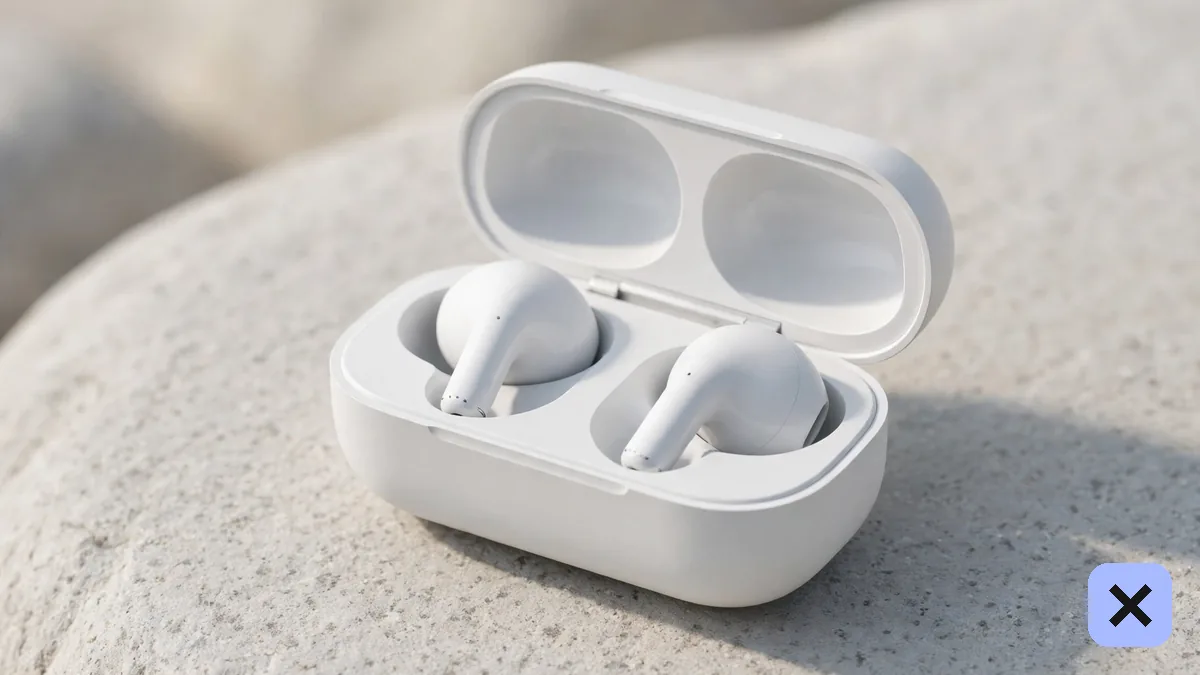
The worst earbuds for running seem fine on the sofa and fall apart the moment your feet hit the pavement. They slip, fog up with sweat, and lose connection at the worst moment, turning a run you looked forward to into a forty-minute fiddle with a tiny plastic bud.
A good pair of running earbuds has to stay put through sweat, rain, and the bounce of every stride, keep playing through wind and traffic noise, and survive being dropped and soaked. That is a long list, and it explains why so many earbuds that sound pleasant indoors become a nuisance outdoors.
This guide names the designs, features, and buying mistakes that cause the most trouble, so you can see why your runs keep getting interrupted and what to look for when you replace your pair.
Key takeaways
- Fit matters more than sound quality when you run, because an earbud that slips out is useless no matter how good it sounds.
- Loose, smooth, and heavy earbuds cause the most running frustration, especially on long or sweaty runs.
- Sweat and rain damage kills more running earbuds than any other cause, so water resistance is not a luxury feature.
- Touch controls, weak batteries, and unstable Bluetooth connections cause more mid-run interruptions than poor audio.
- The best running earbuds are secure, sweat-resistant, simple to control, and comfortable for the full length of your run.

Why Running Exposes Bad Earbuds So Quickly
Running combines movement, moisture, and noise in a way almost no other activity does. Every stride sends a shock through your body to your ears, so an earbud that sits comfortably while you are still will start working loose within the first kilometre, and rarely settles back on its own.
Sweat makes it worse: it breaks the grip between earbud and ear, makes smooth plastic slippery, and works into charging contacts and speaker grilles. A pair never tested against real sweat will often sound muffled after twenty minutes, then cut out, then refuse to charge.
Wind overwhelms weak microphones, traffic forces the volume up, and a busy road demands that you hear what is around you. Earbuds designed for a quiet room were not built for this, and the gap shows up fast. A pair that survives a sweaty, windy, hour-long run will probably survive anything else.
The Worst Types of Earbuds for Running
Not all bad running earbuds fail the same way. Some fall out, some drown in sweat, some sound terrible outdoors, and some are too fiddly to use while moving. The worst combine two or three of these faults at once.
Loose-Fitting Earbuds With No Wings or Hooks
The worst design for running is the smooth, round earbud that relies entirely on friction to stay in place. With nothing to anchor them, the first beads of sweat are usually enough to break that grip, and runners end up pushing them back in every few minutes.
Ear wings, hooks, and fins brace against the ear and take the load off the tip, so the bud stays put even bouncing downhill. A pair without them might look sleek, but on a run, sleek usually means slippery. If a bud has ever popped out and rolled across the pavement, you know the frustration.
Heavy Earbuds That Pull Themselves Out
Weight is the enemy of a secure fit. Heavy earbuds act like tiny pendulums, swinging with every stride and gradually working loose, especially buds packed with large batteries, big drivers, or metal housings that look premium in the hand and feel like ballast in the ear.
After thirty minutes, heavy buds also ache. Pressure builds in the ear canal, the fit loosens as you adjust them, and by the end of a long run you are counting down until you can take them out. For running, lighter is almost always better.
Earbuds With No Real Water Resistance
Sweat is salty water, and salt is corrosive. Earbuds with no water-resistance rating, or one so low it only covers light splashes, are living on borrowed time the moment a serious runner puts them in. The damage is invisible at first, then sudden: one channel goes quiet, the touch controls stop responding, or the case refuses to recognise the bud.
Many runners discover this the expensive way, when the warranty does not cover sweat damage. Look for a proper water-resistance rating, and treat any pair without one as indoor-only.
Earbuds With Fiddly Touch Controls
Touch controls sound convenient until you try them with sweaty fingers while bouncing along a trail. One accidental brush can pause your music, skip a track, or activate a voice assistant you did not ask for.
The worst touch controls have no physical feedback. You tap, nothing happens, you tap again, and suddenly you have skipped two songs and turned the volume down. Physical buttons, or large and well-placed touch areas, are far easier to use on the move.
Earbuds With Weak Bluetooth and Short Battery Life
A running earbud needs a stable connection to a phone bouncing in a pocket or strapped to your arm. Weak Bluetooth chips drop out when your body blocks the signal, which happens constantly as your arms swing, so the track stutters and cuts out just as you hit your stride.
Short battery life is just as bad. A pair that promises four hours but delivers two and a half will die on a long run, without warning. Check real-world battery figures rather than the headline number.
What Actually Goes Wrong Mid-Run
The failures above sound abstract until they happen to you. In practice, they show up as a small set of familiar mid-run moments.
| Problem | What it feels like | Why it happens |
|---|---|---|
| Earbud slips out | Constant pushing and adjusting | Loose fit, smooth shell, sweat |
| Sound goes muffled | Music sounds distant and dull | Sweat blocking the speaker grille |
| Audio cuts out | Music stutters or stops | Weak Bluetooth, body blocking signal |
| Controls misfire | Tracks skip or pause by accident | Over-sensitive touch controls |
| Ears start to ache | Sore pressure after thirty minutes | Heavy buds, wrong tip size |
| Battery dies early | Silence halfway through a long run | Short real-world battery life |
Fit, sweat, weight, and connection quality account for almost every running earbud failure, which is good news: you can avoid most of them by checking just a few things before you buy. It also explains why the most expensive earbuds are not automatically the best for running. A premium pair built for a quiet office can fail every test, while a cheaper sport pair can pass them all.
How to Spot a Bad Running Earbud Before You Buy
You do not need to be an expert to weed out the worst running earbuds. A few quick checks, done before you hand over any money, will catch most of the duds.
- Check the fit system: look for ear wings, hooks, or fins, and make sure spare tip sizes are included in the box.
- Check the water rating: confirm a real sweat and rain resistance rating, and be wary of any pair that does not publish one.
- Check the weight: lighter buds stay put longer, so favour the lighter pair when all else is equal.
- Check the controls: prefer physical buttons or large touch areas you can find by feel, and avoid tiny, over-sensitive panels.
- Check the battery: look for real-world run times from reviewers, not just the headline figure on the box.
- Check the connection: look for a stable Bluetooth connection that holds up when your phone is in a pocket or armband.
If a pair fails two or more of these checks, it is a poor bet for running, no matter how good it sounds in a shop. Sound quality only matters if the bud stays in your ear. Buy for your hardest run, not your easiest one: a gentle jog on flat pavements is far more forgiving than a hilly trail run in summer heat.
What to Look For Instead
The best running earbuds share a clear set of traits. They are light, fit securely with wings or hooks, carry a proper water-resistance rating, and use controls you can operate without looking. They also sit comfortably for an hour or more without pressure or soreness.
Sound matters too, but differently outdoors. Bass that sounds rich indoors can become boomy on a run, while a clear, balanced sound with good wind-noise handling serves you far better. Many runners also value awareness of their surroundings, through a transparency mode or an open design, because hearing traffic is a safety issue, not a luxury.
That context matters when you compare everyday listening with running. The everyday wireless earbuds that already fail at basic comfort are even worse on a run, because running adds sweat, bounce, and wind to every flaw they already have. A pair that cannot stay comfortable for a commute will not survive a ten-kilometre loop.
Think of running earbuds as sports equipment, not a fashion accessory: you would not run a marathon in dress shoes, and you should not run one in earbuds designed for a quiet living room. The headphones that actually earn their place match their design to their purpose, with comfort, durability, and honest sound over gimmicks. Running earbuds should be judged by the same standard.
Frequently Asked Questions
Are expensive earbuds better for running?
Not necessarily. Price often reflects sound quality, brand, and extra features rather than fit, sweat resistance, or stability. Some of the best running earbuds are mid-priced sport models, while some premium pairs are terrible on a run because they were designed for indoor listening.
Do I need ear hooks for running?
You do not always need full hooks, but you do need some kind of anchor. Ear wings, fins, or a well-shaped tip can be enough for gentle runs, while hooks are the safest choice for long, sweaty, or downhill running. The key test is simple: do the buds stay put for a full run without adjustment?
Can sweat really damage earbuds?
Yes, and it is one of the most common causes of running earbud failure. Sweat is salty water, and it can corrode contacts, block speaker grilles, and damage internal seals. A proper water-resistance rating is your best protection, and wiping buds down after a run helps too.
Is noise cancelling useful when running?
It can be, but it is a mixed blessing. Noise cancelling is pleasant on a quiet path, but it can also block traffic, cyclists, and other runners, which is a safety risk. Many runners prefer a transparency mode or an open design outdoors, and only use full noise cancelling on a treadmill.
Why do my earbuds keep falling out when I run?
The most common causes are the wrong tip size, a smooth shell with no wings or hooks, and sweat breaking the seal. Try a different tip size or material, check whether the buds have any fit anchors, and consider a lighter pair. If the buds still fall out, the design is simply wrong for your ears and your running style.
Should I use the same earbuds for running and everyday listening?
You can, but only if the pair is genuinely good at both. Many runners keep a separate sport pair because it is lighter, tougher, and more secure, while their everyday pair stays dry for calls and commuting. The same thinking applies to other fitness gear: the fitness trackers that misread your workouts show what happens when a device is asked to do a job it was never designed for.
The Bottom Line
The worst earbuds for running were never designed for running at all: loose, heavy, sweat-prone, fiddly, and quick to cut out. Running demands a secure fit, real water resistance, a stable connection, and controls that work with sweaty hands, and most everyday earbuds offer none of those. Choose a light, secure, sweat-resistant pair with simple controls and honest battery life, test it on your hardest run, and your music will keep up with you instead of holding you back.