The Plant Shelves That Turn a Bare Wall Into a Living Display in 2026
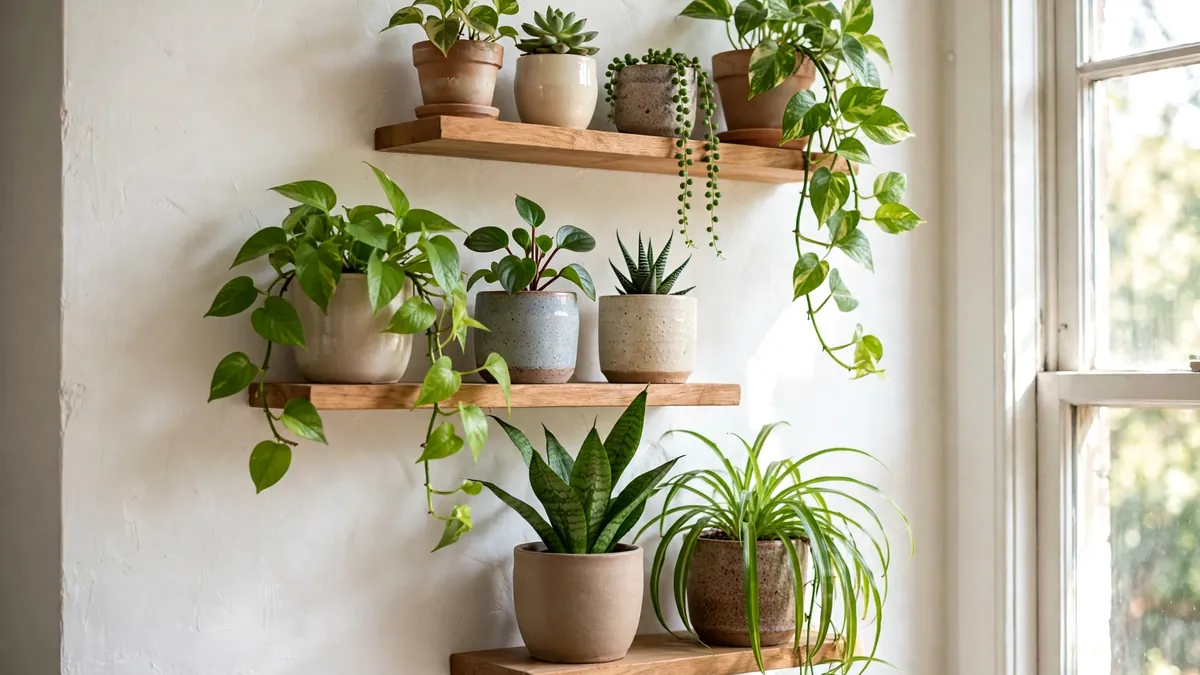
The best plant shelves in 2026 do a job no windowsill can manage: they lift a whole collection of plants onto the wall, where every pot gets its share of light and the room gains a display instead of a cluttered ledge. A good plant shelf holds a wet, heavy pot without sagging, keeps water off the wall and the floor, and puts trailing leaves where they can fall freely. This guide explains how plant shelves work, which types suit which rooms, and what to check before you buy one.
Key takeaways
- The best plant shelves in 2026 hold wet pots safely, so check the weight rating per shelf and the fixings before you fall for the look.
- A solid wood wall shelf is the best plant shelf overall, because it is strong, easy to fit and suits almost any room.
- Match the shelf to the light: high shelves suit trailing plants, while low shelves suit heavy pots you water often.
- Always leave a drip gap or a tray under each pot, because water that runs down a wall will stain paint and rot wood.
- Buy shelves you can reach comfortably, because a plant you cannot water easily is a plant that slowly dies.
Why a wall beats a windowsill
A windowsill holds three pots if you are lucky, and then the collection has nowhere to go. Pots crowd together, leaves press against the glass, and the plants at the back sit in shade while the ones at the front scorch. Watering becomes a balancing act, and every saucer that overflows runs straight onto the paintwork. Plant shelves solve this by spreading the collection across the wall, so each pot has its own patch of light and air. Shelves also let you put plants where the light is, rather than where the sill happens to be: a wall beside a bright window, a stairwell with a skylight, or a kitchen wall that catches morning sun.
How we judged the shelves
We judged every shelf the way you would actually live with one: how much weight it held without sagging, how easy it was to water the plants on it without spilling, and whether the plants on it looked better after a month than they did on the sill. We checked the weight limit per shelf, the depth of each board, and how the shelf coped with drips. A great plant shelf is one you stop worrying about: it holds the pots steady, it does not bow when you brush past it, and it lets light reach every plant instead of shading the ones at the back.
The best plant shelves of 2026 at a glance
| Shelf type | Best for | Pots held | Weight per shelf | Key extra |
|---|---|---|---|---|
| Solid wood wall shelf | Most rooms, most plants | 3 to 5 | 10 to 15 kg | Thick board, hidden brackets |
| Leaning ladder shelf | Small rooms, many plants | 6 to 10 | 8 to 12 kg per tier | No drilling, moves easily |
| Corner plant shelf | Dead corners, trailing plants | 2 to 4 | 5 to 8 kg | Uses space nothing else can |
| Metal rail shelf | Heavy pots, kitchens | 2 to 4 | 15 to 20 kg | Rust-resistant, wipes clean |
| Picture-ledge plant shelf | Small pots, herbs | 3 to 6 | 3 to 5 kg | Slim lip stops pots sliding |
Best overall: the solid wood wall shelf
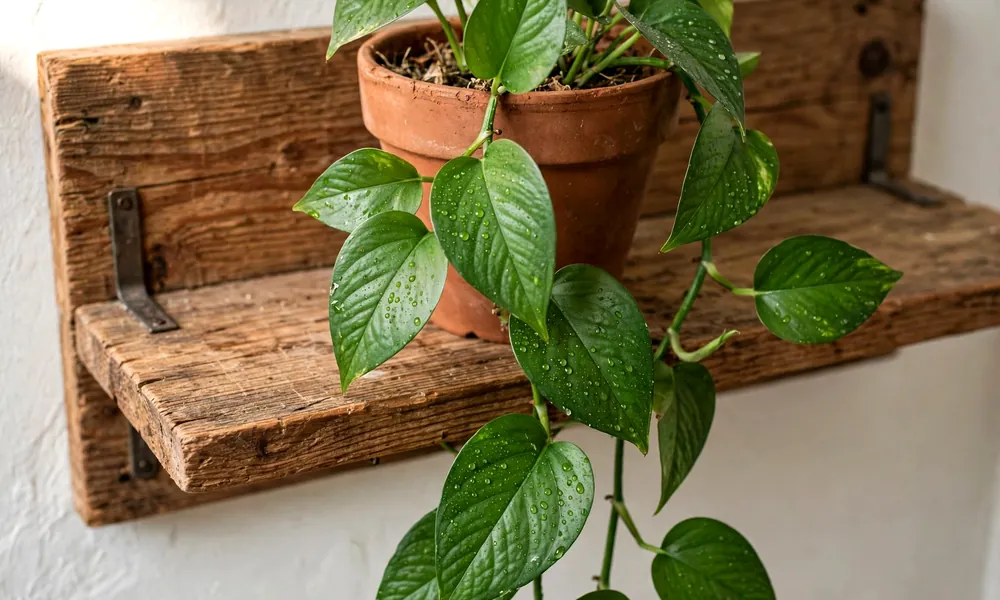
A solid wood wall shelf is the best plant shelf overall in 2026 because it solves the most common problem: too many plants and too little space, without taking any floor at all. A thick oak, walnut or pine board, sixty to ninety centimetres long, holds three to five pots in a single line, and two or three of them stacked up a wall hold a whole collection. Check the brackets before you buy, because the bracket is the shelf: a thick board on weak fixings is a shelf waiting to fall. The rods or brackets should reach at least two thirds of the shelf depth, and at least two fixings should land in a stud or solid masonry.
Best for small rooms: the leaning ladder shelf
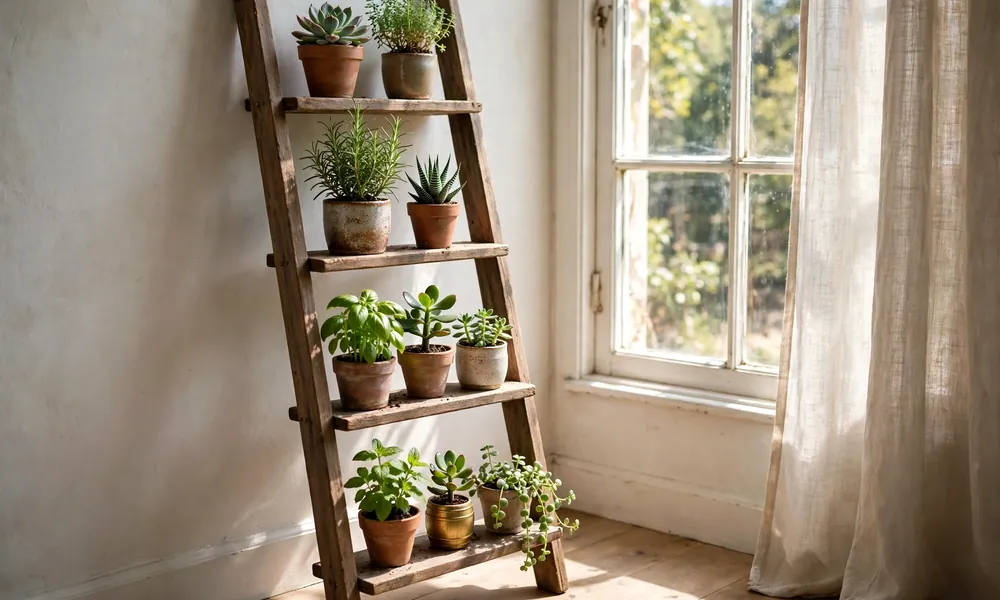
A leaning ladder shelf is the best plant shelf for a small room, because it holds six to ten pots in a footprint no wider than a chair. Its tiers step upwards like a small staircase, so every pot gets light and air instead of sitting in the shadow of the pot in front of it. The top tier suits small succulents and trailing plants that like bright light, the middle tiers suit leafy plants that prefer a softer glow, and the bottom tier takes the heaviest pots you would never lift onto a wall shelf. Most ladder shelves lean against the wall and need no drilling at all, which makes them the friendliest choice for renters.
Best for trailing plants: the corner plant shelf
A corner plant shelf is the best plant shelf for trailing plants, because a corner is the one place a hanging vine can fall freely without brushing past furniture, curtains or people. A triangular shelf fitted into a corner turns dead space into a display, and two or three of them stacked up the corner hold a pothos, a string of pearls and a spider plant in a single vertical column. The plants get light from two directions at once, which keeps them fuller than a plant pressed flat against a single wall. Fitting matters more here than anywhere else: a corner shelf must sit level in both directions, or the pots will slowly slide towards the low side.
Best for heavy pots: the metal rail shelf
A metal rail shelf is the best plant shelf for heavy pots, because steel holds weight that wood only dreams about. A powder-coated steel shelf with a rail at the front holds fifteen to twenty kilograms per shelf, enough for a large ceramic pot, wet soil and all, without any sign of sagging. The metal wipes clean in seconds, it does not stain when water splashes, and it suits a kitchen or a bathroom where humidity would warp a wooden board in a year. The rail at the front stops pots sliding forward and gives trailing vines something to drape over. The trade-off is the look, which is plainer than wood, so a metal shelf suits a modern room better than a cottage-style one.
Best for herbs and small pots: the picture-ledge plant shelf
A picture-ledge plant shelf is the best plant shelf for herbs and small pots, because its slim profile and raised lip suit exactly the plants a deep shelf would swallow. A ledge twenty centimetres deep and a metre long holds a row of small herb pots in the kitchen, a line of succulents in a bedroom, or a set of seedlings in a bright hallway, and the lip at the front stops every pot sliding off when you reach past it. Ledges are cheap, light and easy to fit, which makes them the best way to try plant shelves before committing to a heavy wooden board.
Plant shelves vs plant stands: which one do you need?
The choice between a shelf and a stand comes down to one question: do you have wall space or floor space to spare? A plant shelf uses the wall and takes no floor at all, which makes it the right choice for a small room, a hallway or a flat where every square metre counts. A stand uses the floor and needs room around it, but it holds plants you can move, water and rearrange without a ladder. Our guide to plant stands covers the floor-standing options in full, from tiered wooden stands to rolling caddies for large pots.
What about floating shelves and hanging planters?
Plant shelves sit between two neighbours that look similar but do different jobs. A floating shelf is a general display shelf for a living room, built for books, photos and ornaments, and plants are only one of the things it holds. Our guide to floating shelves covers that general use, including the lighter weight limits and the styling rules that keep a wall calm. A plant shelf is the plant-specific version: deeper boards, stronger fixings, lips and drip trays, and a weight rating that assumes wet soil. At the other end, a hanging planter suspends a single pot from the ceiling, which suits a trailing plant that needs a metre of clear drop below it. Our guide to hanging planters covers that overhead option, from macrame hangers to self-watering pots.
Fixing, watering and keeping shelves safe
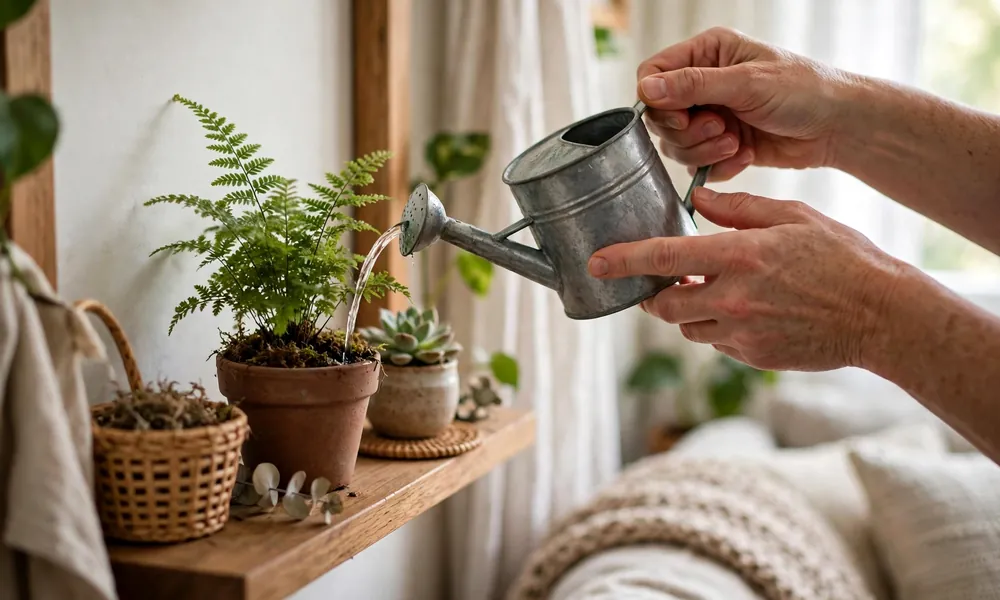
Fixing is where most plant shelves fail, and it is the part people rush. Find the studs first with a stud finder, or drill into solid masonry where you can, and never trust a shelf to the small plastic plugs that come in the box. A shelf holding four wet pots can weigh twenty kilograms, which is more than most plasterboard plugs are rated for, and a shelf that pulls out of the wall takes the plants, the pots and a chunk of plaster with it. Use fixings rated for at least double the load you expect, and check them once a year by giving the shelf a firm pull.
Checklist: before you buy a plant shelf
- Measure the wall and the light, and mark where the sun actually falls during the day.
- Check the weight rating per shelf, and add the weight of wet soil, not dry soil.
- Confirm the fixings suit your wall, whether it is stud, masonry or plasterboard.
- Choose a depth that fits your pots, with a lip or rail at the front.
- Plan a drip tray or saucer under every pot before the shelf goes up.
- Make sure you can reach every pot comfortably to water it without a ladder.
Frequently asked questions
How much weight can a plant shelf hold?
Most wooden plant shelves hold ten to fifteen kilograms per shelf, and metal shelves hold fifteen to twenty. Always check the rating per shelf, not for the whole unit, and remember that a pot full of wet soil weighs far more than the same pot dry.
Can plant shelves hold heavy ceramic pots?
Yes, if the shelf and the fixings are rated for it. Put heavy ceramic pots on the lowest shelf, use brackets fixed into a stud or masonry, and keep the pot in a saucer so water never sits on the board.
Do plant shelves damage walls?
Only if they are fixed badly or left to drip. Proper fixings leave small holes that are easy to fill, while water running down a wall will stain paint and rot wood, so use a tray under every pot.
Are plant shelves safe for renters?
A leaning ladder shelf needs no drilling at all, which makes it the safest choice for renters. Wall shelves need holes, so check your tenancy agreement first, and keep the fixings small and easy to fill when you leave.
Where is the best place to put a plant shelf?
On a wall beside a bright window, where the plants get light without sitting in harsh midday sun. High shelves suit trailing plants, low shelves suit heavy pots, and a stairwell with a skylight is often the brightest spot in the house.
How do I stop water dripping from a plant shelf?
Water the plants over the sink where you can, use a saucer or drip tray under every pot, and water less often than you think. Let the pot drain fully before you put it back on the shelf.
The bottom line
The best plant shelves in 2026 are the solid wood wall shelves that hold wet pots safely, fit the wall you actually have, and put every plant where the light can reach it. Start with one shelf beside a bright window, fix it properly, and add more only once the first one is full of healthy plants.