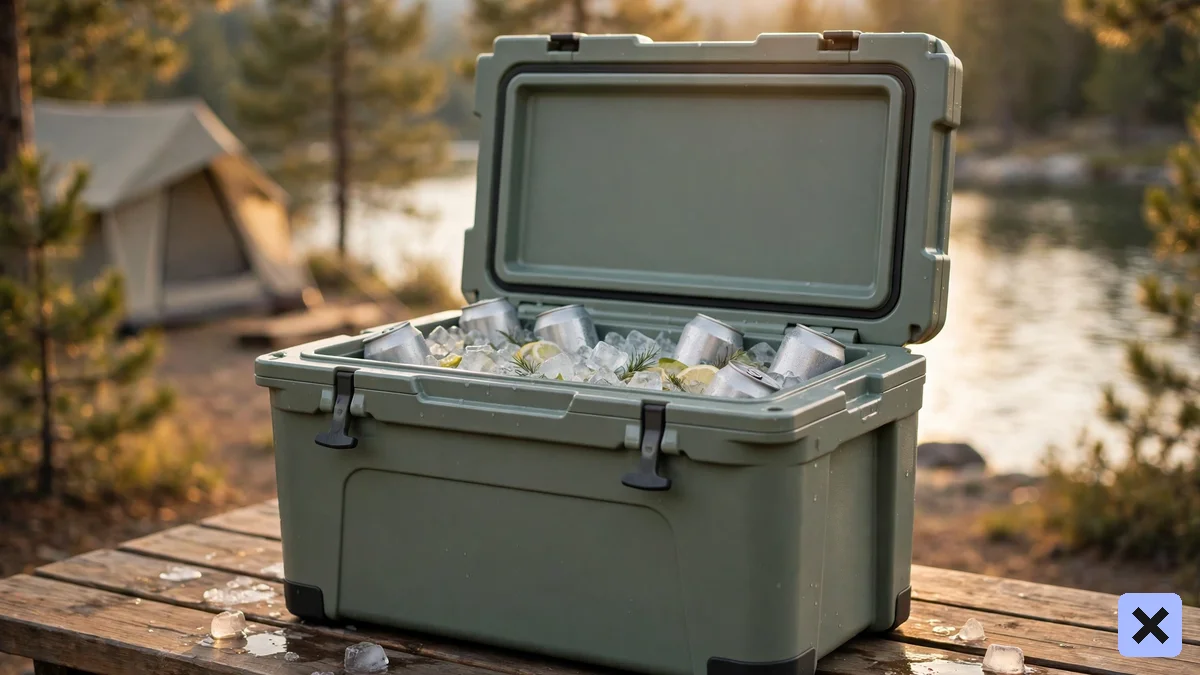
A good cooler is the quiet hero of every camping trip. It keeps your food safe and your drinks cold, yet most campers spend more time choosing a tent than they do choosing the box that holds everything they eat and drink. The best camping coolers in 2026 are tougher, better insulated and easier to carry than the models of a few years ago.
Choosing the right cooler is not about buying the biggest or the most expensive box on the shelf. It is about matching size, insulation and portability to the way you actually camp. A solo camper needs something very different from a family of five on a week-long trip.
This guide explains what separates the best camping coolers from the rest, compares hard-sided and soft-sided designs, and walks through sizing, ice retention, wheels and packing technique.
Key takeaways
- Match the cooler to your trip length and group size before you look at brands or prices.
- Hard-sided coolers hold ice longest, while soft-sided coolers are lighter and easier to carry.
- Pre-chill your cooler and use block ice to stretch ice retention by a full day or more.
- Around 45 litres suits most families for a long weekend, while 25 litres covers a couple.
- Wheels, a drain plug and sturdy latches matter more than ice claims.

What Makes a Great Camping Cooler
A great camping cooler does one job well: it keeps cold in and heat out for as long as possible. The best coolers use thick walls filled with dense foam, a tight-fitting lid and a rubber gasket that seals the cold inside. When the lid closes with a firm press and the seal looks even all the way round, the cooler is doing its most important work.
Build quality matters just as much. Camping gear gets dropped, dragged over gravel and left in the rain, so a cooler needs a shell that can take rough treatment without cracking. Rotomoulded hard coolers are the toughest option, with a single seamless body that resists dents and impacts.
Weight is the trade-off that catches many buyers out. A big rotomoulded cooler can weigh 15 kilograms before you put anything in it, and a full one can be a two-person lift. Comfortable seating matters just as much at camp, so read our guide to the best camping chairs for 2026 before you finalise your kit.
Insulation and Ice Retention
Ice retention figures are usually measured under ideal conditions: a pre-chilled cooler, block ice, shade and a lid that is rarely opened. Your real-world result will be shorter, especially on a hot weekend. Treat the headline figure as a comparison tool, not a promise.
Durability and Build Quality
Check the feet, handles and drain plug before you buy. Wide feet keep the cooler stable on uneven ground, and handles should feel comfortable when the box is loaded. A drain plug that unscrews easily and reseals without leaking saves a lot of mess at the end of a trip.
Hard-Sided vs Soft-Sided Coolers
Hard-sided coolers are the classic choice, and for good reason. They hold ice the longest, protect fragile food, double as a seat or a small table, and survive years of rough use. The best hard coolers keep ice for four to seven days in good conditions, which makes them the right pick for longer trips and group camping.
Soft-sided coolers are lighter, fold flat for storage and are far easier to carry on foot. Modern soft coolers use thick closed-cell foam and welded seams, and the better ones keep ice for one to three days, which is plenty for an overnight trip or a day at the beach. They are ideal as a second cooler for drinks.
Many experienced campers own one of each. The hard cooler stays at base camp holding food for the whole trip, while the soft cooler carries drinks and lunch to the lake or the trail. That combination gives you the ice retention of a hard chest and the portability of a soft bag.
How to Choose the Right Size
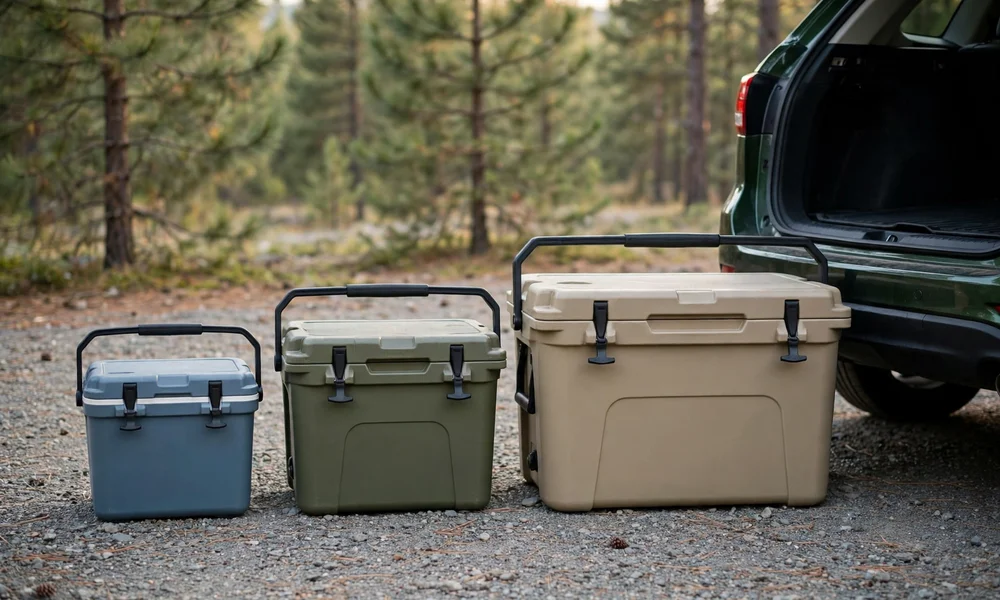
Size is where most people go wrong, and the mistake usually runs in one direction: too big. An oversized cooler with too much empty air space warms up faster, because cold air escapes every time the lid opens. A cooler that is about two-thirds full of food and ice performs far better than a half-empty giant.
As a rough guide, a 20 to 25 litre cooler suits one or two people for a weekend, a 35 to 45 litre cooler covers a family of four for three or four days, and a 60 litre or larger cooler is for groups and long trips. The stated capacity includes the space taken up by ice, so the usable food space is roughly two-thirds of the headline number.
| Group size | Trip length | Recommended size | Best style |
|---|---|---|---|
| 1 to 2 people | Weekend | 20 to 25 litres | Soft-sided or small hard |
| 2 to 4 people | Long weekend | 35 to 45 litres | Hard-sided |
| 4 to 6 people | Up to a week | 50 to 65 litres | Hard-sided with wheels |
| 6 or more people | A week or more | 70 litres or two coolers | Hard-sided, split food and drinks |
Capacity and the Two-Thirds Rule
Fill the cooler with food and ice until it is about two-thirds full, and the cold will last noticeably longer than in a half-empty box. If your usual load leaves a big gap, drop a size. If you are always cramming the lid shut, go up a size or add a second cooler for drinks.
Ice Retention: What Really Matters
The single biggest improvement you can make costs nothing: pre-chill the cooler the night before you leave. Put a bag of ice or a few frozen water bottles inside overnight, and the insulation starts cold instead of stealing cold from your first bag of ice. Campers who skip this step can lose a full day of ice retention before they even reach the campsite.
Block ice melts far more slowly than cubes, because it has less surface area exposed to warm air. Freeze water in large containers at home and use it as the base layer, filling gaps with cubes. Keep the cooler in the shade with a light-coloured towel draped over the top, and open the lid as rarely as possible.
Wheeled Coolers and Portability
Wheels turn a heavy cooler from a two-person lift into a one-handed pull, and they are worth every penny if your pitch is more than a few steps from the car. Look for large, sturdy wheels that roll over gravel and grass rather than small hard wheels that jam on the first stone. A telescoping handle that locks at a comfortable height makes a long pull much easier.
The trade-off is weight and capacity. Wheeled coolers are heavier than the same size without wheels, and the wheel housings eat a little internal space. If you camp mostly on flat, hard-standing pitches, wheels are a clear win. If you hike to your pitch, a backpack-style soft cooler is the better choice.

Handles deserve the same attention as wheels. Rope handles with padded grips are comfortable and easy to replace, while moulded handles are sturdier but can dig into your hands on a long carry. Some larger coolers have handles on all four sides, which makes loading into a car much easier.
Features Worth Paying For
A drain plug is the most useful feature on a large cooler, and it is worth checking before you buy. The best plugs unscrew with a quarter turn, drain quickly and seal without dripping. A non-slip lid is useful if you use the cooler as a seat.
Power is the one feature that changes the game entirely. A powered cool box that plugs into your car or a campsite hook-up keeps food cold indefinitely without ice, and it is a strong option for long stays with electricity. It will not work off-grid without a power station, though, and it costs more than a passive cooler. Keeping your devices charged matters just as much, so our roundup of the best portable chargers for 2026 is worth a look before you pack.
Packing a Cooler Like a Pro
Pack in layers, and pack cold. Chill everything in the fridge overnight before it goes into the cooler, because warm food and drinks will melt ice fast while they cool down. Put block ice or frozen bottles at the bottom, then raw meat in sealed containers, then dairy and cooked food, and keep the items you need first on top.
Use separate containers for raw meat and keep it at the very bottom, away from anything you will eat without cooking. Freeze sauces, soups and stews flat in bags before the trip, because flat packs stack neatly and act as extra ice blocks for the first day or two. For day trips and picnics, the same rules apply with lighter kit, and our guide to the best picnic baskets for 2026 pairs well with a compact cooler.
Cooler Packing Checklist
- Pre-chill the cooler overnight with a bag of ice or frozen bottles.
- Chill all food and drinks in the fridge before packing.
- Layer block ice at the bottom, food in the middle, items needed first on top.
- Keep raw meat sealed and at the very bottom, away from ready-to-eat food.
- Use frozen water bottles as ice packs that become drinking water later.
- Keep the cooler in the shade and open the lid as rarely as possible.
Caring for Your Cooler
Clean your cooler after every trip, even if it looks clean. Wash it with warm water and mild soap, rinse it well and leave the lid open until it is completely dry, because a cooler stored damp will grow mould and smell. Store the cooler with the lid slightly open so air can circulate.
Frequently Asked Questions
How long will a good camping cooler keep ice?
A good hard-sided cooler keeps ice for three to five days in normal camping conditions, and the best models reach five to seven days when pre-chilled, filled with block ice and kept in the shade. Soft-sided coolers manage one to three days.
What size cooler do I need for a family camping trip?
For a family of four on a long weekend, a 35 to 45 litre cooler is the sweet spot. For longer trips or bigger groups, step up to 50 to 65 litres, or split food and drinks into two coolers.
Are expensive rotomoulded coolers worth the money?
They are worth it if you camp often, camp in hot weather or need ice to last four days or more. If you camp a few weekends a year in mild weather, a mid-range cooler will serve you well for a fraction of the price.
Is block ice really better than cubed ice?
Yes. Block ice melts much more slowly than cubes because it has less surface area. Use block ice or frozen water bottles as the base layer and fill the gaps with cubes.
Should I drain the meltwater from my cooler?
Leave it until it gets deep. Cold meltwater still cools the food, so draining it too often lets warm air in and wastes cold. Drain it when the water starts to soak packaging or the cooler gets too heavy to move.
Can I use a camping cooler as a seat?
Most hard-sided coolers can be used as a seat, and many campers do exactly that. Check the weight rating first, because lighter models are not built for it, and avoid standing on the lid.
The bottom line: the best camping cooler for you is the one that matches your group, your trip length and how far you carry it. Choose hard-sided for longer trips and soft-sided for short outings, and size it to run about two-thirds full. Pre-chill it, pack it with block ice and keep it shaded.