
Best Bread Pudding in 2026: Custard-Soaked, Golden-Topped Comfort That Still Wins
The best bread pudding in 2026 is not a clever reinvention. It is the old one done properly: stale bread soaked in a rich egg custard until every crumb is soft, baked until the top turns golden and crisp at the edges, and served warm with a spoonful of sauce. A good one is soft inside and lightly crunchy on top, sweet but not cloying. A bad one is soggy, eggy or dry, usually from the wrong bread, too little soaking time or an oven that was too hot. This guide ranks the best kinds by bread, custard and ease, so you can choose the version that suits your evening.
Key takeaways
- The best bread pudding starts with stale, sturdy bread: it drinks up custard without falling apart, while fresh soft bread turns to paste.
- Soak the bread fully before baking, giving it at least twenty minutes, because dry patches are the most common fault.
- Bake low and slow until the centre is just set, then rest ten minutes so the custard finishes and the top stays crisp.
- Vanilla, cinnamon and nutmeg suit bread pudding best, and a warm sauce matters more than any topping.
- Bread pudding is the best use for bread too stale to eat, and it costs almost nothing to make well.
How the best bread pudding was chosen
Every kind of bread pudding below was judged on five measures. Texture comes first: the inside soft and custardy, the top golden and lightly crisp, the bread holding its shape instead of dissolving. Flavour is second, judged on the balance of bread, egg, sugar and spice, with nothing shouting over the custard itself. Ease is third, because a pudding that needs stale bread and a long soak is a different evening from one that can be made on the spot. Versatility is fourth: can it be served warm or cold, plain or dressed up? Value is fifth, because bread pudding began as a way to use up leftovers. The bread itself sits at the heart of all five measures, and our guide to the best multigrain bread explains why a sturdy, flavourful loaf is the right starting point for a pudding that has to stand up to soaking.
One note before the list. This guide is about bread pudding only: bread, eggs, milk and sugar, baked in a dish until set. It is not about rice pudding, which is a different dessert made from rice cooked slowly in milk, and none of the versions below drift into that territory. The seven kinds below cover the full range, from the classic bake to the rich New Orleans version and the honest shop-bought slice.
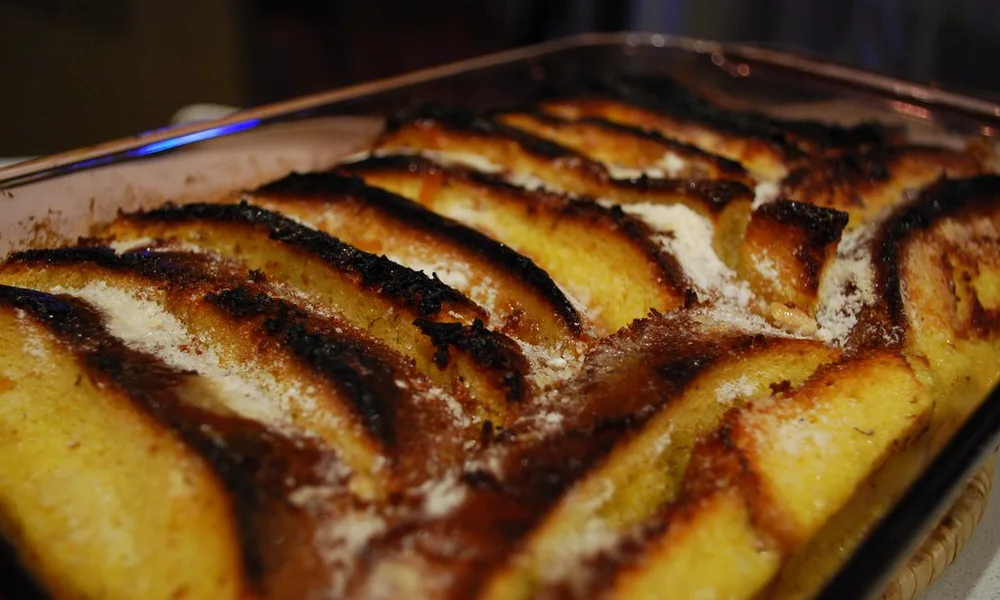
Comparison table: the best bread pudding in 2026
| Rank | Bread pudding type | Best for | Watch out for |
|---|---|---|---|
| 1 | Classic baked bread pudding | The soft, golden standard | Needs stale bread and a full soak |
| 2 | Bread and butter pudding | Crisp layered slices and a clean flavour | Can dry out if the custard is thin |
| 3 | New Orleans bread pudding with bourbon sauce | The richest, most indulgent plate | Very sweet and very rich |
| 4 | Chocolate bread pudding | Chocolate lovers and cold evenings | Chocolate can swamp the bread |
| 5 | Cinnamon sugar bread pudding | A warm, spiced, crowd-pleasing bake | Easy to over-sweeten |
| 6 | Cornbread pudding | A savoury-leaning, golden bake | Drier crumb needs more custard |
| 7 | Shop-bought bread pudding | Zero effort on a busy night | Often too sweet and too uniform |
The best bread pudding
1. Classic baked bread pudding: the standard
The classic baked version is the best bread pudding because it gets the balance right with the least fuss. Cubes of stale white or brioche bread go into a buttered dish, custard is poured over, and the whole thing soaks until the bread is heavy with liquid. The top turns golden and lightly crisp while the inside stays soft, and the bread keeps enough character to taste. Press the bread down gently, wait twenty minutes, and top up dry corners before baking, because a dry patch never recovers.
2. Bread and butter pudding: crisp layers
Bread and butter pudding is the best choice when you want texture in every bite. Slices of buttered bread are layered in a dish, sometimes with raisins scattered between them, and the custard is poured over so it seeps into the gaps. The top layer turns crisp and golden while the layers underneath stay soft, so each spoonful has both crunch and custard. The risk is a thin custard: if the egg-to-milk ratio is too low, the bottom layers soak up everything and the pudding dries out. Use four eggs to every two cups of milk, and let it stand a full half hour before baking.
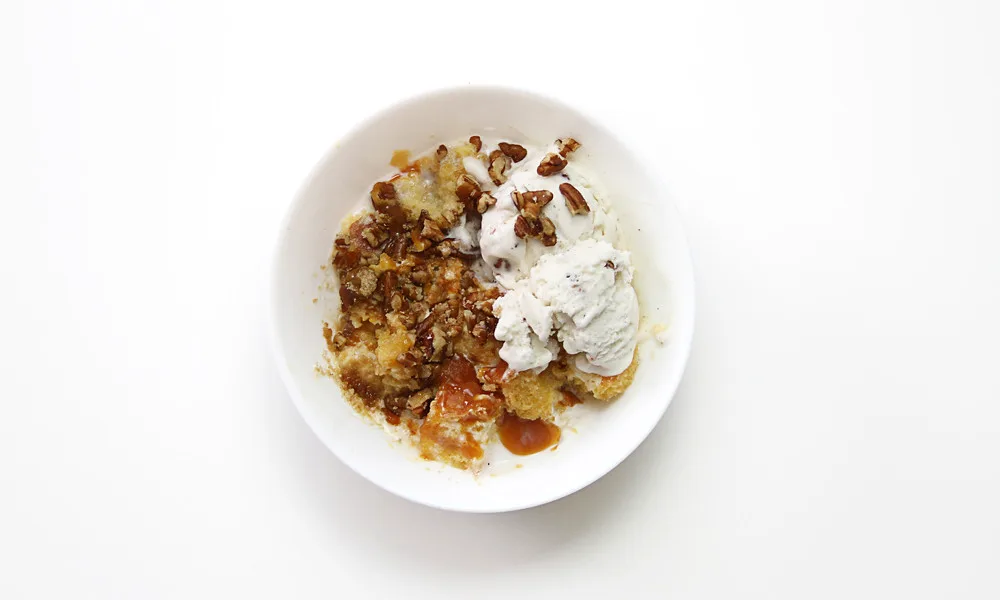
3. New Orleans bread pudding with bourbon sauce: the richest plate
New Orleans bread pudding is the best version for a special occasion, and it is the richest on this list by a clear margin. French bread soaks in a custard of eggs, milk, sugar and vanilla, and bakes up tall and golden before being served warm under a bourbon sauce of butter, sugar and bourbon, cooked just long enough to thicken. The sauce is the point: it soaks into the top and turns the plate into something closer to a celebration than a dessert. The watch-out is sweetness, so keep the sugar in the custard low and serve small portions.
4. Chocolate bread pudding: for cold evenings
Chocolate bread pudding is the best version when the evening calls for something darker and heavier. Cocoa or melted dark chocolate goes into the custard, and the pudding bakes into something halfway between a cake and a custard, best served warm with cream or ice cream. It works because bread is a neutral base: it carries chocolate flavour without competing with it. The mistake is using too much chocolate, which turns the pudding bitter and heavy and hides the bread. A modest amount of good cocoa, a little extra sugar and a pinch of salt will do more than a whole bar of dark chocolate.
5. Cinnamon sugar bread pudding: warm and spiced
Cinnamon sugar bread pudding is the best version for a crowd, because it smells wonderful while it bakes and everyone recognises the flavour. The bread is tossed with cinnamon and sugar before the custard goes on, and the top is dusted again, so the spice runs through the whole dish. A scoop of ice cream turns it into a proper dessert, and it is the version children ask for again. The watch-out is the sugar: cinnamon makes sweetness taste stronger than it is, so it is easy to add too much. Taste the custard before pouring, and remember that the sugar concentrates as the pudding bakes. A little cinnamon that smells like the real bark goes further than a spoonful of stale powder, and it keeps the spice warm rather than dusty.
6. Cornbread pudding: the savoury-leaning bake
Cornbread pudding is the best version for people who like their desserts less sweet. Leftover cornbread, with its golden crumb and faintly savoury flavour, soaks up custard as well as white bread, and the result tastes of corn and butter as much as of sugar. It needs more custard than a white-bread pudding, because cornbread is drier, so give it a longer soak and a wetter custard, and serve it with honey or maple syrup instead of a heavy sauce. Our guide to cornbread that stays moist is worth reading first, because a dry cornbread makes a dry pudding, while a moist one bakes up soft and golden.

7. Shop-bought bread pudding: the honest shortcut
Shop-bought bread pudding is the best version when there is no time to bake, and there is no shame in it. The better ones are made with bread, eggs, milk and sugar and little else, and warmed gently they make a decent plate for a busy weeknight, especially with custard or ice cream on top. The weaker ones are the problem: too sweet, too uniform, with bread that has been baked until it has no character left, and a texture more like cake than pudding. Choose a slice with a short ingredients list and visible pieces of bread, warm it slowly, and finish it with sauce or cream.
What to avoid with bread pudding
The most common mistake is the bread itself. Fresh, soft sandwich bread soaks up custard too fast and collapses into paste, while very dense bread never softens at all. Use bread a day or two old, or dry fresh bread in a low oven for ten minutes before cubing it, so it drinks the custard without falling apart. The second mistake is rushing the soak: dry patches stay dry, because the custard sets around them instead of soaking in. The third is an oven that is too hot, which sets the outside before the middle is done and leaves the top burnt. Bake at a moderate temperature, cover the dish with foil if the top browns too fast, and take the pudding out when the centre still wobbles, because it keeps setting as it rests.
Checklist: making the best bread pudding
- Use stale, sturdy bread, not fresh soft bread, which collapses into paste in the custard.
- Cube or slice the bread evenly so every piece soaks at the same rate.
- Soak for at least twenty minutes, pressing the bread down and topping up any dry corners.
- Bake at a moderate temperature until the centre is just set, then rest the pudding for ten minutes.
- Sweeten lightly at first, since the custard concentrates and the sauce adds sweetness too.
- Serve warm with custard, cream, ice cream or a warm sauce, and keep the topping simple.
Frequently asked questions
What bread is best for bread pudding?
Stale, sturdy bread is best: white bread, brioche, challah or French bread a day or two old. It absorbs custard without falling apart and keeps its shape in the oven. Fresh soft bread turns to paste, and very dense bread never softens.
Why is my bread pudding soggy in the middle?
A soggy middle usually means the bread did not soak evenly, or the oven was too hot. Soak the bread fully, press it down, bake at a moderate temperature, and take the pudding out when the centre still wobbles, because it sets as it rests.
Can bread pudding be made ahead?
Yes. It keeps in the fridge for three days and reheats well in a low oven with a splash of milk or cream. Assemble it the night before and bake it the next day, or bake it fully and reheat portions as needed.
Is bread pudding better warm or cold?
Warm is best, because the custard is soft, the top is crisp and the sauce melts into the pudding. Cold bread pudding is still good, cut into squares and eaten like cake, but it loses the contrast between crisp top and soft centre that makes the warm version special.
How do I stop bread pudding drying out?
Use enough custard, soak the bread properly, and do not overbake. A drier bread needs a wetter custard, and covering the dish with foil for the first half of the bake keeps the top from drying before the middle is set.
What sauce goes best with bread pudding?
Warm custard is the classic, and bourbon sauce is the richest. Vanilla sauce, caramel sauce and a simple cream all work well too. Choose one sauce and keep it warm, because a cold sauce on a warm pudding never quite works.
Bottom line
The best bread pudding in 2026 is the classic baked version: stale bread, a rich egg custard, a full soak and a moderate oven, served warm with sauce. Bread and butter pudding runs it close for its crisp layered top, and the New Orleans version is the best choice for a celebration. Whichever you choose, use stale bread and soak it properly.


