
A Guide to Brow Powders for Natural-Looking Brows in 2026
A good brow powder is the quietest way to make brows look fuller. It dusts soft colour between the hairs you already have, so sparse patches fill in and the shape reads clearly, while everything still looks like your own brows. The best brow powder in 2026 does this without the old complaints: no dusty finish, no grey cast, and no colour that slides off by lunchtime. The difference is rarely the price. It is the shade, the brush and the amount you use: a shade that matches your brow hair disappears into it, a small angled brush puts the powder exactly where it belongs, and a light hand keeps the result soft. This guide covers all three.
Key Takeaways
- Match the powder to your brow hair, not your head hair: brows are usually one shade lighter and cooler than the hair on your head.
- Pressed powder suits most people, loose powder suits oily skin, and a duo covers the most brow colours.
- An angled brush places the colour precisely, and a spoolie brushed through afterwards blends it into the hairs.
- Fill only the sparse patches, and keep the front of the brow softest: a hard block at the inner corner makes powder brows look stamped on.
- Set powder with a light sweep of clear gel, and remove it at night with your normal cleanser.
What Brow Powder Actually Does
Brow powder is a pressed or loose pigment that fills the gaps between brow hairs. It adds colour where hair is thin or missing, and evens out brows that are full but patchy. It does not replace your brows: the best results come from dusting colour into the thin spots, not drawing a new shape on bare skin.
Powder is the softest of the brow products. A pencil draws lines and a pomade paints a sharp edge, but powder sits between the hairs and reads as shadow, which is why it looks so natural. Its limit is that it cannot draw a hair where none exists, or hold unruly hairs in place. What it does best is make a full brow look even and a patchy brow look complete.
Loose, Pressed and Duo Powders, Compared
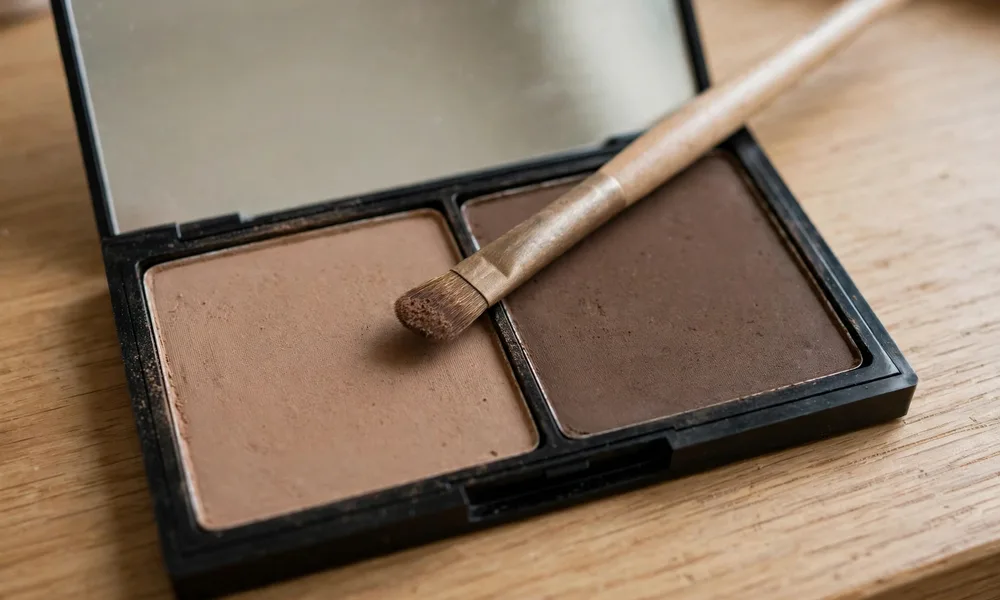
Most brow powders fall into three groups, and the group matters more than the brand. Pressed powder is a firm cake of pigment in a compact, applied with a brush. Loose powder is a fine powder in a jar, tapped onto the brush. A duo compact holds two shades side by side, so you can mix the right colour.
| Type | Best for | Finish | Skill needed | Watch out for |
|---|---|---|---|---|
| Pressed powder | Everyday filling | Soft, natural | Easy | Can look flat if packed on |
| Loose powder | Oily skin, very soft brows | Sheer, diffused | Moderate | Messy; easy to take too much |
| Duo compact | Matching tricky shades | Natural, blended | Easy | One shade often goes unused |
| Powder with wax | Long days, humid weather | Soft, set | Easy | Wax can feel heavy if over-applied |
Pressed powder
Pressed powder is the best first buy. The cake gives up just enough pigment with each brush stroke, so it is hard to take too much, and it travels well without spilling. It suits full brows that only need evening out, and sparse brows that need gentle filling. If the colour looks too strong, a brush through with a clean spoolie softens it in seconds.
Loose powder
Loose powder gives the sheerest finish of all, because the brush picks up so little at a time. It suits oily skin, where pressed powder can clump, and people who want the softest possible fill. The trade-off is mess: tap the brush, knock off the excess, and keep the jar upright. A little goes a long way, and a heavy hand turns a soft brow dusty.
Finding Your Shade
Shade is where most brow mistakes begin, and the rule is simple: match your brow hair, not the hair on your head. Eyebrow hair is usually one shade lighter and ashier than head hair. When in doubt, go one shade lighter: a lighter powder can be layered, while one that is too dark is hard to soften.
Undertone matters as much as depth. Cool, ashy brow hair needs a grey or taupe undertone; warm, reddish brow hair needs a warm brown one. Black hair needs a soft black or dark brown, never a true black, and grey hair suits taupe. Test on your brow, not your hand, and judge it in daylight: bathroom lighting is warm and forgiving, and hides a shade that is too dark.
The Brush Matters as Much as the Powder
The brush decides whether powder looks like brows or like dust. A small, firm, angled brush is the right tool: the slanted edge places colour in short strokes, and the firm bristles pick up just enough pigment. A big, soft brush scatters powder onto the skin around the brow, which is what makes powder brows look messy.
Keep a spoolie brush beside it. After every few strokes of powder, brush through the brow: it pushes the powder into the hairs, softens hard edges and removes excess. Skipping the spoolie is the biggest cause of the dusty, drawn-on look, and a few firm brush-throughs also rescue a brow that went too dark.

The Application Technique
Start with clean, dry brows, and brush them through with the spoolie first: this shows where the gaps actually are. Tap the angled brush into the powder once, then tap the excess off on the back of your hand. The brush should carry a whisper of colour, not a visible load.
Work in short, light strokes in the direction your hairs grow: upward at the front, across the arch, downward toward the tail. Fill only the gaps, keep the pressure lightest at the front, and brush through with the spoolie after every few strokes.
At the tail, fade the pressure so it tapers to a soft point instead of a blunt block. Then step back and look at both brows together: brows are sisters, not twins, and chasing perfect symmetry is how brows end up too dark. Get them close, stop, and let the powder settle before deciding whether you need more.
For extra staying power, finish with a whisper of clear gel brushed through the brows, which locks the powder in place without changing the shade. Our guide to brow gels that hold without the crunch explains how to choose a hold that keeps brows in place while letting them move.
Powder vs Pomade vs Pencil
Powder, pomade and pencil all fill brows, but they do different jobs. A brow pencil is the most precise: a fine tip draws hair-like strokes and defines the shape, which suits sparse brows and anyone who wants a sharp tail. Our guide to brow pencils that shape without looking drawn-on covers the tip, the shade and the hair-stroke technique.
Pomade gives the sharpest, boldest brow of the three. It is a creamy pigment applied with an angled brush, and it suits evenings and defined looks, but it is the easiest to overdo. Powder sits between the two: softer than pomade, more forgiving than a pencil, and the fastest to apply. Many people use two together: pencil for the gaps and tail, powder to soften the whole brow.
The rest of the eye should match the brow. A soft powder brow pairs well with a natural eye, and a stronger brow needs a little more balance elsewhere. Our guide to the best eyeshadows for every eye colour explains how to choose eye colours that work with your brows rather than competing with them.
Longevity and Removal
Powder lasts a full working day on most people, as long as the skin underneath is dry when you apply it. Blot the brows first and let moisturiser sink in, because powder slides on oily skin. On humid days, a light sweep of clear gel or a spritz of setting spray keeps the colour in place.
Removal is easy: powder comes off with your normal cleanser or a micellar water, wiped gently along the brow in the direction of growth. Never share a brow powder or brush, and replace a compact that smells off or has gone hard and shiny on the surface.
Mistakes That Make Powder Brows Look Dusty
The most common mistake is simply too much product. A brush loaded with powder deposits a visible layer that sits on the skin and looks dusty by midday. Tap the brush, knock off the excess, and build the colour in light passes. If your brows look dusty, the fix is less powder next time, not a different powder.
The second mistake is the wrong shade: too warm a brown turns orange on cool brows, and too dark a shade makes the brow look stamped on. Match the undertone as carefully as the depth, and go lighter when torn. The third mistake is filling the whole brow evenly: leave the hairs you have alone, and fill only the gaps.
Checklist: Choosing and Using a Brow Powder
- Match the shade to your brow hair, not your head hair, and go one shade lighter when unsure.
- Choose a pressed powder for everyday use, a duo if your brows change shade from front to tail, and loose powder for the sheerest finish.
- Pick a small, firm, angled brush, and keep a clean spoolie beside it for blending.
- Tap the brush and knock off the excess before you touch the brow: a whisper of colour is enough.
- Fill only the sparse patches with short, light strokes, and brush through with the spoolie after every few strokes.
- Keep the front of the brow soft, fade the tail, and set with a light sweep of clear gel on long days.
Frequently Asked Questions
Is brow powder better than a brow pencil?
It depends on your brows. Powder is softer and more forgiving, so it suits full brows that only need evening out. A pencil is more precise, so it suits sparse brows and a defined shape. Many people use both: pencil for the gaps and tail, powder to soften the look.
How do I make brow powder look natural, not dusty?
Use a small angled brush, tap off the excess, and apply in short, light strokes only where the brow is sparse. Brush through with a clean spoolie after every few strokes, and keep the front of the brow softest.
What colour brow powder should I use?
Match your brow hair, not your head hair, and go one shade lighter when in doubt. Blonde brows suit taupe, brown brows suit medium brown, and black hair suits soft black. Cool brows need an ashy powder, warm brows a warm brown one.
Does brow powder last all day?
Yes, on clean, dry brows it lasts a full working day. Blot any oil first, and set it with a light sweep of clear gel on humid days. It fades gracefully rather than flaking.
Can I use brow powder if my brows are very sparse?
Yes, but pair it with a pencil: use the pencil first for hair-like strokes in the sparsest patches, then dust powder over the top to soften it. A tinted gel over both adds fullness and hold.
How often should I replace brow powder?
A compact lasts many months with daily use. Replace it when the colour looks dry and patchy, the surface has gone hard and shiny, or it smells off. Wash the brush weekly and never share it.
Bottom Line
The best brow powder is the one nobody notices: a shade that matches your brow hair, a small angled brush, and a light hand with the spoolie doing half the work. Fill only the gaps, keep the front soft, fade the tail, and set it lightly on long days. It makes the brows you already have look fuller and more finished, in under a minute.


