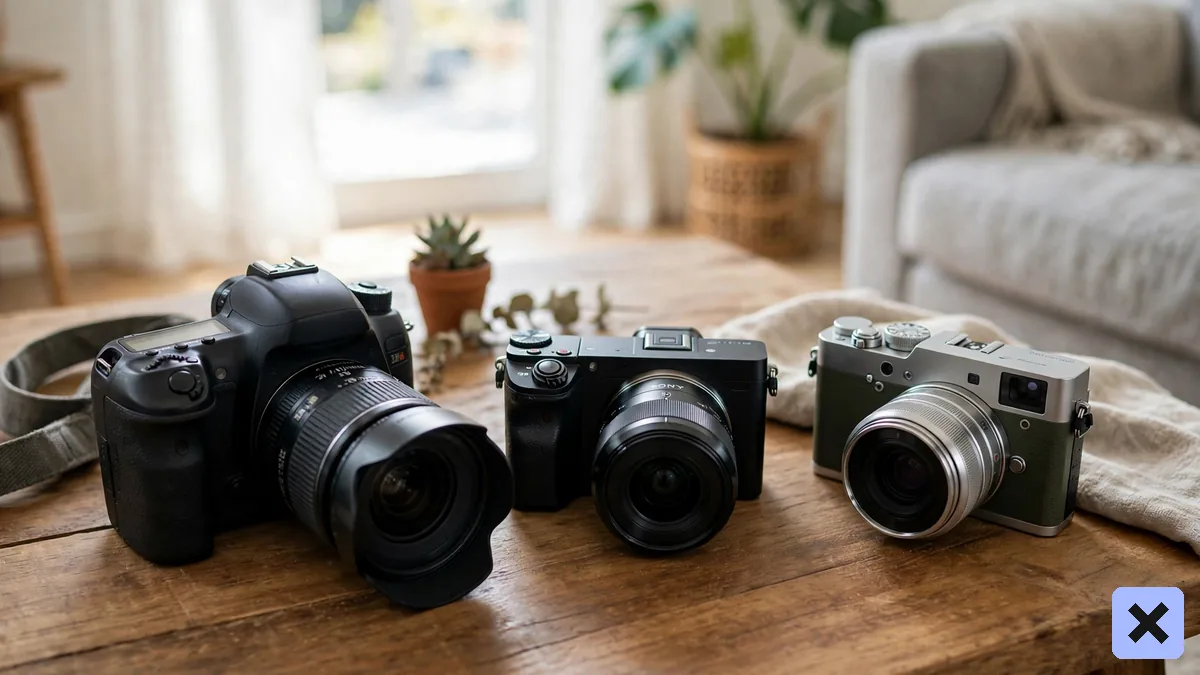
The best cameras in 2026 are not the ones with the biggest numbers on the box. They are the cameras that match the way you actually shoot: the travel you do, the light you work in, the subjects you love, and the bag you are willing to carry. A camera that stays at home will never take a good photograph. The right camera is the one that is with you when the moment happens.
That is why this guide looks at the whole camera market rather than one corner of it. We compare mirrorless cameras, DSLRs and compacts side by side, explain sensor sizes in plain language, and work through lenses and budgets, so you can see where your money actually makes a difference. Beginner cameras and instant cameras have their own guides, so this article focuses on the wider choice: which type, which sensor, which lenses, and how much to spend.
Key Takeaways
- For most buyers in 2026, a mirrorless camera is the best choice, because it is lighter, focuses faster and has the widest range of new lenses.
- Sensor size matters more than megapixels: a larger sensor gives cleaner photos in low light and softer backgrounds in portraits.
- Budget for lenses and accessories as well as the body, because a good lens often improves your photos more than a newer body.
- A compact camera still wins when pocketability matters most, and a DSLR still makes sense if you already own its lenses.
- Try the camera in your hands before you buy: grip, weight and menu layout decide whether you will actually use it.
What Makes a Great Camera in 2026
A great camera in 2026 does four things well. First, it focuses quickly and accurately, even when your subject is moving. Modern autofocus can lock onto eyes, faces, animals and vehicles, and track them across the frame while you concentrate on composition. This single feature has changed photography more than any sensor upgrade of the last five years, and it is worth testing in a shop before you buy, because the difference between a good system and a great one is obvious the moment you try to photograph a child running or a dog mid-leap.
Second, it handles the light you actually shoot in. Most of our favourite photographs are taken indoors, at dusk or at evening events, where light is scarce. A camera with a larger sensor and good high-ISO performance will give you clean, detailed files in those conditions, while a small-sensor camera will start to show noise and lose detail. Third, it is comfortable enough to carry all day: weight, grip and balance matter far more than most buyers expect. Fourth, it has the lenses you need, because the body is only half the system.

Best Cameras 2026 at a Glance
The table below compares the main types of camera on sale in 2026. Prices are typical street prices for a body with a standard kit lens, and they move with sales and new releases, so treat them as a guide rather than a promise.
| Camera Type | Best For | Sensor | Weight | Typical Price |
|---|---|---|---|---|
| Entry mirrorless | Learning and everyday shooting | APS-C | 350–500 g | $500–$900 |
| Mid-range mirrorless | Travel, portraits, events | APS-C or full-frame | 500–700 g | $900–$1,800 |
| Full-frame mirrorless | Low light, weddings, landscapes | Full-frame | 600–900 g | $1,800–$3,500 |
| DSLR | Existing lens owners, long battery life | APS-C or full-frame | 700–1,000 g | $500–$2,500 |
| Compact | Pocketable travel and street | 1-inch or APS-C | 200–400 g | $400–$1,300 |
| Action and vlogging | Video, sport, adventure | Small to 1-inch | 100–300 g | $300–$600 |
Notice how wide the price range is within each type: the body is only part of the cost, and a camera from two years ago often delivers 90 percent of this year’s performance at 60 percent of the price.
Sensor Sizes Explained in Plain Language
The sensor is the part of the camera that captures light, and its size shapes almost everything about your photographs. A full-frame sensor is about the size of a frame of 35mm film, roughly 36 by 24 millimetres. An APS-C sensor is about two-thirds of that size, and a Micro Four Thirds sensor is about half. A phone sensor is far smaller again. Bigger sensors gather more light, which means cleaner images at high ISO settings, more detail in shadows, and a shallower depth of field, which is the soft, blurred background that makes portraits look professional.
That does not mean bigger is always better. APS-C cameras are smaller, lighter and cheaper, and their lenses are smaller too, which matters on a long walk or a crowded street. For most people, APS-C is the sweet spot: noticeably better than a phone in low light, affordable, and light enough to carry every day. Full-frame is worth the extra money and weight when you shoot professionally or work in very dim light.
Mirrorless vs DSLR vs Compact in 2026
Mirrorless cameras have won the market, and for good reason. They show you exactly what your photo will look like through the electronic viewfinder, they focus faster and more accurately across the whole frame, and they are smaller and lighter than DSLRs with the same sensor. Every major manufacturer now puts its newest lenses and best autofocus into mirrorless bodies, so for a first serious camera in 2026, mirrorless is the default choice.
DSLRs are not dead, though. They have optical viewfinders that many photographers still prefer, batteries that last far longer than mirrorless batteries, and a huge second-hand lens market where excellent glass sells for a fraction of its original price. If you already own DSLR lenses, staying with a DSLR body can save you a great deal of money. Compact cameras have also found a new lease of life: a fixed-lens compact with a large sensor slips into a jacket pocket, needs no lens decisions, and takes photographs that a phone cannot match in low light or when you want real optical zoom. If you edit your photos on the go, our guide to the best photo editing apps of 2026 pairs well with any of these cameras, because the edit is where good photographs become great ones. If you want a camera purely for fun prints rather than serious work, our guide to the best instant cameras of 2026 covers the playful end of the market.
Lenses: Where Your Money Makes the Most Difference
Ask any experienced photographer what matters most, and most will say the lens. A sharp, bright lens on a modest body beats a cheap kit lens on an expensive body, and lenses hold their value far better than bodies do. The standard kit lens, usually an 18–55mm or 28–70mm zoom, is a fine starting point: it covers wide landscapes and short portraits, and it costs little. But it is also slow, meaning it lets in relatively little light, which limits you indoors and at dusk. Your first upgrade should usually be a fast prime lens, such as a 35mm or 50mm lens with a wide aperture of f/1.8. It is small, affordable, sharp, and it transforms low-light shooting and portrait backgrounds in a way no body upgrade can match.
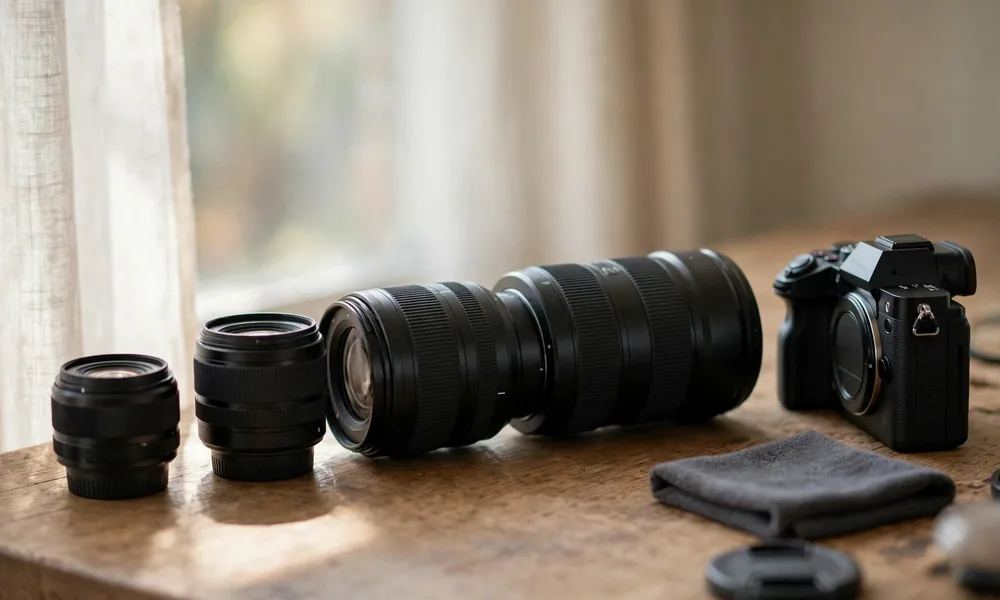
After that, buy lenses for the subjects you actually shoot: wide-angle for landscapes and interiors, telephoto for wildlife and sport, macro for flowers and small details. Resist buying every focal length at once: one or two lenses you know well serve you better than five you barely use. When you compare systems, look at the price and weight of the lenses you will want in two years, not just the body today.
How Much Should You Spend?
There are three sensible budgets in 2026. The first is the starter budget, around $500 to $900 for a body, kit lens, memory card and bag. This buys a capable APS-C mirrorless camera that is dramatically better than a phone, and it is the right budget for most first-time buyers. Our guide to the best cameras for beginners in 2026 looks at this price range in detail, with picks aimed squarely at people buying their first camera.
The second budget is the enthusiast budget, around $1,200 to $2,500, which buys a better body, a fast prime lens and perhaps a second zoom, with a real step up in low-light quality, weather sealing and burst speed. The third is the professional budget, $3,000 and above, for full-frame bodies and professional lenses. Most hobbyists never need this level, and the money is often better spent on travel, courses or lenses. Whatever your budget, reserve 15 to 20 percent for accessories: a spare battery, a fast memory card, a protective bag and a lens cloth.
Common Mistakes When Buying a Camera
The first mistake is buying the most expensive camera you can afford and then having nothing left for lenses. The second is buying for a fantasy version of yourself: the wildlife photographer who never leaves the city, or the vlogger who hates being on camera. Buy for the photography you actually do, not the photography you imagine. The third mistake is ignoring weight: a camera that weighs a kilogram with its lens will stay at home on the days when a lighter camera would have come along. The fourth mistake is buying without holding the camera first, because grip, button placement and menu design are personal.
Camera Buying Checklist
- Decide what you photograph most, and choose the camera type and sensor that suit those subjects.
- Compare autofocus performance and low-light image quality, not just megapixels.
- Check the price and weight of the lenses you will want in the next two years, not just the body.
- Hold the camera in a shop before you buy, and test the grip, menus and viewfinder.
- Reserve 15 to 20 percent of your budget for a spare battery, a fast memory card and a bag.
- Consider the previous generation: it often delivers nearly the same performance for far less money.
Frequently Asked Questions
What is the best camera for most people in 2026?
A mid-range APS-C mirrorless camera with a kit lens and a fast 35mm or 50mm prime lens. It is light enough to carry daily, strong in low light, fast to focus, and affordable enough to leave room for accessories.
Is a DSLR still worth buying in 2026?
Yes, if you already own DSLR lenses, or find a very good second-hand deal. A DSLR takes excellent photographs and its battery lasts far longer than most mirrorless cameras. For a brand-new buyer with no lenses, mirrorless is the better long-term choice.
Do I need a full-frame camera?
Most do not. APS-C cameras produce superb images for prints, social media and even paid work, and they are smaller and cheaper. Full-frame earns its keep in very dim light, for the shallowest depth of field, or for very large prints.
How many megapixels do I need?
Twenty-four megapixels is enough for almost everyone, including large prints up to A3 size. Higher resolutions help landscape photographers who print very large, but they mean larger files and slower workflows.
Should I buy a camera or just use my phone?
A phone is the best camera for everyday snapshots. A dedicated camera still wins for real optical zoom, better low-light performance, a soft portrait background, fast action tracking, or creative control over lenses and settings.
What is the first lens I should buy after the kit lens?
A fast prime lens, usually 35mm or 50mm with an aperture of f/1.8. It is affordable, small and sharp, and it transforms portraits and low-light shooting.
The Bottom Line
The best cameras in 2026 are the ones that fit your subjects, your hands and your budget, not the ones with the longest specification sheet. For most buyers, that means a mirrorless camera with an APS-C sensor, a kit lens and one fast prime, with money left over for a spare battery and a good bag. Compare sensors before megapixels, lenses before bodies, and weight before features. Then go and take photographs: the best camera is the one you carry.