Choosing the best camping tents for families in 2026 is one of the most important decisions you will make before your first trip of the season. A family tent is not just a place to sleep. It is your living room, dining room, changing room, and shelter from a sudden summer storm, all in one portable package.
Family tents have improved dramatically in recent years. Modern designs offer standing headroom, separate sleeping rooms, darkened rest zones that block early morning light, and full-coverage rainflies that genuinely keep water out. Materials are lighter, poles are stronger, and setup is faster than ever, which matters when you are pitching camp with tired children and fading daylight.
This guide compares the best camping tents for families in 2026 on the things that matter most: capacity, peak height, weather protection, ventilation, setup time, and value. Every tent below has been judged on real family use, not just spec sheets.
Key Takeaways
- Buy one size larger than the stated capacity, because ratings assume shoulder-to-shoulder sleeping with no gear inside.
- Look for a peak height of at least 72 inches so adults can stand up to dress and move around.
- A full-coverage rainfly and a bathtub floor matter most when a storm rolls in.
- Dark-rest bedrooms help children sleep past sunrise, which can save the whole trip.
- Practice pitching your tent at home once before your first trip, so setup takes minutes instead of an hour.

What Makes a Tent Great for Families
Family camping puts different demands on a tent than backpacking or solo trips. Weight matters less, because the tent travels in a car boot rather than on your back. Space, comfort, and weather protection matter far more. A tent that works for two adults on a hiking trip feels completely different with two adults, two children, and a pile of clothes and toys inside.
Space and Peak Height
The most common mistake families make is buying a tent that is too small. Tent makers rate capacity by how many sleeping pads fit on the floor, with no room for bags, shoes, or a wriggling child. A family of four should look at six-person tents as a minimum, and a family of five or six should consider eight-person models. Peak height matters just as much: 72 inches or more lets most adults stand upright. Cabin-style tents with near-vertical walls make the best use of their footprint.
Weather Protection
A family tent must handle rain, wind, and morning condensation without leaking. A full-coverage rainfly extends to the ground on every side, protecting the walls from wind-driven rain. Partial rainflies leave the lower walls exposed, and that is where leaks usually start. The floor should be a bathtub design, with waterproof material wrapping several inches up the sides. Ventilation matters too: a tent that seals tight but has no airflow fills with condensation overnight, leaving sleeping bags damp by morning.
Setup Time
When you arrive at a campsite with children, setup time matters more than almost anything else. The best family tents pitch in fifteen to twenty minutes with two adults, and some instant designs go up in under five minutes. Colour-coded poles, hub systems, and pre-attached rainflies all speed things up. If one parent usually pitches the tent while the other watches the children, a design one person can pitch alone is a real advantage.
Best Camping Tents for Families 2026
The tents below cover the full range of family needs, from compact models for small families to huge multi-room cabins for groups of eight. Each one earned its place through a combination of space, weather protection, ease of setup, and value.
| Tent | Sleeps | Peak Height | Weight | Best For |
|---|---|---|---|---|
| REI Co-op Wonderland 6 | 6 | 78 in | 27 lb | Overall best family tent |
| Coleman Skydome 8-Person | 8 | 72 in | 28 lb | Best value for large families |
| Kelty Wireless 6 | 6 | 74 in | 19 lb | Best lightweight family tent |
| Core 9-Person Instant Cabin | 9 | 78 in | 36 lb | Fastest setup |
| Marmot Limestone 6P | 6 | 76 in | 21 lb | Best in bad weather |
| Ozark Trail 10-Person Dark Rest | 10 | 76 in | 32 lb | Best for sleep and big groups |
REI Co-op Wonderland 6: Best Overall
The REI Co-op Wonderland 6 is the best all-round family tent of 2026 because it gets the balance right. It sleeps six comfortably, with a 78-inch peak height and near-vertical walls that make the full 100 square feet of floor genuinely usable. A divider splits it into two rooms, and the huge front vestibule works as a mudroom for wet gear. The full-coverage rainfly and deep bathtub floor held up well in heavy rain and strong wind.
Coleman Skydome 8-Person: Best Value
The Coleman Skydome 8-Person is the best value family tent you can buy in 2026. It sleeps eight, offers a 72-inch peak height, and costs far less than premium rivals while covering the essentials well. The tent pitches in about ten minutes, and the wide door makes it easy to carry air mattresses inside. The WeatherTec system, with welded floors and inverted seams, keeps rain out in all but the worst storms.
Kelty Wireless 6: Best Lightweight Option
The Kelty Wireless 6 is the tent to choose if you want family comfort without a back-breaking packed weight. At just 19 pounds it is far lighter than most six-person tents, yet it still offers a 74-inch peak height and 84 square feet of floor. The secret is a hubbed pole design that uses fewer, stronger poles, plus a lightweight but durable fly fabric. The two doors mean nobody has to climb over anyone else for a midnight bathroom trip.
Core 9-Person Instant Cabin: Fastest Setup
The Core 9-Person Instant Cabin pitches in under five minutes thanks to pre-attached telescoping poles that simply extend and lock. For families arriving at camp late, or pitching in the rain, that speed is worth a lot. The tent sleeps nine across 144 square feet, with a 78-inch peak height and near-vertical walls that make the interior feel like a small room. A divider splits the space into two bedrooms, and the large windows give excellent airflow on hot days.
Marmot Limestone 6P: Best in Bad Weather
The Marmot Limestone 6P is the tent for families who camp where the weather cannot be trusted. Its strong pole structure, full-coverage fly, and clever zone construction give it the best wind and rain performance of any tent in this guide. The poles cross to create near-vertical walls and a very rigid frame, so it stays stable in gusts that would flatten cheaper tents. Inside, the 76-inch peak height and 83 square feet of floor give a family of four plenty of room.
Ozark Trail 10-Person Dark Rest: Best for Sleep
The Ozark Trail 10-Person Dark Rest solves the problem every camping parent knows: children waking at dawn because the sun comes up at 5 a.m. Its dark-rest fabric blocks most daylight from the sleeping areas, so the tent stays dark and cool well into the morning. The tent sleeps ten across three rooms, with a 76-inch peak height and a huge 196 square feet of floor space. Setup takes about twenty-five minutes with two people.

How to Choose the Right Size
Choosing the right tent size starts with an honest count of who is sleeping inside and what gear is coming in with them. Count every person, then add one to the stated capacity for comfort: a family of four should buy a six-person tent, a family of five should look at eight-person models, and a family of six should consider ten-person tents. If you bring cots instead of sleeping pads, you need even more space, since cots take up far more room than pads.
What to Pack With Your Family Tent
A great tent is only half the camp setup. A footprint or groundsheet under the tent protects the floor from stones and damp, and it extends the life of the tent by years. Bring a mallet for stakes, extra guy lines for windy nights, and a small repair kit, because a torn tent on day one ruins the whole trip. For cooking, one of the best camping stoves will boil water and cook dinner far faster than a campfire alone. Mornings run smoother too, which is why many families also pack one of the best tea kettles for camping for coffee and cocoa at the picnic table.
Family Camping Checklist
Use this checklist before every trip so nothing important gets left behind. Run through it the night before you leave, while there is still time to fix any gaps.
- Pitch the tent at home first and check every pole, stake, and guy line is present and undamaged.
- Pack a footprint or groundsheet sized to your tent, plus a mallet and spare stakes.
- Bring sleeping pads or air mattresses for every person, and test them for leaks before the trip.
- Pack a lantern, a headlamp per person, and spare batteries for every light you carry.
- Store food in sealed containers and keep it away from the tent at night to avoid attracting animals.
- Check the weather forecast for your campsite and pack extra rain gear if storms are possible.
Setting Up Your Tent Without the Stress
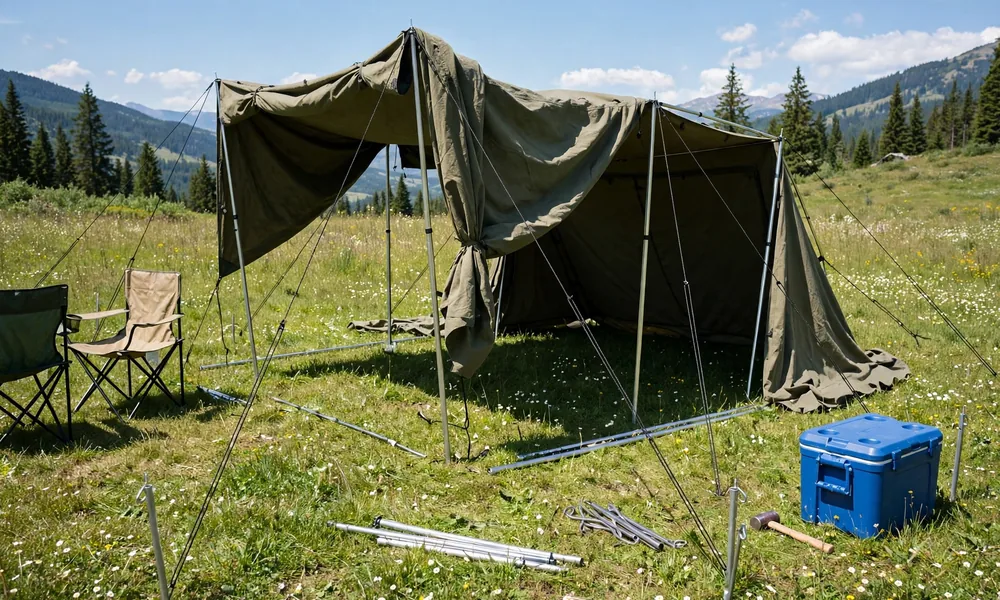
Setting up a family tent is a skill, and like any skill it gets easier with practice. The first time you pitch a new tent should be in your garden, not at a campsite in the rain. At the campsite, pick your pitch before you unpack anything: look for flat, slightly raised ground that will drain in rain, and avoid hollows where water collects. Give children a job, such as holding poles or sorting stakes, so they feel involved instead of bored. Once the tent is up, a family walk from camp is the best way to spend the afternoon, and the best hiking backpacks are worth packing for exactly that.
Frequently Asked Questions
What size tent does a family of four need?
A family of four should buy a six-person tent as a minimum. Manufacturer ratings assume people sleeping shoulder to shoulder with no gear inside, so a four-person tent is genuinely cramped for four people.
Are instant tents as good as regular tents?
Instant tents are excellent for families who value fast setup, and modern designs are sturdy and weatherproof enough for most car camping. They are heavier and bulkier than pole tents, but for fair-weather camping they are a great choice.
How do I stop condensation inside a family tent?
Condensation happens when warm, moist air from breathing meets the cold tent walls. Reduce it by opening vents and windows, even in light rain, and by keeping wet gear in the vestibule rather than inside.
Can I use a family tent in winter?
Most family tents are three-season designs built for spring, summer, and autumn. They are not made for snow loads or freezing temperatures, and using one in winter risks collapsed poles and a very cold night. For winter camping, look for a dedicated four-season tent.
How long should a good family tent last?
A well-made family tent should last at least five to eight years of regular use, and often much longer with care. The main things that shorten a tent’s life are UV damage, mould from packing it away wet, and floor damage from rough ground. Always dry your tent fully before storing it.
Do I need a footprint for my tent?
A footprint is not strictly essential, but it is one of the best value accessories you can buy for a family tent. It protects the floor from punctures and abrasion, and adds a layer of waterproofing.
The Bottom Line
The best camping tent for most families in 2026 is the REI Co-op Wonderland 6, thanks to its standing headroom, two-room layout, and excellent weather protection. Families on a budget should look at the Coleman Skydome 8-Person, which offers huge space for far less money, while those who hate long setups will love the Core 9-Person Instant Cabin. Whatever you choose, remember the golden rule: buy one size bigger than you think you need, practice pitching it at home, and always stake it down properly.