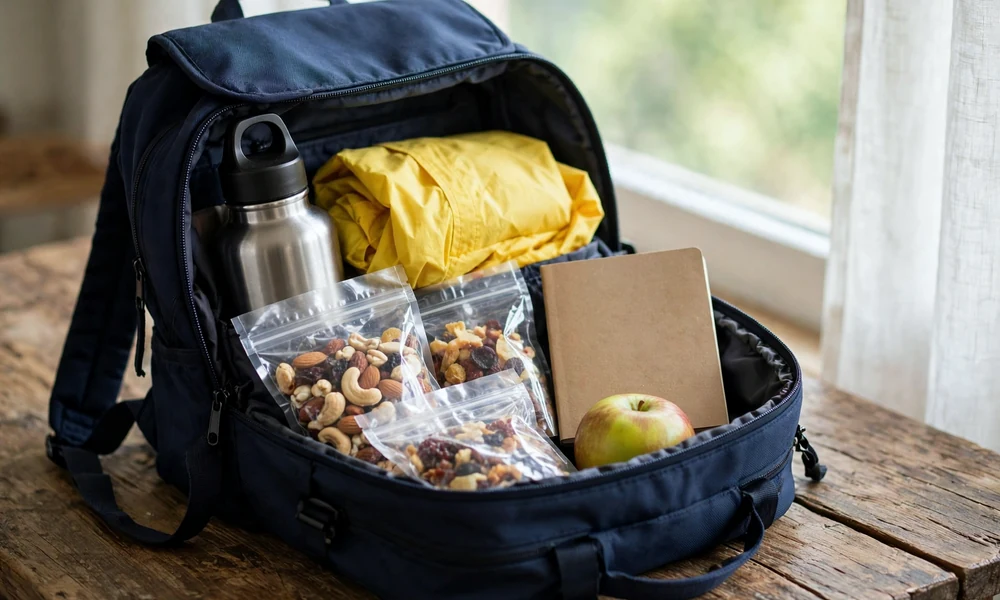
A daypack is the bag you grab when the day has a plan but no luggage. It holds water, a jacket, lunch, a phone charger and whatever the trail or the city throws at you, and it does it without turning your shoulders into a complaint by lunchtime. The best daypacks of 2026 are small on purpose, usually between ten and thirty litres, and they are built around one idea: carry only what the day needs, and carry it well. Get that balance wrong and you end up with a bag that is either a cavern you rummage through or a tight pouch that forces you to leave the rain jacket behind.
What Makes a Daypack Different
A daypack is not a small travel backpack and it is not a school bag with a new label. A travel backpack is built to swallow several days of clothes and to survive being stuffed into an overhead bin, while a daypack is built to be opened and closed a dozen times in a single day. That changes everything about how it should be designed. The main compartment should open wide enough that you can see what is inside without tipping the whole bag upside down on a bench. The pockets should be where your hands expect them: a quick-access pocket for a phone and keys, side pockets that actually hold a water bottle while you walk, and a small zipped pocket for the things you never want to lose.
Weight matters more here than in almost any other kind of bag, because the whole point is that you forget you are wearing it. A daypack that weighs a kilogram before you put anything in it has already failed, however good its fabric looks. The best daypacks of 2026 use light but tough nylon or polyester, with the heavy reinforcement saved for the base and the lower corners where the bag meets the ground. A good daypack should feel almost empty on your back when it holds a bottle, a jacket and lunch, and it should never pull you backwards the way an overloaded travel pack does.
Size: Ten to Thirty Litres, and Why It Matters
Size is the first decision, and it is the one most people get wrong by buying too big. A ten to fifteen litre pack is right for a short walk, a city day or a light school load: water, a snack, a phone, keys and a thin jacket. It sits close to your back, it never bangs into door frames, and you can wear it on a crowded bus without apologising to everyone around you. Go smaller than ten litres and the bottle no longer fits, which defeats the purpose of the bag entirely.
A twenty to twenty-five litre pack is the sweet spot for most people. It holds a full water bottle or a hydration bladder, a proper rain jacket, lunch, a first-aid pouch and a book or a small tablet, with room left over for a layer you take off at midday. A thirty litre pack suits a long hike or a day that includes work gear, but beyond thirty litres you are no longer carrying a daypack: you are carrying a weekend bag, and your shoulders will know the difference by the afternoon. If you need a bigger bag for a longer trip, our guide to the best travel backpacks for day trips covers packs built for exactly that job, while a daypack stays focused on a single day out.
The Best Daypacks for Hiking
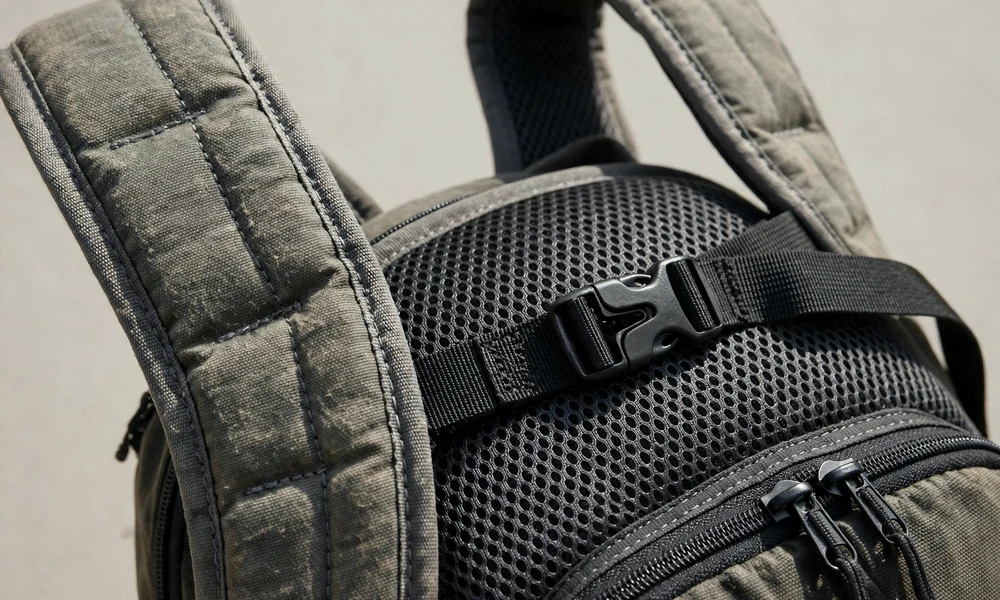
On the trail, a daypack earns its keep through fit and ventilation. Look for a mesh back panel that lets air move between the bag and your back, because a solid panel turns into a sweat patch within the first hour of a climb. Shoulder straps should be wide, padded and shaped to sit flat, with a sternum strap that stops them sliding off your shoulders on a steep section. A hip belt helps even on a small pack: it takes a surprising amount of weight off your shoulders when the bag is full of water, and it stops the pack bouncing when you pick up the pace downhill.
Hydration is the other hiking essential. A good hiking daypack has a sleeve for a water bladder and a small port for the drinking tube, plus side pockets deep enough that a bottle does not fall out when you bend to tie a boot. Compression straps are worth having too: they pull the load close to your back when the pack is half empty, so it does not swing around. And if you hike in changeable weather, a rain cover that lives in its own pocket at the base of the bag is worth more than any waterproofing claim on the fabric, because it keeps the whole pack dry in minutes. For the rest of your wet-weather kit, our guide to the best rain jackets for hiking pairs naturally with any pack on this list.
The Best Daypacks for the City
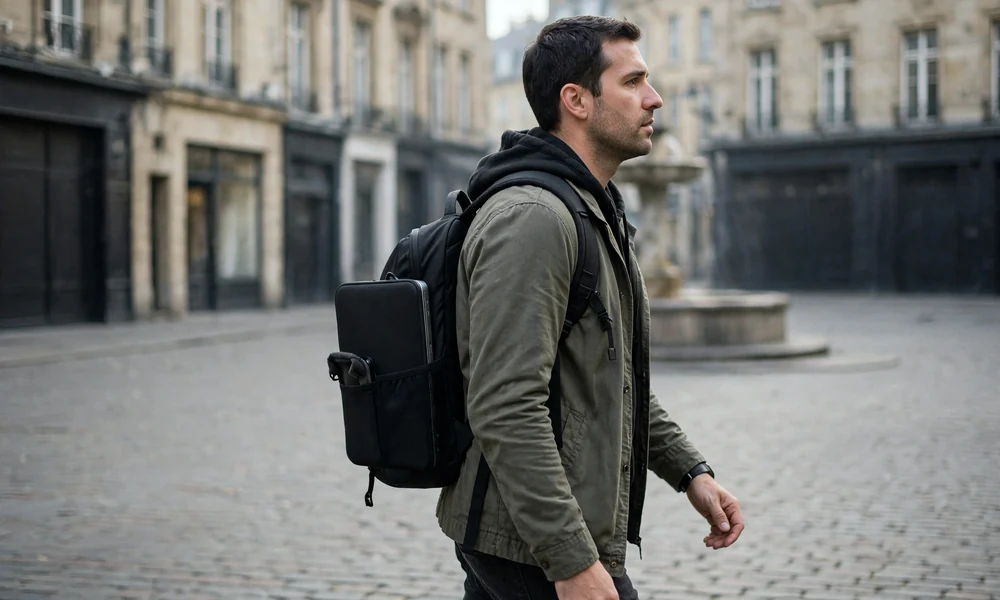
A city daypack has a different job: it has to look at home in an office, a gallery and a cafe, while still holding a laptop, a charger, a bottle and a book. The best city daypacks hide their practicality behind a clean shape. The laptop sleeve should be padded and suspended slightly above the base of the bag, so a careless set-down does not send a shock straight into the machine. A sleeve that fits a thirteen or fourteen inch laptop is enough for most people, and a bag built around a huge laptop ends up looking like luggage.
Organisation matters more in the city than on the trail, because you open the bag in public and you want to find things without a performance. A front organiser pocket with slots for pens, cards and cables keeps the main compartment free for the big things, and a hidden pocket against your back is the right place for a wallet or a passport. Water resistance matters here too, but for a different reason: a city pack gets caught in sudden showers and set down on wet pavement, so a water-repellent coating and a base that does not soak up puddles are the features that keep your laptop dry.
The Best Daypacks for School and Everyday Carry
For school and everyday use, durability beats cleverness. A school daypack gets dropped, dragged, stuffed into a locker and sat on, so the zips and the stitching matter more than the number of pockets. Look for chunky zips that a cold hand can pull without a struggle, bartacked stitching at the strap joins, and a base panel that can handle being set down on concrete day after day. A pack that survives a school year without a torn seam is a better buy than a lighter pack that falls apart by Christmas.
Comfort counts for younger wearers more than anyone else, because a heavy or badly fitting bag is carried for hours every day. The pack should be no wider than the wearer’s shoulders, the straps should adjust small enough to actually fit, and the load should sit high on the back rather than hanging low and pulling backwards. A chest strap helps here too, especially on a walk to school. Keep the total weight, bag plus contents, as low as you can: a daypack that forces a child to lean forward to balance it is the wrong size, whatever the label says.
Packing a Daypack Properly
Even the best daypack feels bad when it is packed badly, and packing well is a skill that takes about a minute to learn. Put the heaviest things, usually water and food, closest to your back and in the middle of the pack, not at the bottom and not at the front. That keeps the weight over your hips and stops the bag pulling you backwards. Put the things you need often, like a phone, sunscreen or a snack, in the top pocket or the side pockets, and bury the things you will only need in an emergency, like a first-aid kit or a spare layer, at the bottom.
Weather, Zips and Fabric
Rain is the honest test of a daypack, and the marketing language around it is worth reading carefully. Water-resistant means the fabric will shrug off a light shower; waterproof means the bag can be submerged, which almost no daypack is. For a day out, water-resistant fabric plus a rain cover is the practical combination, and it is better than a fully waterproof bag with no ventilation that leaves your back soaked from the inside. Sealed seams help, but they matter less than a good rain cover and a sensible packing routine that keeps electronics in a dry bag or a zipped inner pocket.
Zips are the part of a daypack that fails most often, so they deserve a close look before you buy. A good zip runs smoothly when the bag is full, not only when it is empty, and it should have a pull that you can grip with gloves on. Two-way zips on the main compartment are worth having because they let you open the top of the bag without unzipping the whole thing. On fabric, look for a denier rating that matches the job: around 210 to 420 denier is light and fine for city and light trail use, while 600 denier and above is the tougher choice for rough ground and daily school abuse.
Mistakes to Avoid
The most common mistake is buying a daypack for the trip you imagine rather than the days you actually have. A huge pack bought for one imagined mountain weekend will spend the rest of the year half empty and uncomfortable, while a right-sized pack gets used every week. Buy for the ordinary day: the walk, the commute, the school run, the museum visit. If a bigger trip comes along, that is what a larger bag is for, and our guide to the best carry-on backpacks for weekend trips covers packs built to hold several days of kit without becoming a burden.
The second mistake is ignoring fit. Two packs with the same litre rating can feel completely different on the same back, because torso length, strap shape and back panel design all change how the weight sits. If you can, try the pack on with the weight you will actually carry, walk around the shop, and bend, reach and sit down in it. A pack that feels fine empty and terrible full is a pack you will stop using. And never buy a daypack without checking the return policy: a bag that looks right on a screen and wrong on your back should be easy to send back.
The Verdict
The best daypack is the one that disappears on your back and reappears exactly when you need it, with the water, the jacket and the phone all where your hands expect them. Buy for your real days, not your imagined ones: twenty litres for most people, smaller for the city, with a ventilated back, honest zips and a rain cover in its own pocket. Get those things right and the brand on the label matters far less than the fit on your shoulders. A good daypack does not make the day; it simply gets out of the way and lets the day happen, which is exactly what it is for.