
Top Drying Racks for Small Laundry Rooms in 2026
A drying rack is the most useful thing in a small laundry room, and the easiest to get wrong. The right one holds a full load, folds away to almost nothing, and lets air move freely around every garment. The wrong one wobbles under wet towels, blocks the door, and leaves clothes damp for two days. The top drying racks for small laundry rooms in 2026 are not the biggest: they fit the room you have, hold wet laundry without sagging, and disappear when the washing is done. This guide covers the types that work in tight spaces, how to size one, and what to check before you buy.
Key Takeaways
- Measure first: a rack that fits your floor space with room to walk past matters more than its metres of drying line.
- Wet laundry is heavy: a full load of towels can weigh over ten kilograms, and a weak rack will sag or tip.
- Airflow dries clothes, not heat alone: space garments apart, keep the rack away from walls, and open a window or door a crack.
- A rack that folds flat and stands on its own is worth more in a small room than a bigger one with nowhere to live between loads.
- Metal racks outlast plastic in a damp room, and wide, smooth bars leave fewer creases than thin wires.
Why Air-Drying Wins in a Small Home
Air-drying costs almost nothing, treats clothes gently, and needs no vent or duct. In a small home without space for a tumble dryer, a good rack is the whole drying system. Clothes last longer without high heat: elastic stays springy, prints do not crack, and colours fade more slowly. A rack also dries the things a dryer should never touch, such as wool jumpers, delicates, and anything with a rubber print.
The trade-off is time and space: air-drying takes hours, and a loaded rack occupies floor space while it works. A rack that holds a full load in a small footprint, folds away flat, and lets air circulate freely will dry a load overnight; one that crowds clothes against a wall will still be damp next morning. The goal is not the biggest rack, but the one that dries a load fastest in the space you have.
The Main Types of Drying Rack
Six designs dominate the market, each suiting a different kind of small space. The right choice depends on your floor area, your ceiling height, and what you wash most.
Folding Accordion Racks
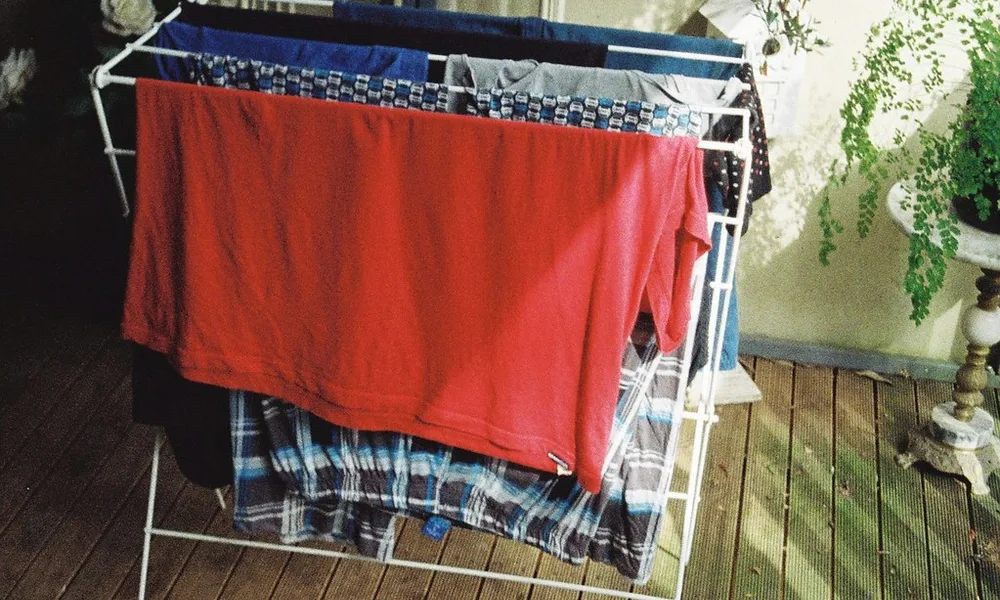
The classic folding rack, sometimes called a gullwing rack, opens into an A-frame with bars on both sides and wings on top. It holds a full load, folds flat to a few centimetres, and costs less than most alternatives. It is the best all-rounder for a small laundry room, provided you have a patch of floor about a metre wide. Look for a locking hinge, because a rack that collapses under wet towels is worse than no rack at all.
Wall-Mounted Racks
A wall-mounted rack folds down from the wall when needed and flat against it when not, so it uses no floor space at all. It suits a room with a free stretch of wall and keeps the floor clear. The catch is capacity: most wall racks hold less than a folding rack, and they need solid fixings, because a loaded rack pulls hard on its screws.
Ceiling Pulley Racks
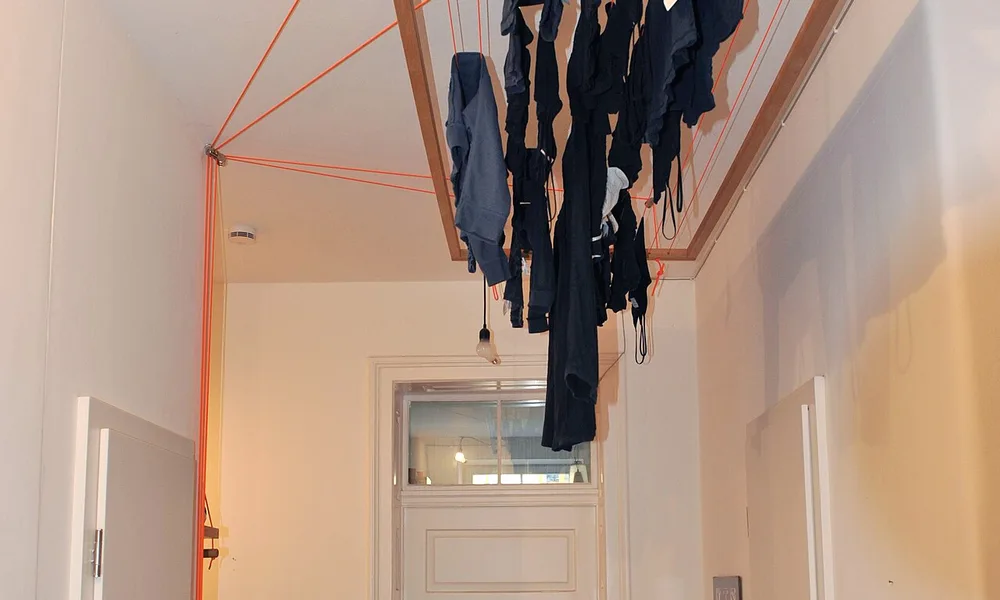
A ceiling rack hangs from pulleys above head height, so it uses space that is otherwise wasted. You lower it to load, hoist it up to dry, and the warm air near the ceiling dries clothes faster. It is the best choice for a very small room with a high ceiling. It needs a solid ceiling fixing and a little practice, but once fitted it is the most space-efficient drying there is.
Heated Racks
A heated rack is an electric frame with warm bars that dries clothes faster than air alone, especially in a cold or damp room. It uses far less electricity than a tumble dryer and is gentler on clothes. It suits a home where laundry must dry overnight in winter, or a room with no window. The downsides are the running cost, the power lead, and the fact that it cannot fold as flat as a plain rack. Never drape plastic or rubber-backed items over a heated bar.
Over-Door and Tiered Racks
An over-door rack hooks over a door and holds a few items, which suits a flat with no laundry room. A tiered rack stacks two or three levels in a small footprint, which suits delicates. Neither holds a full family load, so think of them as second racks: a tiered rack for socks and underwear, an over-door rack for shirts. Pairing a main folding rack with a small tiered one is often the best setup for a tight room, and the same logic applies to the laundry basket that keeps dirty clothes sorted.

Comparison Table: Which Rack Fits Your Room
| Type | Best for | Capacity | Floor space | Price range |
|---|---|---|---|---|
| Folding accordion | Most small rooms | Full load | About 1 square metre | Low to medium |
| Wall-mounted | Clear floors | Half to full load | None | Low to medium |
| Ceiling pulley | High ceilings | Full load | None | Medium |
| Heated | Cold, damp rooms | Full load | About 1 square metre | Medium to high |
| Over-door / tiered | Flats, delicates | Small load | Almost none | Low |
Sizing a Rack for a Small Laundry Room
Start with the room, not the rack. Measure where the rack will stand, then subtract the space to walk past it, open the washer door, and reach the shelves. A rack that leaves you squeezing past it will be folded away and forgotten within a week. Most folding racks need about a metre by sixty centimetres open. If that does not fit, a wall-mounted or ceiling rack is the honest answer, not a smaller folding rack that cannot hold a load.
Capacity is measured in metres of drying line, but that number hides as much as it reveals. Ten metres sounds generous, but if the bars are close together, clothes overlap and air cannot reach them. What matters is usable line with space between garments: fifteen to twenty metres of well-spaced line holds a full wash load, while ten metres suits a half load. Check the weight rating too: wet towels are the test, because a rack that holds shirts easily can still sag under four wet bath towels.
Airflow: The Part Most People Forget
Clothes dry because moving air carries moisture away, not because the room is warm. A rack pushed against a wall dries slowly on the wall side, because air cannot get behind the clothes. Leave a gap of a few centimetres between rack and wall, space garments so they do not touch, and open a window or door a crack to let damp air out. In a windowless room, a small fan aimed at the rack cuts drying time more than any heater.
Bar shape matters more than it looks. Wide, smooth, coated bars leave fewer creases than thin bare wires, which can press lines into damp fabric that survive ironing. Plastic-coated bars are kinder to clothes than bare metal and do not rust. If your rack has thin wires, drape clothes over two bars, or use hangers for shirts. Never overload: a packed rack dries slower than the same load spread out, because the air cannot move. If clothes smell musty after drying, the cause is usually slow drying, not dirt, and the fix is airflow. Choosing the right laundry detergent for sensitive skin helps, but no detergent can save a load that sat damp for two days.
What to Check Before You Buy
Stability comes first. Set the rack up in the shop if you can, press down on the top bars, and rock it gently. A good rack feels rigid and planted; a bad one flexes and wobbles. Check the feet: wide, non-slip feet grip a tiled floor, while narrow feet slide. Check the hinges: they should lock open firmly and fold without pinching. Stainless steel or powder-coated frames resist rust far better than plain steel or cheap plastic, and carry more weight without bending.
Think about where the rack lives between loads. One that stands on its own behind a door is easy to grab; one balanced against a wall will fall over. Measure the folded thickness too: five centimetres fits behind most doors, fifteen does not. Finally, check the warranty and spare parts: hinges and feet wear out first, and a maker that sells replacements will last years longer than a cheaper one that cannot be repaired.
Six-Point Checklist Before You Buy
- Measure the floor space and the walking route, and make sure the rack fits with room to pass it and open the washer door.
- Check the weight rating and the frame: it should hold wet towels without sagging, with a locking hinge and wide non-slip feet.
- Count usable drying line with space between garments, not total metres, and aim for fifteen to twenty metres for a full load.
- Choose wide, smooth, coated bars that will not press lines into damp fabric or rust in a damp laundry room.
- Make sure it folds flat enough to store behind a door and stands on its own when folded.
- Leave room for air: keep the rack a few centimetres from the wall, space clothes apart, and ventilate while it dries.
Frequently Asked Questions
How long does laundry take to dry on a rack?
Light clothes dry in four to eight hours in a ventilated room, while heavy towels and jeans can take twelve to twenty-four hours. Airflow matters more than temperature: a rack near an open window dries faster than one in a warm, still room.
Can I use a drying rack in a room with no window?
Yes, but you must ventilate: open the door, run a small fan, or use a dehumidifier. Without air movement, drying slows to a crawl and the room can grow mould. Never dry laundry in a sealed, unventilated room.
Are heated drying racks worth it?
In a cold or damp home, yes: they dry a load faster than air alone and cost far less to run than a tumble dryer. They are gentler than a dryer, but cannot fold as flat, need a power socket, and are not suitable for plastic or rubber-backed items.
How do I stop clothes getting creases from the rack bars?
Use wide, coated bars, drape clothes over two bars, and hang shirts on hangers hooked over the rack. Shake each garment out before hanging, smooth it flat, and take clothes down as soon as they are dry.
What is the best drying rack for a very small flat?
A wall-mounted rack or a ceiling pulley rack, because neither uses floor space. If you cannot fix anything to the wall or ceiling, a compact tiered rack plus an over-door rack will handle a single person’s laundry. The same small-space thinking helps elsewhere: dryer balls that beat dryer sheets are a small change that makes a real difference to drying.
How much weight can a drying rack hold?
A good full-size folding rack holds ten to fifteen kilograms, which covers a normal wash load including towels. Cheap racks may claim the same but sag under half that. Check the rating, look for a steel frame with a locking hinge, and test it with wet towels first.
The Bottom Line
The best drying rack for a small laundry room fits your space, holds a full wet load without sagging, and folds away to almost nothing when the washing is done. Measure the room first, choose wide coated bars and a solid steel frame, and give the clothes room to breathe. Do that, and a simple rack will dry a load overnight, cost almost nothing to run, and keep clothes in better shape than any tumble dryer.


