
Drywall Anchors That Hold Heavy Frames in 2026
Drywall anchors that hold heavy frames in 2026 are the difference between a picture that hangs straight for years and one that lands on the floor at two in the morning. A screw driven straight into plasterboard grips almost nothing: the board is a thin skin of gypsum between two sheets of paper, and it crumbles under a steady pull. An anchor spreads that pull across a much wider area, behind the board or through it, so the weight of a heavy frame, a mirror or a cabinet is carried by the wall itself rather than by a single point of crumbling plaster.
Key Takeaways
- A screw alone cannot hold a heavy frame in drywall: the board crumbles under a steady pull, so the fixing must spread the load behind or across the board.
- Toggle bolts and molly bolts carry the most weight, often 30 kilograms or more per fixing, while self-drilling anchors suit medium frames and plastic plugs suit light ones only.
- Find the stud first: a screw into solid timber beats any anchor, and our guide to stud finders that hit the stud first time shows how to locate one reliably.
- Match the anchor to the board thickness and the frame weight, and always use two fixings for a heavy frame so the load is shared and the frame stays level.
- Drill the hole to the size the anchor needs, never larger, and test the fixing with a firm pull before you hang anything valuable on it.
What a Drywall Anchor Actually Does
A drywall anchor is a fixing that grips plasterboard where a screw cannot. An anchor changes the physics: instead of relying on the thin board at one point, it either opens out behind the board, like a toggle or a molly bolt, or it cuts a wide thread through the board itself, like a self-drilling anchor, so the force is spread over a far larger area.
That spreading is what the weight ratings mean. When a packet says an anchor holds 30 kilograms, it means the anchor, correctly fitted in sound 12.5 millimetre board, can carry that load in a straight downward pull without failing. Treat the packet rating as a maximum, not a target, and keep the real load well under it.
The Main Types of Drywall Anchor
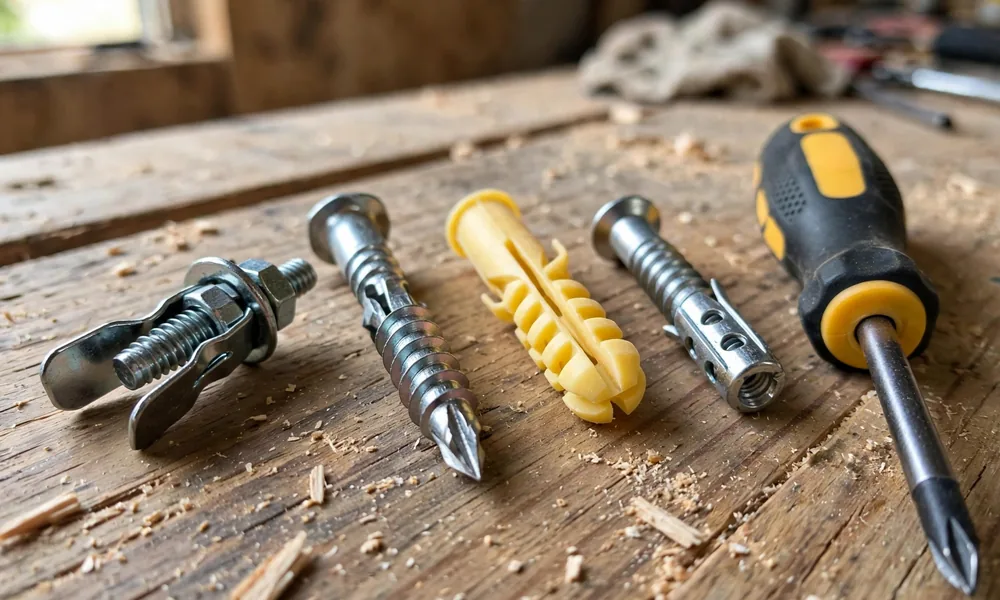
There are five types worth knowing, and they cover every frame from a small print to a heavy gilt mirror.
Toggle Bolts
A toggle bolt is the strongest common drywall anchor. It has a spring-loaded pair of wings on a long bolt: you fold the wings, push them through a drilled hole, and they spring open behind the board. Tightening the bolt pulls the wings flat against the back of the plasterboard, spreading the load across a wide area.
Molly Bolts
A molly bolt, also called a hollow-wall anchor, is a metal sleeve that collapses behind the board as you tighten it. Molly bolts hold roughly 20 to 30 kilograms each, and unlike a toggle they stay in the wall when the screw is removed, so you can take a frame down and put it back without drilling a new hole.
Self-Drilling Anchors
A self-drilling anchor is a metal or heavy-duty plastic screw with a wide, sharp thread that cuts its own way into the plasterboard, with no drilling needed. You drive it in with a screwdriver or a drill, then drive the frame screw into its centre. These are the quickest anchors to fit and the easiest to remove, and they hold about 15 to 25 kilograms each in sound board.
Plastic Expansion Plugs
A plastic expansion plug is the small ribbed sleeve most people know from flat-pack furniture. You drill a hole, tap the plug in, and drive a screw into it so the plug expands against the sides of the hole. In drywall they hold only about 5 to 10 kilograms, because the plug grips the thin board rather than spreading behind it.
Adhesive and Picture-Hanging Strips
Adhesive strips have their place, but it is not under a heavy frame. The best strips hold a few kilograms on a clean, smooth wall, and they fail without warning when the adhesive ages, the wall gets warm, or the paint underneath lets go. For anything heavy, valuable or hung above furniture, a mechanical anchor is the only sensible choice.
How Much Weight Can Each Anchor Hold?
Weight ratings assume perfect conditions: sound board, the right size hole, and a load that hangs still. As a rule, keep the real load at no more than half the packet rating for anything you value, and use two fixings wherever the frame allows it.
| Anchor type | Typical load per fixing | Best for | Needs a drilled hole |
|---|---|---|---|
| Toggle bolt | 30 to 45 kg | Heaviest frames, large mirrors, cabinets | Yes, large |
| Molly bolt | 20 to 30 kg | Heavy frames that may come down again | Yes |
| Self-drilling anchor | 15 to 25 kg | Medium frames, the best all-rounder | No |
| Plastic expansion plug | 5 to 10 kg | Light frames, small clocks, hooks | Yes, small |
| Adhesive strip | 2 to 5 kg | Light frames in rented homes only | No |
The table is a starting point, not a guarantee. Board thickness matters: a toggle rated for 40 kilograms in 12.5 millimetre board may hold far less in 9.5 millimetre board, and board that has been damp, patched or drilled before is weaker than fresh board.
Choosing the Right Anchor for Your Wall
Start with the frame, not the anchor. Weigh it on bathroom scales, including the glass and the frame, then decide how many fixings it will hang from. A frame with a single wire needs one strong fixing, and that is where a toggle or a molly bolt earns its place.
Then check the wall. If a stud runs behind either hanging point, use it. A long screw into a stud holds more than any anchor in plasterboard, and it costs nothing extra. If there is no stud where the frame must go, which is most of the time, pick the anchor from the table above and buy one size stronger than you think you need.
How to Fit a Drywall Anchor Properly
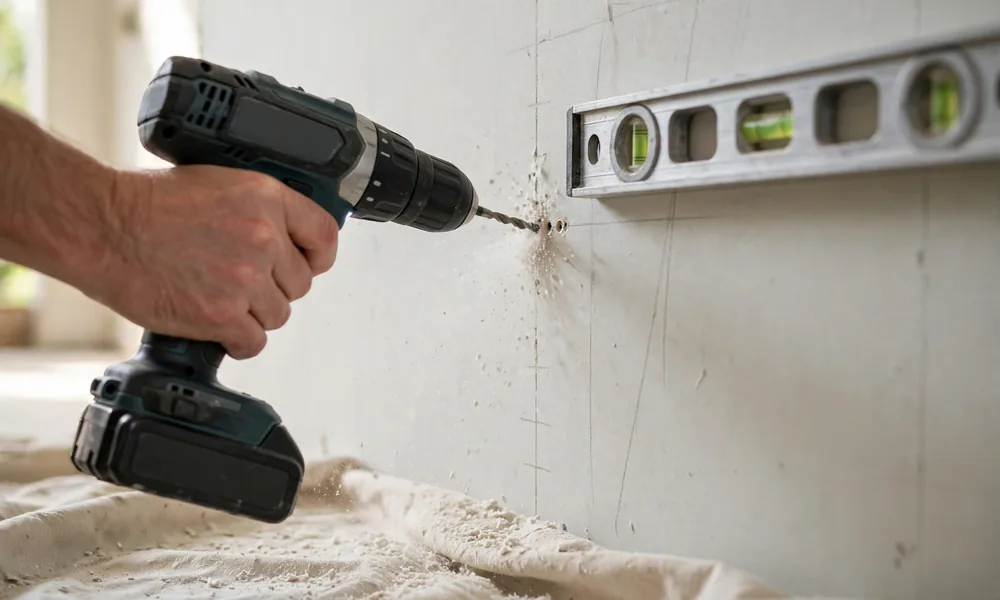
Mark the hanging points with a pencil, check them with a level, and measure twice before you drill anything. Our guide to why a good level is the tool you reach for most covers the checking part in detail, and it is worth reading before you mark the wall.
Drill the hole to exactly the size the anchor packet specifies. Too small and the anchor will not go in without force, which cracks the board around the hole; too large and the anchor will spin or pull through under load. Tighten the screw slowly, feeling for the moment the anchor grips, and stop as soon as it is firm. Over-tightening is the most common fitting mistake: it strips the thread or crushes the plaster around the hole, and a stripped anchor holds nothing at all.
Before you hang the frame, test the fixing. Pull it firmly downwards and outwards with your hand, harder than the frame will ever pull. If it moves, flexes or creaks, take it out and fit a stronger anchor in a fresh hole a few centimetres away.
Mistakes That Make Anchors Fail
The first mistake is trusting the fixings that came with the frame. Manufacturers ship the cheapest plug that fits the box, not the anchor your wall needs, and those plugs are sized for solid walls as often as for drywall.
The third mistake is drilling into a damp or damaged patch of board and expecting it to hold. Plasterboard that has been wet, even once, loses much of its strength, and board around an old fixing is already weakened by the first hole.
Anchors, Shelves and Hooks: What Changes
A floating shelf is harder: it pulls down and out at the same time, and the leverage of a loaded shelf multiplies the force on the fixings. That is why shelves need toggles or molly bolts even when a frame of the same weight would be fine on self-drilling anchors. Our guide to floating shelves that display without the clutter covers shelf fixings in detail, and its weight advice is stricter than this guide for good reason.
Hooks are the opposite: a wall hook for coats pulls down and out with every coat hung and taken off, but the loads are small and the hook itself is the weak point more often than the fixing.
Checklist: Hanging a Heavy Frame
- Weigh the frame with its glass and hanging wire, then choose an anchor rated for at least twice that weight per fixing.
- Scan for a stud first and use it if one sits behind a hanging point.
- Mark both hanging points, check them with a level, and measure twice before drilling.
- Drill exactly the hole size the anchor packet specifies, straight and no larger.
- Fit the anchor without forcing it and stop tightening as soon as it grips firmly.
- Pull-test every fixing by hand before hanging the frame, and use two fixings wherever the frame allows it.
Frequently Asked Questions
Can I hang a heavy frame with just a screw in drywall?
No. A screw in plasterboard alone grips soft gypsum and strips out under a steady pull, often within days. Use an anchor, or drive the screw into a stud if one is behind the hanging point.
Which drywall anchor holds the most weight?
A toggle bolt holds the most, typically 30 to 45 kilograms per fixing in sound 12.5 millimetre board, because its wings spread the load across a wide area behind the wall. Molly bolts are the next strongest.
How do I know if my wall is drywall or solid plaster?
Tap it: drywall sounds hollow and gives slightly under a knuckle, while plaster on brick sounds solid and dull. A stud finder also tells you where the timber sits, which only drywall walls have in this pattern.
Can I reuse a drywall anchor hole?
A molly bolt stays in the wall and can be reused, and a self-drilling anchor can sometimes be refitted in the same hole. A toggle bolt cannot, because its wings fall behind the wall when the bolt is removed, so you need a fresh hole.
What size hole should I drill for a drywall anchor?
Exactly the size printed on the anchor packet, which varies by type and brand. Too small cracks the board, too large lets the anchor spin or pull through, so measure the drill bit rather than guessing.
Is it safe to hang a heavy mirror above a bed or sofa?
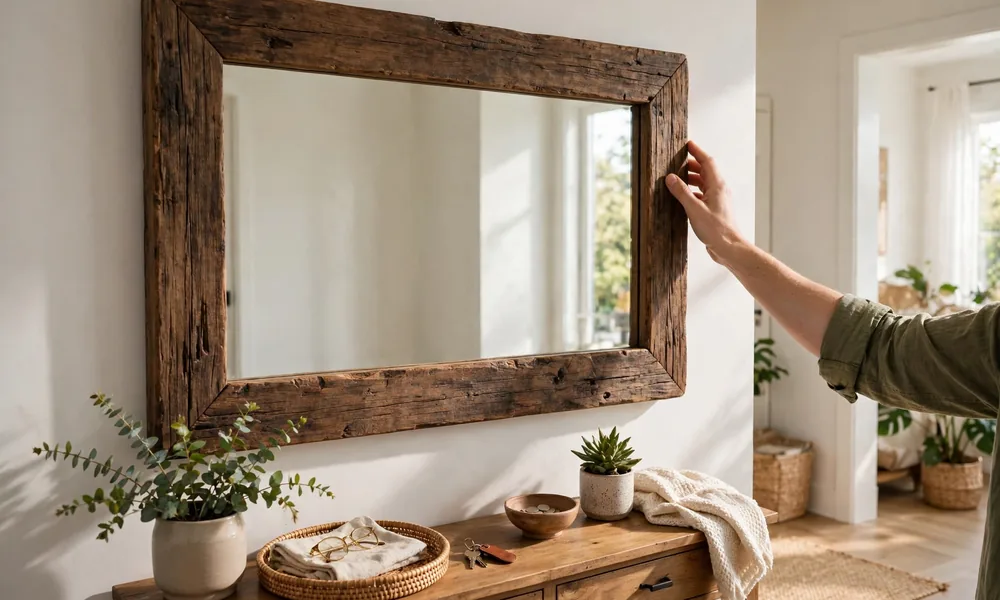
Yes, if it is hung from two toggle or molly bolt fixings, each rated well above half the mirror weight, and both pull-tested first. If you cannot fit two strong fixings, hang the mirror elsewhere rather than risking it above where people sit or sleep.
The Bottom Line
Drywall anchors that hold heavy frames in 2026 are not a mystery and not a gamble: a toggle or molly bolt for the heaviest frames, a self-drilling anchor for medium ones, and a plastic plug only for light ones. Find the stud first, use two fixings, drill the right size hole, stop tightening when the anchor grips, and pull-test before you hang anything you care about. Do those things and the frame stays straight, the wall stays whole, and the only thing you will notice about the fixing is that you never have to think about it again.


