
Eton Mess vs Pavlova: Which Strawberry Meringue Dessert Wins in 2026?
Eton mess is the dessert that proves a little chaos can be delicious. Crushed meringue, softly whipped cream and ripe strawberries tumbled together in a bowl, it looks like an accident and tastes like summer. In 2026, as home bakers look for puddings that do not demand piping skills or a perfect bake, Eton mess has become the easy answer to what to serve after a long lunch. This guide compares the best Eton mess with its closest rival, pavlova, and shows how to make a version that holds its crunch, keeps its cream cool and lets the strawberries do the talking.
5 Key Takeaways
- Eton mess wins on ease: no careful baking, no cracking risk and no piping, just good ingredients assembled at the last minute.
- Pavlova wins on drama: a tall, crisp shell with a marshmallowy centre makes a better centrepiece for a formal table.
- Strawberry quality decides both desserts, so buy ripe, fragrant berries and taste them before you build anything.
- Assemble Eton mess no more than an hour before serving, or the meringue will soften and the crunch will vanish.
- Keep the cream barely sweetened and softly whipped, because the meringue already brings all the sweetness the bowl needs.
What Eton Mess Actually Is
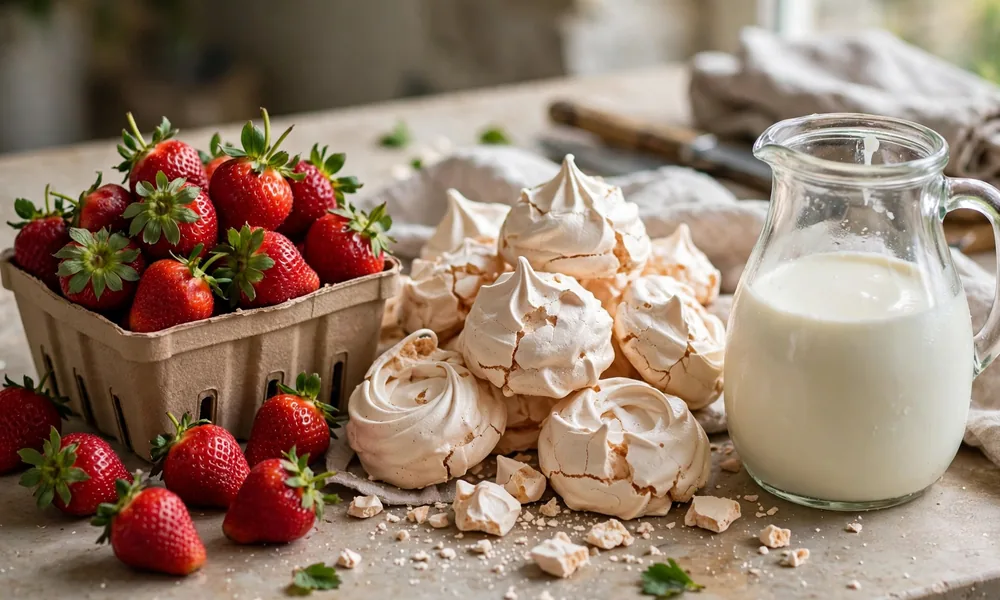
Eton mess is a traditional English dessert made from three things: broken meringue, whipped cream and strawberries. Its name comes from Eton College, where it has reportedly been served since the nineteenth century, and the story goes that a meringue dessert was once dropped and served anyway, mess and all. Whether or not the legend is literally true, it captures the spirit of the dish. There is no mould, no setting time and no decoration to get wrong. The pleasure is in the contrast between crisp shards, cool cream and juicy fruit.
Eton Mess vs Pavlova: The Head-to-Head
Pavlova is the dessert most often confused with Eton mess, and the confusion is understandable. Both are built on meringue, cream and fruit, and both are associated with summer. The difference is architecture. A pavlova is a single baked meringue shell with a crisp outside and a soft, marshmallow-like inside, filled with cream and topped with fruit. It is built to be sliced at the table. Eton mess takes those same elements, breaks them apart and serves them in a bowl or glass. One is a construction project; the other is a pile of good things.
| Factor | Eton Mess | Pavlova |
|---|---|---|
| Effort | Very low; assembly only | High; precise bake and cooling |
| Texture | Crisp shards, soft cream, juicy fruit | Crisp shell, marshmallow centre, cream |
| Appearance | Rustic and informal | Tall, pale and dramatic |
| Make-ahead | Parts ahead, assemble last minute | Shell ahead, fill just before serving |
| Failure risk | Almost none | Cracking, weeping, sinking |
| Best for | Picnics, barbecues, weeknights | Dinner parties, celebrations |
| Serving style | Bowl or individual glasses | Sliced from a platter |
| Cost | Low; uses broken or shop meringue | Moderate; needs a perfect bake |
The Three Ingredients, Done Properly
Strawberries are the soul of the dish, and they deserve the most attention. Choose berries that smell sweet at the stem end, feel heavy for their size and have a deep red colour all the way to the tip. Pale shoulders mean underripe fruit, and underripe strawberries stay tart no matter how much sugar you add. Hull them just before use, cut the largest ones in half or quarters, and leave the smallest whole. If the berries are perfect, add nothing. If they are a little sharp, toss them with a teaspoon of sugar and a squeeze of lemon, then leave them for fifteen minutes to release their juices.
Cream is the second pillar, and the most commonly mishandled. Double cream whipped to soft peaks is the classic choice because it holds its shape without turning buttery. Whip it in a cold bowl, stop the moment the whisk leaves soft trails, and resist the urge to sweeten it heavily. A teaspoon of icing sugar per 300 millilitres is plenty, and a drop of vanilla is optional rather than essential. Over-whipped cream turns grainy and stiff, which fights the softness of the dessert. If you do go too far, a splash of unwhipped cream folded in will usually rescue it.
Meringue is the third pillar and the easiest to get right, because the dessert forgives almost any meringue. Crisp shop-bought nests are ideal. Break them into pieces roughly the size of a thumbnail, keeping a mix of fine crumbs and larger shards so the texture varies from spoonful to spoonful. Avoid meringue that has gone soft or sticky in humidity; it will dissolve into the cream instead of crunching. Store meringue in an airtight tin until the moment you need it, and never assemble the dessert in a humid kitchen hours ahead of time.

How to Make the Best Eton Mess
Start by preparing the strawberries. Hull and halve 400 grams of ripe strawberries, reserving a handful of the prettiest ones for the top. Toss the rest with a teaspoon of caster sugar if they need sweetening, and leave them at room temperature while you whip the cream. This short rest draws out the juices, which will marble through the cream when you fold everything together. Do not use a food processor or crush the berries; you want pieces, not puree.
Whip 300 millilitres of double cream to soft peaks in a cold bowl, adding a teaspoon of icing sugar and a few drops of vanilla if you like. The cream should flop gently from the whisk rather than standing in stiff points. Set it aside in the fridge while you break up about 100 grams of meringue nests into rough pieces. Keep some larger shards for the top, where they catch the eye and give the first spoonful its crunch.
Now assemble, and do it quickly. Spoon a third of the cream into a large serving bowl or into individual glasses, scatter a third of the strawberries and a third of the meringue over it, and repeat the layers twice more. Finish with the reserved berries and the largest meringue shards on top. Serve within the hour. The dessert will keep in the fridge for a few hours, but the meringue softens steadily, and after an hour the texture is noticeably different. For a picnic, carry the three components separately and assemble on site; it takes two minutes and the result is dramatically better.
Common Mistakes That Ruin Eton Mess
The most common mistake is assembling too early. Meringue and moisture are enemies, and cream is mostly water. Every minute the dessert sits assembled, the meringue absorbs moisture and loses its snap. An hour is fine; four hours is a different dessert. If you must prepare ahead, keep the whipped cream covered in the fridge, the strawberries in their own bowl and the meringue in a sealed tin, then combine them at the last moment.
The second mistake is over-sweetening. Meringue is almost pure sugar, and strawberries in season are sweet already. Adding sugar to the cream as well as the fruit tips the bowl into cloying territory. Taste the components before you combine them, and sweeten only the part that needs it. A squeeze of lemon over the strawberries does more for the flavour than another spoonful of sugar ever will, because acidity makes sweetness taste brighter rather than heavier.
The third mistake is using the wrong cream. Single cream will not whip, and squirty cream collapses within minutes. Double cream is the safe choice, and a spoonful of mascarpone folded into whipped cream can add richness if you like a denser result. Avoid low-fat alternatives; they split, weep and taste thin against the meringue. If you want a lighter dessert, serve smaller portions rather than swapping the cream. For more ideas on creamy desserts that reward the same care, see our guide to the best creme brulee, where the custard must be just as carefully balanced.
Variations Worth Trying
Flavouring the cream is an easy way to change the character of the dessert. A spoonful of elderflower cordial gives a floral note that suits early summer. A little rosewater is lovely with raspberries. A splash of amaretto suits an adult version, though it should be used sparingly so the alcohol does not thin the cream. Chocolate is a bolder move: a few shavings of dark chocolate over the top add bitterness that plays well against the sweet meringue. If you enjoy layered desserts in general, our guide to the best trifle covers another classic that rewards the same attention to layers and balance.

Serving, Storing and Making Ahead
Eton mess is best served cold, straight from the fridge, on a warm day. The contrast between the cool cream and the summer air is part of the pleasure. Serve it in the bowl it was assembled in, with a large spoon, and let people take what they want. If you are serving a crowd, make two medium bowls rather than one enormous one; the second bowl stays crisp in the fridge while the first is eaten, which matters more than it sounds.
Your Eton Mess Checklist
- Buy ripe, fragrant strawberries and taste them before you start.
- Use double cream, whipped to soft peaks and barely sweetened.
- Break meringue into thumbnail-sized shards, not dust.
- Keep the three parts separate until serving time.
- Assemble no more than an hour before eating.
- Finish with the prettiest berries and the largest shards on top.
Frequently Asked Questions
Can I use frozen strawberries for Eton mess?
Frozen strawberries work in a pinch, but they release a lot of juice as they thaw and the texture is softer than fresh berries. Thaw them fully, drain the excess juice, and use them only when fresh strawberries are out of season.
Can I make Eton mess dairy-free?
Yes, if you use a whippable plant-based cream and check that your meringue is suitable. Coconut cream whipped from a chilled tin works well, and aquafaba meringue is a good substitute for egg-white meringue.
Why did my meringue go soft in the bowl?
Meringue absorbs moisture from cream and fruit, so softening is inevitable once the dessert is assembled. The fix is timing: assemble at the last minute, use crisp meringue, and keep the dessert cold.
Is Eton mess the same as a pavlova?
No. Pavlova is a single baked meringue shell filled with cream and fruit, while Eton mess is the same ingredients broken up and mixed in a bowl. They share a flavour family but differ in structure, effort and presentation.
How far ahead can I prepare the parts?
Meringue keeps for two weeks in a sealed tin, strawberries for two or three days in the fridge, and cream should be whipped on the day. Assemble the dessert no more than an hour before serving.
What else can I serve with Eton mess?
Eton mess is a complete dessert on its own, but it pairs well with shortbread for guests who want something to dunk. For another baked dessert that rewards patience, our guide to the best cheesecake is a good next read.
The Bottom Line
Eton mess wins in 2026 because it asks so little and gives so much. Three ingredients, two minutes of assembly and no baking skill produce a dessert that tastes like the best of summer. Pavlova keeps the crown for drama and formal occasions, but for picnics, barbecues and ordinary weeknights, the mess is the better choice. Buy good strawberries, whip the cream softly, keep the meringue crisp, and assemble at the last minute. Do that, and the simplest dessert on the table will be the one everyone remembers.


