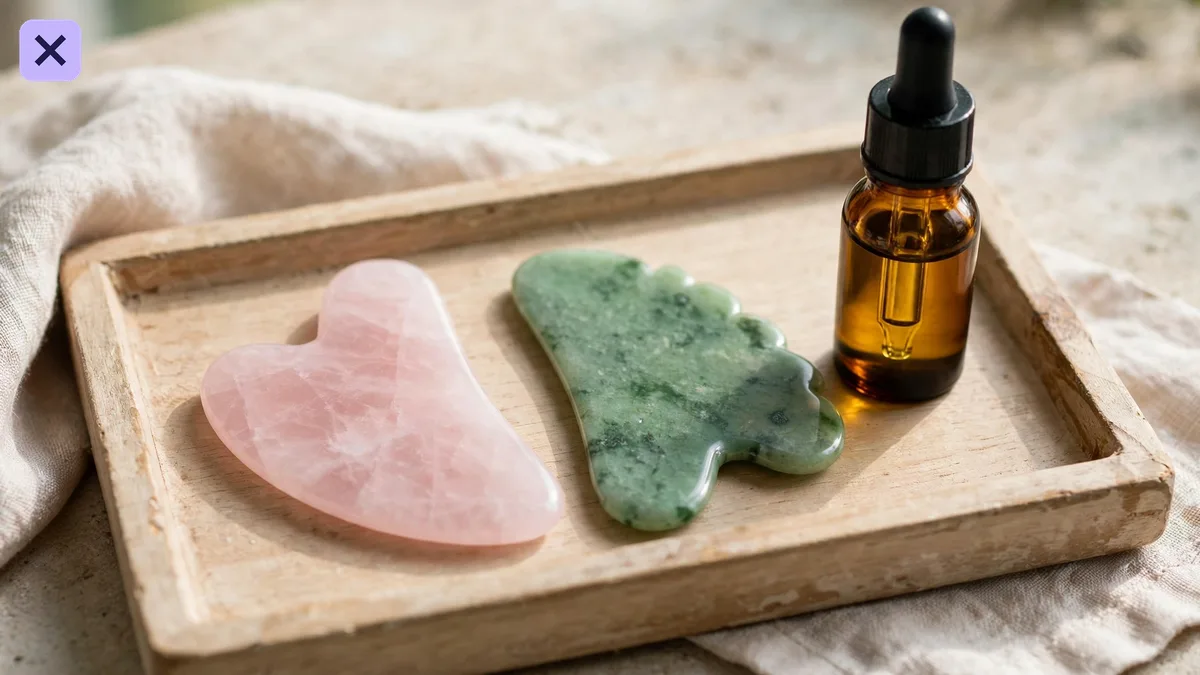
What Makes a Great Gua Sha Tool in 2026?
A gua sha tool is a smooth, flat stone with curved edges, drawn slowly across the skin to massage, de-puff and release tension. It comes from traditional Chinese medicine, where scraping the skin has been practised for centuries, and it has become a familiar sight on bathroom shelves in the last few years. A great gua sha tool is not the most expensive one or the prettiest one: it is the one with the right shape, the right stone and edges smooth enough to glide without catching.
Gua sha is often confused with face rolling, but the two tools work differently. A roller glides over the skin on a wheel; a gua sha stone scrapes across it, edge first, with more contact and more control. That scraping action is what makes gua sha so good at releasing a tight jaw or easing tension in the forehead, and it is also what makes technique matter more. This guide explains how to choose a tool and use it well.
Key takeaways
- A gua sha tool scrapes rather than rolls, giving more contact with the skin and more control over pressure and direction.
- Rose quartz suits beginners and sensitive skin, jade holds its cool longest, and bian stone is the traditional choice for deeper work.
- Always use a facial oil underneath: gua sha on dry skin drags, irritates and can leave marks.
- Hold the stone almost flat against the skin, use light to medium pressure, and scrape upward and outward in slow strokes.
- Five to ten minutes, three or four times a week, is enough; stop if the skin stays red or sore.
What gua sha actually does
Gua sha works on the same principles as any massage: movement plus pressure encourages blood flow and helps fluid drain from the tissues. The flat edge of the stone covers more skin at once than a roller, and because you control the angle and the pressure directly, you can work more precisely into the places that hold tension: the jaw, the brow, the neck and the shoulders.
The drainage effect is real but modest. Gua sha can reduce the puffiness that collects overnight, particularly under the eyes and along the jawline, and regular use can make the face look less tense and more rested. What gua sha can honestly offer is a calmer face, less tension and a few quiet minutes that belong to you.
It is also worth knowing the difference between facial gua sha and the traditional body practice. Body gua sha is done firmly enough to raise red marks, known as sha, on the back and shoulders, and it is a therapeutic treatment best left to a trained practitioner. Facial gua sha is far gentler: the pressure is light, the skin should not be marked, and if redness appears, the pressure was too firm. The two share a name and a tool shape, but they are different practices.
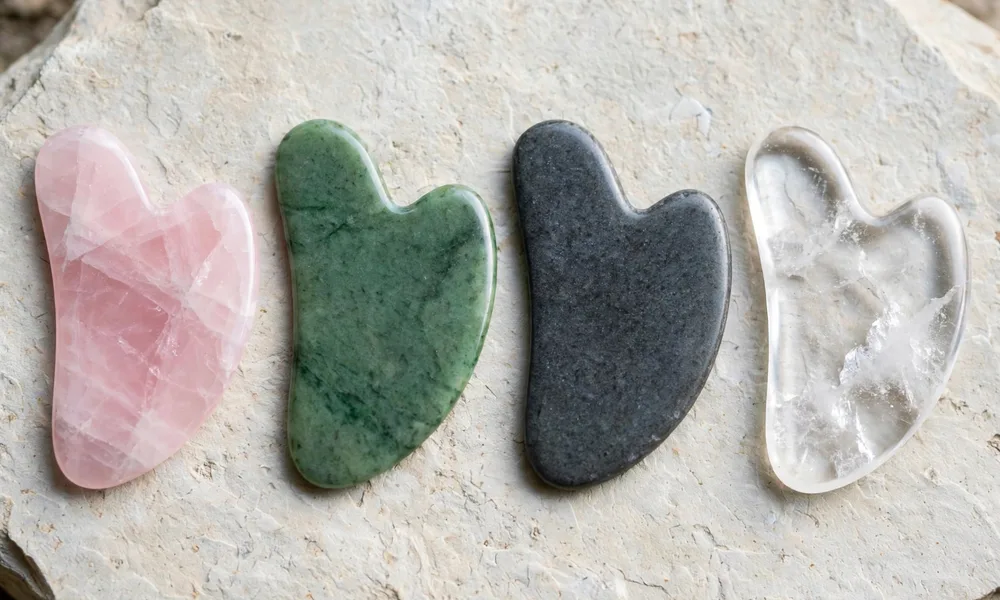
Stone types: rose quartz, jade, bian and more
Rose quartz is the best starting point for most people. It is smooth, cool and forgiving, with a soft pink colour and a polished surface that glides easily. It suits sensitive skin and beginners because it is hard to hurt yourself with it, and it is widely available at a fair price.
Jade is the traditional favourite and the coolest of the common stones. It holds a low temperature longer than rose quartz, so it feels refreshing through a whole session and suits morning use. Jade is denser and slightly heavier in the hand, which some people prefer for the jaw and neck, where a little weight helps.
Bian stone is the dark grey or black stone of traditional practice. It is made from a mineral-rich rock and is said to hold warmth as well as cold, which makes it the choice for people who like to warm their stone in the hands before use.
| Stone | Feel | Best for | Care |
|---|---|---|---|
| Rose quartz | Smooth, gentle, cool | Beginners, sensitive skin | Wash gently, dry fully |
| Jade | Cool, dense, stays cold | Morning puffiness, everyday use | Wash gently, dry fully |
| Bian stone | Heavy, warm or cold | Jaw and neck tension | Wash gently, dry fully |
| Clear quartz | Light, bright, cool | Delicate skin, easy cleaning | Wash gently, dry fully |
| Stainless steel | Coldest, smooth | Oily skin, travel, durability | Rinse or wipe, unbreakable |
Shape matters as much as stone. A good facial gua sha tool has at least three useful edges: a long smooth edge for the cheeks and forehead, a curved notch that fits the jawline, and a smaller curve or point for the brow bone and under the eyes. The classic wing or heart shape offers all three. Avoid tools with sharp points or rough edges, and run your finger along every edge before buying: if it catches your skin, it will catch your face.
Scraping technique: how to use a gua sha tool
Start with clean skin and a generous layer of facial oil. This is the one rule that matters most. Gua sha without slip drags, pulls and can leave red marks, so apply enough oil that the stone glides without resistance. A face oil is the usual choice, and a few drops warmed between the palms and pressed into the skin is enough for the whole face. If the stone starts to drag halfway through, add another drop rather than pressing harder.
Hold the stone almost flat against the skin, at about fifteen degrees, so the edge rather than the point does the work. Work in slow, upward and outward strokes, always moving away from the centre of the face. Start at the neck, scraping gently upward toward the jaw, then move to the jawline, using the notched edge to hug the bone from chin to ear. On the cheeks, use the long edge from the nose outward toward the ear, then on the forehead, scrape upward from the brows to the hairline.
Repeat each stroke five or six times before moving on, and keep the pressure light to medium. You should feel the stone moving over the skin, not digging into it. Around the eyes, switch to the smallest edge, use the lightest touch, and scrape gently outward from the inner corner. The whole routine takes five to ten minutes.

Pressure: how hard is too hard
Pressure is where most gua sha mistakes happen. On the face, light to medium pressure is enough, and the correct pressure is the one that feels pleasant. The skin may turn slightly pink during a session, which is normal and fades within minutes. It should never turn dark red, and it should never hurt.
The jaw and neck can take a little more pressure than the cheeks, because the skin is thicker and the muscles underneath are stronger. The under-eye area can take almost none. Never scrape over active acne, broken skin, sunburn or a rash. Gua sha is a massage for healthy skin, not a treatment for irritated skin, and scraping over a breakout can spread bacteria and make it worse.
Skin types and when to skip gua sha
Dry skin loves gua sha, because the oil underneath is part of the treatment. Oily skin should choose a light, non-comedogenic oil and a steel or clear quartz tool, which are the easiest to keep clean, and should wash the tool thoroughly after every session. Sensitive skin should use rose quartz, keep sessions to five minutes, and skip gua sha entirely on days when the skin feels reactive.
Combination skin can use any stone, and jade is the usual recommendation. Mature skin benefits from the improved colour and the gentle massage, but should keep the pressure very light, since thinner skin marks more easily. Whatever your skin type, gua sha three or four times a week is plenty. Daily use is fine if the pressure is light, but more is not better, and skin that feels sore is asking for a rest.
There are times to skip gua sha altogether. Do not use it over active acne, eczema flare-ups, sunburn, or skin that has just had a chemical peel or laser treatment. If you take blood-thinning medication or bruise easily, keep the pressure feather-light and talk to your doctor first. And if you have just washed your face, use a gentle face wash and wait until the skin is calm and dry before applying oil and starting, rather than scraping over freshly washed, slightly tight skin.
Care and cleaning: keeping the stone safe
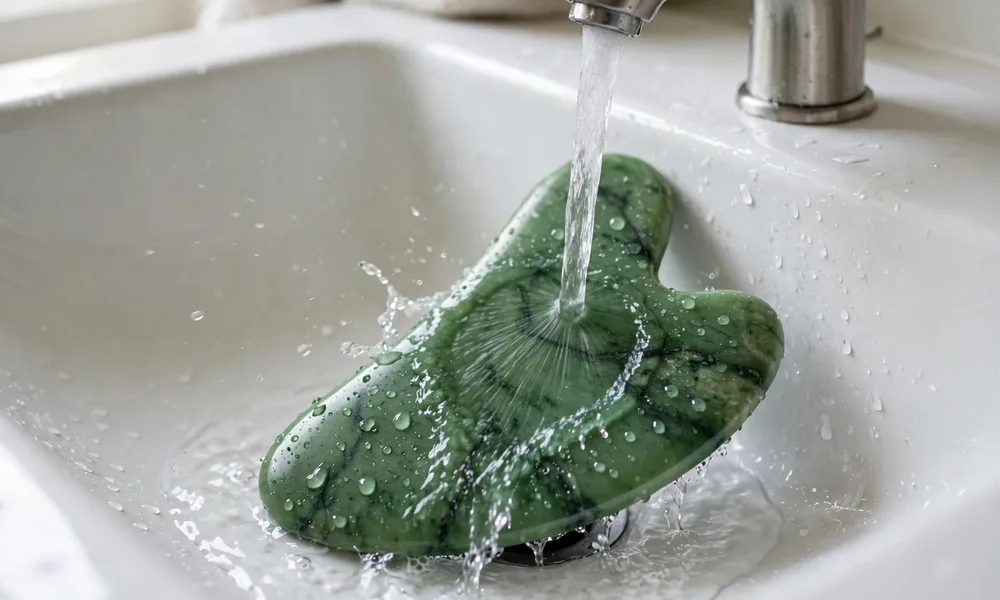
A gua sha stone touches your face and your oil every time you use it, so it needs washing after every session. Rinse it with lukewarm water and a drop of gentle soap, then pat it dry with a clean towel. A steel tool can be rinsed freely and wiped with rubbing alcohol once a week.
Store the stone in its pouch or box, away from hard surfaces. If your skin feels rough or flaky between sessions, a gentle face scrub once or twice a week will keep the surface smooth, so the stone glides cleanly instead of catching on dry patches.
Gua sha checklist: before you buy
- Choose rose quartz for your first tool, jade for morning coolness, or steel for durability and easy cleaning.
- Pick a wing or heart shape with a long edge, a jaw notch and a small curve for the eyes.
- Run a finger along every edge: it should feel smooth, with no sharp points or rough patches.
- Look for natural colour variation; perfectly uniform colour usually means glass.
- Buy a facial oil to use underneath; gua sha without slip will drag and mark the skin.
- Plan to wash the stone after every use and store it in a pouch, away from hard surfaces.
Frequently asked questions
Is gua sha better than a face roller?
They do different jobs. Gua sha scrapes with more contact and control, which suits tension and sculpting work. A roller glides more gently and is quicker for morning de-puffing. Many people use both.
How often should I use gua sha?
Three or four times a week for five to ten minutes is enough. Daily use is fine if the pressure stays light, but sore or marked skin means you should rest for a few days.
Do I need oil for gua sha?
Yes, always. Gua sha on dry skin drags, irritates and can leave marks. A few drops of facial oil give the stone the slip it needs to glide safely.
Will gua sha slim my face?
No. Gua sha can reduce puffiness and relax a tight jaw, which can make the face look less swollen, but it cannot remove fat or change bone structure.
Why does my skin go red after gua sha?
A light pink flush that fades in minutes is normal. Dark red marks mean the pressure was too firm or the skin was too dry. Use less pressure and more oil next time.
Can I use gua sha if I have acne?
Scrape around active breakouts, never over them, and use a steel tool that is easy to keep clean. Stop if the skin becomes more irritated, and skip gua sha during a bad flare-up.
The bottom line
A great gua sha tool in 2026 is a smooth, well-shaped stone that fits your hand and your face: rose quartz for beginners and sensitive skin, jade for lasting coolness, bian for deeper jaw work, or steel for durability and easy cleaning. The tool itself is only half the story. The other half is technique: plenty of oil, a nearly flat angle, slow upward strokes and pressure light enough to feel pleasant. Get those right, and gua sha becomes one of the most satisfying five minutes in your skincare routine.


