
The best hair dryers in 2026 do far more than blast hot air at wet hair. The strongest models dry faster, protect the hair shaft with controlled heat, cut frizz with ionic technology, and feel light enough in the hand that a full blow-dry never turns into an arm workout. The difference between a great dryer and a mediocre one shows up every single morning: smoother ends, faster styling, and hair that still looks healthy months later.
This guide compares the best hair dryers of 2026 on the things that actually matter: drying speed, heat control, weight, noise, attachments, and price. Whether you have fine hair that overheats in seconds, thick hair that takes twenty minutes to dry, or curls that need a diffuser and a gentle touch, there is a dryer here that fits.
Key Takeaways
- Airflow matters more than raw heat: a strong motor dries hair faster with less damage.
- Ionic technology genuinely reduces frizz, especially on thick, wavy and curly hair.
- A dryer should weigh under 500 grams if you style your hair every day.
- Multiple heat and speed settings are essential; one-setting dryers damage fine hair.
- A diffuser is non-negotiable for curls, and a concentrator is essential for sleek blow-dries.
How We Chose the Best Hair Dryers of 2026
A good hair dryer is a balance of power and protection. Too much heat fries the cuticle, too little airflow leaves hair damp for twenty minutes, and a heavy dryer makes styling feel like a chore. We judged every dryer on drying time for different hair types, measured heat consistency, weight in the hand, noise level, and the quality of the attachments in the box.
What Matters Most in a Hair Dryer
Start with the motor. Modern digital motors spin faster, move more air, and run quieter than the old AC motors in budget dryers. A dryer that moves 100 cubic metres of air per hour will dry thick hair in half the time of a weak model, and it does it at a lower temperature, which is kinder to your hair.
Heat control comes next. The best dryers hold their temperature steady instead of spiking, and they offer a genuine cool shot that locks a style in place. Look for at least three heat settings and two or three speeds.

The Best Hair Dryers of 2026 Compared
The table below puts the leading types side by side. No single dryer wins every category, so match the strengths to your hair. Fine hair needs gentle heat and a light body; thick hair needs raw airflow; curly hair needs a diffuser and low, steady heat.
| Type | Best For | Drying Speed | Heat Control | Weight | Price Range |
|---|---|---|---|---|---|
| Premium digital-motor dryer | All hair types | Very fast | Excellent | Light | High |
| Ionic mid-range dryer | Frizz-prone hair | Fast | Good | Medium | Mid-range |
| Lightweight travel dryer | Fine hair, travel | Moderate | Good | Very light | Budget to mid |
| High-power salon dryer | Thick, long hair | Fastest | Good | Heavy | Mid-range |
| Diffuser-focused dryer | Curly, wavy hair | Moderate | Excellent | Medium | Mid-range |
The premium digital-motor dryers lead the field in 2026 because they combine the fastest drying with the smartest heat control. Sensors check the air temperature dozens of times a second and adjust it before it can spike, which keeps the cuticle smooth. They are also the quietest dryers on the market, and at under 500 grams they are easy to hold through a full styling session.
Best Hair Dryers by Hair Type
Best for Fine Hair
Fine hair overheats fast, so the winning formula is a light dryer with precise low-heat settings and a concentrator nozzle that aims the airflow exactly where you want it. Avoid the highest heat setting entirely; medium heat with strong airflow dries fine hair quickly without cooking it. A dryer with a dedicated gentle mode is worth paying for, because fine hair shows damage sooner than any other type.
Keep the dryer moving and hold it at least fifteen centimetres from your head. Fine hair dries in five to eight minutes with a good dryer, and the result should feel soft, not straw-like. If your hair feels rough after drying, the heat is too high or the dryer is too close.
Best for Thick Hair
Thick hair is a drying-time problem, and airflow is the answer. A high-power dryer with a strong motor can cut a twenty-minute dry down to eight or ten minutes, and that time saving adds up to hours every month. Look for a dryer rated above 1,800 watts with a wide concentrator that covers more hair in each pass.
Section your hair and dry the underneath layers first, where moisture hides. Thick hair holds water at the roots, so lift sections and aim the airflow at the roots before smoothing the lengths. A cool shot at the end seals the cuticle and adds shine that lasts all day.
Best for Curly Hair
Curly hair needs the opposite of a blast: low heat, low speed, and a diffuser that spreads the airflow over a wide area without breaking the curl pattern. The best curly-hair dryers come with a deep-bowl diffuser that cradles the curls instead of flattening them, and a low-heat setting that stays steady.
Dry curls to about eighty percent and let the rest air-dry. That last twenty percent is where frizz starts, because the hair is light enough to be blown around. A diffuser used on the lowest speed, with the dryer held still rather than moved, gives defined curls with far less frizz.
Features Worth Paying For
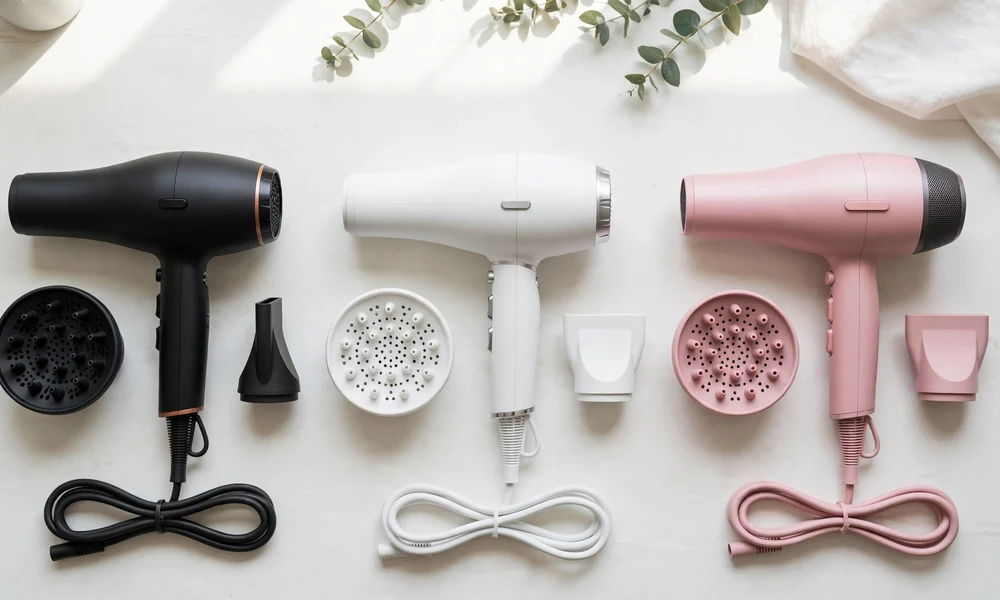
Not every feature on the box earns its price. The ones that do are the ones you use every day: a magnetic attachment system that clicks on in a second, a long cord that reaches your mirror without an extension lead, a cool-shot button placed where your thumb naturally rests, and a removable filter you can clean in thirty seconds.
A removable filter matters more than most people realise. A clogged filter makes the motor work harder, the dryer run hotter, and the drying time creep up week by week. A quick rinse every month keeps the dryer performing like new for years.
Heat Settings and the Cool Shot
Three heat settings are the minimum for a good dryer. Low heat is for fine or damaged hair and for finishing, medium heat is the everyday workhorse, and high heat is for thick hair that needs power. The cool shot is not a gimmick: a burst of cool air at the end of a blow-dry closes the cuticle, locks in the shape, and adds visible shine.
Attachments That Actually Help
The concentrator nozzle is the most useful attachment ever made for a dryer. It narrows the airflow into a flat sheet that smooths the cuticle as you brush, and it is the difference between a frizzy blow-dry and a sleek one. The diffuser is essential for curls and waves. A wide-tooth comb attachment helps detangle thick hair while drying, and a gentle air attachment is useful for very fine or fragile hair.
How to Blow-Dry Without Damaging Your Hair
Technique matters as much as the dryer. Start by towel-drying gently, never rubbing, because wet hair is at its weakest and rough towel-drying breaks it. Apply a heat protectant from mid-length to ends, then rough-dry on medium heat until the hair is about seventy percent dry.
Then switch to the concentrator and a round brush, working in sections from the underneath layers up. Keep the dryer moving, point the nozzle down the hair shaft from roots to ends, and finish each section with a cool shot. Pointing the nozzle downwards is the single most important technique: it smooths the cuticle flat instead of ruffling it open.
For a sleek finish, dry the top layers last and brush them smooth over the underneath. For volume, lift the roots with the brush and aim the airflow upwards at the roots only, then smooth the lengths downwards.

What to Avoid When Buying a Hair Dryer
The worst hair dryers share the same flaws: one heat setting, a heavy body, a short cord, and a motor that screams. A dryer with a single heat setting will damage fine hair and under-dry thick hair, because it cannot adapt. A dryer over 700 grams will make your arm ache before the back of your head is dry.
Be wary of dryers that promise salon results at a suspiciously low price. The motor is the expensive part of a dryer, and a cheap motor means weak airflow, uneven heat, and a short life.
Also check the warranty. The best dryers carry two to five years of cover, and that tells you how much the maker trusts its own motor.
How to Care for Your Hair Dryer
Clean the filter monthly, wipe the body with a damp cloth, and never wrap the cord tightly around the dryer, because that breaks the wires inside. Store the dryer in a drawer or on a hook rather than on a damp bathroom floor, and keep it away from water. A well-cared-for dryer lasts five years or more, and its performance stays consistent for that whole life.
Your Hair Dryer Buying Checklist
- Choose the motor first: digital motors dry faster, quieter and cooler.
- Match the dryer to your hair type, not to the most expensive model.
- Check the weight: under 500 grams for daily use, under 400 for travel.
- Confirm at least three heat settings, two speeds and a cool shot.
- Make sure the diffuser or concentrator you need is in the box.
- Test the grip and the button placement before you commit.
Frequently Asked Questions
How much should I spend on a hair dryer?
A good mid-range dryer costs enough to buy a proper digital or ionic motor, and that is where most people should shop. Premium dryers earn their price with smarter heat control, lighter bodies and quieter motors, but a mid-range ionic dryer dries hair very well.
Do ionic hair dryers really reduce frizz?
Yes, for most hair types. Negative ions break water into smaller droplets and neutralise static, which leaves the cuticle smoother and the hair visibly less frizzy. The effect is strongest on thick, wavy and curly hair, and on hair that frizzes in humidity.
Is a high-wattage dryer always better?
No. Wattage measures power draw, not drying performance, and a well-designed 1,500-watt dryer with strong airflow can outperform a poorly designed 2,200-watt one. Airflow and heat control matter more than the wattage number on the box.
How long should a hair dryer last?
A good dryer lasts four to six years with regular use and monthly filter cleaning. Premium models often last longer because their motors are built to higher tolerances.
Can I use a hair dryer every day?
Yes, if you use the right technique. Use a heat protectant, keep the dryer moving, use medium heat rather than maximum, and finish with a cool shot.
What is the best dryer for curly hair?
The best dryer for curly hair has a deep-bowl diffuser, a genuine low-heat setting, and a low-speed mode that will not blast curls apart. Dry on low speed with the diffuser held still against the curls, and stop at about eighty percent dry.
Related Guides
If you are building a better bathroom routine, our guide to the best electric toothbrushes of 2026 covers the other daily essential, and the best bathrobes for women make the post-shower routine more comfortable. For travel, the best travel organizers for toiletries keep your dryer and styling tools packed neatly.
The Bottom Line
The best hair dryers of 2026 win on airflow, heat control and weight, not on wattage numbers or gimmicks. Pick a dryer that matches your hair type, make sure it has the attachments you actually need, and learn the basic technique of pointing the nozzle down the hair shaft. Do that, and a good dryer will save you time every morning and keep your hair looking healthier for years.


