A good lunch bag is a small upgrade with a big daily payoff, and the best insulated lunch bags for work in 2026 prove it. The right bag keeps a salad crisp, a soup warm, and a sandwich fresh at noon.
Yet most lunch bags fail at one of those jobs. Some look smart but lose their chill within two hours. Others are too small for a real meal, too bulky for a crowded train, or impossible to clean after a leak. The difference comes down to insulation, lining quality, size, and how well the bag suits a working day.
This guide rounds up the best insulated lunch bags for work in 2026, judged on temperature hold, real capacity, ease of cleaning, and carrying comfort.
Key takeaways
- Thick foam plus a sealed lining holds food cold for four to six hours; thin linings rarely manage three.
- Measure your largest container first: a six-litre bag fits far less once an ice pack is inside.
- A leakproof, wipe-clean lining matters more than a pretty exterior.
- Pair any bag with a slim ice pack and pre-chill it overnight.
- Match the carry style to your commute: tote for walks, strap for trains, backpack for cycling.
What Makes a Great Insulated Lunch Bag for Work
A good insulated lunch bag layers three materials: a durable shell, foam that slows heat transfer, and a lining that seals in cold air. The best bags use thick, closed-cell foam with heat-sealed linings.
Insulation That Actually Holds Temperature
Pack a chilled container and an ice pack, leave the bag closed in a warm room, and check it four hours later. Good bags keep food cold for four to six hours; thin-lined bags often warm up within two. Look for a quoted hold time, and treat vague claims such as premium insulation with scepticism. The same physics applies as to larger cold storage, which is why the principles behind the best camping coolers translate directly: thick walls, a tight seal, and little empty air.
Leakproof Linings and Easy Cleaning
A work lunch bag will be knocked over and squeezed into a crowded bag, and occasionally packed with a container that was not quite sealed. A heat-sealed, waterproof lining catches those accidents instead of letting them soak into the foam, and it wipes clean with a damp cloth. Avoid linings of simply stitched fabric with no seal, since liquid will find the seams.
The 9 Best Insulated Lunch Bags for Work 2026
These nine picks cover the main ways people carry lunch to work. Start with your commute and your usual lunch.
1. Best Overall: The Everyday Insulated Tote
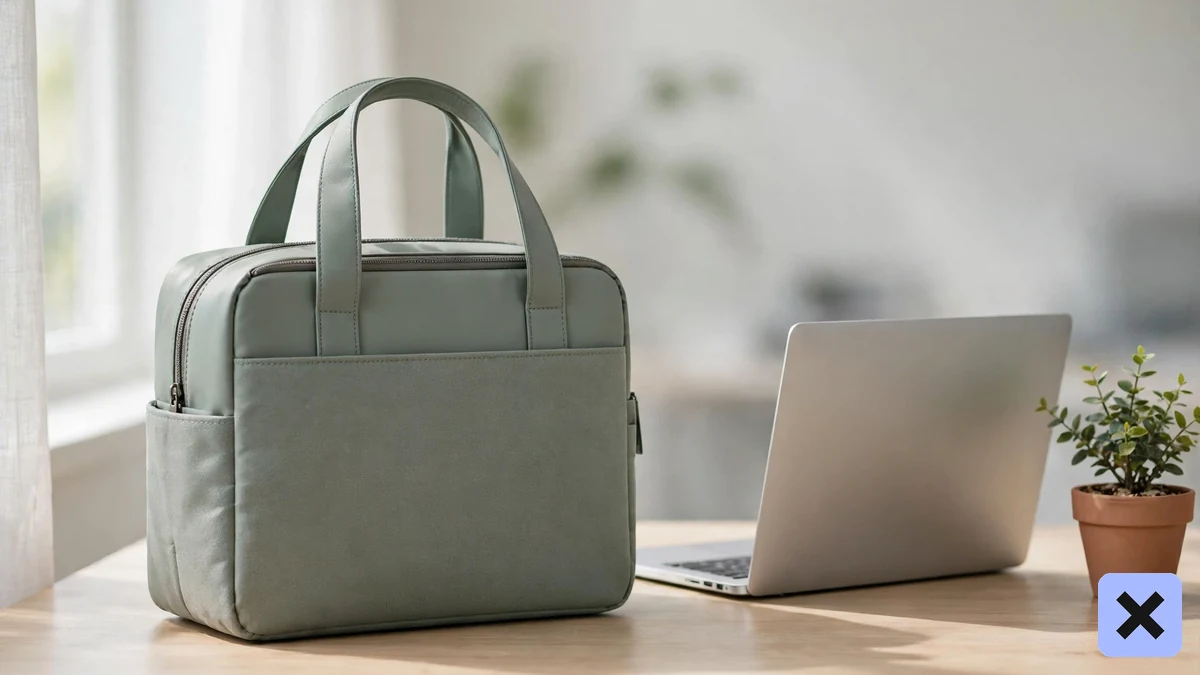
The everyday tote is the safest all-round choice for most office workers. It opens wide, stands upright on a desk, and swallows a meal prep container, fruit, and an ice pack. Thick foam and a sealed lining keep food cold for about five hours, and the wipe-clean interior handles spills.
2. Best Budget: The Slim Soft-Sided Cooler Bag
The slim soft-sided cooler is the value pick: the same foam-and-foil construction as pricier bags, minus premium fabric and pockets. It fits a sandwich box and a drink, folds flat when empty, and is light enough to carry inside a work bag. Expect a season or two, not five years.
3. Best for Meal Preppers: The Boxy Meal Prep Carrier
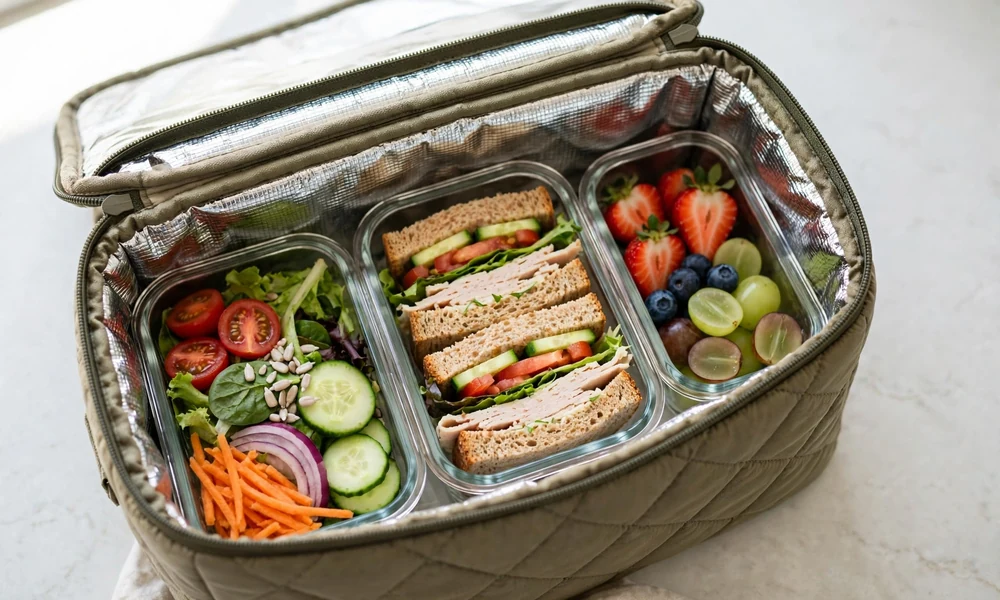
Meal preppers need a bag shaped around rectangular containers, and the boxy carrier is built for that. Firm walls hold two or three stacked containers upright, so sauces stay put and salads are not crushed. A full-length zip opens it like a small suitcase.
4. Best for Hot Lunches: The Thermal Soup Carrier
Hot lunches need different insulation. The thermal soup carrier pairs a well-insulated bag with a wide-mouth insulated food jar, keeping soups, stews, and pasta hot until midday. The bag is smaller than a full tote, since the jar does the work.
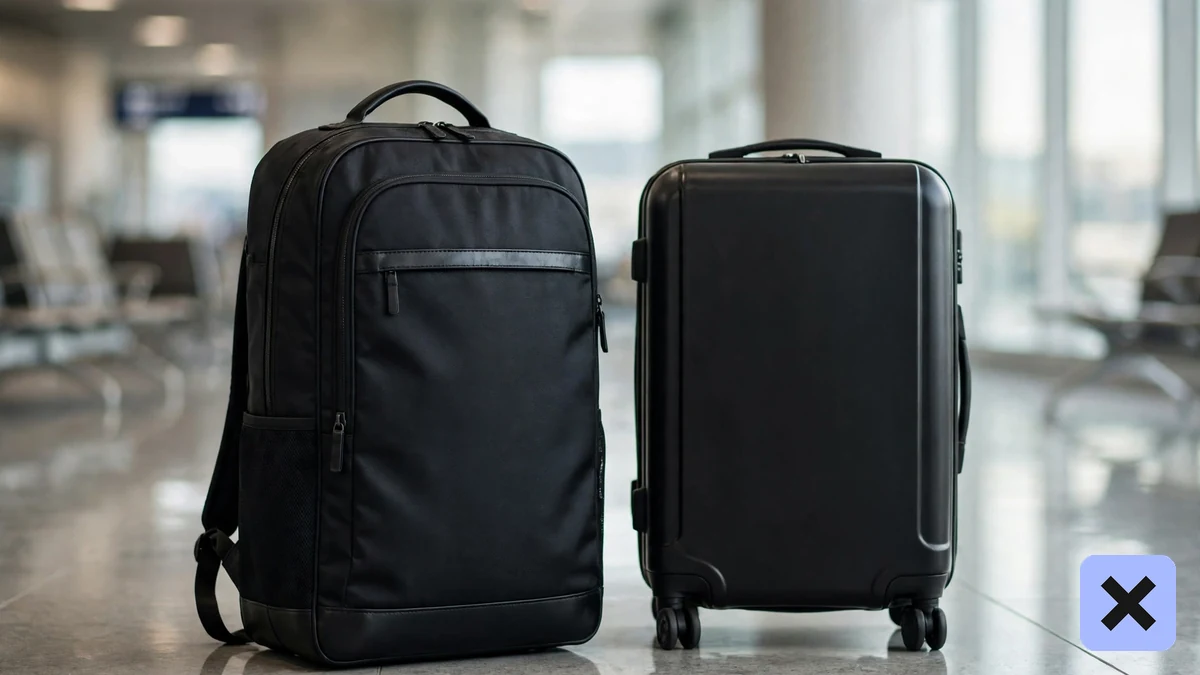
5. Best Backpack Style: The Commuter Lunch Backpack
Cyclists and long-distance commuters do better with a backpack style. It keeps both hands free, distributes weight evenly, and stays put on a crowded train. The best versions add an insulated compartment and a laptop sleeve. Pair it with an ice pack on warm days.
6. Best Hard-Shell: The Protective Lunch Box Bag
Delicate lunches need protection as much as insulation. The hard-shell bag has a structured case that stops a bento box from being crushed by a laptop or gym kit, and thick foam walls hold temperature well. It suits car commuters best.
7. Best Large Capacity: The Family-Sized Work Lunch Bag
Some workdays need more than one meal: lunch, afternoon snacks, and a drink. The large-capacity bag holds all of it, with room for two ice packs and a tall bottle. Treat it as a standalone carry, and check it fits in your office fridge.
8. Best Stylish: The Leather-Look Work Lunch Tote
A lunch bag does not have to look like camping gear. The leather-look tote pairs a smart, office-friendly exterior with the same insulated core as the practical picks, sitting comfortably next to a handbag or briefcase. Insulation is mid-range, suiting shorter commutes.
9. Best Compact: The Minimal Lunch Pouch
For light eaters, the compact pouch carries a single container and a snack in the smallest possible package. It slips into a work bag, weighs almost nothing, and stashes in a desk drawer. Insulation is modest, suiting food eaten within three or four hours.
Best Insulated Lunch Bags for Work 2026: Comparison Table
| Bag style | Best for | Capacity | Cold hold | Carry style |
|---|---|---|---|---|
| Everyday insulated tote | Most office workers | 6 to 8 litres | About 5 hours | Top handles |
| Slim soft-sided cooler | Budget buyers | 4 to 6 litres | About 4 hours | Top handle |
| Boxy meal prep carrier | Meal preppers | 8 to 10 litres | About 5 hours | Handle, shoulder strap |
| Thermal soup carrier | Hot lunches | 3 to 5 litres | Hot for 4 hours | Top handle |
| Commuter lunch backpack | Cyclists, long commutes | 8 to 12 litres | About 4 hours | Backpack straps |
| Hard-shell lunch box bag | Delicate lunches | 6 to 8 litres | About 5 hours | Top handle |
| Large capacity bag | Long shifts, two meals | 12 to 15 litres | About 6 hours | Shoulder strap |
| Leather-look work tote | Style-conscious offices | 5 to 7 litres | About 4 hours | Handles, shoulder strap |
| Minimal lunch pouch | Light lunches | 2 to 4 litres | About 3 hours | Fits inside another bag |
How to Choose the Right Size
Size is where most lunch bag purchases go wrong. Manufacturers quote litres, but usable space is always less once you account for insulation, an ice pack, and container shapes. Before buying, measure your largest container and check internal dimensions, not just the litre rating.
Think about shape as well as volume. Rectangular meal prep containers need a boxy bag; round containers and jars fit better in a taller tote. The right size is the smallest bag that fits your usual lunch plus one ice pack with a little room to spare, because empty air warms up faster than food. The same logic applies outdoors, and the best picnic baskets show how much difference the right shape makes.
Keeping Food Cold (and Hot) Until Lunch
Insulation slows temperature change; it does not create cold. The best results come from starting cold and staying closed: pack food straight from the fridge, add a frozen ice pack, and keep the bag zipped shut until lunchtime. Every opening lets warm air in.
Ice Packs and Pre-Chilling
A slim reusable ice pack is the cheapest upgrade for any lunch bag. Place it on top of the food rather than underneath, since cold air sinks. On hot days, use two packs: one on top and one along the side. Pre-chill the bag too: leave it in the fridge overnight, or pop a frozen pack inside for half an hour before packing.

Hot Food Rules
Hot food follows the opposite rule: start as hot as possible and keep the container sealed. Heat soup or stew until steaming, fill a pre-warmed jar to the brim, and close it immediately. A full jar stays hot far longer than a half-empty one, with less air inside to cool down.
Packing a Work Lunch That Actually Stays Fresh
A great bag cannot rescue a badly packed lunch. Pack wet and dry foods separately, keep dressings sealed until serving, and put heavy items at the bottom so nothing gets crushed. Use containers that actually seal: a lid that clicks shut beats any insulation if the alternative is a leak.
Plan for the week rather than the morning. Batch-cook grains and proteins on Sunday, portion them into containers, and grab one each morning. Keep cutlery and a napkin at your desk, so a forgotten spoon never forces you to buy lunch. For ideas on food that travels well, the best road trip snacks are a useful guide, since snacks that survive a long drive also survive a long morning.
Carrying Comfort and the Daily Commute
Comfort matters, because a lunch bag is carried twice a day, five days a week. Top handles suit short walks from a car park, but a padded shoulder strap makes a real difference on a twenty-minute walk or a crowded platform. Backpack straps are best for cycling and heavy work bags.
Weight is the hidden factor. A hard-shell bag can weigh over a kilogram before any food goes in, which adds up over a long commute. If you walk far, choose the lightest bag that insulates well enough, and let the office fridge do the heavy lifting once you arrive. Also check the details: a one-handed zip and a base that sits flat without toppling over.

Work Lunch Bag Checklist
- Measure your largest container against the bag’s internal dimensions.
- Check the lining is heat-sealed and waterproof.
- Confirm it holds temperature for four hours with an ice pack.
- Test the zip and handles: they take the most wear.
- Make sure it fits your fridge, locker, or desk drawer.
- Buy a slim ice pack with the bag.
Frequently Asked Questions
How long do insulated lunch bags keep food cold?
A well-made bag with a frozen ice pack keeps food cold for four to six hours. Thinner bags manage two to three hours; a fridge covers the rest of the day.
Do I still need an ice pack with an insulated lunch bag?
Yes, for anything perishable. Insulation only slows warming; it does not make food cold. A slim ice pack keeps temperatures safe, especially for dairy, meat, and salads on warm days.
What size lunch bag do I need for work?
Most office workers need six to eight litres: a meal prep container, a snack, and an ice pack. Light eaters can manage with three to four litres; shift workers should look at ten or more.
Can insulated lunch bags keep food hot?
Yes, but hot food needs a sealed insulated jar inside the bag. A good jar stays hot for four to five hours, and the bag adds an extra layer of insulation. Loose hot food in a container cools much faster.
How do I clean an insulated lunch bag?
Wipe the lining with a damp cloth and mild soap after each use, and leave the bag open to dry fully. For smells, wipe with water and a little white vinegar, then air it out overnight.
Are insulated lunch bags machine washable?
Most are not. Machine washing can damage foam insulation and break down heat-sealed seams. Hand washing and air drying is safest, and keeps insulation working properly for much longer.
The Bottom Line
The best insulated lunch bag for work in 2026 fits your actual lunch, commute, and working day. For most people, that is the everyday insulated tote: thick foam, a sealed wipe-clean lining, and room for a real meal plus an ice pack. Meal preppers should go boxy, cyclists should go backpack, and long, hot commutes call for insulation over looks. Buy the right size, add a slim ice pack, and keep the bag closed until lunch.