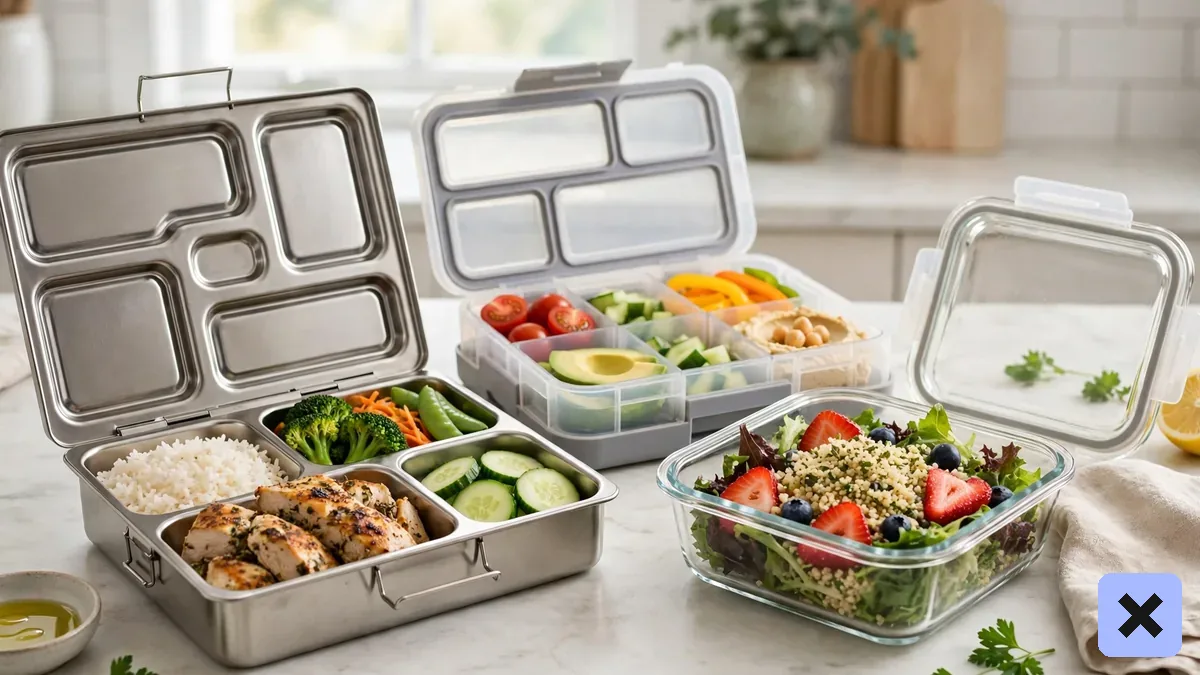
The best lunch boxes in 2026 do far more than carry a sandwich. They keep hot food hot, cold food cold, and sauces where they belong, so a meal packed in the morning still looks appetising at noon. A good one makes a desk lunch enjoyable; a bad one leaks into your bag.
The best lunch boxes for adults share a few qualities that matter far more than brand names. They seal properly, they hold a real meal rather than a snack, they are easy to open and clean, and they are made from materials that will not stain, smell, or warp after months of daily use. Get those right and almost any style can work.
This guide compares the strongest lunch boxes of 2026 for work, the gym, and everyday use, with advice on seals, compartments, materials, sizes, and cleaning.
Key Takeaways
- A leakproof seal matters most, because one spill ruins a bag, a laptop, and a lunch.
- Compartments keep food separate and appetising, especially salads, grain bowls, and saucy dishes.
- Stainless steel is toughest, glass reheats best, and good BPA-free plastic is lightest.
- Most adults need 900 ml to 1.2 litres for a main meal, plus a smaller box for snacks.
- Buy a box that fits your bag, your microwave habits, and your dishwasher, not just one that looks good empty.
What Makes the Best Lunch Box in 2026
A great lunch box has to survive a real working day. It is packed in a hurry, carried sideways in a bag, and opened with one hand at a desk. The boxes that last close with a firm click and stay closed when dropped.
Start with the seal, because it decides whether the box is trustworthy. The strongest designs use a silicone gasket in the lid plus locking clips on two or four sides, which press the lid evenly onto the base. A lid that simply rests on top is fine for dry food, but it will not hold soup, curry, yoghurt, or dressing. Test any box first: fill it with water, close it, and turn it upside down over a sink.
The Seal Matters More Than the Brand
Close the lid and press the centre. A good lid gives a firm click and stays flat, while a weak lid flexes or pops back up. Check the gasket too: it should sit snugly in its channel all the way around, without twisting or lifting out. A gasket that falls out after three washes is a box that will leak by month two. Four clips give the most even pressure, while two are quicker; avoid thin, bendy clips.
Best Bento and Compartment Lunch Boxes
Bento-style lunch boxes are the best choice for most adults in 2026, because they stop everything ending up mixed together. A divided box keeps a salad crisp, a grain bowl separate from its dressing, and fruit away from a hot main dish, so the meal still tastes like a meal at noon. The best designs have two to five compartments, with one large section for the main dish.
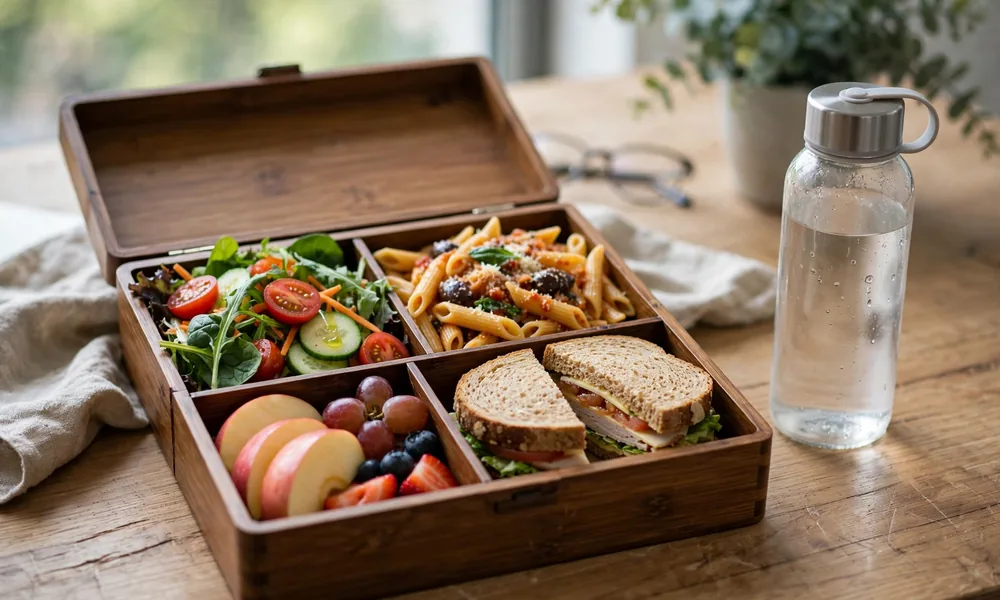
Compartment size matters as much as count. A box with five tiny sections looks clever, but it is useless if none fits a sandwich or a proper portion of pasta. Look for a main compartment of at least 500 ml and fixed dividers, which do not slide around. Some have a removable inner tray, which makes washing easier.
Stainless Steel Bento Boxes
Stainless steel bento boxes are the toughest option, and they suit anyone who carries lunch in a backpack or gym bag. They do not crack, stain, or hold smells, and the best have smooth corners that are easy to wash. Their weakness is the microwave: most steel boxes cannot be heated in one.
Plastic Bento Boxes
Good plastic bento boxes are lighter than steel, cheaper, and often microwave-safe, making them the most practical choice for office lunches that need reheating. Look for BPA-free plastic, a thick rigid base, and a lid with a silicone seal. Avoid very cheap plastic, which can warp and stain.
Best Glass Lunch Boxes
Glass lunch boxes are the best choice if you reheat lunch at work and care about taste. Borosilicate glass goes from fridge to microwave to table without absorbing flavours, staining, or warping, and a glass box with a locking lid and silicone seal is genuinely leakproof. Glass is also the easiest material to get truly clean.
The trade-off is weight and fragility: glass is heavier and can crack if dropped, so it suits a desk drawer better than a crowded gym bag. Choose 900 ml to 1 litre. Glass boxes also work well for batch cooking, storing meals in the fridge and travelling to work the next day. Our guide to the best meal prep containers of 2026 compares the strongest glass and plastic sets for that kind of weekly cooking.
Best Insulated and Thermal Lunch Boxes
Insulated lunch boxes have a double wall or foam layer that slows heat moving in or out, so hot food stays hot and cold food stays cold for hours. They are the best choice if you have no fridge or microwave at work, if you eat outdoors, or if you pack lunch early and eat it late. A good insulated box keeps food at a safe temperature for four to five hours.
Insulation works best when the box is full: a half-empty box cools quickly. An ice pack helps for cold food, and pre-warming helps for hot food, but neither can rescue thin walls and a loose lid. Rigid insulated boxes keep food safer and are easier to clean than soft ones. For younger children the rules differ, and our guide to the best insulated lunch boxes for kids in 2026 covers lighter, easier-to-open designs for small hands and school bags.
Leakproof Lunch Boxes: How to Test Before You Trust One
A box that claims to be leakproof is not always leakproof, and the only way to know is to test it. Fill it with water, close the lid properly, turn it upside down over a sink, and leave it for a minute. Then shake it gently and lay it on its side to check for dampness.
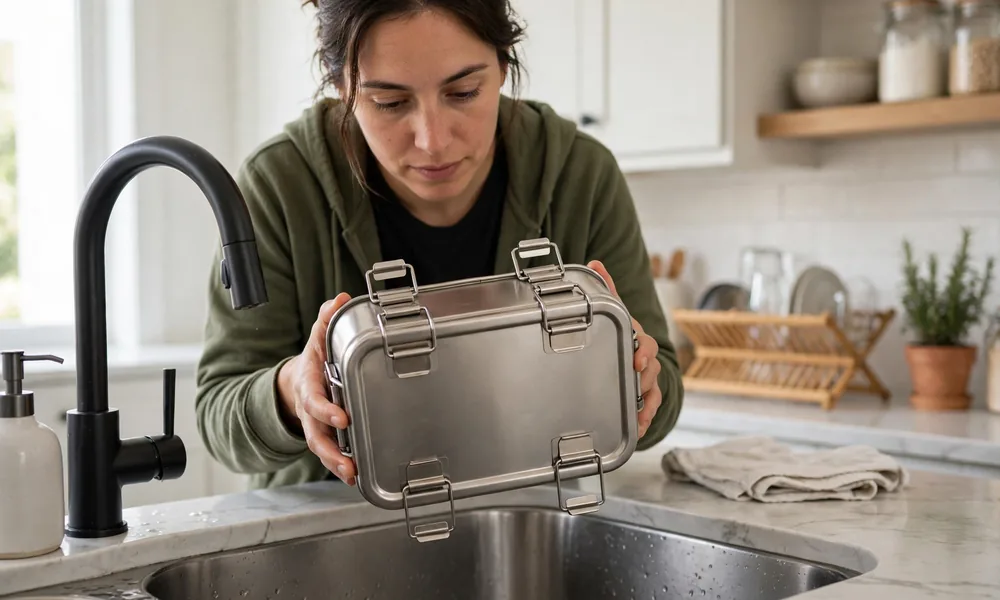
Sauces deserve special attention. Even a good box can leak if runny dressing is poured straight over a salad, so use a small separate sauce pot with its own lid inside the main box, or choose a box with a dedicated sauce compartment. The same rule applies to soups: pack them in a box designed for liquids, with a deep silicone seal and four locking clips, rather than a shallow bento tray. Seals wear out, so check yours every few months and retire a box that fails the water test.
Lunch Box Sizes: How Much Do You Really Need?
Size is the easiest thing to get wrong, because lunch boxes look bigger empty than full. Most adults need a main box of 900 ml to 1.2 litres for a proper lunch, plus a smaller 300 ml to 500 ml box for fruit, yoghurt, or a snack. A box under 700 ml is usually too small for a main meal, while one over 1.5 litres is heavy and hard to fit in a bag.
Think about the meals you actually eat. A grain bowl needs a wide box of about a litre; soup needs a deep 600 ml to 800 ml container with a leakproof lid. Measure your bag before you buy, and leave room for a water bottle and an ice pack. Our roundup of the best water bottles for the gym in 2026 covers leakproof bottles that pair well with a daily lunch box.
Lunch Boxes Compared
| Lunch Box Type | Best For | Typical Size | Strengths | Watch Out For |
|---|---|---|---|---|
| Stainless steel bento | Work, gym, travel | 900 ml–1.2 L | Tough, no stains or smells | Usually not microwave-safe |
| Plastic bento | Office lunches, reheating | 900 ml–1.2 L | Light, cheap, often microwave-safe | Cheap ones warp and stain |
| Glass with locking lid | Reheating, food safety | 900 ml–1 L | Best taste, easy to clean | Heavy, can break if dropped |
| Insulated thermal box | No fridge or microwave | 700 ml–1 L | Keeps food hot or cold for hours | Smaller capacity, heavier |
| Silicone collapsible | Small bags, travel | 800 ml–1 L | Folds flat when empty, light | Weaker seal, less sturdy |
| Single-compartment box | Soups, stews, grain bowls | 800 ml–1.1 L | Simple, strong seal, easy to wash | Foods mix together |
Cleaning and Looking After a Lunch Box
Wash your lunch box every day, because residue left overnight breeds smells and bacteria, especially in gaskets. Remove the gasket and trays, wash them separately, and dry everything fully. Leave the lid ajar overnight.

Most boxes are dishwasher-safe, but wash lids on the top rack or by hand to protect the seal. A baking-soda paste removes stains, and vinegar helps with smells. A box looked after properly should last for years.
Lunch Box Buying Checklist
- Test the seal with water before trusting the box with soup, sauce, or dressing.
- Choose 900 ml to 1.2 litres for a main meal, with a smaller box for snacks.
- Pick the material for your routine: steel for toughness, glass for reheating, plastic for lightness.
- Check that the box fits your bag, your fridge shelf, and your microwave if you reheat lunch.
- Make sure the lid, gasket, and inner trays are easy to remove, wash, and dry.
- Confirm it is dishwasher-safe, BPA-free, and free from any coating you do not want.
Frequently Asked Questions
What is the best lunch box for adults in 2026?
A 900 ml to 1.2 litre bento box with a silicone-sealed, locking lid, in stainless steel for toughness or glass if you reheat lunch at work. Compartments keep food separate, and a proper seal stops leaks.
Are stainless steel lunch boxes better than plastic?
Steel is tougher, does not stain or hold smells, and lasts longer, but it usually cannot go in the microwave. Plastic is lighter, cheaper, and often microwave-safe, but cheap plastic can warp and stain. If you reheat lunch often, glass or good plastic is more practical.
How do I stop my lunch box from leaking?
Use a box with a silicone gasket and locking clips, do not overfill it, and keep runny sauces in a small separate pot with its own lid. Test the seal with water first, check the gasket is seated properly, and replace a worn gasket or retire a box that fails the test.
What size lunch box do I need for work?
Most adults need 900 ml to 1.2 litres for a main meal, plus a smaller 300 ml to 500 ml box for fruit or a snack. A box under 700 ml is usually too small for lunch, while one over 1.5 litres is heavy and hard to fit in a bag.
Can I put a lunch box in the microwave?
Glass and most BPA-free plastic boxes can go in the microwave if you remove the lid or open any vent, but stainless steel boxes cannot. Always check the maker’s instructions, remove metal clips, and never microwave a sealed box.
How do I keep food fresh in a lunch box until noon?
Pack food cold from the fridge, close the lid quickly, and use an ice pack for cold food or pre-warm the box with hot water for hot food. An insulated box helps if you have no fridge at work, and keep dressings separate until you eat.
The Bottom Line
The best lunch boxes in 2026 are the ones that fit your real routine: a leakproof seal you can trust, compartments that keep food separate, a size that holds a proper meal, and a material that suits how you carry and reheat lunch. Stainless steel is toughest, glass is best for reheating, and good plastic is lightest for the office. Test the seal, measure your bag, and choose a box you will enjoy packing every morning, because the best lunch box is the one that gets used.