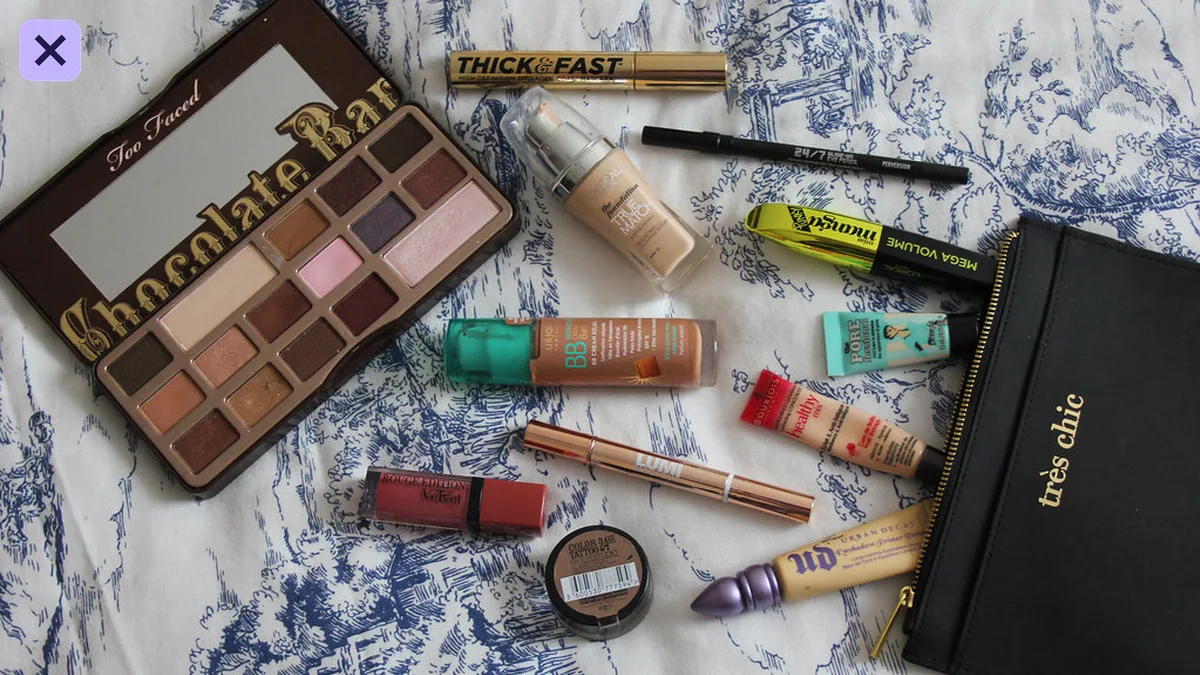
A Guide to Makeup Bags That Keep Everything Organised in 2026
A good makeup bag does a quieter job than any product inside it: it keeps every brush, palette, lipstick and bottle in its place, so getting ready takes minutes instead of a morning spent digging. The best makeup bags of 2026 are not the biggest or the prettiest on the shelf. They are the ones that fit the routine you actually have, and survive being zipped, tossed into a tote and wiped clean again and again.
Most makeup bags fail for boring reasons. One is too small for a palette, so it travels loose and cracks. Another has a single open pocket, so everything sinks to the bottom in a tangled pile. A third looks lovely but has a flimsy zip that gives up after a month. Choosing well means asking how much you carry, where the bag lives, and how often it travels.
Key takeaways
- Buy for the routine you actually have: a daily-carry bag and a travel bag are different tools.
- Compartments beat capacity. A medium bag with a brush sleeve, a mesh pocket and a zipped section keeps things findable; a big open sack just hides the mess.
- Look for a wipe-clean lining and a smooth, sturdy zip. Makeup leaks happen, and a bag you cannot clean is a bag you will throw away.
- Match the material to the job: soft nylon and canvas travel well, leather suits a dressing table, and clear PVC is best for quick security checks.
- Measure your longest palette and tallest bottle first: a bag one centimetre too short is useless, however nice it looks.
Makeup bag or makeup organizer? Know the difference
A makeup bag and a makeup organizer solve different problems, and confusing them is the most common buying mistake. An organizer is a rigid system that stays on a vanity: acrylic drawer units, bamboo trays and rotating turntables that give every product a fixed home. A makeup bag is soft, zipped and portable: it closes, travels, and protects your products when they leave the house. If your makeup never leaves your bedroom, our guide to the best makeup organizers covers the better option.
The same distinction applies to toiletry organizers, which are built for bottles and liquids, with leak-proof sections and a hook for hanging in a hotel bathroom. A makeup bag is built for palettes, compacts, brushes and pencils, which need flat slots and soft sleeves rather than tall bottle pockets. Our guide to the best travel organizers for toiletries is the right companion piece if you pack both.

The main types of makeup bag
Every makeup bag is a variation on a few shapes, and each shape suits a different routine. Match the shape to the way you actually get ready.
Flat pouches: the daily-carry classic
The flat zip pouch is the simplest makeup bag there is, and for many people it is the only one they need. It holds the daily essentials in a slim shape that slides into a handbag or a desk drawer. Its weakness is organisation: with one open compartment, small items sink and pencils roll to the corners. The best flat pouches fix this with an interior slip pocket or a small zipped section. Look for a pouch at least 20 centimetres wide, because anything narrower will not fit a standard palette flat.
Boxy and train cases: the full collection at home
A boxy bag or train case stands upright, opens wide, and keeps its shape when empty. Inside you will usually find tiered trays, brush loops and dividers that keep palettes flat and bottles upright. This is the bag for a large collection, or for a makeup artist. The trade-off is bulk: a train case does not slip into a handbag, and a full one is heavy. If you buy one, check the trays extend fully and the dividers can move, because fixed compartments rarely match the odd shapes of real makeup. A rigid shell also protects pressed powders far better than a soft pouch.
Standing and hanging bags: the travel workhorse
A standing makeup bag has a flat base and a wide mouth, so it sits open on a bathroom counter like a small basket and you can see everything inside without emptying it. Some versions have a hook so they can hang from a door or a towel rail. These are the best travel bags for hotel stays. The risk is size: standing bags look compact folded and open much wider than expected, so measure your suitcase space rather than trusting the product photo. The best ones have a waterproof base and a hanging loop.
Clear bags: fast, practical, and airport-friendly
Clear PVC and vinyl bags have one unbeatable advantage: you can see everything without opening them. That makes them fast for a morning routine and simple at airport security, where liquids must be visible. Clear bags do have limits: the material can yellow and stiffen with age, especially in sunlight, and it shows every smear of foundation. Buy a thicker PVC with a proper zip, and keep it out of direct sun when stored.
Makeup bags compared at a glance
| Bag type | Best for | Capacity | Main weakness | Price |
|---|---|---|---|---|
| Flat pouch | Daily carry | 5–10 products | Little organisation | $8–$25 |
| Boxy / train case | Large collections | 30+ products | Heavy and bulky | $25–$80 |
| Standing / hanging | Travel, hotels | 15–25 products | Opens very wide | $20–$60 |
| Clear PVC bag | Airport, liquids | 8–15 products | Yellows over time | $8–$20 |
| Brush roll / sleeve | Protecting brushes | 8–15 brushes | Brushes only | $10–$30 |
Size, compartments and materials
Size is the first decision and the one most people get wrong. Lay out the products you use on a normal day and measure the longest and tallest. A standard eyeshadow palette is about 15 centimetres long and a foundation bottle about 12 centimetres tall. If the bag cannot fit those two things lying flat, it will not work. Buy one size bigger than your daily pile, because collections grow.
Compartments are what separate a good bag from a sack. Brushes need their own sleeve or loop, because loose brushes shed bristles and pick up powder from everything they touch. Palettes need a flat slot so they do not slide and crack. Small items, lipsticks, eyeliners and tweezers, need a zipped pocket or they will vanish to the bottom. Three well-placed compartments beat ten shallow ones that hold nothing properly.
Material sets the cleaning routine and the lifespan. Nylon is the workhorse: light, strong, water-resistant and easy to wipe, which is why it dominates travel bags. Canvas looks warmer but absorbs foundation and needs washing. Leather is the dressing-table choice, beautiful and durable, but heavy and unhappy in damp bathrooms. PVC and vinyl are the easiest to clean and the least forgiving of heat and sunlight. Choose a smooth, wipe-clean lining in a light colour, so leaks show up before they stain everything. And check the zip: a smooth, chunky zip that runs the full width of the opening is the difference between a bag that lasts years and one thrown away in months.

Travel versus home: one bag or two?
The honest answer for most people is two bags, and it is cheaper than replacing one bag that does neither job well. A home bag can be bigger, boxier and prettier, because it never has to fit in a suitcase. A travel bag should be lighter, tougher and waterproof, because it will be squashed, dropped and possibly rained on. Keeping them separate also means no repacking every Friday night.
If you do travel with makeup, pack the way the bag wants to be packed. Palettes go flat at the bottom, where they cannot flex. Bottles go upright in a waterproof section, with lids checked twice. Brushes go in a sleeve or a separate roll, never loose on top of powders. At home, keep the bag somewhere dry and out of direct sunlight, such as a bedroom drawer.
Cleaning and care
Makeup bags get dirty faster than any other bag you own, because they carry products designed to transfer colour. A quick wipe once a week and a proper clean once a month will keep a bag usable for years. Empty the bag, shake out the loose powder, and wipe the lining with a damp cloth and a little mild soap. For stubborn foundation marks, a cloth dampened with micellar water works better than scrubbing, which damages the lining. Never machine-wash a bag unless the label says you can. Let the bag dry fully before packing it away, or it will smell musty within days.
Brushes deserve a mention here because they are the dirtiest thing in the bag. A dirty brush transfers old product and bacteria into every palette it touches, so clean them weekly with a gentle soap and let them dry flat or bristle-down. Our guide to the best makeup brushes explains which shapes are worth owning and how to keep them in good condition. While you clean, clear out expired makeup too: old mascaras and dried-out liners are the quiet clutter in every bag.

Makeup bag checklist: before you buy
- Measure your longest palette and tallest bottle, then buy a bag that fits both lying flat.
- Choose the type for the job: flat pouch for daily carry, standing bag for travel, boxy case for home.
- Check for a brush sleeve, a flat palette slot and a zipped pocket for small items before you fall for the outside.
- Pick a wipe-clean, light-coloured lining so leaks are easy to spot and easy to clean.
- Test the zip: it should run smoothly the full width of the bag, with a pull you can grip easily.
- Match the material to the setting: nylon for travel, leather for the dressing table, clear PVC for airports.
Frequently asked questions
How big should a makeup bag be?
Big enough for the products you use on a normal day, plus a little spare room. For most people that means a pouch around 20 to 25 centimetres wide, which fits a standard palette flat. Measure your longest palette first.
What is the best material for a makeup bag?
Nylon is the best all-rounder: light, strong, water-resistant and easy to wipe clean. Leather suits a dressing table and lasts for years with care. Canvas absorbs makeup, and clear PVC can yellow over time.
Should I buy one makeup bag or two?
Two, if you travel: a larger bag for home and a lighter, waterproof bag for travel. If you never travel with makeup, one good bag is enough.
How do I clean a makeup bag?
Empty it, shake out loose powder, and wipe the lining with a damp cloth and mild soap. Use micellar water on stubborn marks, let it dry fully open, and never machine-wash it unless the label says you can.
Can I use a makeup bag for toiletries?
You can for small items, but a toiletry organizer suits bottles and liquids better, with upright, leak-proof sections. A makeup bag is built for palettes, compacts and brushes, which need flat slots rather than tall pockets.
How often should I replace my makeup bag?
A good bag lasts three to five years with regular cleaning. Replace it when the zip fails, the lining tears, or it no longer fits the routine you have. If it still smells musty after cleaning, the lining is beyond saving.
The bottom line
The best makeup bag for 2026 is the one that fits your routine, not the one that looks best in a product photo. For most people that means a medium flat pouch for daily carry, with a brush sleeve and a wipe-clean lining, plus a standing bag for travel. Measure your longest palette, check the zip, and buy one size bigger than today’s pile. Get those four things right, and the bag will quietly do its job for years.


