
Best Pool Floats 2026
A pool float is a small purchase that decides how a whole summer feels. The wrong one tips you into the water the moment you shift your weight, leaks air by lunchtime, or turns sticky and hot under the sun. The right one holds you steady, keeps you cool, and lets you forget you are floating on anything at all.
Key Takeaways
- Buy the float for how you will use it, because a lounger built for napping is a poor choice for playing with children, and a ring built for play is a poor choice for an afternoon nap.
- Check the weight limit before anything else, since a float rated below your weight will sit low in the water, feel tippy, and wear out fast.
- A float with a cup holder, a headrest, and a way to stay put in a breeze is worth more than a float with a clever shape and none of those things.
Pool Floats 2026 at a Glance
| Best for | Float type | Weight limit | Standout strength |
|---|---|---|---|
| Best overall | Mesh fabric lounger | 115 kg | Cool, steady, and comfortable for hours |
| Best for small pools | Classic ring float | 90 kg | Simple, tough, and easy to store |
| Best for relaxing | Padded recliner float | 110 kg | Headrest, armrests, and a cup holder |
| Best for families | Animal or novelty float | 100 kg | Big, fun, and easy for children to climb onto |
| Best for two people | Double lounger float | 180 kg | Room for two without tipping |
| Best for travel | Compact folding float | 95 kg | Folds small and inflates in minutes |
What a Pool Float Is Really For
A pool float does one simple job: it keeps you on top of the water while you do nothing. That sounds easy, and the best floats make it look easy, but the job has more to it than it first appears. A float has to support your weight evenly, stay stable when you move, resist sun and chlorine, and dry out without growing mould in the folds.
It also helps to think about the pool itself. A float that is perfect for a large garden pool can be a nuisance in a small one, where it bumps the walls and blocks the steps. And a float is only part of a good afternoon by the water: if you are choosing what to wear in the pool, our guide to the best and worst swimsuits of 2026 covers the fabrics and fits that hold up in chlorine, so your swimwear lasts as long as your float does.
Getting the Size and Weight Limit Right
Size is where most pool float purchases go wrong. A float that is too small for you will sit low in the water, and a float that is too big for your pool will spend the afternoon wedged against the wall. Measure the pool first, then check the float against your own height and weight.
Weight limits are the number people ignore, and they matter more than any other figure on the box. A float rated for 90 kilos will still hold a heavier person for a while, but it will ride low, feel unsteady, and put extra strain on the seams. Buy a float rated at least 15 kilos above your weight, and check whether the limit is for one person or two before sharing a double float.
The Main Types of Pool Float
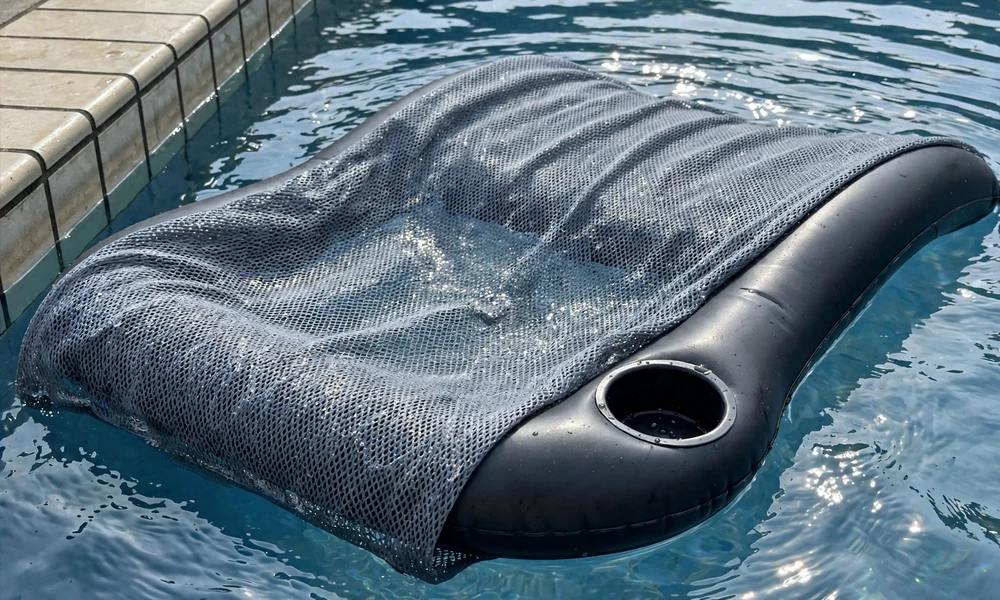
The mesh fabric lounger is the safest choice for most people: a fabric hammock stretched between two inflatable tubes, with your body partly in the water. Its strength is coolness, since the water flows around you and the fabric never gets hot in the sun. Its weakness is drying time, because the fabric holds water after you climb out.
The classic ring float is the simplest float ever made, and it is still one of the best. A ring is easy to inflate, hard to puncture, and simple to store, and it suits children and adults who want to bob around rather than lie flat. Its weakness is comfort, since there is no back support and no place to rest your arms.
The padded recliner float is the choice for people who want to stay in the pool for hours. It has a raised headrest, armrests, and usually a cup holder, and it keeps your upper body out of the water so you can read or talk without getting your book wet. The trade-off is bulk, since a recliner is heavier to carry and slower to dry than a simple ring.
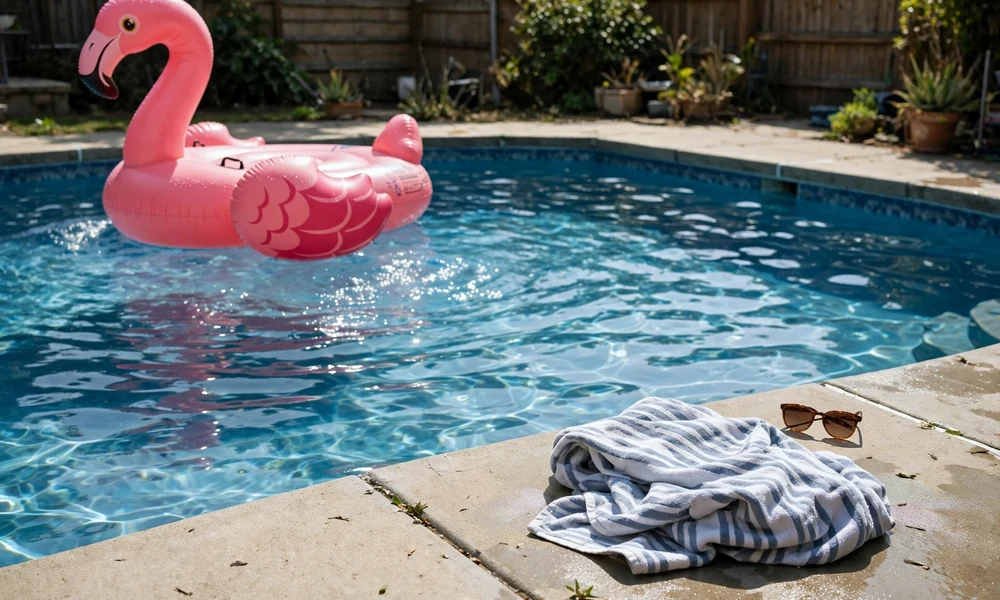
Animal and novelty floats are the fun of the pool, from flamingos and unicorns to giant slices of pizza. They are usually the biggest floats you can buy, which makes them easy for children to climb onto, and they photograph well. Their weakness is the wind: a large float catches the breeze and drifts across the pool, so look for one with handles or a way to hold it still.
Materials and Build Quality
Most pool floats are made from vinyl, fabric mesh, or a mix of the two, and each material has a clear trade-off. Vinyl is the classic choice: it holds air well, wipes clean, and comes in every colour and shape. Thick vinyl, around 0.3 millimetres or more, lasts far longer than thin vinyl, which is why cheap floats often fail at the seams after a few weeks.
Fabric mesh is the cooler choice, and it earns its place on hot days. A mesh lounger lets water through, so you never lie on a hot vinyl surface, and the fabric dries without the sticky feeling that vinyl gets in the sun. The trade-off is care: mesh needs rinsing and drying, and it can fade faster than vinyl if it is left in the sun when it is not in use.
Sun, Chlorine, and Skin
Choose a float with a canopy or a shade if you burn easily, and remember that the water reflects sunlight back up at you, so the parts of you that face the sky are not the only parts at risk. A wide-brimmed hat and a long-sleeved swim top help, and so does getting out of the water for a break in the shade every hour or so. For choosing the right protection, our guide to the best and worst sunscreens of 2026 explains which formulas actually stay on in the water and which ones wash off within minutes.
Inflation, Deflation, and Storage
Inflating a pool float by mouth is possible, and it is also slow, tiring, and unhygienic. A small electric pump or a hand pump is a better investment, and it will pay for itself the first time you inflate a large novelty float. Look for a pump with a few nozzle sizes, since float valves are not all the same.
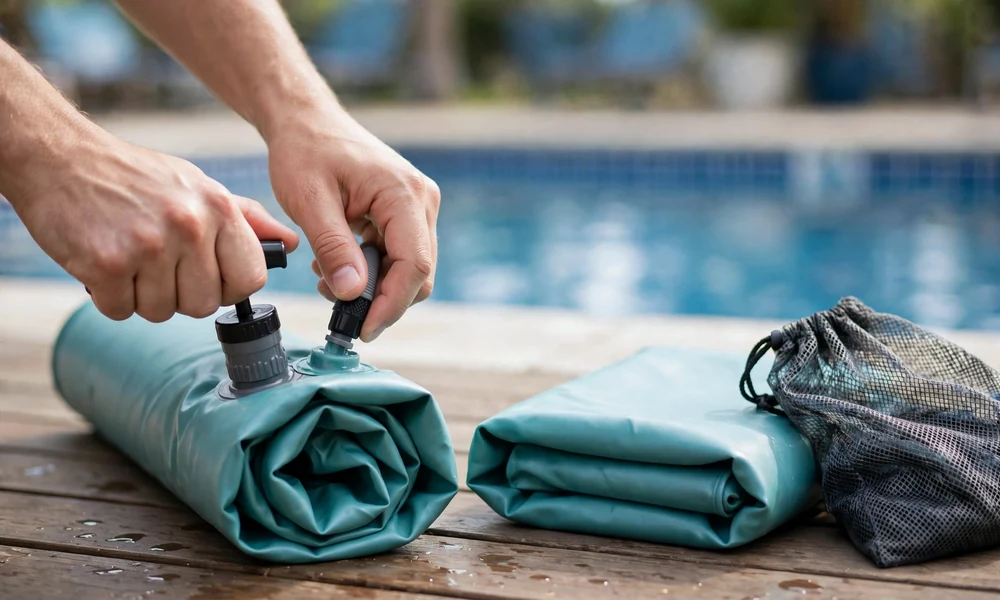
Do not over-inflate a float. Air expands in the heat, so a float that feels firm in the shade can become drum-tight in the midday sun, and that extra pressure is what splits seams. Inflate the float until it is firm but still gives slightly when you press it, and let a little air out if it will sit in direct sun all afternoon.
Matching the Float to the Pool
Think about the pool surface too. A rough concrete edge can scuff a float, and a sharp tile can puncture one, so keep floats away from the coping and lift them out of the water rather than dragging them across the deck. And if your pool is at a hotel or a resort rather than at home, the pool itself matters as much as the float: our round-up of the worst hotel pools of 2026 is a useful warning about pools that look inviting in photographs and disappoint in person, with cloudy water, broken tiles, and no shade at all.
Before You Buy: A Short Checklist
- Measure the pool, and buy a float that leaves room to swim around it.
- Check the weight limit, and buy a float rated at least 15 kilos above your weight.
- Lie on the float if you can, and check that your head and shoulders stay above the water.
- Check the thickness of the vinyl or the quality of the mesh, and look for double-welded seams.
- Think about sun protection before you get in, and take breaks in the shade.
Frequently Asked Questions
How do I stop my pool float drifting across the pool? Use the tether loop if your float has one, and tie it loosely to a poolside chair. Without a tether, a rope through a handle works, or simply choose a heavier mesh lounger, which drifts less than a light vinyl float.
Why does my pool float go flat overnight? The most common cause is a valve that does not seal fully, followed by a small seam leak. Check the valve first, then inflate the float and press it under water to look for bubbles, which will show you exactly where the air is escaping.
Can I leave a pool float in the sun all day? You can, but it will not last as long. Sunlight fades colours and weakens vinyl, and air inside the float expands in the heat, which stresses the seams. Let a little air out on hot days and store the float in the shade when you are not using it.
Are mesh floats better than vinyl floats? Mesh floats are cooler and more comfortable in direct sun, since water flows through the fabric. Vinyl floats hold air longer, wipe clean faster, and come in more shapes. For long, lazy afternoons, mesh usually wins; for play and novelty shapes, vinyl usually wins.
How long should a good pool float last? A well-made float that is rinsed after use, dried before storage, and kept out of the sun when it is not in the pool should last several summers. A cheap float that is left in the sun and stored wet may not survive one.
The Bottom Line
The best pool float of 2026 is the one that fits your body, your pool, and the way you spend your afternoons in the water, and then quietly lets you forget it is there. It is wide enough to feel steady, long enough to support you properly, rated well above your weight, and made well enough that the seams and the valve survive a season of sun and chlorine.
Start with the tape measure, not the catalogue. Measure the pool, check the weight limit, and then choose the type that fits: a mesh lounger for long, cool afternoons, a ring for simple bobbing about, a recliner for reading in the water, or a novelty float for a family day. Rinse it, dry it, store it properly, and it will be waiting for you next summer too.


