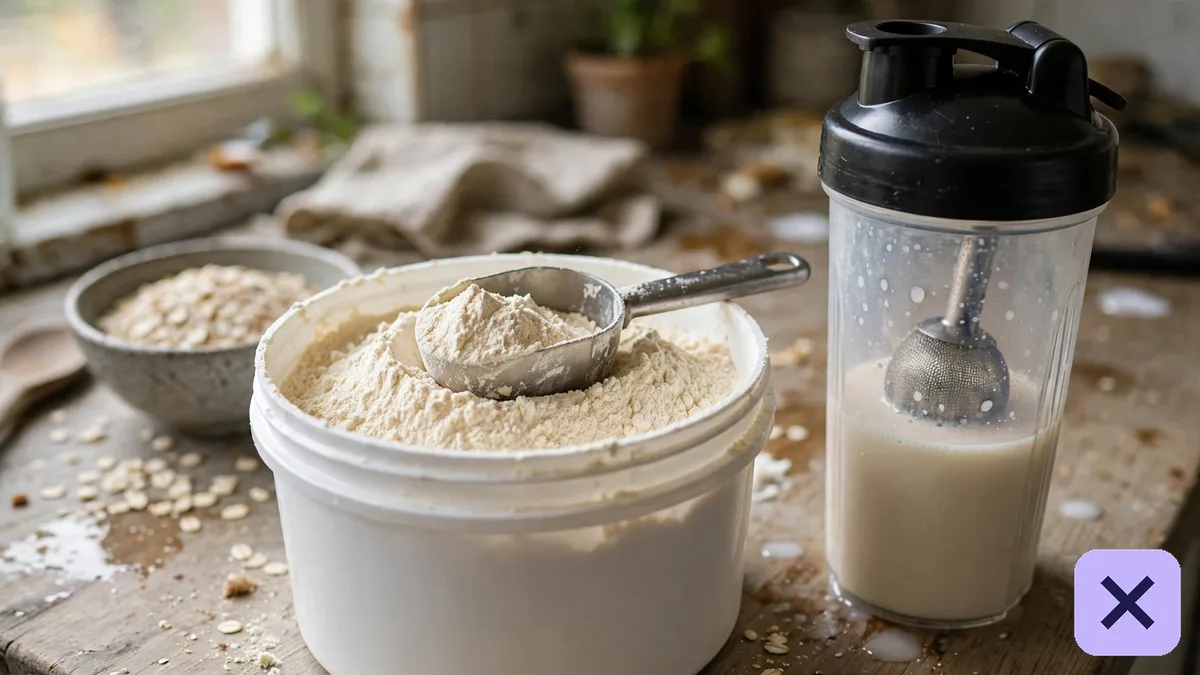
The best protein powder for everyday training in 2026 is not the tub with the loudest label. It is the one you will use four or five times a week, that mixes smoothly into a shake you enjoy, and that gives you 20 to 25 grams of protein per scoop without a long list of sweeteners and fillers. For most people who train regularly, a good powder is a convenience tool: it fills the gap between your meals and your training demands.
Protein powder is now an everyday pantry item. Whey, casein, soy, pea and blended plant proteins share the same shelf, at prices from under thirty dollars a kilo to more than twice that. What matters is simple: protein per scoop, the amino acid profile, how well it mixes, and how it tastes.
Key Takeaways
- Look for 20 to 25 grams of protein per scoop, with at least 2 grams of leucine, the amino acid that switches on muscle repair after training.
- Whey isolate is the best all-round choice: high protein, low lactose, fast to digest and easy to mix.
- Read the label per scoop, not per 100 grams: a powder can look strong and deliver only 15 grams per serving.
- A short ingredient list beats a long one; avoid powders where sugar appears before the protein itself.
- One scoop a day is enough for most everyday trainers; food should still provide the majority of your protein.
What Protein Powder Actually Does
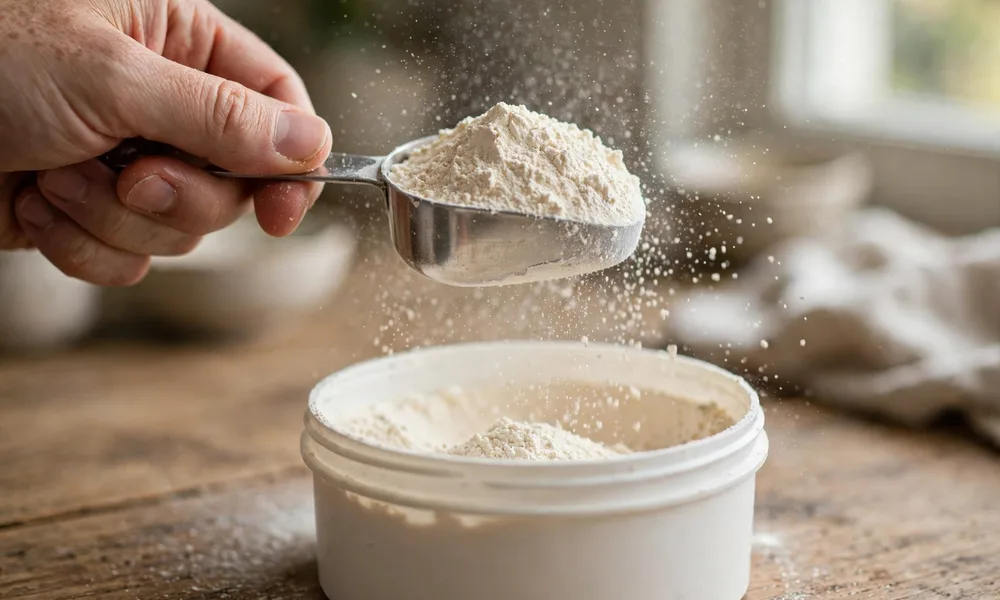
Protein powder is food, concentrated. A scoop of whey isolate is the protein from milk with most of the lactose and fat removed; a scoop of pea protein is the protein from yellow peas with the starch taken out. It delivers a measured dose of amino acids, the building blocks your body uses to repair the small damage training causes to muscle fibres.
That repair process is why dose matters more than brand. Research shows that 20 to 25 grams of high-quality protein after training, with around 2 to 3 grams of leucine, is enough to switch muscle repair on fully for most adults. What matters more is total daily intake: most active adults do best on roughly 1.6 grams of protein per kilogram of body weight per day, spread across three or four meals. For a person weighing 75 kilograms, that is about 120 grams a day, and a single scoop neatly closes the gap when cooking another high-protein meal is not going to happen.
The Main Types of Protein Powder Compared
Whey concentrate is the most common and cheapest whey, containing 70 to 80 percent protein by weight, with the rest made up of lactose and milk fat. It tastes creamy, mixes well, and suits almost everyone except those sensitive to lactose. Whey isolate is filtered more aggressively, reaching 90 percent protein or more, with almost no lactose and very little fat. It costs more per kilo, but each scoop delivers more protein and fewer calories, making it the best choice for anyone watching their weight.
Whey hydrolysate is whey partly broken down into smaller fragments, which makes it absorb faster and taste more bitter. It is the most expensive whey and mainly suits people with digestive problems. Casein is the other milk protein, digesting slowly over six to eight hours, which makes it popular as a bedtime shake, though a normal protein-rich meal does the same job.
| Powder Type | Protein per Scoop | Best For | Typical Price |
|---|---|---|---|
| Whey concentrate | 20–24 g | Everyday training, best value | $25–$40 per kg |
| Whey isolate | 23–27 g | Low lactose, lean goals | $40–$60 per kg |
| Whey hydrolysate | 23–25 g | Sensitive digestion | $55–$80 per kg |
| Casein | 22–24 g | Slow release, bedtime | $35–$55 per kg |
| Pea protein | 20–24 g | Dairy-free, vegan | $30–$50 per kg |
| Plant blend (pea + rice) | 20–24 g | Complete vegan amino profile | $35–$55 per kg |
| Soy isolate | 22–25 g | Complete vegan protein | $30–$50 per kg |
Plant proteins have improved enormously. Pea protein alone is low in methionine, while rice protein is low in lysine. A blend of the two covers both gaps and gives a profile close to whey, which is why most good vegan powders are blends. Soy isolate is the exception: complete on its own, with leucine close to whey, and it mixes more smoothly than pea.
How to Read a Protein Powder Label
The front of the tub is advertising; the nutrition panel on the back is the truth. Start with the serving size and the protein per serving. A tub claiming 25 grams of protein per 30-gram scoop is about 83 percent protein, which is honest and good. A tub delivering 18 grams in a 35-gram scoop is only about half protein; the rest is carbohydrate, fat, flavouring and filler, and you are paying protein prices for it.
Next, look at the sugar. A good unflavoured whey isolate has under 1 gram per scoop, and a flavoured powder may have 2 to 3 grams. Anything above 5 grams per scoop is a dessert in disguise. Then check the ingredient list: ingredients are listed by weight, so protein should come first. If sugar or maltodextrin appears before the protein source, put the tub back. If you drink your shake with milk, our guide to the best protein milk of 2026 covers ready-to-drink options that pair well with a scoop.
Third-Party Testing Matters More Than Marketing
Protein powders are supplements, and in most countries they are not tested by regulators before they go on sale. Third-party testing matters: an independent lab checks the tub contains the protein the label claims and screens for heavy metals and banned substances, so look for marks such as Informed Sport or NSF Certified for Sport. Testing also guards against amino spiking, where cheap powders add free amino acids such as glycine to inflate the protein reading while delivering less complete protein.
Taste, Mixability and the Shake You Will Actually Drink
The best protein powder is useless if it sits in the cupboard because you hate drinking it. Taste is personal, but mixability is not: a good powder should dissolve with ten seconds of shaking and leave no grit or lumps. Whey isolate and soy isolate mix the most smoothly. Pea protein is naturally grittier, which is why many people prefer it blended into a smoothie. A blender makes almost any powder drinkable, and our guide to the best vs worst blenders of 2026 is useful if your shake still comes out lumpy.

Chocolate and vanilla are the safest flavours because they hide the natural taste of the protein best and mix well with milk, oats and banana. Unflavoured powder is the most flexible of all, working in porridge, pancake batter, yoghurt and baking without fighting the other flavours. Buy a small tub or samples first, and test it the way you will actually use it.
When to Take Protein Powder, and How Much
The old idea of a thirty-minute window after training has been softened by research: your muscles stay receptive to protein for several hours. The practical rule is simple. Have a protein-rich meal or shake within a couple of hours of training, and make sure your total intake for the day hits your target. A shake straight after training is convenient when your appetite is low, but a meal an hour later works just as well.
Breakfast is the other moment a scoop earns its place. Many people eat toast, cereal or fruit delivering only 5 to 10 grams of protein, then wonder why they are hungry by ten o’clock. Adding a scoop to porridge or a smoothie lifts that meal to 25 or 30 grams. One scoop a day is enough for most everyday trainers; two make sense on heavy training days, or for people who struggle to eat enough protein from food. More than two rarely helps, because the powder is then replacing real meals. Vegetable-based powders can add fibre to the same shake, and our guide to the best greens powders of 2026 covers which blends mix well with protein, though a greens powder adds little protein itself.
Common Mistakes When Buying Protein Powder
The first mistake is buying on protein per 100 grams instead of protein per scoop: a powder can claim 80 grams per 100 grams and still deliver only 20 grams in a scoop. Always do the maths on the serving you will take. The second is choosing an untried flavour in the biggest tub available: sample first, commit second. The third is assuming more protein per scoop is always better: a clean 25 grams from a 30-gram scoop beats 30 grams from a 45-gram scoop full of carbohydrate and fat. The fourth is ignoring the rest of your diet: no powder compensates for too little protein, too little sleep or inconsistent training. Store the tub sealed in a cool, dry cupboard and finish it within eight weeks of opening, since moisture and heat turn a good powder stale.
Protein Powder Buying Checklist
- Check protein per scoop is 20 to 25 grams, with at least 2 grams of leucine.
- Choose whey isolate for low lactose, whey concentrate for best value, or a pea and rice blend for dairy-free.
- Read the ingredient list: protein first, sugar under 5 grams per scoop, no amino spiking fillers high on the list.
- Look for independent third-party testing, such as Informed Sport or NSF Certified for Sport.
- Buy a small tub or samples first, and test the powder shaken the way you will drink it.
- Store the tub sealed in a cool, dry cupboard and finish it within eight weeks of opening.
Frequently Asked Questions
How much protein powder should I take each day?
One scoop a day, delivering 20 to 25 grams of protein, is enough for most everyday trainers. Aim for about 1.6 grams of protein per kilogram of body weight a day, and use the powder to fill the gap your meals leave, not to replace meals.
Is whey or plant protein better for building muscle?
Whey has a small edge because it is richer in leucine and digests faster, but the difference is modest. A pea and rice blend with a complete amino acid profile builds muscle effectively too. Choose the one your stomach tolerates and you enjoy drinking.
Can protein powder help with weight loss?
Yes, indirectly. Protein is very filling, so a 120-calorie shake with 25 grams of protein can replace a higher-calorie snack and keep you full for longer. The powder does not burn fat; it makes eating fewer calories easier.
Does protein powder cause bloating?
It can, usually because of lactose in whey concentrate, artificial sweeteners, or drinking a shake too fast. Switching to whey isolate or a plant blend, choosing an unsweetened powder, and sipping slowly usually fixes it.
When is the best time to drink a protein shake?
Within a couple of hours of training is convenient, but the exact timing matters less than your total daily intake. A shake at breakfast is just as useful if your morning meal is low in protein. Spread your protein across three or four meals rather than loading it all into one.
Do I need protein powder if I already eat a lot of protein?
No. If your meals already give you 1.6 grams of protein per kilogram of body weight a day, a powder adds nothing. It is a convenience product for people whose meals fall short or who want a quick option after a workout.
The Bottom Line
The best protein powder for everyday training in 2026 is a tested powder delivering 20 to 25 grams of protein per scoop, with a short ingredient list, under 5 grams of sugar, and a taste you actually enjoy. Whey isolate is the best all-round choice, a pea and rice blend is the best dairy-free choice, and whey concentrate is the best value. Buy a small tub first, check the label per scoop rather than per 100 grams, and let one daily shake close the gap between your meals and your training.


