Stepping into the shower after a long day and meeting a weak, dribbling spray is deeply disappointing. The best shower heads for low water pressure solve exactly that problem, turning a feeble trickle into a firm, satisfying stream without a plumber or a costly pump.
Low water pressure is common in older homes, flats with shared supplies, and houses on upper floors. Narrow pipes, long pipe runs, or a modest municipal supply can leave the water arriving with little force. The result is shampoo that takes forever to rinse out and a shower that never feels refreshing.
The good news is that the right shower head can make a dramatic difference. Modern designs use smaller nozzles, pressurised chambers, and air-injection technology to boost the feel of the water, even when the pressure from the wall is modest.
Key takeaways
- The best shower heads for low water pressure use smaller nozzles and air-injection to make a weak flow feel strong.
- Measure your water pressure first: most homes sit between 40 and 60 psi, and anything below 40 psi counts as low.
- Handheld and high-pressure fixed heads usually perform best in low-pressure homes.
- Removing or replacing a flow restrictor can help, but check local water regulations first.
- Installation takes minutes and needs no special tools beyond an adjustable spanner.

Why Low Water Pressure Ruins a Good Shower
Water pressure is the force that pushes water through your pipes and out of the shower head. When that force is low, the water leaves the head slowly and spreads out weakly, so less of it reaches your skin with any energy. A standard head with large holes simply lets the water fall out, which is why low-pressure showers so often feel like a drizzle.
The problem is not always the shower head. Mains pressure can be low because of the distance from the street, the height of the bathroom, or old pipes narrowed by mineral deposits. In flats, a shared supply can mean pressure drops when a neighbour runs a tap. If every tap runs slowly, the supply is the issue. If only the shower is weak, the head, hose, or a clogged filter may be to blame.
How to Measure Your Water Pressure First
Measuring your pressure takes less than five minutes with a cheap gauge that screws onto an outside tap. Attach it, turn the tap on fully, and read the number. Most homes fall between 40 and 60 pounds per square inch, known as psi. Below 40 psi is low, and under 30 psi is very low and needs a head designed for weak supplies.
Without a gauge, a bucket test gives a rough idea. Hold a one-litre jug under the shower for six seconds. Less than 500 millilitres means a flow under 5 litres per minute, which is low. Knowing your number narrows the choice: a head built for normal pressure will still feel weak at 30 psi, while a high-pressure model will feel noticeably stronger.
The Best Shower Heads for Low Water Pressure in 2026
There are five main types worth considering, and the best choice depends on your bathroom, your budget, and how you like to shower.
Best Overall: High-Pressure Rain Shower Head
A high-pressure rain shower head uses small, closely spaced nozzles to turn a modest flow into a dense, even curtain of water. The smaller the holes, the faster the water leaves each one, so these heads feel much stronger than a standard model.
Rain heads are fixed to the wall or ceiling and suit bathrooms with a bit of space, giving a gentle all-over soak rather than a hard jet. Look for silicone nozzles, which wipe clean when limescale builds up, and a face eight to ten inches wide for good coverage.

Best Handheld: Multi-Spray Handheld Shower Head
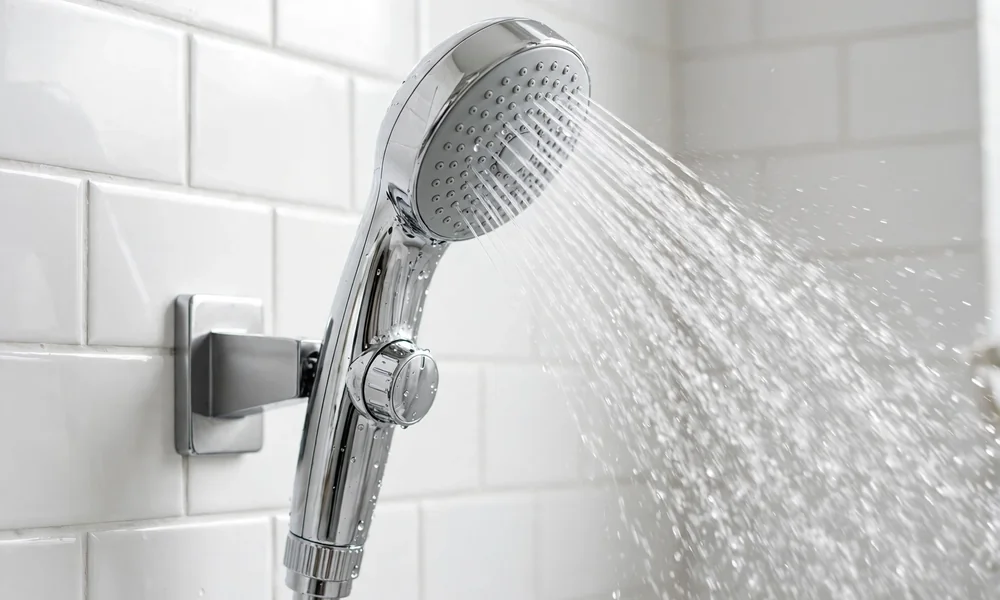
A handheld shower head is often the best answer for a low-pressure home. Because the head is smaller and sits closer to you, the water loses less energy. A good handheld also lets you aim the spray exactly where you need it, so nothing is wasted on the tiles.
Multi-spray models are the most versatile, offering a wide rain setting for rinsing, a massage setting for tired shoulders, and a mist setting for a gentle wash. A hose of 1.5 metres or more makes it easier to wash children, pets, and the shower itself. If you travel often, a compact handheld packs easily, much like the items in our guide to the best travel toiletry bags that keep bathroom gear organised on the road.
Best Budget: Compact High-Pressure Fixed Head
For the biggest improvement at the lowest price, a compact high-pressure fixed head is hard to beat. These heads are small, usually three to four inches across, with a dense pattern of tiny holes. The small face concentrates the water into a tight, powerful spray.
Budget models are also the easiest to install, screwing straight onto the existing shower arm with no extra parts. They suit small bathrooms and shower cubicles. The trade-off is coverage: the spray is narrower, so you may need to move around a little more to rinse fully.
Best for Small Bathrooms: Adjustable Dual Head
A dual shower head combines a fixed head with a handheld on the same arm. In a low-pressure home, running both at once weakens the spray, so use one at a time: the fixed head for a normal shower, the handheld for rinsing or washing hair.
Dual heads suit small bathrooms because they add versatility without taking up extra wall space. Look for a simple diverter valve that switches cleanly between the two heads. A metal diverter lasts longer than a plastic one, and a magnetic holder keeps the handheld firmly docked.
Best Luxury Pick: Large Rainfall Head With Air-Injection
Air-injection shower heads mix air into the water stream as it passes through the head. The bubbles make each droplet feel bigger and hit the skin with more force, even though the volume of water is the same or lower. The result is a full, luxurious spray that uses less water.
Large rainfall heads with air-injection are the premium choice for low-pressure homes that want a spa-like feel. They work best on a ceiling-mounted arm so the water falls straight down. They cost more than a basic head, but the difference in feel is obvious, and the water saving can pay for the head over time.
Comparison Table: The Best Shower Heads for Low Water Pressure at a Glance
| Type | Best For | Spray Feel | Price Range | Install Difficulty |
|---|---|---|---|---|
| High-pressure rain head | Everyday showers | Even, all-over soak | Mid-range | Easy |
| Multi-spray handheld | Flexibility and rinsing | Adjustable, targeted | Budget to mid-range | Easy |
| Compact fixed head | Tight budgets | Strong, narrow jet | Budget | Very easy |
| Adjustable dual head | Small bathrooms | Two modes, one at a time | Mid-range | Easy |
| Air-injection rainfall head | Luxury feel, water saving | Full, soft and strong | Premium | Easy |
What Makes a Shower Head Work With Low Pressure
Three design features separate a genuinely good low-pressure head from a normal head with a new label.
Smaller Nozzles and Pressurised Chambers
When water is forced through a smaller hole, it leaves faster, just as putting your thumb over the end of a garden hose makes the water jet further. A head with many small holes feels far stronger than a head with a few large holes on the same supply. Some heads add a pressurised inner chamber that keeps the spray steady even when the supply fluctuates.
Air-Injection Technology
Air-injection draws air into the water stream through small vents in the head, forming larger, lighter droplets that feel more forceful on the skin. Because the droplets are part air, the head uses less water while feeling stronger.
Flow Restrictors: Friend or Foe?
Many shower heads come with a small plastic flow restrictor inside the connection, limiting the water to around 9.5 litres per minute. In a home with healthy pressure it is barely noticeable, but in a low-pressure home it can make a weak shower worse. Removing it is a common fix and legal in many places, but check local water regulations first, and keep it safe so you can refit it later.
How to Install Your New Shower Head
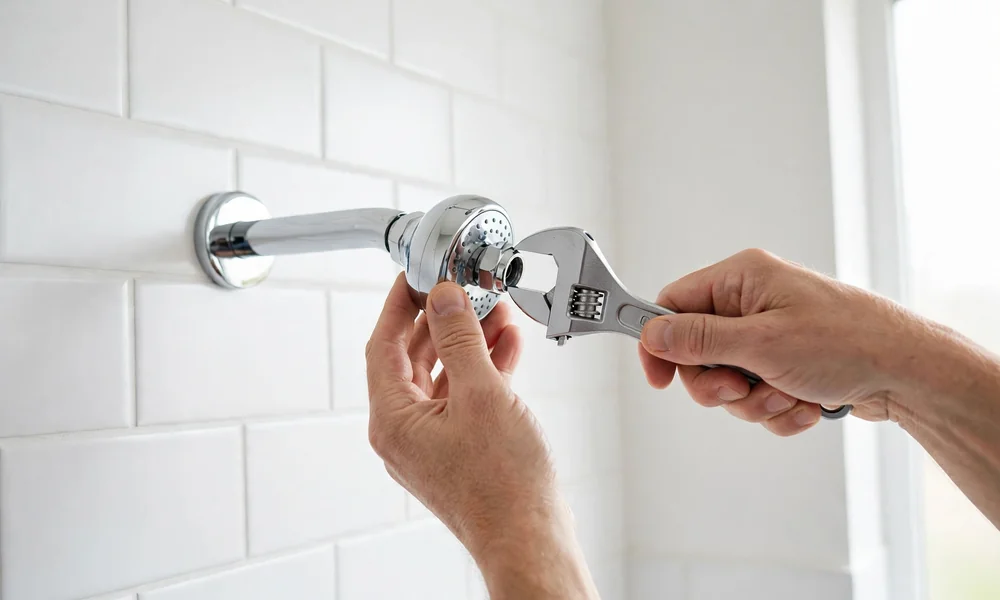
Installing a new shower head takes about ten minutes. Unscrew the old head from the shower arm by hand, turning it anticlockwise. If it is stuck, wrap a cloth around it and use an adjustable spanner so you do not scratch the finish.
Clean the threads on the shower arm and wrap them with a few turns of plumber’s tape, winding it in the same direction as the thread. This seals the joint and stops drips. Then screw the new head on by hand until snug, with a gentle final tighten from the spanner if needed. Turn the shower on and check for leaks.
Other Ways to Improve Low Water Pressure
A new shower head is the quickest fix, but a few other steps can help. Start with the simplest: clean the filter screen in your head and hose, since limescale and sediment can block a surprising amount of flow. Soaking the head in white vinegar overnight dissolves most deposits.
Check that the stopcock, the main valve where water enters the house, is fully open. A partially closed stopcock is a common and easily missed cause of low pressure. If the whole house has low pressure, ask your water supplier about the pressure at your meter, or ask a plumber about a booster pump. And once your shower feels strong, finish the routine well: a soft towel makes the whole experience better, so read our guide to the best bath towel sets for families before you buy, and a warm robe is just as welcome, as our picks of the best bathrobes for women show.
Checklist: Choosing the Right Shower Head for Low Pressure
- Measure your water pressure before you shop.
- Choose small nozzles or air-injection, not just a large face.
- Pick a handheld for targeted spray, or a rain head for an all-over soak.
- Check for a removable or adjustable flow restrictor.
- Match the fitting to your shower arm: most are half-inch thread.
- Look for silicone nozzles and a finish that resists limescale.
Frequently Asked Questions
Will a new shower head really help with low water pressure?
Yes, in most cases. A head designed for low pressure uses smaller nozzles or air-injection to make the same flow feel much stronger, although it cannot create pressure that is not there.
What is the best type of shower head for very low pressure?
A compact high-pressure fixed head or a multi-spray handheld usually performs best at very low pressure, because the small face concentrates the water into a strong spray. Large rain heads suit moderate pressure.
Should I remove the flow restrictor from my shower head?
Removing the restrictor often improves the spray in a low-pressure home, but check local water regulations first, as some areas require it. Keep it safe so you can refit it if you move.
Do high-pressure shower heads use more water?
Not necessarily. Many high-pressure heads use the same or even less water than a standard head, because smaller nozzles and air-injection make the water feel stronger without more volume.
How long does a shower head last?
A good shower head lasts five to ten years with basic care. Wipe the nozzles regularly and soak the head in vinegar every few months in hard-water areas.
Can I install a new shower head myself?
Yes. Most shower heads screw onto a standard half-inch shower arm and need only plumber’s tape and an adjustable spanner.
The Bottom Line
The best shower heads for low water pressure prove that a weak supply does not have to mean a weak shower. Measure your pressure, choose a head with small nozzles or air-injection, and pick the style that fits your bathroom. A ten-minute installation turns a disappointing dribble into a shower you look forward to.