The best ski resorts in 2026 are not simply the ones with the most snow or the tallest peaks. They are the places where the whole trip works: reliable snow, lifts that move without endless queues, terrain that matches the people in your group, and a village where you actually want to spend the evening. A great resort forgives a bad weather day with good grooming, good food and something to do off the slopes.
This guide ranks the resorts that deliver that complete experience in 2026, from the huge linked areas of the Alps to the deep powder of Japan and the wide-open bowls of North America. We weighed snow reliability, size and variety of terrain, lift quality, ski schools, value for money, and how easy each place is to enjoy for beginners, families and experts alike. The winners are the resorts we would book with our own money.
Use the comparison table to narrow the list in a minute, then read the resort-by-resort notes to find the one that fits your ability, your budget and the kind of trip you want. The right resort makes the difference between a trip you remember fondly and one you spend a year paying off.
Key takeaways
- Whistler Blackcomb is the best all-round ski resort in 2026, with the biggest lift-served terrain in North America and something for every ability level.
- Zermatt offers the most reliable snow and the most spectacular setting, with glacier skiing and a car-free village beneath the Matterhorn.
- Niseko in Japan is the best choice for deep powder, with light, dry snow that falls in huge quantities all winter.
- Families should prioritise strong ski schools, gentle nursery areas and short transfers, not just the biggest ski area.
- Book lift passes, lessons and accommodation early: the best resorts in 2026 reward early planners with lower prices and better availability.
The best ski resorts in 2026 at a glance
| Resort | Best for | Ski area | Why it wins |
|---|---|---|---|
| Whistler Blackcomb, Canada | All-round trips | Over 8,000 acres | Huge varied terrain, lively village |
| Zermatt, Switzerland | Snow reliability, scenery | 360 km of pistes | Glacier skiing, car-free village |
| Chamonix, France | Experts, atmosphere | 150 km plus off-piste | Legendary steep terrain, heritage |
| Aspen Snowmass, USA | Luxury, variety | Four mountains | Four mountains on one pass |
| Niseko, Japan | Powder snow | Four linked resorts | Deep light powder, tree runs |
| St. Anton, Austria | Advanced skiers, après-ski | 305 km in the Arlberg | Challenging runs, lively evenings |
| Banff, Canada | Scenery, value | Three resorts | Rockies setting, one pass |
| Courchevel, France | Groomed pistes, comfort | Part of 600 km area | Immaculate grooming, huge area |
The resorts, in detail
1. Whistler Blackcomb, Canada
Whistler Blackcomb remains the benchmark other big resorts are measured against. Two mountains linked by the Peak 2 Peak gondola give more than 8,000 acres of lift-served terrain: long cruisers, wide bowls, gladed tree runs and testing steeps. Beginners, intermediates and experts all find terrain at their level, from gentle learning zones to the high alpine of Blackcomb Glacier. The village is a proper pedestrian town with a wide choice of hotels, restaurants and bars. The trade-off is cost, so book early and consider a multi-day pass. For a mixed-ability group taking one big ski trip in 2026, no other resort covers as many bases as well.
2. Zermatt, Switzerland
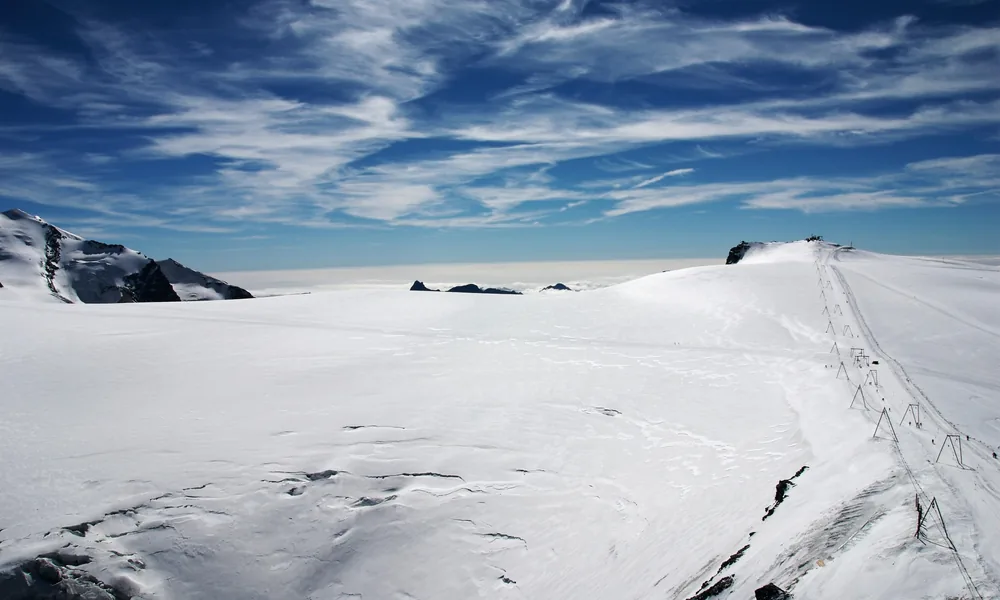
Zermatt is the resort for skiers who want snow they can count on and a setting they will never forget. The village sits beneath the Matterhorn, cars are banned, and the skiing stretches up to the Theodul Glacier, where snow is reliable from late autumn deep into spring. The pistes are long and scenic, the lift system is modern and fast, and the mountain restaurants are among the best in the Alps. It is not the cheapest resort on this list, and beginners may find the glacier terrain demanding. But for confident intermediates and experts, Zermatt is hard to beat, and the link across the border to Cervinia in Italy adds variety on the same lift pass.
3. Chamonix, France
Chamonix is where modern skiing began, and it still feels different from every other resort in France. The town sits in a deep valley under Mont Blanc, and the skiing is spread across several separate areas rather than one connected bowl, which gives the place a raw, mountain feel. Experts come for the steep, serious terrain and the famous Vallée Blanche, a long off-piste descent from the Aiguille du Midi that is one of the great ski experiences in the world when conditions and guides allow. Beginners should be honest before booking: Chamonix is not the easiest place to learn.
4. Aspen Snowmass, USA
Aspen Snowmass gives you four mountains on a single lift pass, and that variety is its greatest strength. Aspen Mountain is steep and central, Aspen Highlands has the famous Highland Bowl, Buttermilk is gentle and ideal for beginners and families, and Snowmass is the big, sprawling area where most visitors spend most of their time, with wide cruisers, terrain parks and excellent on-mountain dining. Aspen town adds polish: excellent restaurants, smart shops and service noticeably higher than at most ski resorts. Prices match the polish, so Aspen suits travellers who are comfortable paying for quality.
5. Niseko, Japan
Niseko is the powder capital of this list. Cold air crossing the Sea of Japan dumps light, dry snow on the mountains of Hokkaido in enormous quantities, and the resort regularly records some of the deepest snowfalls of any major ski area in the world. The skiing is spread across four linked resorts on the slopes of Mount Niseko-Annupuri, with open bowls at the top, wonderful tree runs lower down, and night skiing that extends the day well after dark. The resort suits intermediates and confident skiers best, and the food scene is a genuine draw. English is widely spoken and the ski schools are strong.
6. St. Anton am Arlberg, Austria
St. Anton is the resort for skiers who want to be tested and then celebrate properly. The Arlberg region offers more than 300 kilometres of pistes, with steep reds, demanding blacks and a famous off-piste culture that rewards strong skiers. The lift system is modern and fast, the snow record is strong, and the resort links to Lech and Zürs, giving a huge area to explore over a week. After the lifts close, St. Anton is famous for the liveliest après-ski in the Alps, with slope-side bars that fill up while the sun is still on the mountain. For strong skiers who want big terrain and big evenings, St. Anton delivers both better than almost anywhere else.
7. Banff, Canada
Banff offers some of the most beautiful skiing anywhere, with the peaks of the Canadian Rockies rising around the town and Lake Louise a short drive away. Three resorts share one lift pass: Sunshine Village, with its high, snow-sure bowls; Lake Louise, with huge, varied terrain and spectacular views; and Mount Norquay, a smaller, friendly hill close to town that is ideal for beginners. The combination gives a week of skiing real variety without long transfers. Banff town is a comfortable base, and the resort generally offers better value than Whistler.
8. Courchevel, France
Courchevel is the smartest address in the largest ski area in the world. As part of Les Trois Vallées, it gives access to around 600 kilometres of linked pistes, and its own slopes are famously well groomed, wide and confidence-building for intermediates. The resort is spread across several village levels, from the lively 1650 to the polished 1850, so there is a base to suit most budgets within the same ski area. The grooming and lift system are superb, and the sheer size of the area means you can ski somewhere new every day for a week. For intermediates who want perfect pistes and endless variety, it remains one of the finest places to ski in Europe.
How to choose the right resort
Start with the people, not the resort. Beginners need gentle slopes, a good ski school and short walks to the lifts; experts need steeps, off-piste and a lift system that reaches high ground quickly. Families should look for nursery slopes near the village and childcare. Mixed groups do best at big, varied resorts such as Whistler, Aspen Snowmass or Courchevel, where different abilities can ski separately and meet for lunch. High resorts and glacier areas, such as Zermatt, cost more but hold their snow late into the season. Small mistakes in planning are the usual reason a ski trip disappoints, and reading about the worst ski trip mistakes before you book is a quick way to avoid the most common ones. Finally, budget the whole trip, not just the lift pass, and compare the best travel insurance for 2026 before you travel.
Getting there and getting around
Most resorts on this list need a transfer from the nearest airport. Geneva serves Chamonix, Courchevel and Zermatt; Innsbruck and Munich serve St. Anton; Vancouver serves Whistler; Denver serves Aspen; and Calgary serves Banff. Shared shuttles are cheapest, private transfers suit families with heavy luggage, and trains work beautifully in Switzerland. Many visitors drive at least part of the way, especially in North America, so check the best SUVs for winter driving in 2026 before you set off. Arrive the evening before your first ski day if you can: a rested start and a proper rental boot fitting will make the whole week better.
Checklist: booking your ski trip
- Match the resort to the weakest skier in your group, not the strongest, so nobody spends the week out of their depth.
- Check the resort’s altitude, snowmaking and season dates to make sure your chosen week has reliable snow.
- Book lift passes, lessons and rentals early for the best prices and the widest choice of times.
- Confirm what your travel insurance covers, including off-piste skiing, rescue and cancellation.
- Pack proper layers, gloves, goggles and sun protection, and get rental boots fitted by a professional.
- Plan your transfer from the airport in advance, and allow a spare day for travel delays in bad weather.
Frequently asked questions
When is the best time to ski in 2026?
Mid-January to early March usually offers the best combination of snow cover and quieter slopes, after the New Year crowds and before Easter.
Which ski resort is best for beginners?
Banff, Buttermilk at Aspen Snowmass and Courchevel are strong choices, with gentle nursery areas, good ski schools and plenty of easy runs. Avoid resorts built mainly for experts, such as Chamonix, until you are comfortable on blue runs.
Which ski resort has the most reliable snow?
Zermatt is the most reliable on this list thanks to its glacier and high altitude, followed by Whistler and the high resorts of the Arlberg. Niseko is the most reliable for deep powder, with huge natural snowfall all season.
How much does a ski trip cost in 2026?
A week at a major resort typically costs several thousand per person including flights, accommodation, lift passes, rentals, lessons and food. Early booking, self-catering accommodation and multi-day passes are the most effective ways to bring the cost down.
Do I need travel insurance for a ski trip?
Yes. Skiing carries a real risk of injury, and mountain rescue, medical treatment and trip cancellation can be very expensive without cover. Make sure the policy explicitly includes winter sports and any off-piste skiing you plan to do.
Can I ski in Japan without speaking Japanese?
Yes. Niseko is well set up for international visitors, with English widely spoken in hotels, ski schools and restaurants.
The bottom line
The best ski resort in 2026 is the one that fits your group: Whistler Blackcomb for the best all-round trip, Zermatt for snow you can trust and scenery you will never forget, Niseko for the deepest powder, and Courchevel or Banff for families who want great skiing without the stress. Pick the resort that matches your ability and your budget, book early, and let the mountains do the rest.