The best smart thermostats for homes in 2026 do far more than switch the heating on and off. They learn your routine, trim your energy bills, and keep every room at the temperature you want, while letting you change the heating from your phone, your voice, or the wall itself.
Choosing between them is harder than it looks. Some models need a C-wire, some work brilliantly with heat pumps and others do not, and the difference between a thermostat that saves you money and one that annoys you daily often comes down to sensors, scheduling, and smart home compatibility.
This guide compares the leading models on performance, installation, app quality, room sensors, energy saving, and value, so you can pick the right one with confidence.
Key Takeaways
- The best smart thermostats learn your schedule and adjust heating and cooling automatically, cutting energy waste without you lifting a finger.
- Room sensors are the biggest upgrade for homes with hot and cold spots, because they let the thermostat heat the room you are actually in.
- Check your wiring before you buy: most models need a C-wire, and homes without one need a model with a power extender kit.
- Voice and app control matter most when they work with the smart home system you already use, whether that is Alexa, Google Home, or Apple HomeKit.
- A well-chosen smart thermostat typically pays for itself through lower energy bills within one to two years.
What Makes a Smart Thermostat the Best
A smart thermostat earns its place on your wall by doing three things well: keeping you comfortable, saving energy, and staying out of your way. The best models manage all three at once.
Learning ability separates the leaders from the rest. A learning thermostat watches your adjustments for the first week or two, then builds a schedule around them, so you rarely need to touch it afterwards. Models without learning rely on schedules you program yourself, which suits a regular routine but feels rigid if your days change often.
Comfort and Temperature Accuracy
Accuracy matters. A thermostat that reads two degrees too warm will leave you chilly, while one that overshoots wastes energy. The best models bring rooms to temperature gently, avoiding the swings of old dial thermostats.
Room sensors take this further. Instead of heating the whole house to suit the hallway where the thermostat lives, a sensor in the bedroom or living room tells the system which space matters right now.
Energy Saving Features
Energy reports are one of the most useful features a smart thermostat offers. The best apps show when your heating ran and how much energy you used compared with previous weeks.
Geofencing is another quiet money saver. When your phone leaves the house, the thermostat eases back to an energy-saving temperature, and when you head home, it warms up ready for your arrival.
Smart Home Compatibility
A thermostat does not live alone. The best smart thermostats for homes work smoothly with the voice assistants and platforms you already own, so you can ask for a warmer living room without reaching for your phone. If you already use smart speakers, a thermostat on the same system feels like a natural extension, and our guide to the best smart speakers of 2026 shows which ones pair best with a connected home.
Compatibility also covers the practical side: radiators, underfloor heating, heat pumps, and multi-stage systems all need different support. Check that your model supports your heating type before buying.
The Best Smart Thermostats for Homes in 2026
After comparing features, performance, and value, five models stand out in 2026. Each suits a different kind of home, so the right choice depends on your heating system, your budget, and how much automation you want. Here they are.
| Model | Best For | Standout Feature | Price Range |
|---|---|---|---|
| Google Nest Learning Thermostat | Hands-off automation | Learns your schedule automatically | Premium |
| Ecobee Smart Thermostat Premium | Room-by-room comfort | Included room sensor and air quality monitor | Premium |
| Honeywell Home T9 | Multi-room homes | Excellent room sensors and scheduling | Mid-range |
| Amazon Smart Thermostat | Budget buyers | Simple, affordable Alexa control | Budget |
| Emerson Sensi Touch 2 | Easy installation | Works with most systems, often no C-wire needed | Mid-range |
Google Nest Learning Thermostat
The Nest Learning Thermostat remains the benchmark for set-and-forget heating. It watches your adjustments during its first week, then builds a schedule that follows your life without constant tweaking. Home-and-away features adapt the heating when your routine changes.
Ecobee Smart Thermostat Premium
The Ecobee Smart Thermostat Premium is the strongest choice for homes with uneven temperatures. It ships with a room sensor in the box, and extra sensors can be placed in bedrooms or living areas so the system heats the rooms you are using. It is a premium purchase, but the combination of sensors, air monitoring, and polished software makes it the most capable thermostat on this list.
Honeywell Home T9
Honeywell has been making thermostats for decades, and the T9 shows that experience. Its room sensors are among the best, letting you prioritise different rooms at different times of day. Scheduling is flexible, the app is reliable, and it handles complex multi-stage systems with ease.
Amazon Smart Thermostat
If you want smart heating without a premium price, the Amazon Smart Thermostat is the best value pick of 2026. It covers the essentials, app control, Alexa voice control, scheduling, and energy-saving hints, at a price far below the premium models. It is ideal for flats, smaller homes, or a first smart thermostat. The trade-off is depth: no learning schedule and no room sensors, though for many homes the essentials are enough, and the money saved can go towards upgrades like the best smart plugs for home automation.
Emerson Sensi Touch 2
The Sensi Touch 2 is the quiet achiever of this list. It works with the widest range of heating and cooling systems, including many that other smart thermostats struggle with, and it often installs without a C-wire where rivals need one. The colour touchscreen is bright and easy to read, and the app gives you full control plus usage reports.
How to Choose the Right Smart Thermostat for Your Home
The best thermostat for your neighbour may not be the best one for you. Your heating system, the size of your home, and how you live in it all shape the right choice, so work through the points below before you buy.
Check Your Wiring First
Most smart thermostats need a C-wire, the common wire that supplies constant power. Many modern homes have one, but older homes often do not. Before ordering, switch off your heating, remove your old thermostat, and look at the wires.
Match It to Your Heating System
Gas boilers, heat pumps, electric heating, underfloor heating, and multi-stage systems all behave differently. Heat pumps need a thermostat that understands their slower, steadier heating style, or it will trigger expensive backup heating too often.
Think About Rooms, Not Just the Hallway
Most thermostats sit in a hallway, which is rarely the room you care about most. If your bedrooms run cold or you work from a home office all day, room sensors are worth the extra cost.
Pick the App and Voice Control You Will Actually Use
You will use the app far more than the wall unit, so it needs to be good. Look for clear scheduling, quick temperature changes, energy reports you can understand, and alerts if the temperature drops unexpectedly. Voice control should work with the assistant you already use. It is also worth knowing which gadgets cause the most trouble, and our guide to the worst smart home devices that cause more problems is a useful warning about what to avoid.
Installation: What to Expect
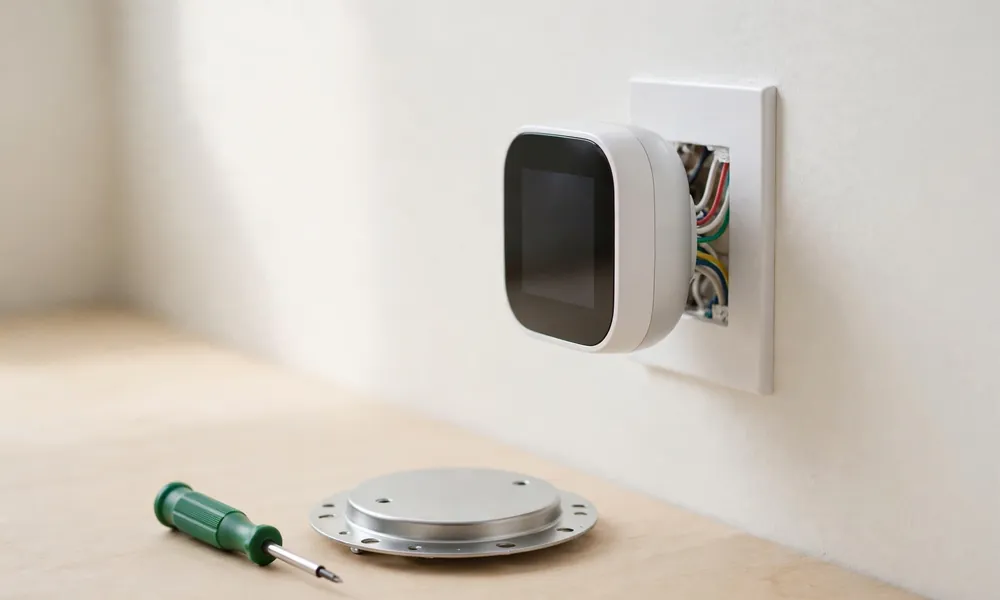
Installing a smart thermostat is a manageable DIY job for most people, taking thirty minutes to an hour. Switch off power at the breaker, remove the old thermostat, photograph the wiring, label each wire, connect them to the matching terminals on the new base plate, mount it on the wall, and follow the app setup.
The photograph step is the one people skip and later regret. Wires can look alike once they are loose, and a clear photo makes troubleshooting simple. If your wiring looks unusual or you have a complex multi-zone or heat pump system, a qualified installer is worth the cost.

Saving Energy With a Smart Thermostat
A smart thermostat saves energy in three ways: it heats only when needed, it heats only where needed, and it shows you the results so you can improve. Together, these habits typically cut heating and cooling use enough to recover the purchase price within one to two years.
The biggest saving comes from schedules that match real life. Dropping the temperature by a single degree cuts heating costs, and letting the house cool while you are at work or asleep saves more than most people expect. Check your energy reports monthly and adjust your schedules as the seasons change.
Finally, use the maintenance reminders. A thermostat that warns you when the filter needs changing can catch small problems before they become expensive repairs.
Smart Thermostat Buying Checklist
- Confirm your heating system type and check the thermostat supports it before ordering.
- Look behind your old thermostat and confirm whether you have a C-wire.
- Decide whether you need room sensors for hot and cold spots, and budget for them if you do.
- Make sure the thermostat works with your voice assistant and smart home platform of choice.
- Check the app reviews and make sure scheduling, energy reports, and alerts are easy to use.
- Compare the total cost, including sensors and installation, not just the price of the thermostat alone.
Frequently Asked Questions
Do smart thermostats really save money?
Yes, for most homes. By heating only when you are home and easing off at night, a smart thermostat typically reduces heating and cooling costs enough to pay for itself within one to two years.
Do I need a C-wire for a smart thermostat?
Most models need a C-wire for constant power, though some include a power extender kit or work without one on certain systems. Check your wiring before buying, and if there is no C-wire, choose a model that solves the problem in the box.
Can I install a smart thermostat myself?
Most people can. The job usually takes thirty to sixty minutes and involves swapping wires from the old thermostat to the new one. Switch the power off first, photograph the wiring, and label each wire.
Will a smart thermostat work with a heat pump?
Yes, but choose carefully. Heat pumps heat slowly and steadily, so the thermostat needs a heat pump mode that avoids triggering expensive backup heating. The Ecobee, Nest, and Honeywell models on this list all support them when set up correctly.
Can a smart thermostat control different rooms separately?
With room sensors, yes. Sensors tell the thermostat the temperature in the room you are using, so it heats that space to your target. True independent control of each room needs a zoned system, but sensors are a big step in that direction.
What happens to my smart thermostat if the Wi-Fi goes down?
Your heating keeps working. The thermostat continues to follow its schedule and you can still change the temperature on the wall unit. You only lose remote control until the Wi-Fi returns.
The Bottom Line
The best smart thermostat for your home is the one that matches your heating system, fits the way you live, and quietly saves energy without demanding your attention. For most homes, the Nest Learning Thermostat or the Ecobee Smart Thermostat Premium lead the way, while the Amazon Smart Thermostat is the smartest choice on a budget and the Sensi Touch 2 is the safest bet for older or unusual systems.