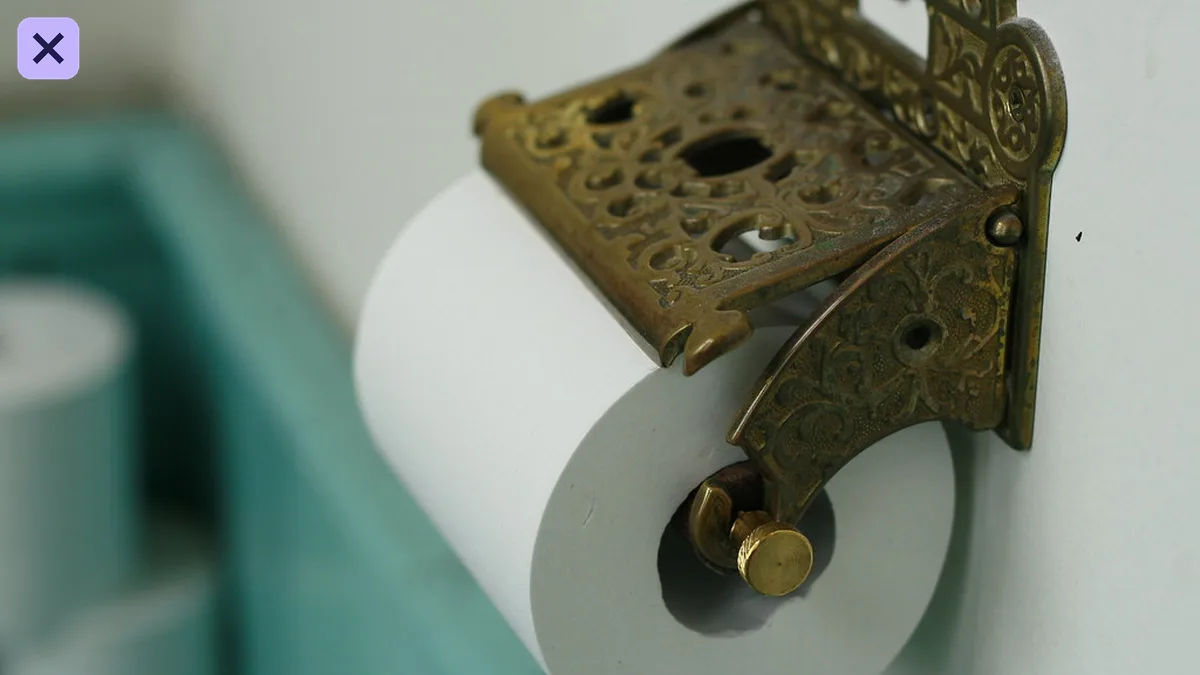
How to Pick a Toilet Paper Holder That Fits the Wall in 2026
A toilet paper holder is a small fitting with an outsized ability to annoy. Put it in the wrong place and every trip to the bathroom involves a stretch, a fumble, or a roll that unwinds onto the floor. Put it on the wrong wall and it works loose within months, leaving holes that are harder to fix than the fitting was to install. Choosing the right toilet paper holder is mostly a matter of measuring first and buying second.
This guide takes the decisions in the order that saves the most trouble: the wall, the mount, the type, the material, and the fit.
Key Takeaways
- Measure the wall space and the reach from the seat before you buy anything, because most toilet paper holder problems are placement problems.
- Match the fixing to the wall: screws into a stud or solid masonry hold best, while tile and plasterboard need the right plugs or an adhesive mount.
- A wall-mounted holder suits most bathrooms, a recessed holder suits a tiled wall with space behind it, and a freestanding holder suits renters and awkward layouts.
- Chrome and stainless steel resist moisture best, while matte black and brass look better but need more wiping to stay smart.
- Check the roll size, the spindle, and the clearance around the holder before you drill, so the roll spins freely and the paper tears cleanly.
Start With the Wall, Not the Holder
Every toilet paper holder is only as good as its fixing, and the fixing depends entirely on the wall. A holder screwed into a timber stud or solid brick will hold firm for years. The same holder fixed to bare plasterboard with ordinary screws will wobble, then pull out, usually at the worst moment. Before you look at a single product, work out what your bathroom wall is made of.
Tap the wall beside the toilet. A solid, dull thud usually means masonry or a stud behind the plasterboard; a hollow sound means a cavity. The fixing has to reach the material behind the tiles, so if you are unsure, a small pilot hole in an inconspicuous spot tells you more than any guess.
Finding a Stud or Solid Fixing Point
A stud finder is the fastest way to locate timber behind plasterboard. Mark the stud edges in pencil and aim the screws at the centre of the stud. If there is no stud where the holder needs to go, use plasterboard fixings rated for the load, such as metal toggle bolts or self-drilling anchors, which hold far better than the plastic plugs supplied in the box. On masonry, use a masonry bit and proper plugs, drilling into the brick rather than the mortar joint, which crumbles under load.
How High and How Far From the Seat
The standard position is on the wall beside the toilet, with the centre of the roll about 66 centimetres above the floor and 20 to 30 centimetres in front of the front edge of the seat. Leave at least 10 centimetres of clear space above the roll so a full roll lifts off easily, and the same to the side so the paper unrolls without brushing the wall.
Getting these numbers right before you buy is what separates a holder that feels invisible from one that irritates you daily. The same habit of measuring the room first pays off elsewhere in the bathroom too, as the guide to best vs worst bathroom faucets shows with taps and basins.
The Main Types of Toilet Paper Holder
Once the wall and the position are settled, the choice narrows to five types. Each suits a different bathroom, and the differences are practical rather than cosmetic: how the roll is loaded, how much space the holder needs, and how it behaves when the bathroom is damp.
Wall-Mounted Holders
The wall-mounted holder is the default for a reason. A short arm or a pair of brackets holds a spring-loaded spindle, the roll lifts off with one hand, and the fitting takes up almost no space. It suits nearly every bathroom and needs only two screws, so choose one with a solid metal arm and a spindle that clicks firmly into its sockets.
Recessed Holders
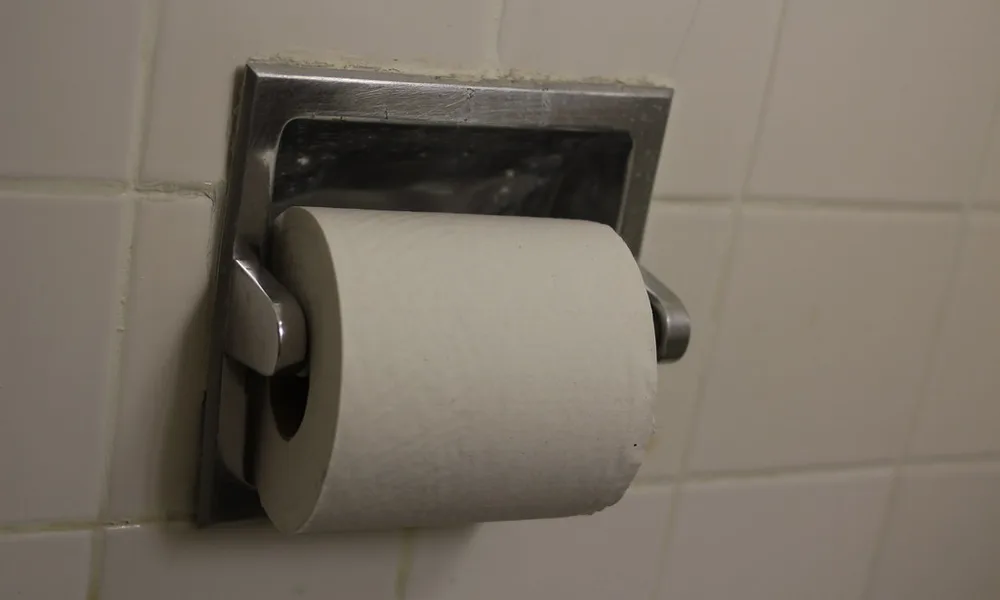
A recessed holder sits inside the wall, so only the roll and a slim frame show. It is the neatest option, and the best choice for a small bathroom where every centimetre matters. The catch is the installation: the wall needs a cavity deep enough for the unit, which usually means cutting into plasterboard or building the recess during a renovation. It is a poor choice for solid masonry unless you are prepared to chase a hole into the brick.
Freestanding and Over-Tank Holders
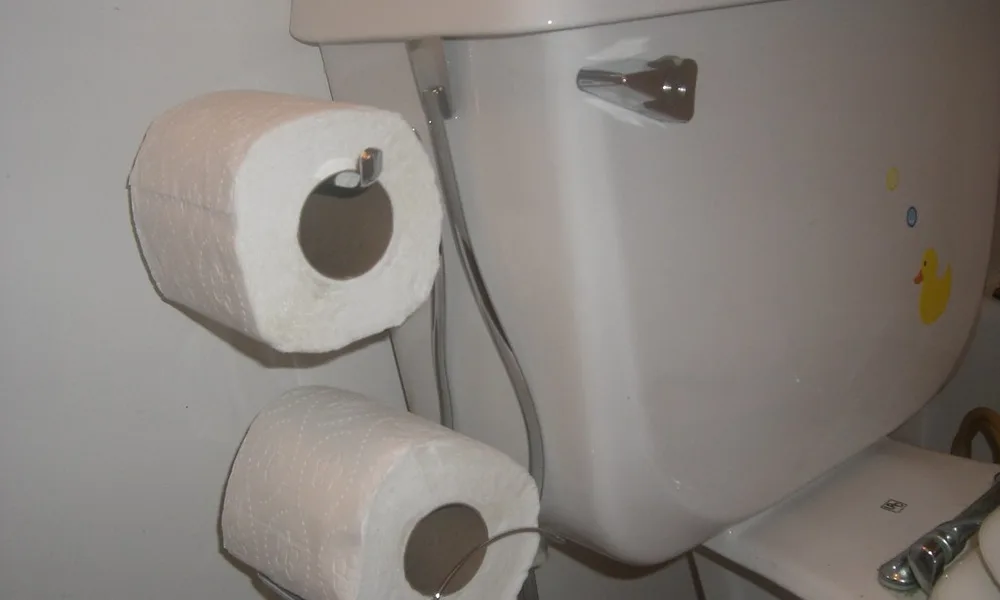
A freestanding holder stands on the floor beside the toilet, usually with a weighted base and room for spare rolls underneath. It needs no drilling at all, which makes it the natural pick for renters, for walls that cannot be drilled, and for anyone who wants to move the holder when the layout changes. The trade-off is floor space, so choose one with a heavy base and a low centre of gravity. An over-tank holder clips to the side of the cistern and holds one or two spare rolls, which is handy in a cloakroom.
| Type | Best for | Fixing needed | Weak point |
|---|---|---|---|
| Wall-mounted | Most bathrooms | Two screws | Pulls loose on weak walls |
| Recessed | Small tiled bathrooms | Wall cavity | Hard to retrofit |
| Freestanding | Renters, no-drill homes | None | Takes floor space |
| Over-tank | Cloakrooms, spare rolls | Clip-on | Fits few cisterns |
| Adhesive | Tiled walls, rentals | Stick-on pad | Fails on damp or dirty tile |
Adhesive Holders
Adhesive holders have improved a lot. The better ones use a large transparent pad and a metal bracket, and they genuinely hold a full roll on smooth tile. They are the fastest to fit and the only type that leaves no mark, which matters in a rented flat. Their limit is the surface: they grip glazed tile and glass, but not textured tile, painted plaster, or wallpaper, and they hate damp, so keep them away from shower spray.
Materials and Finishes That Last in a Damp Room
A bathroom is a hard environment for metal. Steam, splashes, and cleaning sprays attack every finish, and a holder that looks perfect in the shop can spot and pit within a year. The material matters more than the brand, and the differences show up fast.
Chrome-plated brass is the safest all-round choice. It shrugs off moisture, wipes clean with a damp cloth, and suits almost any bathroom. Stainless steel is equally tough and suits a modern bathroom, though cheaper steel shows water spots. Solid brass looks warmer but needs occasional polishing and costs more. Matte black looks superb against pale tiles, but it shows dust and water marks, and a cheap black coating chips where the roll rubs. Plastic holders never rust, but they flex, creak, and look tired long before they break.
Fit Checks Before You Drill
The last step before drilling is a dry run, and it takes five minutes. Hold the bracket against the wall at the planned height, sit on the toilet, and reach for it. If you have to stretch or twist, move it. Then check the roll itself: a standard roll is about 10 centimetres wide, but jumbo rolls are wider, and a holder made for standard rolls will pinch them so they barely turn.
Check that the roll spins freely once fitted. A roll that drags will tear in short strips, and the fault is usually a spindle that is too tight or a bracket that pinches the roll. Also look at what sits around the holder: a towel rail or shelf too close will snag the paper. Give each fitting its own clear zone, as the guide to towel racks that keep a bathroom tidy explains for the rail beside it.
Mistakes That Ruin an Otherwise Good Holder
Most holder failures are avoidable. Drilling into tile without a diamond bit cracks the glaze, and the crack spreads every time the bathroom steams up. Fixing to a mortar joint instead of the brick lets the holder work loose within weeks, and using the short screws from the box on a thick tiled wall leaves the plug barely engaged, so the holder pulls out under the lightest tug.

Checklist: Picking a Toilet Paper Holder That Fits
- Measure the wall space, the height from the floor, and the reach from the seated position before you shop.
- Identify the wall type and choose the fixing to match: stud or masonry screws, plasterboard anchors, or an adhesive pad on clean tile.
- Pick the type for the room: wall-mounted for most bathrooms, recessed for a small tiled wall, freestanding where drilling is not allowed.
- Check the roll width against the holder, leaving at least a centimetre of clearance on each side so the roll spins freely.
- Choose a moisture-proof material, chrome or stainless steel for the easiest care, and test the spindle for play before you buy.
- Do a dry run on the wall, sitting on the seat and reaching for the roll, and leave clear space above and beside the holder.
Frequently Asked Questions
How high should a toilet paper holder be?
About 66 centimetres from the floor to the centre of the roll suits most adults, with the holder 20 to 30 centimetres in front of the front edge of the seat. In a family bathroom with small children, fitting it a little lower, around 60 centimetres, makes it easier for them to reach.
Can I fit a toilet paper holder without drilling?
Yes. A freestanding holder needs no fixing at all, and a good adhesive holder sticks firmly to clean, dry, glazed tile. Adhesive mounts do not grip textured tile, painted plaster, or wallpaper, and they need a full day to cure before you hang a roll on them.
What is the best material for a toilet paper holder?
Chrome-plated brass or stainless steel lasts longest in a damp bathroom and is the easiest to keep clean. Solid brass looks warmer but needs polishing, matte black looks smart but shows water marks, and plastic never rusts but feels flimsy and ages quickly.
Will a recessed holder fit my bathroom wall?
Only if the wall has a cavity deep enough for the unit, which usually means a plasterboard wall or a wall opened during a renovation. A solid brick wall would need a hole chased into it, so a recessed holder is best specified while the bathroom is being built or refitted.
Why does my toilet paper holder keep coming loose?
The usual cause is the wrong fixing for the wall: ordinary screws in plasterboard, plugs in a mortar joint, or screws too short to reach through tile into the wall behind. Refit it with the right anchor for the wall type, or move it to a stud, and it will hold.
How do I stop the roll from unravelling?
Make sure the roll spins freely without wobbling. A spindle that is too tight drags and tears the paper in strips, while a loose one lets the roll spin on and unravel. Replacing a worn plastic spindle with a sprung metal one usually fixes it. If the wall is crowded, the ideas in the guide to bathroom shelves that add storage without the clutter show how to give every fitting its own space.
The Bottom Line
The best toilet paper holder in 2026 is not the most expensive or the most decorative one. It is the one that fits your wall, sits within easy reach of the seat, holds your usual roll without pinching it, and stays solid year after year. Measure the wall, match the fixing to what is behind the tiles, check the roll width before you drill, and choose chrome or stainless steel if you want the easiest care.


