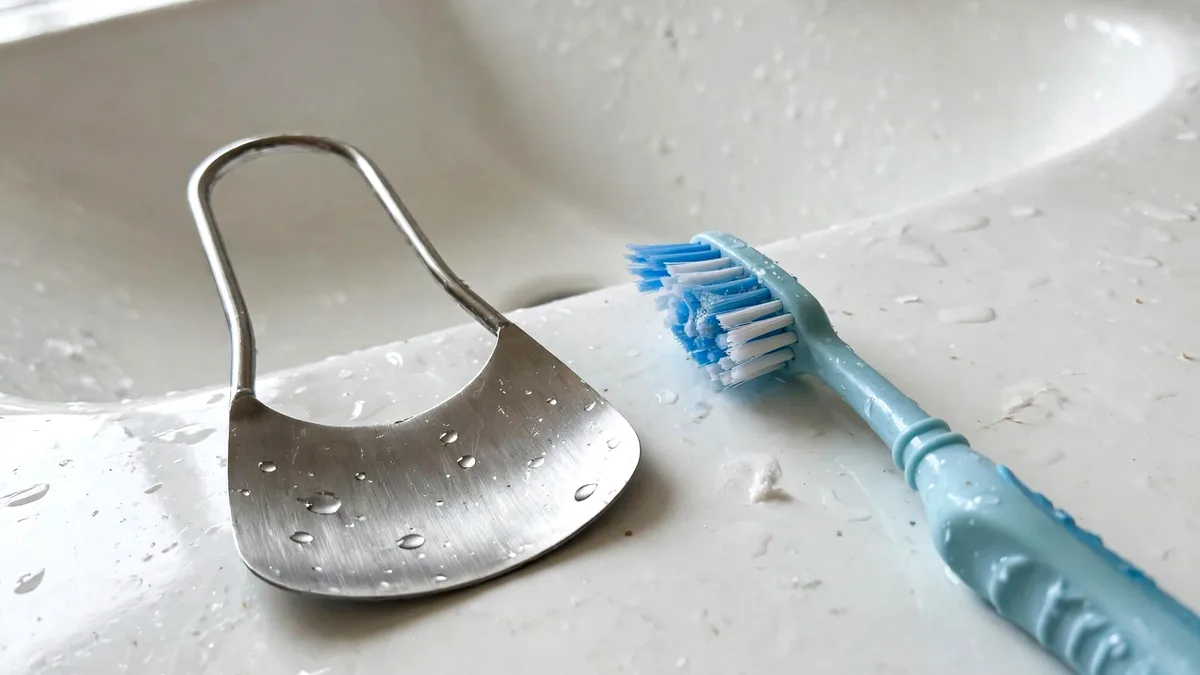
The best tongue scrapers of 2026 do a job your toothbrush only pretends to do. Brushing cleans your teeth, but the tongue is where most bad breath starts: a warm, rough surface where bacteria, food debris and dead cells collect into a coating that brushing barely touches. A tongue scraper is a simple curved tool that pulls that coating off in a few gentle strokes, and the difference is noticeable the same morning you first use one. This guide compares the best tongue scrapers for everyday use in 2026, judged on material, edge shape, grip and how easy they are to keep clean.
The first attempt feels strange, but the trick is simple: place the curved edge near the middle of the tongue, press lightly, and draw it forward in one slow stroke. Rinse, repeat three or four times, and you are done in under a minute. There is no need to press hard or gag yourself. A good scraper does the work with light pressure, and this guide explains which type suits your mouth, your gag reflex and your bathroom shelf.
Key Takeaways
- A tongue scraper removes the bacterial coating that causes most bad breath, which brushing alone leaves behind.
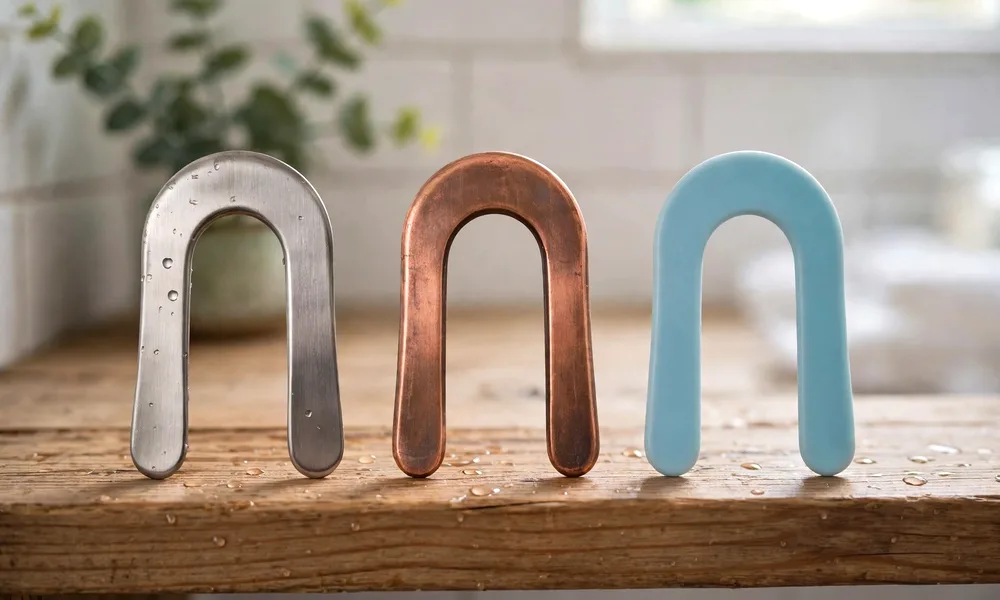
- Stainless steel scrapers last longest and clean easiest, while copper needs drying after use and plastic is the gentlest starting point.
- Use light pressure and short strokes from the middle of the tongue forward, three or four passes, once or twice a day.
- Never scrape hard or far back enough to gag: pressure does not clean better, it only irritates the tongue.
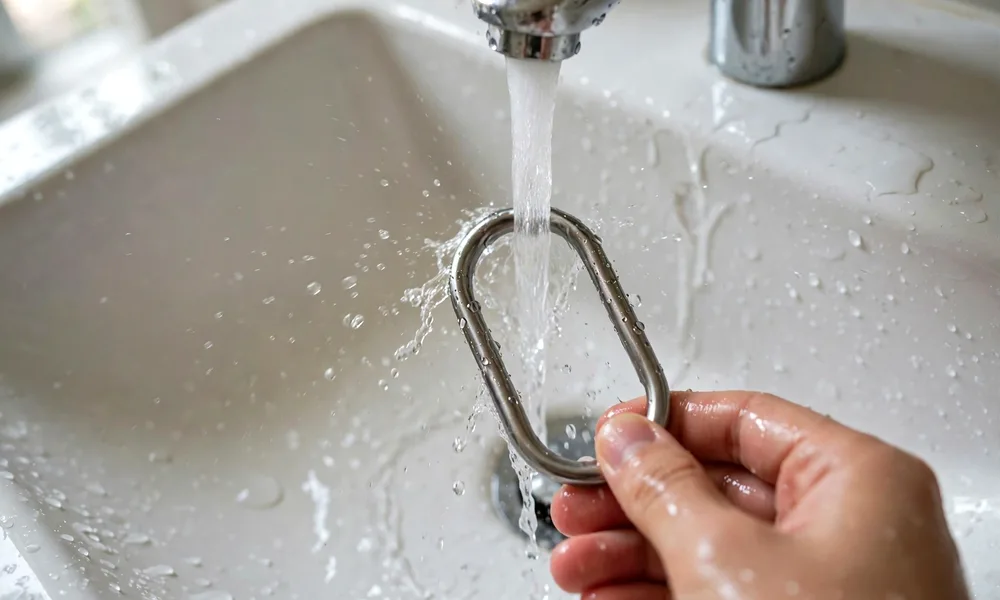
- Rinse the scraper under running water after every pass and wash it properly once a day so it never becomes a source of bacteria itself.
How We Picked the Best Tongue Scrapers for 2026
A good scraper has a smooth, rounded edge that glides without catching, and a curve that matches the shape of the tongue so the whole width is cleaned in one pass. Sharp edges, rough seams and stiff plastic ridges all fail this test: they feel scratchy, they miss the sides, and they make you press harder than you should.
Steel lasts for years and cleans easiest, copper is naturally antimicrobial but needs drying, Two-handed U-shaped scrapers give even pressure across the tongue, while single-handle scrapers are easier to store and travel with. Finally we considered cleaning, because a scraper that cannot be rinsed clean in seconds will be left in a drawer.
The Best Tongue Scrapers of 2026 at a Glance
| Scraper | Material | Shape | Best for |
|---|---|---|---|
| SteelLoop Pro | Stainless steel | U-shaped, two handles | Best overall |
| CopperKind Classic | Copper | U-shaped, two handles | Traditional choice |
| FlexiClean Gentle | Soft plastic | Single handle | Sensitive tongues |
| TravelMini Fold | Stainless steel | Compact single handle | Travel |
| FamilyPack Value | Plastic | Single handle | Best value |
Best Overall: SteelLoop Pro
The SteelLoop Pro is the scraper we would hand to most people, The U-shaped stainless steel loop gives even pressure across the full width of the tongue, so one slow stroke cleans what a narrow scraper takes three passes to cover. The edge is smooth and rounded, the handles give a steady grip even with wet hands, and it rinses clean in seconds. It never needs replacing unless you lose it.
Best Traditional Choice: CopperKind Classic
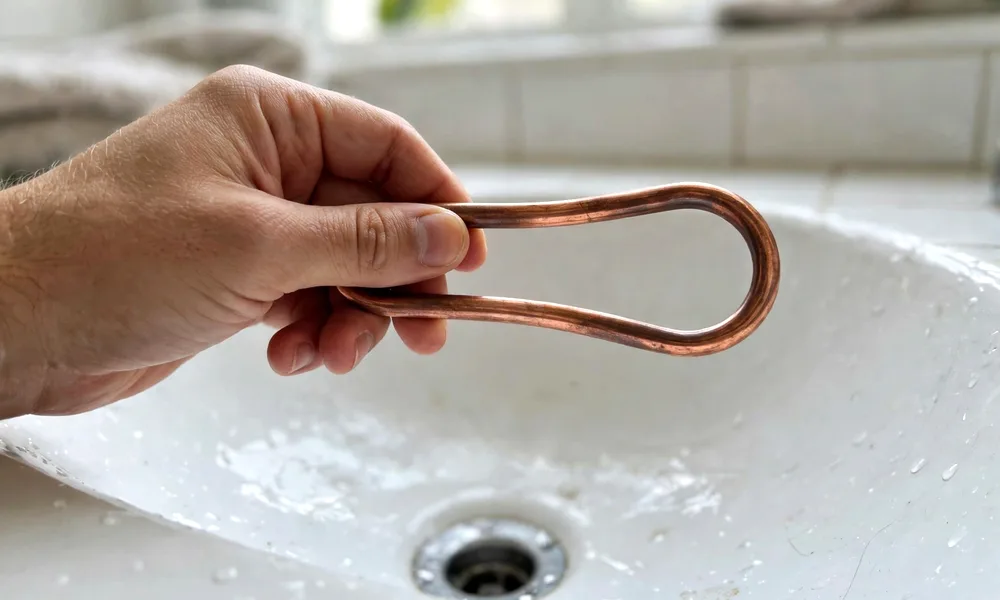
Copper is naturally antimicrobial, the U-shape gives the same even pressure as the steel pick, and the warm metal feels comfortable against the tongue. It needs a little more care: dry it after use so it does not tarnish. If you like a natural material and do not mind a minute of upkeep, this is the scraper to buy.
Best for Sensitive Tongues: FlexiClean Gentle
The soft plastic edge flexes against the tongue instead of pressing into it, so you can learn the motion without worrying about scratching. It does not clean quite as thoroughly in one pass as the steel loop, so expect four or five gentle strokes instead of three. Replace it every few months, when the edge starts to roughen.
Best for Travel: TravelMini Fold
This compact steel scraper folds flat, slips into a small case, and opens into a proper single-handle scraper with the same smooth edge as the full-size steel pick. It takes an extra pass to cover the tongue, but the cleaning is just as good. Buy it as a second scraper for trips, not as your only one.
Best Value: FamilyPack Value
The FamilyPack Value is a pack of four plastic single-handle scrapers, sold for about the price of one steel scraper. The edge is smooth, the handle is comfortable, and each scraper works well for a few months. The point of the pack is hygiene and sharing: everyone in the household gets their own scraper, colour-coded so there are no mix-ups. It is the best way to get a whole family scraping.
What a Tongue Scraper Actually Does
The surface of the tongue is covered in tiny bumps called papillae, and between them live bacteria, food debris and dead cells. Together they form a coating, often whitish or yellowish, that brushing barely disturbs: a toothbrush is designed for the smooth surface of teeth, not the rough surface of the tongue, and its bristles skate over the top of the coating. A scraper works differently. Its curved edge sits flat against the tongue and lifts the coating off in a single pass, which is why the first scrape often looks unpleasant and the mouth feels noticeably fresher afterwards.
Most bad breath comes from the back of the tongue, where sulphur-producing bacteria thrive in the coating, and removing it cuts the smell at its source rather than covering it up. Taste improves too: a coated tongue dulls flavour, and food often tastes sharper within a week. The benefit is real but limited. Scraping does not cure gum disease, fix cavities, or replace brushing and cleaning between your teeth.
How to Use a Tongue Scraper Properly
Scrape before or after brushing, whichever you will stick to, and always on a damp tongue. Hold the scraper with both hands if it is U-shaped, or one hand if it has a single handle, and place the curved edge near the middle of your tongue, not right at the back. Press lightly, draw it forward towards the tip in one slow stroke, and look at what comes off. Rinse the scraper under running water, then repeat the stroke three or four times, working from the middle outwards so you cover the whole tongue.
Steel, Copper or Plastic: Which Material Wins?
It is the easiest to clean, it does not rust or tarnish, it keeps a smooth edge for years, and it can be sterilised in boiling water. The only downside is the feel: cold steel on the tongue takes a day or two to get used to, so keep the scraper in a holder rather than loose on the sink.
Copper has the longest history and a genuine antimicrobial edge, but it tarnishes and needs drying after every use. Plastic is the gentlest and cheapest, and the best choice for children and sensitive tongues, but it wears out and should be replaced every few months. Our advice: start with plastic if you are unsure, move to steel once the habit sticks, and choose copper only if you enjoy the ritual of caring for it.
Scraping, Brushing and Rinsing: The Full Routine
Brushing cleans the teeth, scraping cleans the tongue, and rinsing reaches the gaps neither one touches. Brush for two minutes with a soft brush, scrape the tongue for under a minute, and clean between your teeth daily: our guide to how to floss without the hassle explains the technique that makes flossing quick instead of fiddly.
Rinsing has its place too, but timing matters. A fluoride rinse used at a different moment from brushing, such as after lunch, adds protection in the gaps the brush cannot reach, and our guide to the best mouthwash explains when to use it and who benefits most. And if you are still choosing the brush itself, our comparison of the best electric toothbrushes covers the models that keep the two-minute routine steady. A scraper is a small addition to that routine, but it is the one that deals with the part of the mouth everything else ignores.
When Scraping Is Not Enough
A tongue scraper helps with everyday coating and ordinary bad breath, but it is not a treatment. A thick white coating that does not come off with gentle scraping, a tongue that stays sore or bleeds, white patches, or bad breath that does not improve after a week or two of daily scraping are all reasons to see a dentist. Some coatings are caused by thrush, a dry mouth, or medicines, and no scraper will fix those. The same applies to bleeding gums, loose teeth, or pain when eating: those are dental problems, not hygiene problems, and they need a professional, not a new tool.
Your Tongue Scraper Checklist
- Choose a scraper with a smooth, rounded edge and a curve that matches your tongue.
- Start with plastic if you are nervous, and move to steel once the habit sticks.
- Scrape with light pressure, from the middle of the tongue forward, three or four passes.
- Rinse the scraper under running water after every pass.
- Wash the scraper with soap and hot water once a day, and dry copper scrapers after use.
- Replace plastic scrapers every few months, and see a dentist if a coating will not come off.
Frequently Asked Questions
How often should I use a tongue scraper?
Once a day is enough for most people, usually in the morning when the coating is thickest. Twice a day is fine if you enjoy it, but once a day, done gently, is what makes the difference.
Does tongue scraping really help bad breath?
Yes, for the most common kind. Most bad breath comes from bacteria in the coating on the back of the tongue, and scraping removes that coating at its source. If bad breath does not improve after a week or two of daily scraping, see a dentist, because the cause may be elsewhere.
Is a tongue scraper better than brushing your tongue?
Yes, for most people. A toothbrush bristle skates over the coating, while a scraper edge lifts it off. Brushing the tongue is better than nothing, but a scraper cleans more thoroughly in fewer strokes and with less pressure.
Should I choose steel, copper or plastic?
Steel is the easiest to keep clean and lasts for years. Copper is traditional and naturally antimicrobial but needs drying after use. Plastic is the gentlest and cheapest, and the best first scraper, but it should be replaced every few months.
Why do I gag when I scrape my tongue?
You are starting too far back. Place the scraper near the middle of your tongue and draw it forward, and only move back a little further over several days as you get used to it. Light pressure and slow strokes help more than forcing it.
Can children use a tongue scraper?
Yes, once they are old enough to follow instructions. Use a soft plastic scraper, go gently, supervise them until the motion is second nature, and never share a scraper between people.
The Bottom Line
The best tongue scraper is a smooth-edged, well-shaped tool you will actually use every morning: the SteelLoop Pro for most people, the CopperKind Classic if you like a traditional material, and the FlexiClean Gentle if your tongue is sensitive or you are just starting out. Use light pressure, three or four slow strokes from the middle of the tongue forward, and rinse after every pass. It takes under a minute and deals with the part of your mouth that brushing, flossing and rinsing all miss.