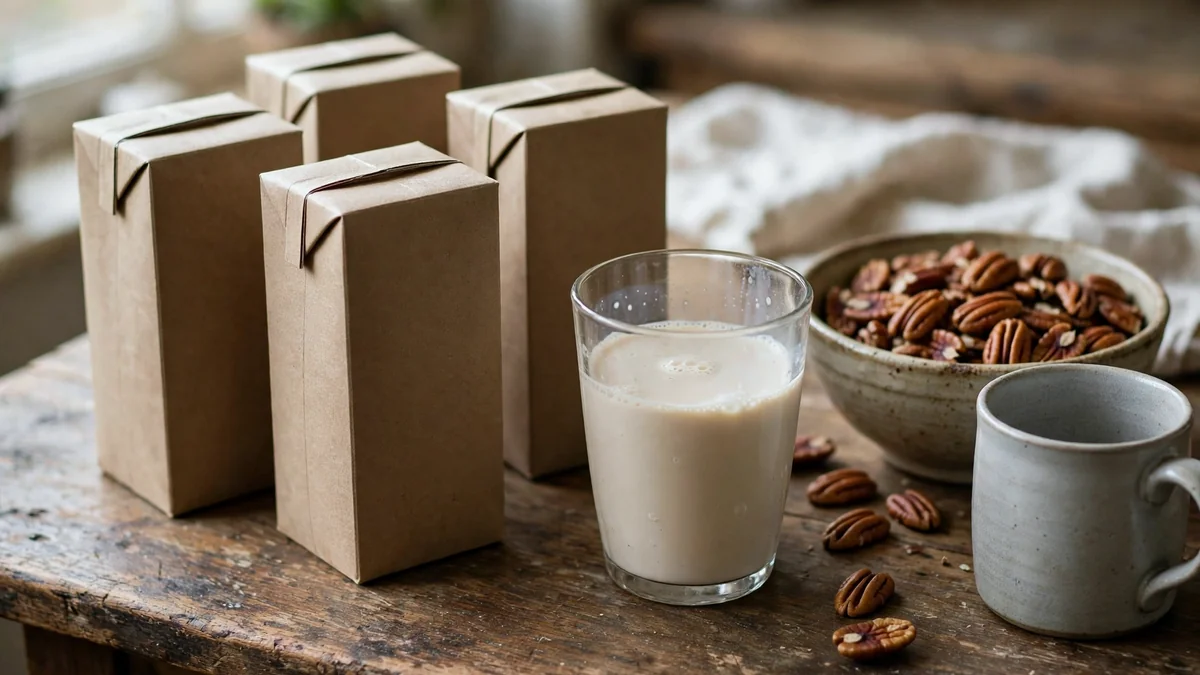
Pecan milk is the warmest voice on the plant milk shelf, and it is also one of the least known. Where almond milk tastes bright and oat milk tastes of grain, a good pecan milk tastes of toasted nuts and caramel, rich and buttery, with a soft sweetness that comes from the nut itself rather than from sugar. It pours a creamy pale brown, smells faintly of baking, and turns a bowl of porridge or a cup of coffee into something that tastes like autumn. The best versions taste like the nut you would eat by the handful: deep, mellow, and satisfying. The worst versions taste of almost nothing, or of sugar and flavouring, and they cost far more than the carton deserves. That gap is what this comparison is about.
The difference between the best pecan milks of 2026 and the worst shows up in four places: the flavour, the body, the sweetness, and the way the milk behaves in hot drinks. A great pecan milk is creamy and smooth in the mouth, tastes gently of real toasted pecan without any bitterness, and stays together in coffee and porridge alike. A bad one is so thin it might as well be tinted water, or so sweet it turns every bowl of cereal into dessert, or so full of thickeners that it coats the mouth like glue. This comparison puts them head to head the way you would actually use them: poured over breakfast cereal, stirred into porridge, blended into a smoothie, and drunk cold from a glass. We look at flavour, body, sweetness, how they hold up in tea and coffee, and whether a carton earns its place in the fridge or only its place on the shelf.
Key Takeaways
- A good pecan milk is creamy and pale brown, with a warm toasted flavour, no bitterness, and no chalky aftertaste.
- Check the label for pecan content and added sugar: the best cartons list real pecan first and keep sweetening light.
- Pecan milk is at its best in porridge and hot coffee, where its warm, buttery flavour deepens instead of fading.
- The worst pecan milks are thin and grey-brown, overly sweet, or so thick with gums that they coat the mouth.
- The same honest approach sits behind our comparison of the best and worst almond milks of 2026, since almond is the older nut milk and pecan is the warmer, richer rival.

How We Judged the Pecan Milks
We judged every pecan milk the way a household actually uses one, not the way a label describes it. Each carton was tasted cold from a glass, poured over cereal, stirred into hot porridge, blended into a smoothie, and mixed into both iced and hot coffee. Flavour came first: did it taste of real toasted pecan, warm and faintly caramel, or did it taste of sugar, vanilla flavouring, or nothing at all? Body came second: did it pour thick and smooth, or thin and watery? Sweetness came third, because a milk that is too sweet ruins cereal and coffee alike, while an unsweetened one lets you decide. Finally we watched how each milk behaved in hot drinks, since a milk that splits in tea or coffee is no good however nice it tastes cold.
We also read every label in full, because pecan milk is one of the most expensive plant milks on the shelf and the label is where the value hides. The best cartons are honest about how much pecan they contain, keep the ingredient list short, and use a little salt and a little oil to carry the flavour rather than a long list of gums and flavourings. The worst hide a tiny amount of pecan behind sugar, thickeners, and natural flavours, and charge a premium price for what is mostly water. Price mattered too, but only alongside what was inside the carton: a dear carton that tastes of real pecan is better value than a cheap one that tastes of nothing.
The Best Pecan Milks of 2026
The best pecan milks of 2026 share a quiet confidence. They pour a soft, pale brown, thick enough to coat a spoon but light enough to drink cold, and they taste of the nut from the first sip: warmly toasted, faintly sweet, a little buttery, with no bitterness and no chemical aftertaste. In hot coffee they are superb, adding a deep, nutty note that makes the coffee taste richer without hiding it. In porridge they are better still, turning a plain bowl into something that tastes like baking, warm and comforting. Over cereal they hold their own, and in a smoothie they add body and flavour without turning the drink into dessert. They froth gently for coffee, they do not split in hot drinks, and they leave the mouth feeling clean rather than coated.
What sets the best apart is how little they need to do to impress. The ingredient list is short, the pecan content is real rather than token, and the sweetness is light enough that the nut flavour leads. They are not trying to be a milkshake or a dessert drink; they are trying to be a good milk that happens to taste of pecan, and they succeed. They cost more than oat or almond milk, and that is fair when the carton is full of real pecan, but the price only makes sense when the flavour follows. A good pecan milk makes breakfast taste better without shouting about it, and it is the carton you reach for again the next morning.

Reading the Carton: What the Label Really Tells You
The label is the most useful tool you have when choosing a pecan milk, and it is worth reading before you pay a premium price. Look first for the pecan content: the best cartons list a meaningful percentage of pecan, often around five percent or more, while the worst list a tiny amount and fill the rest with water, sugar, and thickeners. Pecan should appear near the start of the ingredient list, not buried after sugar and flavourings. If the first ingredients are water and sugar, you are buying sweetened water with a pecan rumour in it, however pretty the carton looks.
Sugar is the second thing to check, and it matters more here than with most milks because pecan milk is often sold sweetened. An unsweetened carton lets the nut flavour speak and keeps the milk useful for cooking, cereal, and coffee alike, while a sweetened one can be pleasant in a glass but turns porridge and smoothies into dessert. Added flavours are the third warning sign: a carton that needs vanilla or other flavouring to taste of anything is telling you the pecan is not doing the work. A short label, real pecan, and light sweetness are the marks of a carton worth its price.
The Worst Pecan Milks of 2026
The worst pecan milks of 2026 fail in ways that are easy to spot once you know what to look for. The most common failure is thinness: a carton that pours like tinted water, tastes of almost nothing, and disappears into coffee without adding flavour or creaminess. It looks brown in the glass, which is part of the disappointment, because the colour promises a richness the taste never delivers. Some are worse still, drowned in sugar so that the first sip tastes like a sweet drink and the second tastes like a mistake, with the pecan flavour nowhere to be found. Others are thick in the wrong way, loaded with gums that make the milk coat the mouth and sit heavily in the stomach.
The other common failure is splitting in hot drinks. A bad pecan milk can look fine cold and then curdle the moment it meets hot coffee or tea, leaving flecks in the cup and a sour note on the tongue. That is not a small flaw when coffee and porridge are the main reasons many people buy it. The worst cartons also tend to be the most expensive for what they are, charging a premium for a tiny amount of pecan and a long list of additives. They are the cartons that make people try pecan milk once and never buy it again, which is a shame, because the good ones are genuinely worth drinking.
Pecan Milk in Coffee, Porridge, and Smoothies
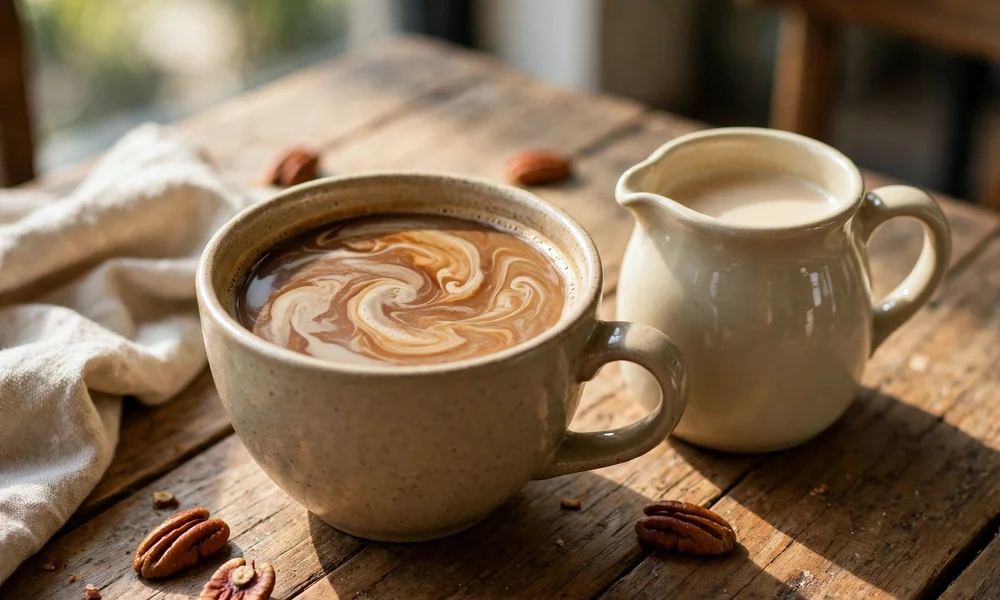
Hot coffee and porridge are where pecan milk shines brightest, and they are the uses that suit its warm flavour best. The best cartons mix cleanly into hot coffee, keep their soft brown colour, and add a toasted, buttery note that flatters the coffee rather than fighting it. They do not split, they do not go grainy, and they turn a simple morning coffee into something that tastes like a cafe drink. In porridge the effect is even stronger: the best cartons make a plain bowl taste rich and comforting, as if a little butter and brown sugar had been stirred in, without any extra sweetness. If coffee and porridge are your main uses, try a carton in both before you commit to a large pack, because a milk that only works cold is only half a milk.
How to Choose a Pecan Milk by How You Use It
Choose by how you will actually use the carton, not by the picture on the front. If hot coffee and porridge are your main uses, pick an unsweetened carton with a real pecan content and a short label, and check that it stays smooth in hot drinks without splitting. If you drink it cold from a glass, a lightly sweetened carton can be pleasant, but keep the sugar low enough that the nut flavour still leads. For cereal, creaminess matters most, so look for a carton that pours thick and smooth. For smoothies, any good unsweetened carton will do, since the fruit and the blender do much of the work. Buy the smaller carton first if you are trying a new one, keep it cold once opened, use it within a few days, and trust your own mouth over the claims on the front. The same care that goes into choosing a good breakfast makes the milk that goes into it worth pouring, as our comparison of the best and worst pistachio milks of 2026 makes clear, since pistachio is the other distinctive nut milk that rewards a careful label read.
The Verdict
The best pecan milks of 2026 are the quiet, honest ones: real pecan, real creaminess, a short label, and a flavour that tastes warm and fresh. They pour smoothly, they behave in coffee and in porridge, and they make breakfast taste better without shouting about it. The worst are thin, overly sweet, or drowned in thickeners, and they fail exactly where it matters most, in the coffee cup and in the glass. Between the two sits a wide middle of perfectly drinkable cartons that do the job without ever delighting anyone. Pick by how you use it, read the label before you buy, and keep a carton you trust in the fridge. Pecan milk is at its best when it tastes like the nut and nothing else, as our comparison of the best and worst cashew milks of 2026 shows, because the same nut rewards the same honesty whether it is poured from a brown carton or a pale one.


