
A towel is the simplest thing in your bathroom, and it is the one you touch every single day. The best towels of 2026 make an ordinary moment feel better: they wrap you in warmth after a shower, they dry you in seconds without rubbing your skin raw, and they still feel soft and thick after fifty washes. The worst towels do the opposite. They stay damp, they smell musty no matter how often you wash them, they shed fluff all over your bathroom, and they turn thin and scratchy within months.
This comparison puts the best towels of 2026 head to head against the worst, judging them the way you would actually use them: fresh out of the shower, after a swim, on a beach holiday, and folded in a linen cupboard. We look at absorbency, softness, drying time, durability, and value, because a towel has to earn its place in a home where it is used every day. The same honest approach sits behind our comparison of the best and worst bedding of 2026, because a good towel and good bedding are the two things that make a bedroom and bathroom feel like home.
Key Takeaways
- Judge a towel by how fast it dries you, not by how thick it looks on the shelf, because a heavy towel that stays wet is useless.
- Long-staple cotton and a dense loop pile beat a fluffy surface every time, since real absorbency comes from the fibre, not the fuzz.
- A towel that dries quickly between uses stays fresh far longer than one that stays damp all day.
- Weight matters: a towel around 500 to 600 grams per square metre is usually the sweet spot for home use.
- Buy towels for the way you actually live, not the ones that look best in a hotel photograph.
What Makes a Towel Good or Bad
A good towel starts with its fibre. The best towels of 2026 are made from long-staple cotton, usually Turkish or Egyptian, with fibres long enough to spin into smooth, strong yarn. Those long fibres make loops that stand up, soak up water fast, and stay soft wash after wash. The worst towels are made from short, cheap fibres that break, shed, and tangle into a thin, scratchy surface. They may feel soft in the shop, where they have been treated with silicone softener, but that softness washes away within weeks and leaves a towel that feels like sandpaper.
The second thing that separates good from bad is the weave. A good towel has a dense, even loop pile on both sides, with loops that are long enough to hold water but tight enough not to snag on jewellery or rough skin. The best towels are woven so that the loops stay put through dozens of washes, and the edges are bound with a double-stitched hem that does not fray. The worst towels have a loose, uneven pile that pulls and snags, and hems that start to unravel after a handful of washes.
Drying time is the third test, and it is the one most buyers overlook. A towel has to dry itself between uses, and a towel that is still damp the next morning will smell musty no matter how clean it is. The best towels balance thickness and airflow: thick enough to absorb properly, open enough to dry in a few hours on a rail. The worst towels are either so thin they cannot dry you properly, or so heavy and dense that they never dry at all.
The Best Towels of 2026
The best towels of 2026 are the ones that feel like a small luxury every single day. They are thick without being heavy, soft without being slippery, and they dry you properly with a few gentle pats rather than a hard rub. Their cotton is dense and springy, and when you hold one up to the light you cannot see through it. They come out of the wash looking as good as they went in, and they stay that way for years.
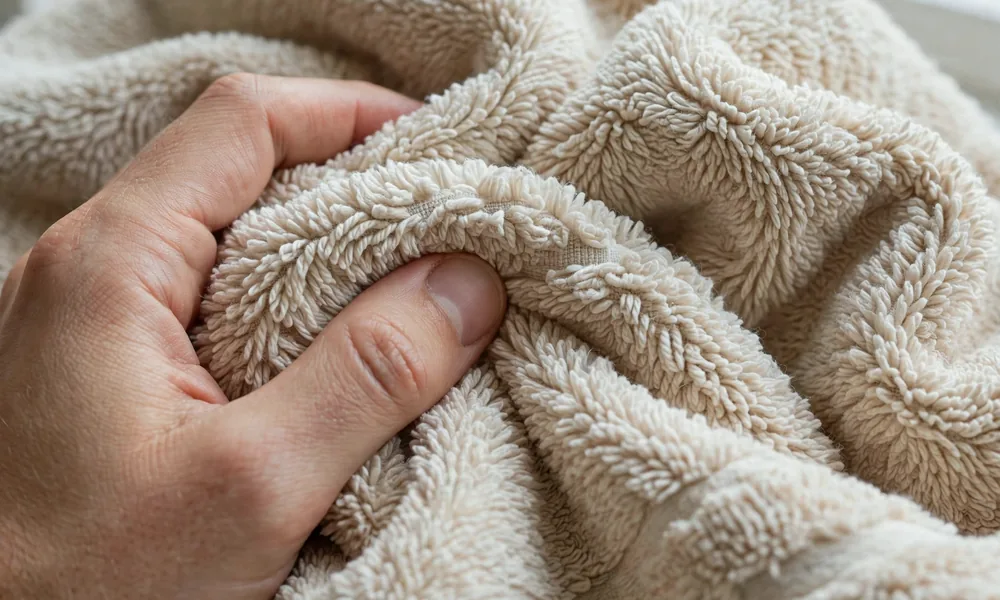
What the best towels share is a feeling of substance. They have a good weight in the hand, a hem that lies flat, and a colour that does not fade to grey after a month. Their makers use proper dyes and a proper finishing process, so the towel does not shed lint all over your bathroom floor and does not leave fluff on your skin.
The Worst Towels of 2026
The worst towels of 2026 are not always the cheapest, and that is what makes them so frustrating. Some look thick and luxurious in the shop and come in beautiful colours, but within a few washes the problems start: the colour fades, the edges fray, and the towel starts shedding lint everywhere. Owners find themselves buying replacements within months, and every replacement is money wasted.

Absorbency is where many of the worst towels fall down hardest. They are often treated with softener or silicone in the factory so they feel silky in the shop, and that coating repels water instead of absorbing it. The result is a towel that pushes water around your skin instead of soaking it up, leaving you damp and cold. Worse still, the coating washes off unevenly, so the towel becomes patchy: absorbent in one corner, water-repellent in another. A towel that cannot dry you is not a towel at all.
Bath Towels, Hand Towels, or Beach Towels: Which Wins
Bath towels are the everyday workhorses, and for most homes they are the ones worth spending money on. A good bath towel is big, thick, and absorbent, and it is the towel you reach for twice a day. Its weakness is drying time: a thick bath towel needs a proper rail and some airflow, or it will stay damp. For a single person or a couple with a well-ventilated bathroom, though, a good bath towel is often all the towel anyone needs.
Hand towels are the ones guests judge you by, and they take more punishment than any other towel in the house. They are used constantly, washed constantly, and the best ones stay soft and absorbent through all of it. Their small size means they dry quickly, which keeps them fresh, but a cheap hand towel will thin out and fray faster than any other towel you own. The same care applies to everything else in the bathroom, and our comparison of the best and worst body lotions of 2026 shows how much difference a good routine makes after a shower.

Beach towels are a different job entirely. They need to be big enough to lie on, light enough to carry, and quick to dry in the sun. The best beach towels use a thinner, velour-style weave on one side and a loop pile on the other, so they dry you fast and then dry themselves fast. The worst beach towels are just bath towels in bright colours: heavy when wet, slow to dry, and far too bulky to carry home in a beach bag.
Cotton, Bamboo, and Microfibre: What Actually Works
Cotton remains the simplest choice for most homes in 2026, especially Turkish cotton, which has long fibres and a naturally soft hand. A good cotton towel is breathable, durable, and easy to wash, and with proper care it gets softer with every wash. The best cotton towels return strong real-world performance without any of the complications of special care.
Bamboo towels are the soft option, and the best of them are now so good that many buyers will never go back. They are silky, they absorb well, and they have a natural resistance to odour that keeps them fresher between washes. There is no special washing needed: you simply wash them like cotton and they do the rest. For a household where towels stay damp, a good bamboo towel is often the freshest towel in the cupboard, though they can be slower to dry than cotton.
Microfibre is the practical choice for travel and the gym, but it is a narrower one than it used to be. If you need a towel that packs small, dries in an hour, and weighs almost nothing, a good microfibre towel is hard to beat. For everyday home use, though, a microfibre towel can be a false economy: it feels thin, it clings to skin, and it never gives you the warm, plush feeling of a proper cotton towel. A towel for the bath should feel like comfort, not like a cleaning cloth. The same honest thinking applies to the rest of your routine, and our guide to why bath oil deserves a spot in your routine in 2026 is worth a look before you rebuild your bathroom shelf.
How to Buy Towels Without Regret
The single most useful thing you can do before buying towels is to touch them properly. A quick stroke in the shop tells you almost nothing. Instead, pick the towel up, feel its weight, hold it up to the light, and check the hem. A good towel feels dense and springy, and you cannot see daylight through it. If the towel feels thin, slippery, or unnaturally silky, believe it: it will feel worse after a few washes, not better.
Check the label with real attention before you buy. Look for 100 percent long-staple cotton, a weight of around 500 to 600 grams per square metre, and a hem that is double-stitched rather than glued or single-stitched. Look at washing instructions too: a towel that needs special care will not get it, and a towel that shrinks in a hot wash is a towel that will not last. Wash new towels before first use, skip the fabric softener, and let them dry fully between uses.
Best vs Worst Towels at a Glance
| What to judge | The best towels | The worst towels |
|---|---|---|
| Absorbency | Dry you in seconds with gentle pats | Push water around instead of soaking it up |
| Fibre | Long-staple cotton, dense even loops | Short cheap fibres that shed and tangle |
| Drying time | Dry on a rail within a few hours | Still damp next morning, smells musty |
| Durability | Soft and thick after fifty washes | Thin, frayed, and faded within months |
| Edges and hems | Double-stitched hem that lies flat | Hems unravel after a handful of washes |
| Value | Costs more once, lasts years | Cheap to buy, replaced every season |
The Verdict
The best towels of 2026 are the ones that make an ordinary moment feel better without asking for much in return. They are absorbent, soft, quick to dry, and durable, and they stay that way because they are made from proper fibre and woven properly. They do not need to be fancy or expensive: they simply work, wash after wash, year after year.
The worst towels of 2026 are the ones that demand too much and give too little back: too much money spent on replacements, too much time spent drying yourself with a towel that cannot absorb, and too much of your bathroom smelling of mildew. A towel is something you touch every day, and when it fails, every shower feels worse.
So buy with your hands as well as your eyes. Choose the fibre that fits your real life and the weight that fits your real bathroom. Touch it properly before you buy it, wash it before you judge it, and walk away from anything that feels thin, slippery, or too good to be true.


