The best yoga blocks for beginners in 2026 are the ones that make yoga feel possible from the very first class. A good block brings the floor closer, steadies wobbly balance poses and lets you hold a stretch without straining. For a beginner, that small rectangle of foam, cork or wood is often the difference between a pose that hurts and a pose that helps.
Many new students skip blocks because they think props are only for people who cannot do yoga properly. The opposite is true: experienced teachers use blocks in almost every class, and beginners who start with them build better alignment habits. A block is not a crutch. It is a tool that teaches your body where it needs to go.
This guide compares the best yoga blocks for beginners in 2026 by material, size, density, grip and price, and explains how to choose, use and care for them.
Key Takeaways
- Foam blocks are the best starting point for most beginners: light, soft and affordable.
- Cork blocks offer firmer support and better grip for standing poses and sweaty hands.
- A standard 9 x 6 x 4 inch block fits most adults; smaller hands call for a 9 x 6 x 3 inch block.
- Buy two, not one: most beginner poses use a matching pair.
- Look for dense, non-slip material; expect to pay $10 to $40 for a good pair.
Why Beginners Need Yoga Blocks
Yoga blocks close the gap between your body and the floor. When your hamstrings are tight or your hips are stiff, the floor can feel impossibly far away in poses like a forward fold or a triangle. A block raises the floor to meet your hand, so you can keep your spine long and your chest open instead of rounding your back to reach down.
What a Yoga Block Actually Does
A block works as an extension of your arm and as a support under your body. Under your hand in a standing pose, it gives you stability. Under your sitting bones, it lifts your hips so your knees drop comfortably. Squeezed between your thighs in a bridge, it teaches your legs to work together.
Who Benefits Most
Beginners with tight hamstrings, stiff hips or balance worries gain the most from blocks. So do taller students, whose long limbs make the floor feel further away, and older students returning to movement after a break. If you sit at a desk all day, blocks help you open the chest and hips gently.
How to Choose the Best Yoga Block for Beginners
Four things matter most: material, size, density and grip. Get those right and almost any well-made block will serve you well for years.
Material: Foam vs Cork vs Bamboo vs Wood
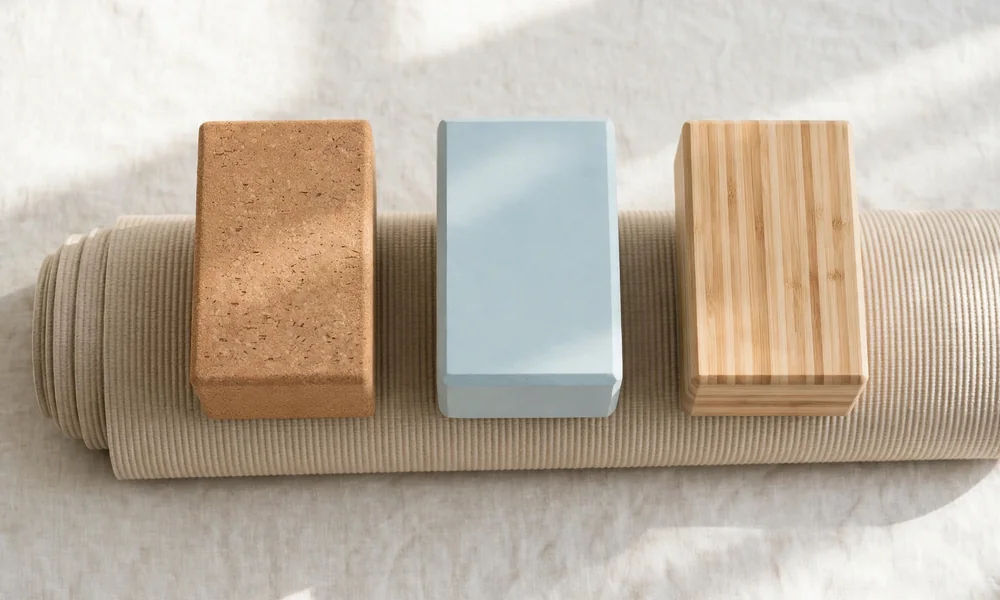
Foam is the friendliest material for a first block. It is light, soft on the knees and joints, and cheap enough that buying two is easy. Dense foam holds its shape under your weight, while cheap soft foam can feel wobbly in standing poses. Cork is heavier and much firmer, with a naturally grippy surface that stays steady even when your hands sweat. Bamboo and wood are the firmest and most beautiful, but heavy, hard under the knees and usually the most expensive. For a first purchase, foam or cork is the right call.
Size and Shape
Most blocks measure 9 x 6 x 4 inches, and that standard size suits most adults. The three heights are the whole point: stand the block on its tallest side for the most support, on its middle side for moderate support, or flat for just a little lift. A slimmer 9 x 6 x 3 inch block suits smaller hands and travel, but it offers less height when you need it most. Rounded edges feel kinder on the palms and knees than sharp corners.
Density and Grip
Density decides whether a block feels solid or spongy. Press your thumb in: good foam should dent slightly and spring back, not collapse. A block that is too soft will sink under your hand. Grip matters just as much. Smooth, shiny foam can get slippery with sweat, while cork and textured foam stay put. If you practise hot yoga or sweat easily, cork is the safer choice.
Weight and Portability
A foam block weighs 200 to 300 grams, so carrying two to class is effortless. A cork block weighs roughly twice as much, and a bamboo block can weigh over a kilogram. If you walk to the studio, foam wins; if your blocks live at home, cork’s stability is worth the extra heft. Pair your blocks with one of the best yoga mats for home practice and you have a complete beginner setup that fits in a corner of any room.
The Best Yoga Blocks for Beginners in 2026
These six picks cover every budget and every kind of beginner, from the first-timer who wants something cheap and light to the eco-minded student who wants a block that lasts a decade.
| Block | Material | Size | Weight | Best For | Price Range |
|---|---|---|---|---|---|
| Gaiam Essentials Yoga Block | Foam | 9 x 6 x 4 in | Light | Best overall for beginners | $10–$15 |
| Manduka Recycled Foam Block | Foam | 9 x 6 x 4 in | Light | Best premium foam | $18–$24 |
| YogaAccessories Cork Block | Cork | 9 x 6 x 4 in | Medium | Best cork block | $20–$28 |
| Trideer Yoga Blocks (Pair) | Foam | 9 x 6 x 4 in | Light | Best value pair | $12–$18 |
| Hugger Mugger Bamboo Block | Bamboo | 9 x 6 x 4 in | Heavy | Best eco-friendly firm block | $28–$40 |
| Lululemon Lift and Lengthen Block | Foam | 9 x 6 x 3 in | Light | Best slim block for small hands | $18–$22 |
Best Overall: Gaiam Essentials Yoga Block
The Gaiam Essentials block is the classic first block for a reason. It is light, comfortable, widely available and cheap enough to buy two without thinking twice. The high-density foam holds its shape in standing poses, and the 9 x 6 x 4 inch size gives three useful heights. For most beginners, this is the block to start with.
Best Premium Foam: Manduka Recycled Foam Block
Manduka’s recycled foam block feels a step up from budget foam. It is denser and more stable, with a slightly textured surface that grips well even with damp hands. The foam is made from recycled material, which suits buyers who want a lighter footprint without switching to cork. It holds up better in weight-bearing poses, and if you plan to practise several times a week, the extra cost pays for itself in durability.
Best Cork: YogaAccessories Cork Block
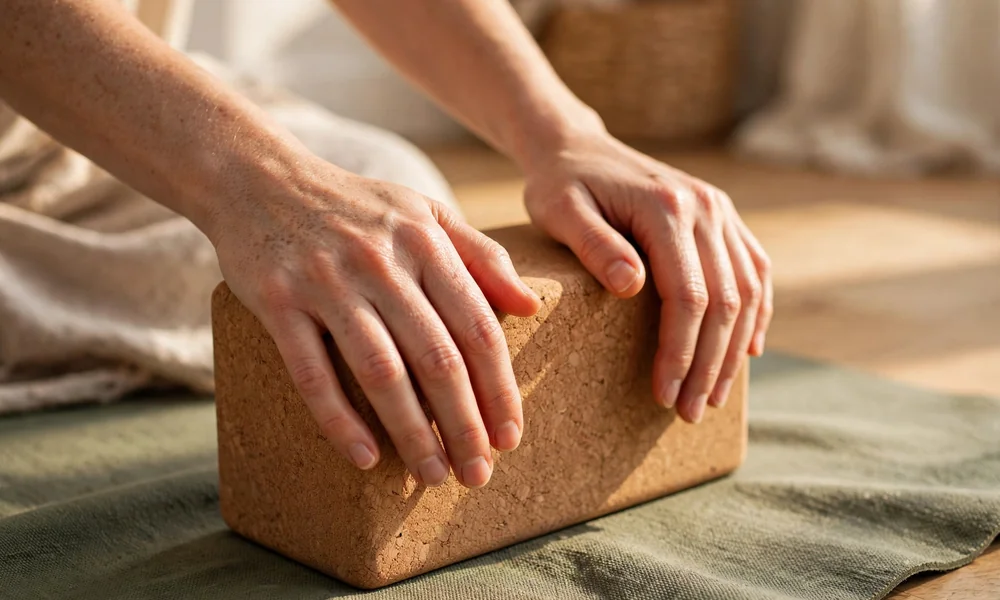
The YogaAccessories cork block is the firmest beginner-friendly option that still feels comfortable. Cork does not compress under body weight, so the support it gives is completely predictable, and its natural texture grips better than any foam when your hands sweat. It is heavier than foam, but that weight keeps it planted on the mat.
Best Value Pair: Trideer Yoga Blocks
Trideer sells its blocks as a matching pair, which is exactly what a beginner needs, at a price close to a single premium block. The foam is firm for the price and the blocks are light enough to carry to class. This is the best choice if you want to start practising this week without spending much.
Best Eco-Friendly Firm Block: Hugger Mugger Bamboo Block
The Hugger Mugger bamboo block is the most beautiful block on this list and the firmest. Bamboo is a fast-growing, renewable material, and the block’s solid construction means it will never compress, dent or wear out. It is heavy, so it suits a home practice better than a commute, and its hard surface is less forgiving on the knees.
Best Slim Block: Lululemon Lift and Lengthen Block
Lululemon’s slim block measures 9 x 6 x 3 inches, which makes it easier to grip for smaller hands and easier to pack for travel. The foam is dense and supportive despite the slimmer profile. The trade-off is less height in standing poses, so very stiff beginners may still want a standard 4 inch block alongside it.
How to Use Yoga Blocks as a Beginner
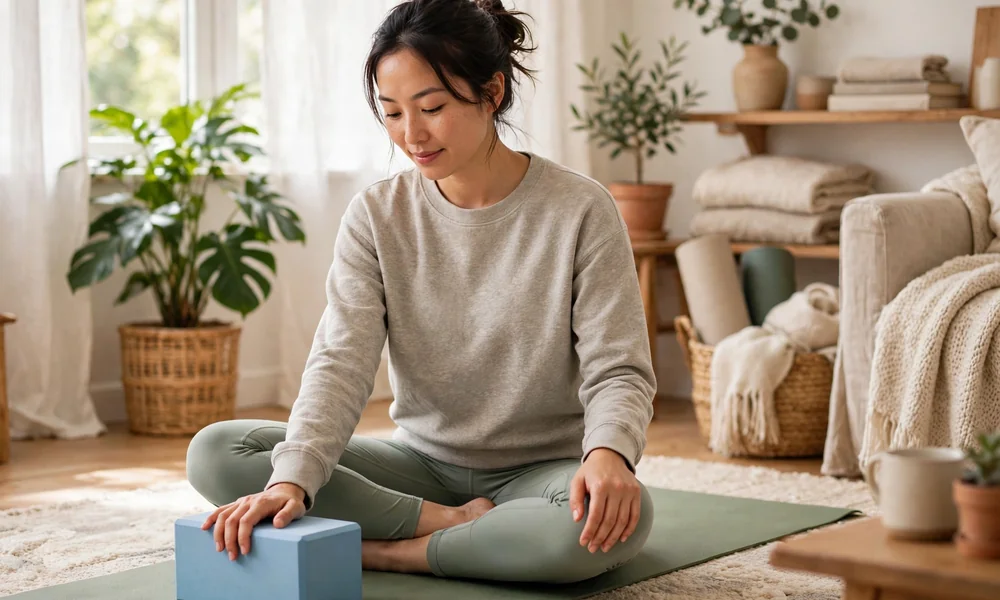
Blocks are easy to use once you know the three heights. Tall gives the most support for stiff hamstrings and tight hips. Medium suits most standing poses. Flat gives a gentle lift in seated poses. Start tall and lower the block as your flexibility improves.
Five Beginner-Friendly Poses With a Block
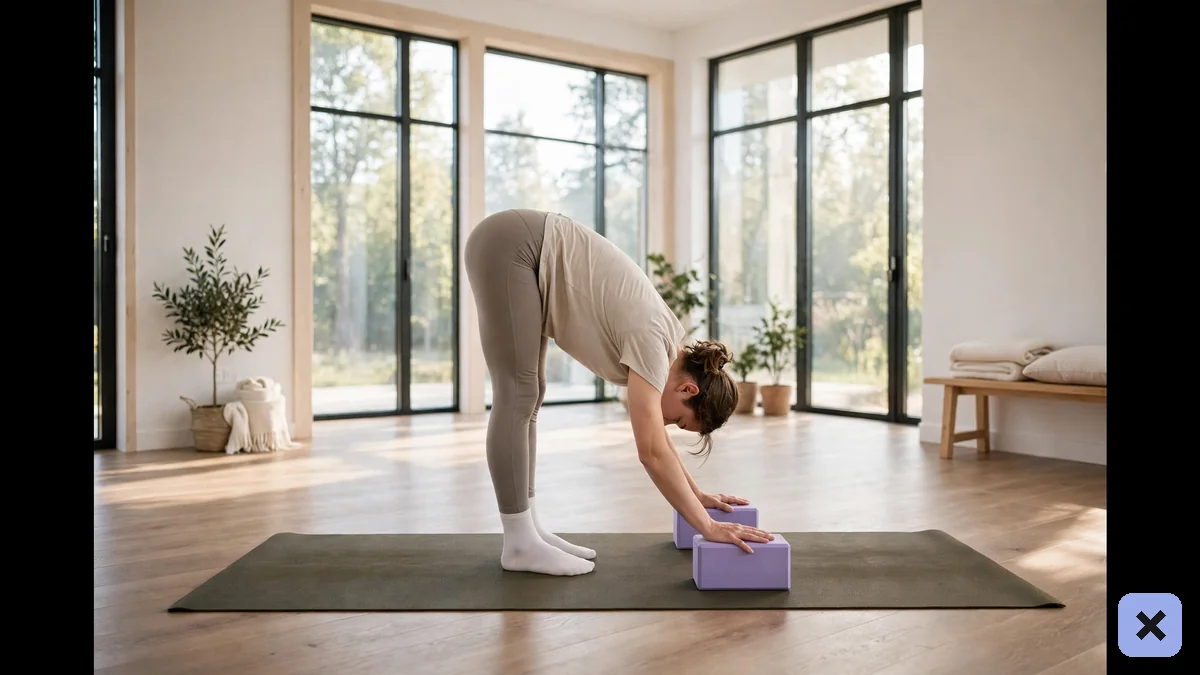
In a standing forward fold, place a block under each hand and lengthen your spine instead of rounding. In triangle pose, rest your lower hand on a block beside your front foot so your chest opens fully. In a seated forward fold, sit on a block to lift your hips and ease the pull on your hamstrings. In supported bridge, slide a block under your sacrum and let your lower back rest.
Keep a small towel nearby for sweaty hands during longer sessions. Many students like the best travel towels for this because they are compact and quick-drying. A dry grip on your block is a safe grip, especially in balance poses.
Yoga Block Care and Storage
Good blocks last for years with little maintenance. Wipe foam blocks with a damp cloth and mild soap after sweaty sessions, then air-dry. Cork needs only a quick wipe and naturally resists odour. Bamboo and wood can be wiped clean and occasionally treated with mineral oil.
When to Replace Your Blocks
Replace a foam block when it no longer springs back after you press it, when the edges crumble, or when it feels wobbly under your weight. Cork and bamboo blocks rarely need replacing unless they crack or chip badly. Store blocks flat in a dry place, out of direct sun. After a sweaty practice, dry off with one of the best bath towels for guest bathrooms before you stretch.
Beginner’s Yoga Block Checklist
- Buy two matching blocks so both sides of your body get equal support.
- Choose foam for lightness and comfort, or cork for firmness and grip.
- Pick the standard 9 x 6 x 4 inch size unless your hands are small.
- Check that the foam is dense and springs back when pressed.
- Look for bevelled edges and a non-slip, textured surface.
- Keep your blocks beside your mat so you actually reach for them.
Frequently Asked Questions
Do beginners really need yoga blocks?
Yes. Blocks make poses safer and more comfortable by bringing the floor closer while your flexibility builds. Most teachers recommend them.
How many yoga blocks should a beginner buy?
Buy two. Most poses use one under each hand, and a matching pair keeps your body balanced. A single block works for seated poses, but you will soon want the second.
Are foam or cork yoga blocks better for beginners?
Foam is better for most beginners because it is light, soft and affordable. Cork is better if you want maximum firmness, sweat-proof grip and a longer-lasting block.
What size yoga block is best for a beginner?
The standard 9 x 6 x 4 inch block suits most adults and offers three useful heights. Smaller hands or travel call for a slimmer 9 x 6 x 3 inch block.
Can yoga blocks help with tight hamstrings?
Yes. Blocks let you keep a long spine in forward folds instead of rounding your back to reach the floor. That safer alignment helps hamstrings lengthen more effectively than forcing a deep stretch.
How do I clean my yoga blocks?
Wipe foam blocks with a damp cloth and mild soap, then air-dry. Wipe cork blocks with a damp cloth only. Avoid soaking any block, and keep them out of direct sunlight.
The Bottom Line
The best yoga blocks for beginners in 2026 are the Gaiam Essentials for value, the Manduka recycled foam block for premium comfort and the YogaAccessories cork block for firm, grippy support. Buy two, choose foam or cork, and keep them beside your mat. With the right blocks, every pose becomes reachable and every class feels safer.