
When the question is hybrid vs electric cars for range in 2026, the honest answer is that both can now cover serious distances, but they do it in very different ways. A modern hybrid can travel 500 miles or more on a tank of petrol and refill in minutes. A modern electric car can cover 300 miles or more on a single charge and refill at home overnight. The real difference is how that range behaves in daily life, in winter, on motorways, and on long trips.
Range anxiety used to be the main reason drivers avoided electric cars, and it was a fair concern. Early models often delivered less than 150 miles, and public charging was patchy. That picture has changed. Many electric cars sold in 2026 now claim 300 miles or more, and the rapid charging network along major routes has grown fast. Hybrids have improved too, with better batteries and engines that stretch every litre further.
This guide compares the two side by side on the thing that matters most: how far you can actually go. We compare claimed range with real-world range, cold weather and motorway driving, refuelling and recharging times, and which type suits different drivers.
Key takeaways
- Hybrids still win on total range, with many models covering 500 to 600 miles on one tank.
- Long-range electric cars now cover 300 miles or more on a charge, enough for most drivers.
- Electric range drops faster than hybrid range in cold weather and at motorway speeds.
- Home charging makes electric cars effortless for daily driving, but long trips need planning.
- The best choice depends on your journeys: long trips favour hybrids, short trips favour electric cars.
What Range Really Means in 2026
The range figure quoted by a manufacturer is measured in laboratory conditions, so treat it as a starting point rather than a promise. Official tests use fixed speeds and temperatures, with gentle acceleration and light heating or air conditioning. Real driving is messier: traffic, hills, wind, and weather all eat into range.
For a hybrid, the gap between claimed and real range is usually small. A car quoted at 55 miles per gallon might deliver 48 to 52 in everyday driving, which still leaves a total range of 450 to 550 miles from a typical tank. That covers London to Edinburgh with fuel to spare.
For an electric car, the gap can be bigger. A car quoted at 320 miles might deliver 260 to 280 miles in mild weather, and closer to 220 miles on a cold winter motorway run. The usable range is often about 75 to 85 percent of the headline figure, so knowing this in advance stops nasty surprises.
Hybrid Cars and Range: The Long-Distance Champion
A hybrid pairs a petrol engine with an electric motor and a small battery that charges itself as you drive. The electric motor helps at low speeds and when pulling away, while the engine takes over at higher speeds. The result sips fuel in town, cruises efficiently on the motorway, and needs no charger planning.
Total range is the hybrid’s biggest strength. Most family hybrids cover 500 to 600 miles on a full tank, and some frugal models stretch beyond 650 miles. That means fewer stops and no worry about the next charger. For drivers who regularly cover long distances, that freedom is hard to beat. If you are weighing up body styles too, our guide to electric vs hybrid SUVs for families shows how the same choice plays out in larger cars.
Hybrids also handle cold weather better. A petrol engine produces waste heat that warms the cabin for free, so turning the heater on does not cost you miles. In winter, a hybrid might lose five to ten percent of its range, while an electric car can lose twenty percent or more.
Where Hybrids Lose Ground
Hybrids are not perfect. They still burn petrol, so every mile produces exhaust emissions and costs fuel money. Their efficiency advantage is biggest in town; on a steady motorway cruise, the gap to a good diesel narrows. They also carry two power systems, so there are more parts to maintain, though modern hybrids have proved very reliable.
Hybrid range also depends on tank size as much as efficiency. A small hybrid with a small tank may only manage 350 to 400 miles, no better than a mid-range electric car. Check tank size alongside fuel economy.
Electric Cars and Range: Closer Than Ever
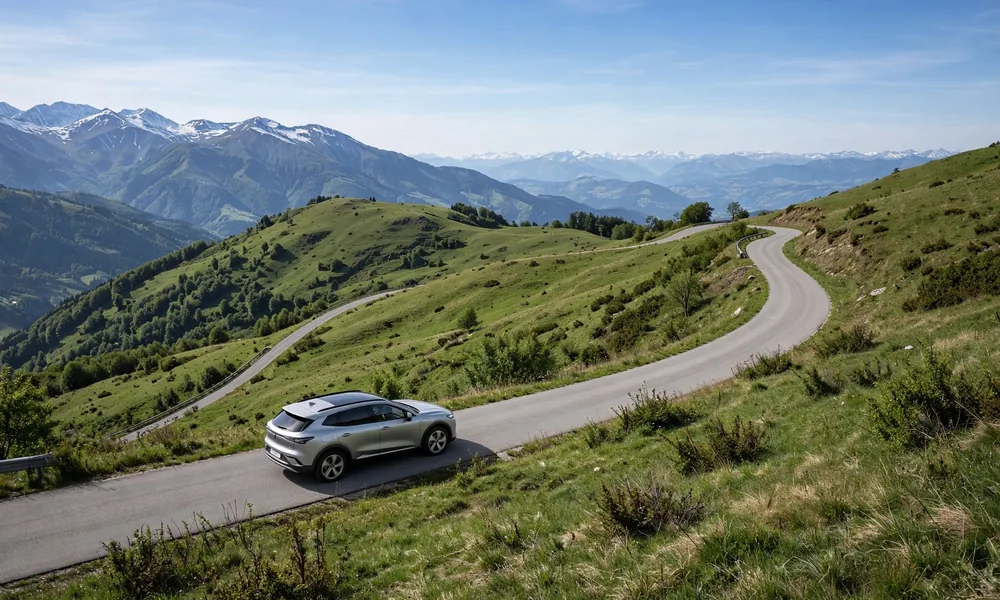
Electric cars have closed the gap fast. The best mainstream models in 2026 offer 300 to 350 miles of claimed range, and premium models push past 400 miles. Bigger batteries, more efficient motors, and better aerodynamics have all helped. For the average driver, covering 20 to 30 miles a day, that means charging once or twice a week.
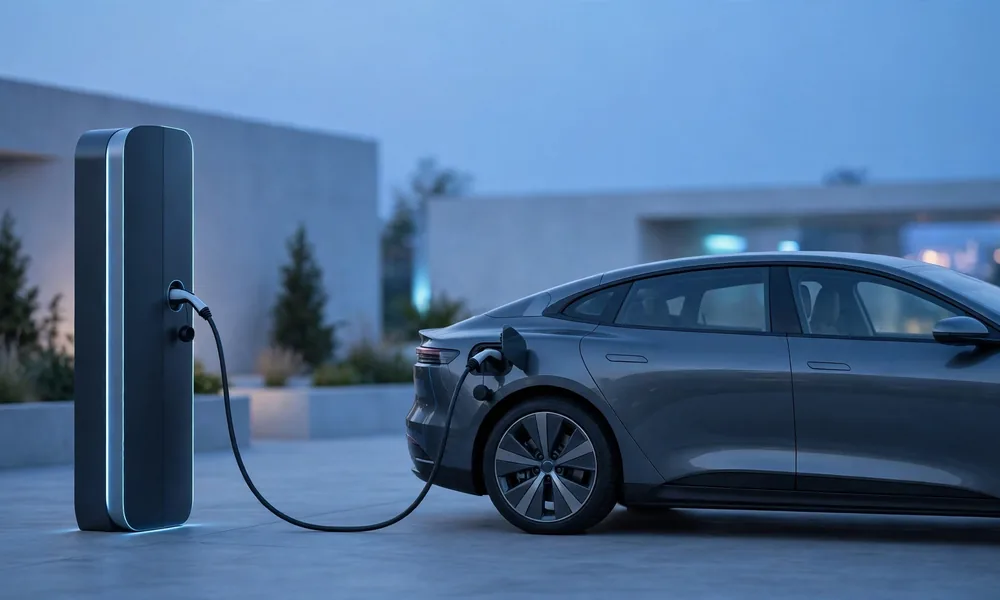
Home charging changes the whole experience. If you can charge on your driveway overnight, you start every morning with a full battery, and range stops being something you think about. Public rapid chargers handle the occasional long trip, adding around 100 miles in ten to fifteen minutes on the fastest cars.
Electric cars are also cheaper to run per mile. Electricity costs much less than petrol for the same distance, especially on a home or overnight tariff. Servicing is simpler too, with fewer moving parts and no oil changes.
The Real Limits of Electric Range
Electric range is more sensitive to conditions than hybrid range. Cold weather is the biggest factor, because the battery is less efficient when cold and the heater draws power directly from it. Motorway speeds hurt too, because pushing air aside at 70 miles per hour takes a lot of energy, and towing a trailer or carrying a roof box can cut range by a third or more.
Charging speed matters as much as battery size. Two cars with the same 300-mile range can feel very different on a long trip if one charges at 150 kilowatts and the other at 50. Check the peak charging rate and the ten to eighty percent charging time, because that is the stop you will actually make.
Hybrid vs Electric: The Numbers Side by Side
The table below compares a typical family car in 2026, using realistic ranges rather than laboratory claims.
| Factor | Hybrid car | Electric car |
|---|---|---|
| Typical total range | 500 to 600 miles | 250 to 350 miles |
| Refuel or recharge time | About 5 minutes | 20 to 40 minutes rapid |
| Winter range loss | 5 to 10 percent | 15 to 25 percent |
| Motorway range loss | Small | Noticeable |
| Home refuelling | Not possible | Yes, overnight |
| Running cost per mile | Moderate | Low |
Read the table as a guide, not a verdict. The hybrid wins on distance and convenience; the electric car wins on running costs and home charging. Which matters more depends on how you drive.
Real-World Range: Weather, Speed and Load
Three things shrink range faster than anything else, and they hit electric cars harder than hybrids. The first is cold weather. Batteries work best at moderate temperatures, and a freezing morning can cut electric range by a fifth before you even switch the heater on. Preheating while plugged in helps, because the energy comes from the charger rather than the battery.
The second is speed. Aerodynamic drag rises sharply with speed, so the difference between 60 and 70 miles per hour is bigger than most drivers expect. An electric car at 70 uses noticeably more energy than the same car at 60, so slowing down slightly on a long motorway run is the easiest way to stretch range.
Charging vs Refuelling on a Long Trip
Picture a 400-mile journey. In a hybrid, you drive the whole way and stop once for five minutes if you want to. In an electric car with 300 miles of real range, you stop once for twenty to thirty minutes: enough for a proper break, a meal, and a stretch.
That single stop is the heart of the debate. Drivers who like four hours without stopping will prefer a hybrid, while those who stop every two hours anyway lose almost nothing in time.
What matters is that the charger works when you arrive. The rapid charging network has improved, but a broken charger or a queue can still add delay. Check charger availability before you set off and have a backup stop in mind. For a closer look at how fuel costs shape long journeys, see our comparison of diesel vs petrol cars for long distance driving.

Which One Wins for Your Driving?
For city and suburban drivers, the electric car is the clear winner. Short trips, home charging, and low running costs make it cheaper and easier to live with, and if you rarely drive more than 100 miles a day, range stops being a question.
For regular long-distance drivers, the hybrid still has the edge. Sales representatives, rural drivers, and anyone who often drives somewhere without reliable charging will appreciate the 500-mile range and the five-minute refill. The hybrid asks nothing of you: no apps, no charging plans, no waiting.
For mixed drivers, the choice is closer. Mostly short trips with one long journey a month? A long-range electric car handles it with one charging stop. But if that journey goes somewhere remote, or you tow a caravan, the hybrid is safer. Drivers with a driveway get far more from an electric car than those who rely on public chargers. Running costs matter too, so compare the full picture in our guide to electric vs petrol cars and which costs less.
Your Range Checklist Before You Buy
- Check the realistic range, not just the claimed figure, for the conditions you drive in.
- Look up owner reports for how far the car goes in winter.
- Find out the rapid charging speed and the ten to eighty percent charging time.
- Work out your longest regular journey and whether it needs a charging stop.
- Check charger availability along your usual long routes before you commit.
- Compare fuel tank sizes on hybrids, since a small tank limits total range.
Frequently Asked Questions
Do hybrids or electric cars have more range in 2026?
Hybrids have more total range. A typical family hybrid covers 500 to 600 miles on a full tank, while a long-range electric car covers 250 to 350 miles in real driving.
How much range does an electric car lose in winter?
Most electric cars lose 15 to 25 percent of their range in cold winter weather. Preheating while plugged in and using heated seats can reduce the loss.
Can an electric car handle a 400-mile road trip?
Yes. A long-range electric car needs one rapid charging stop of twenty to thirty minutes on a 400-mile trip. Plan the stop in advance.
Is a hybrid better than an electric car for motorway driving?
For pure motorway range, yes. Hybrids lose little range at motorway speeds and refuel in minutes, while electric cars use more energy at high speeds and need longer stops.
Do electric cars really cost less to run than hybrids?
Per mile, yes. Home charging is much cheaper than petrol, and electric cars need less servicing. The saving depends on your tariff and mileage.
Should I buy a hybrid now or wait for better electric cars?
If you need a car now and regularly drive long distances, a hybrid is a safe choice. If your driving is mostly short trips and you can charge at home, an electric car makes sense now.
The Bottom Line
For range alone in 2026, the hybrid still wins: 500-mile-plus total range, five-minute refuelling, and steady cold-weather performance make it the easier choice for big-distance drivers. But the electric car has closed the gap: with 300 miles of real range, rapid charging, and waking up to a full battery, it suits most drivers most of the time. Choose the hybrid for long, unplanned journeys; choose the electric car if your journeys are mostly short and you can charge at home.


