Kindle vs Audible reading habits is a choice almost every modern reader faces at some point. One promises quiet, focused pages you can carry in your pocket. The other promises whole books finished during commutes, workouts, and chores. Both hold enormous libraries, yet they fit into a daily routine very differently.
The real question is not which service is better in the abstract. It is which one matches the shape of your life. A reader with long, quiet evenings will build a very different habit from a commuter with two hours of driving a day. The format that wins is the one you will actually use on a busy Tuesday.
This comparison looks at how they feel to use, what they cost over a year, how well they help you finish books, and how they build a lasting habit.
Key takeaways
- Kindle suits focused, eyes-on reading and builds deep concentration, while Audible suits busy schedules and turns dead time into reading time.
- Listening is faster for finishing books, but reading usually wins for retention of complex material.
- Kindle books are generally cheaper per title than Audible credits.
- The strongest habit often comes from using both: Kindle at home and Audible on the move.
- Your daily routine, not the technology, should decide which format you start with.

How Kindle Reading Works
A Kindle is a dedicated e-reader built around one idea: remove distractions and let the words take over. The e-ink screen looks like paper, causes little eye strain, and stays readable in bright sunlight. Battery life is measured in weeks, and the device is light enough to hold one-handed. There are no notifications, feeds, or browser tabs competing for attention.
That simplicity is the Kindle’s greatest strength. When you pick it up, there is only one thing to do, and that single purpose makes it easy to slip into a focused session. Many readers find twenty quiet minutes with a Kindle richer than an hour of scrolling on a phone, because nothing interrupts the flow.
The focused reading experience
Reading on a Kindle mirrors a printed book, with useful upgrades: adjustable font size, instant word lookup, and highlights to review later. For dense nonfiction and classic literature, this focus matters, since you can reread a paragraph and flip back without losing your place. If you are torn between a dedicated e-reader and a tablet, our Kindle vs iPad for reading comparison breaks down the screen, battery, and distraction differences.
What Kindle does best
The Kindle shines for readers who already have quiet time in their day, even if it is only fifteen minutes before bed. It is at its best in the evening, on holiday, and anywhere you can sit still, and it excels for people who read several books a month, because ebooks are inexpensive and the next book is one tap away. Where it struggles is in the gaps of a busy day: you cannot read while driving, cooking, or exercising.
How Audible Listening Works
Audible is Amazon’s audiobook service, and its pitch is simple: let someone else read to you while your hands and eyes are busy. A monthly membership provides credits for audiobooks, along with a rotating selection of included titles, podcasts, and original productions. You listen through the Audible app on a phone, and the app syncs your position across devices.
The habit Audible builds is very different from the one a Kindle builds. Instead of carving out quiet time, you attach listening to things you already do. The morning commute, the gym session, and the washing up all become reading time. For many people, this is the only way reading fits into a full life.
The hands-free habit
Listening works because it asks for so little. You press play and keep doing what you were already doing. A good narrator can turn a long drive into the best part of the day. Many listeners say audiobooks rescued their reading habit after years of unfinished print books. That ease is also its main weakness: your mind can wander, and rewinding is more awkward than glancing back at a page. Listeners who love a gripping story often start with the best true crime podcasts of 2026 before moving on to full-length audiobooks.
What Audible does best
Audible is at its best for stories, memoirs, and books where the author’s voice matters. A well-narrated novel can feel closer to a performance, and listeners often remember characters more vividly. It also suits people who struggle with traditional reading. Long commutes, manual work, and exercise pair naturally with audio, and listeners with tired eyes often find audiobooks open up books print never could. For these readers, Audible is not a compromise. It is the format that finally works.
Kindle vs Audible Head to Head
Put side by side, the two services trade wins in almost every category. The table below compares them on the points that matter most to a daily reading habit.
| Feature | Kindle | Audible |
|---|---|---|
| Best for | Focused, quiet reading | Reading while on the move |
| Typical cost | Device plus cheap ebooks | Monthly membership plus credits |
| Retention | Strong for complex material | Strong for stories, weaker for detail |
| Finishing speed | Depends on free time | Faster for most busy readers |
| Eye strain | Very low on e-ink | None, since you listen |
| Multitasking | Not possible | Excellent |
| Library size | Millions of ebooks | Hundreds of thousands of audiobooks |
| Extras | Dictionary, highlights, sync | Podcasts, originals, narration |
Neither column wins outright: depth favours Kindle, volume favours Audible, and your schedule decides.
Which One Builds a Stronger Reading Habit
A habit is built by repetition, and repetition depends on how easily a behaviour fits into an ordinary day. Kindle and Audible ask for different kinds of time and attention.
Consistency
Audible usually wins on consistency, because it attaches to routines that already exist. You commute every day, so you listen every day. The Kindle needs you to create a new pocket of quiet time, which is harder to protect when life gets busy. Kindle readers who establish a routine tend to keep it for years: a nightly chapter becomes as automatic as brushing your teeth. The best habit is tied to a trigger you already have, whether a commute or a bedtime.
Comprehension and retention
For stories and light nonfiction, listening and reading perform similarly. For dense books, reading usually wins, because pausing, rereading, and highlighting help with demanding material. Match the format to the book: Kindle for books you want to study, Audible for books you want to enjoy and finish. Choosing well matters too. Steering clear of the book trends readers are tired of can make the difference between a book you finish and one you abandon halfway through.
Finishing more books
Most readers finish more books with Audible, and the reason is simple arithmetic. An hour of commuting becomes an hour of reading, five days a week, without taking a single minute from the rest of the day. Even a slow listener can finish two or three audiobooks a month on commute time alone, a pace Kindle readers match only by protecting similar quiet time. Finishing is not the only measure: twelve thoughtful Kindle books may teach you more than twenty-four audiobooks you barely remember.
Cost, Library, and Ownership
Cost is where the two services diverge most sharply. A Kindle is a one-time purchase, and ebooks are often inexpensive, with frequent sales and free classics. A regular reader can build a large library for very little money. Audible is a subscription: a monthly fee buys credits, typically one audiobook each, and audiobooks cost more to produce than ebooks. Included titles and sales soften this, but yearly spending is usually higher.
What you pay over a year
For one book a month, Kindle is almost always cheaper, and the device pays for itself quickly. For a listener finishing three or four audiobooks a month, Audible credits run out fast, and extra purchases add up. Kindle owners can borrow library ebooks and watch for deals; Audible members can spend credits carefully and use included titles. The cheapest format matches how fast you actually read.
What you keep
Both are digital libraries: you buy a licence, not a physical object. Books live in your Amazon account and can be downloaded for offline use. Neither is something you can lend the way you would lend a paperback, although Audible’s returns policy and Kindle’s household sharing soften that limit. If ownership matters, Kindle has a small edge: ebooks are cheaper to replace.
The Hybrid Habit: Using Both
The most honest answer is that many happy readers use both. The formats are tools for different parts of the day, and combining them removes the weaknesses of each. Many titles come in both formats, and Whispersync can sync your position, so you can switch mid-chapter.
A simple weekly rhythm
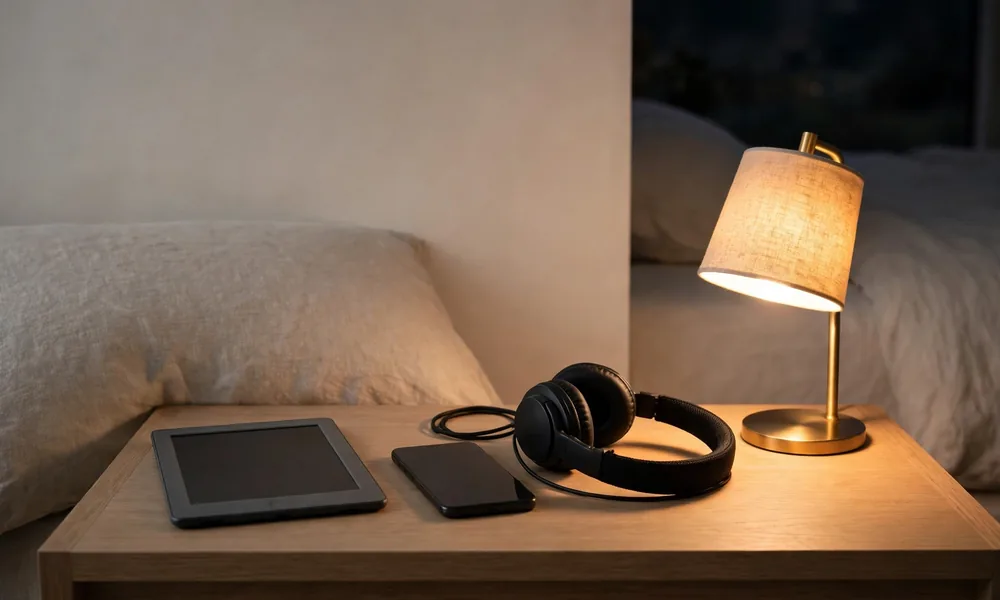
A practical routine: listen during the weekday commute, read on the Kindle in the evening. One book moves forward in the car, another on the sofa. Others keep one book in both formats, switching as the day changes. Keep it simple enough to survive a bad week: if one slot disappears, the other keeps the habit alive.
When to switch formats
Switch to Audible when your hands and eyes are busy or you are travelling. Switch to Kindle when the material is dense, you want notes, or you have a quiet hour. Let the situation choose. Switching also helps when you feel stuck: a dragging Kindle book can come alive in audio, and a book that washes over you in audio can become clear on the page.
Reading Habit Checklist
Use this checklist to turn whichever format you choose into a habit that lasts.
- Pick a daily trigger you already have, such as your commute or bedtime, and attach reading to it.
- Start with fifteen minutes a day, and increase the time only once the habit feels automatic.
- Keep your next book ready before you finish the current one, so there is never a gap.
- Match the format to the book: Kindle for depth, Audible for stories and busy days.
- Track finished books simply, with a list or a reading app, and celebrate each one.
- If you stall on a book, switch formats or switch books rather than stopping altogether.
Frequently Asked Questions
Is listening to an audiobook the same as reading?
For stories and general nonfiction, listening gives you the same ideas and enjoyment as reading. For complex material, reading has an edge, because you can pause and reread.
Which is cheaper, Kindle or Audible?
Kindle is usually cheaper over a year: a one-time device and inexpensive ebooks, versus a monthly membership and pricier audiobooks.
Can I use Kindle and Audible together?
Yes. Listen on the move, read at home, and some titles support Whispersync, which keeps your place matched across formats.
Do I need a Kindle device to read Kindle books?
No. The free Kindle app works on phones and tablets. The dedicated e-reader is still best for long sessions, thanks to its paper-like screen and long battery life.
Does Audible work without the internet?
Yes. Download audiobooks to your phone and listen offline, ideal for flights and weak-signal areas. Downloads also save mobile data.
Which format helps you read more books?
Audible helps busy readers finish more books, since listening uses commute and chore time. Kindle helps focused readers go deeper. Volume: start with Audible. Depth: start with Kindle.
The Bottom Line
Kindle vs Audible for reading habits comes down to your day, not the devices. Choose Kindle for quiet time, depth, and low cost. Choose Audible to turn busy hours into finished books. Choose both for a habit that survives any schedule. Start with the format that fits your life today.


