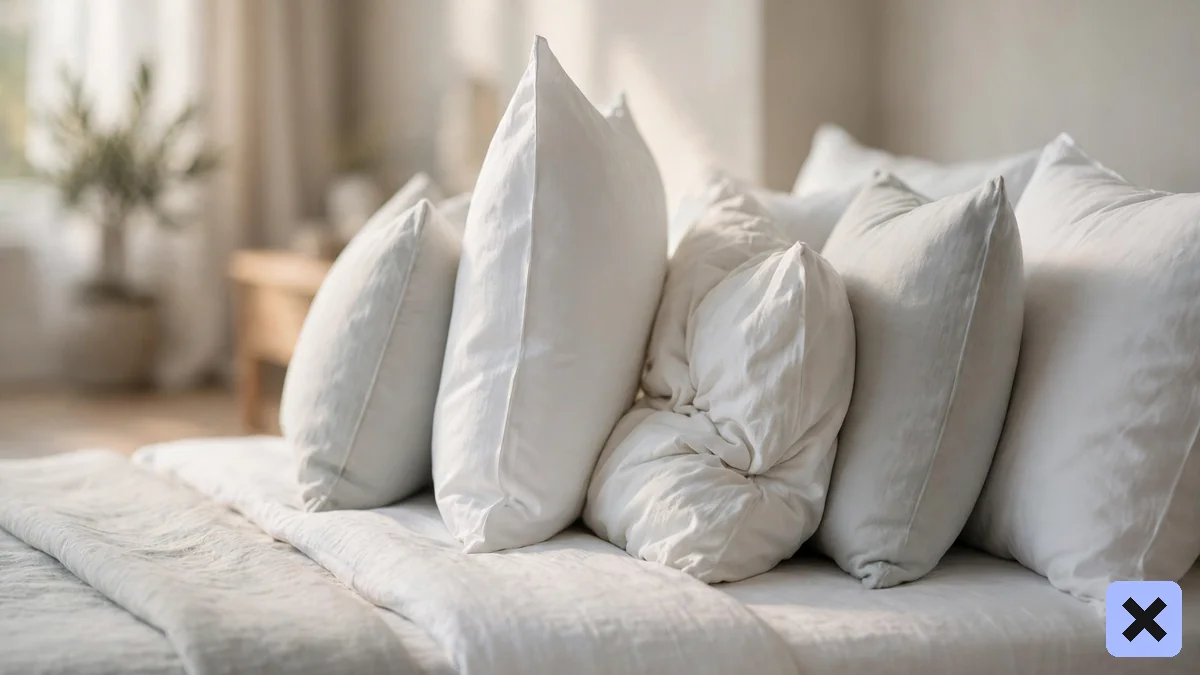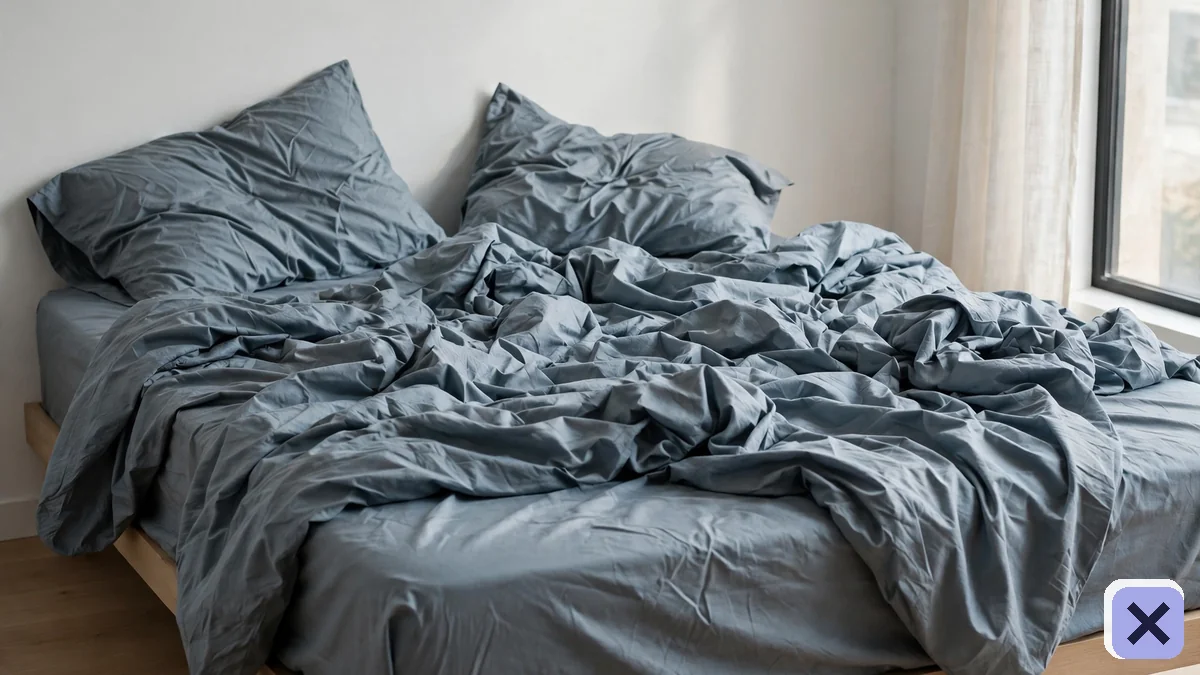
You can have the perfect mattress, the right pillow and a dark, quiet room, and still wake up tired. The culprit is often the layer closest to your skin. The worst bedsheets for comfort do not just feel unpleasant when you climb into bed; they trap heat, bunch up under you, pill within weeks and leave you tossing and turning all night.
Most bad sheets fail in predictable ways. The fabric is too synthetic to breathe, the weave is too tight to let air through, or the fit is so loose that the corners pop off before midnight.
This guide looks at the bedsheets most likely to ruin your sleep, the fabrics and weaves to avoid, the sizing traps that catch buyers out, and how to spot a bad set before you spend money on it.
Key takeaways
- Cheap polyester and microfibre sheets trap heat and feel clammy, making them the worst bedsheets for comfort in warm bedrooms.
- A high thread count means nothing if the yarn is short-staple cotton or a rough synthetic blend.
- Sheets that are too small pop off the corners, while oversized sheets bunch up and wrinkle under your body.
- Rough, stiff or heavily treated fabrics soften slowly, if at all, and often pill within the first few washes.
- Check the fibre content, the weave and the pocket depth before buying, and always wash a new set once before judging it.
Why Some Bedsheets Ruin Your Sleep
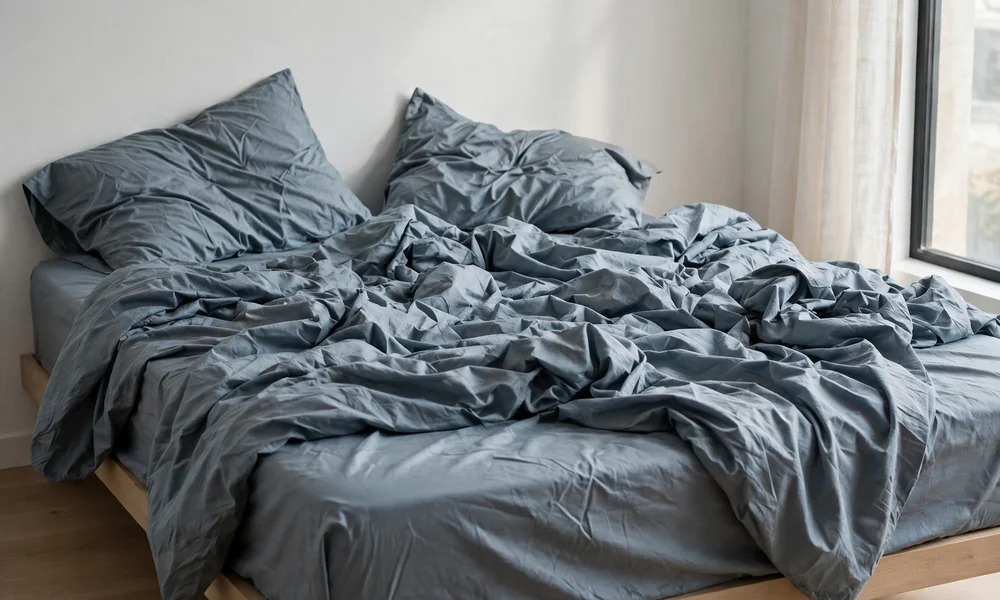
Sleep depends on temperature, touch and movement, and your sheets control all three. A sheet that holds heat pushes your body temperature up, which is one of the fastest ways to wake in the middle of the night. A sheet that feels rough against the skin keeps your senses alert instead of letting them settle. A sheet that slides, bunches or pulls tight forces you to adjust it again and again.
The Worst Bedsheet Fabrics for Comfort
Fabric is the first thing to get right, because no weave or finish can rescue a fibre that does not suit sleeping. The worst offenders share a pattern: they are cheap to make, feel acceptable for about five minutes in the shop, and turn uncomfortable once you have slept on them.
Cheap Polyester and Microfibre
Polyester microfibre is the most common disappointment in bedding. It is soft to the touch in the packet, which is why it sells, but it barely breathes. Heat and moisture build up under the sheet, and by the middle of the night the surface feels warm and slightly damp. Hot sleepers suffer most, but even cool sleepers notice the clammy feeling on warm nights.
Microfibre also holds static, attracts pet hair and lint, and pills quickly where your body rubs against it. The pilling starts as a slight roughness and grows into small hard balls that catch on skin. Washing does not fix it; each wash can make it worse.
Low-Quality Cotton Blends
Cotton has a strong reputation, and it is mostly deserved, but not all cotton is equal. Short-staple cotton, the cheap fibre used in budget sheets, has short fibres that produce a rougher yarn. The result is a sheet that feels stiff and slightly scratchy, even after several washes. It also sheds lint, thins at the fold lines and develops holes sooner than long-staple cotton.
Blends can make this worse. A cotton-polyester mix with low-grade cotton combines the worst of both: the heat retention of polyester and the roughness of short-staple cotton. These sets often feel fine when new because of the chemical softeners applied in the factory, then turn harsh once the softener washes out after two or three cycles.
Rough, Unfinished Linen and Hemp
Linen is a wonderful fabric when it is well made, but cheap linen is one of the worst bedsheets for comfort you can buy. Low-grade linen is woven from coarse, uneven fibres and finished without proper softening, so it feels like sleeping on fine sandpaper. It also wrinkles aggressively and can feel cold and stiff on first contact.
Weave and Thread Count Traps
Even a good fibre can be ruined by a bad weave, and the numbers on the packet are designed to confuse. Thread count is the most misunderstood figure in bedding, and it is the one sellers lean on hardest.
The Thread Count Myth
Thread count measures how many threads fit into a square inch of fabric. Up to a point, a higher count means a smoother, denser sheet. But beyond about 400, the gains vanish, and manufacturers start gaming the number by twisting multiple thin yarns together and counting each ply separately. A sheet labelled 1,000 thread count can be made from weaker, thinner yarns than an honest 300-count sheet.
Sateen Versus Percale Gone Wrong
Sateen and percale are the two most common cotton weaves, and each fails in its own way when done badly. Sateen has a smooth, slightly shiny surface that feels silky at first. Cheap sateen, though, is often woven loosely and finished with resins that wash out, leaving a limp fabric that pills, snags and loses its sheen within months.
Percale is the crisp, matte weave used in classic hotel sheets. Good percale feels cool and fresh. Bad percale feels like paper: stiff, noisy when you move, and rough against the skin. Budget percale is often made from short-staple cotton, which makes the stiffness worse and the fabric prone to wrinkling into hard creases.
Fit, Size and Construction Problems
A sheet that does not fit the mattress is uncomfortable no matter how good the fabric is. The most common problem is pocket depth. Modern mattresses are thicker than they used to be, often 30 centimetres or more with a topper, yet many sheet sets still come with shallow 25-centimetre pockets. The fitted sheet stretches tight, the corners pop off during the night, and you wake up lying on bare mattress.
Oversized sheets cause the opposite problem. A fitted sheet that is too deep or too wide slides around, bunches under your hips and shoulders, and forms wrinkles that press into your skin. Flat sheets that are too short pull free from the foot of the bed, while flat sheets that are too wide trail on the floor and tangle around your legs.
Heat, Sweat and Night-Time Discomfort
Overheating is the single biggest complaint about bad bedsheets. Your body temperature needs to fall for you to fall asleep and stay asleep, and your sheets sit directly against your skin for seven or eight hours. A sheet that insulates instead of breathing works against that process all night.
Synthetic fabrics are the worst offenders, but they are not the only ones. Very dense cotton weaves, heavy flannel in mild climates, and sheets treated with wrinkle-resistant resins all trap heat. Moisture is the second half of the problem. Good sheets wick sweat away from the skin and let it evaporate. Bad sheets let moisture pool, so you wake up damp and chilled, or hot and sticky. If you regularly wake up sweaty, your sheets deserve suspicion before your room temperature does.
How the Worst Bedsheets Compare
| Fabric | Feel against skin | Breathability | Wrinkles and pilling | Verdict |
|---|---|---|---|---|
| Cheap polyester microfibre | Soft at first, then clammy | Poor | Pills fast, holds static | Avoid |
| Short-staple cotton blend | Stiff and scratchy | Moderate | Wrinkles, thins quickly | Avoid |
| Cheap unfinished linen | Rough and coarse | Good | Wrinkles heavily | Avoid unless pre-washed |
| High thread count sateen | Silky at first | Poor | Pills, loses sheen | Overrated |
| Budget percale | Crisp to the point of stiff | Good | Hard creases | Choose carefully |
| Long-staple cotton percale | Cool and smooth | Excellent | Light wrinkles only | Best bet |
How to Spot Bad Bedsheets Before You Buy
Most bad sheets give themselves away before you take them home, if you know what to check. Start with the fibre content. Look for the percentage of each fibre and be wary when polyester leads the list. Check the weave name and the thread count, and treat counts above 500 with suspicion.
Comfort is not only about the bed. The same care applies to the rest of the home, which is why it helps to know about the worst sofas for comfort and durability before choosing seating for the bedroom or the living room. Small choices add up, and a comfortable home supports better sleep in ways that go beyond the mattress.
Checklist: Six Signs Your Bedsheets Are the Problem
- You wake up hot or sweaty even when the room is cool.
- The sheets feel rough, scratchy or clammy after the first few washes.
- Pilling or small hard balls have appeared where your body rests.
- The fitted sheet corners pop off, or the flat sheet pulls free during the night.
- The fabric smells chemical when new, or irritates sensitive skin.
- You sleep noticeably better in hotels or guest beds than in your own bed.
What to Buy Instead
The good news is that comfortable sheets are not hard to find once you know what to look for. Long-staple cotton in a percale or mid-weight sateen weave, with a thread count between 300 and 400, suits most sleepers. It breathes, softens with washing and lasts for years rather than months.
Hot sleepers should lean towards percale, linen or a cotton-linen blend, all of which move air well. Cold sleepers can choose sateen or a light flannel, but should still check the fibre content and avoid heavy synthetic blends.
Think of the whole sleep setup, not just the sheets. The mattress matters as much as the bedding, so it is worth reading about the worst mattresses for back pain before blaming the sheets alone for a bad night. A good mattress with bad sheets still sleeps badly, and good sheets cannot rescue a mattress that does not support you. Buy from sellers with a clear returns policy, and keep the packaging until you have slept on the sheets at least twice.
Frequently Asked Questions
What are the worst bedsheets for comfort?
Cheap polyester and microfibre sheets are the worst bedsheets for comfort for most sleepers, because they trap heat, feel clammy and pill quickly. Low-quality cotton blends and rough, unfinished linen are close behind.
Is a higher thread count always better?
No. Above about 400, thread count stops predicting comfort, and very high counts often mean weaker yarns and less airflow.
Why do my sheets pill?
Pilling happens when short or weak fibres break and tangle into small balls on the fabric surface. It is most common in polyester, microfibre and short-staple cotton, and it gets worse with friction from your body and with washing.
Why do my fitted sheets keep coming off?
The pocket depth is usually too shallow for your mattress, especially if you use a topper. Measure the mattress height, add the topper, and buy a fitted sheet with a pocket depth that matches or exceeds that total.
Are expensive bedsheets always more comfortable?
Not always, but very cheap sheets are rarely comfortable. The best value is usually in the middle: good long-staple cotton from a reputable maker, without luxury branding.
How often should I replace my bedsheets?
Most sheets last two to three years with weekly washing, though good cotton can last longer. Replace them when they feel rough, pill heavily, thin at the folds or no longer stay on the bed. If you sit at a desk all day, remember that the worst home office chairs for comfort can leave you aching before you even get into bed, so comfort is a whole-day problem, not just a night-time one.
The Bottom Line
The worst bedsheets for comfort are the ones that fight you all night: cheap polyester that traps heat, rough cotton blends that never soften, and sheets that do not fit the mattress they are supposed to cover. They are easy to buy and hard to live with, and they cost you sleep in small doses that add up fast. Choose long-staple cotton in a breathable weave, check the pocket depth, and ignore thread counts above 500.