
Casual Games to Skip in 2026: The Worst Light Games That Waste Your Spare Minutes
The worst casual games of 2026 are not the ones with the simplest graphics or the smallest budgets. A casual game is supposed to be light: pick it up, play for five minutes while you wait for a bus or a kettle, put it down without feeling robbed. The worst ones take that promise and turn it against you. They are easy to start and hard to stop, not because they are fun, but because they are built to keep you tapping, waiting, watching adverts and paying for the privilege. This guide ranks the worst types of casual game you can download in 2026, what goes wrong with each, and what to play instead, so your next spare five minutes goes to a game that earns it.
Key takeaways
- A casual game should respect a five-minute session: if it needs you to come back every hour or pay to keep playing, it has failed at being casual.
- One mechanic is fine for a minute, but a game that never adds a second idea will bore you by the end of the week.
- Waiting is not gameplay: timers, energy bars and harvest clocks are ways of selling your own time back to you.
- If the game plays itself while you watch, you are not playing a game, you are watching a shop with animations.
- Before you download, check recent player reviews, play the free version for a day, and delete anything that asks for money before it has earned your attention.
How the worst casual games of 2026 were ranked
Every type below was scored on five measures. Respect for short sessions comes first: a casual game must be worth playing for five minutes and easy to leave after five minutes, with no penalty for putting it down. Depth is second, because even a light game should add a new idea, a new choice or a new challenge as you play, not just a bigger number. Fairness is third: can a player who never spends extra enjoy the whole game, or is the fun locked behind a shop? Honesty of the loop is fourth, because a game that pretends you are playing while it plays itself is not a game at all.
Two notes before the list. First, no single game is named as the worst, because the same broken patterns appear across many releases, and what matters is learning to recognise them before you download. Second, casual is a style, not a platform: a casual game can live on a phone, a tablet, a console or a computer, and it is defined by short sessions and simple controls, not by the device in your hand. That is what separates it from the games in our guides to the worst video games of 2026, which cover the big cross-genre patterns, and the worst mobile games of 2026, which cover the traps of the phone as a platform. A casual game can be on a phone without being a mobile-game problem, and a mobile game can be deep without being casual at all.
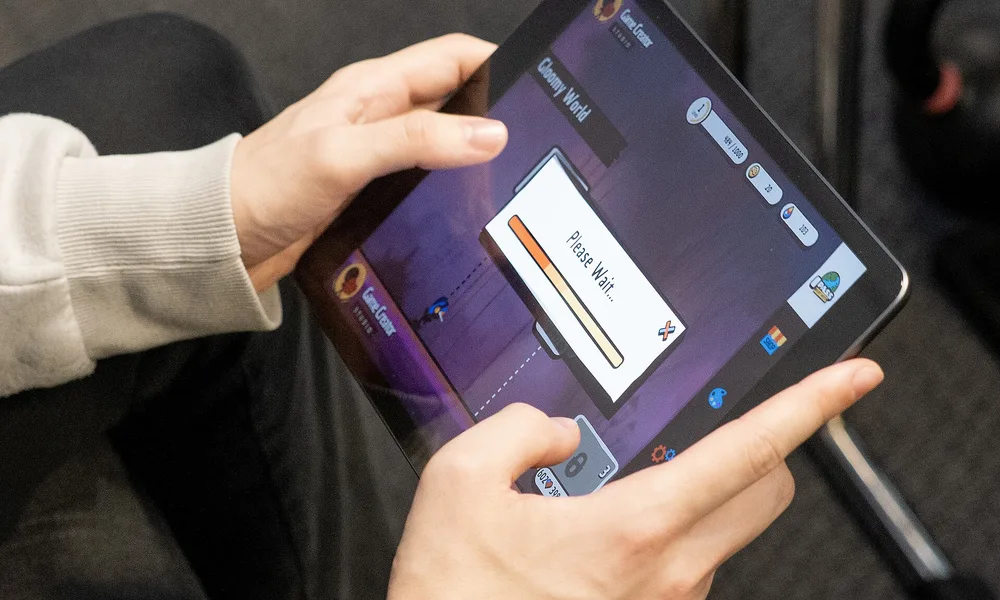
Comparison table: the worst casual games of 2026
| Rank | Casual game type | Biggest flaw | Who gets hurt most |
|---|---|---|---|
| 1 | One-trick hyper-casual games | One mechanic, then adverts | Anyone with five spare minutes |
| 2 | Idle clickers that play themselves | You watch, the game plays | Players who wanted a game |
| 3 | Merge games with paywalled boards | The board fills, the shop opens | Patient players |
| 4 | Timer-gated town builders | Wait hours or pay to build | Daily players |
| 5 | Endless runners with no finish | Same obstacles, forever | Commuters and queue-standers |
| 6 | Catalogue dress-up games | A shop dressed as a game | Creative players |
| 7 | Recycled solo quiz apps | Same questions, every round | Curious players |
The worst casual games of 2026
1. One-trick hyper-casual games: one mechanic, then adverts
The hyper-casual game is the purest form of the casual promise and the easiest to ruin. It has one mechanic: flick, tap, stack, dodge, and nothing else. For the first minute it is genuinely pleasant, because the idea is clear and the controls need no explanation. Then the minute ends, and the game has nothing else to show you. The levels get slightly faster, the colours change, and an advert plays after every attempt. The worst versions are built to be thrown away: they are released in batches, advertised hard for a week, and abandoned, so the bugs never get fixed and the adverts never stop.
2. Idle clickers that play themselves: you watch, the game plays
Idle games, the clickers and tappers that earn coins while you are away, can be a relaxing joke of a genre when they are honest about it. The worst casual clickers are not honest. You tap for a while, buy an upgrade that taps for you, buy another that earns while you sleep, and soon there is nothing left for you to do except open the app, collect the coins, buy the next upgrade, and close it again. The game plays itself, and your job is to watch the numbers go up and visit the shop.
3. Merge games with paywalled boards: the board fills, the shop opens
Merge games ask you to combine matching items into better ones, and the idea is satisfying for about an hour. The worst casual merge games turn that satisfaction into a trap. The board is small, the items keep arriving, and soon there is no space left to merge anything. The game offers you a choice: wait, delete something you worked for, or pay to clear a square. The free space is the product, and the game sells it back to you a square at a time.
4. Timer-gated town builders: wait hours or pay to build
Casual town and farm builders promise a relaxing little place of your own, built a few minutes at a time. The worst ones make the building the punishment. Every house, shop or decoration takes hours to finish, and the timer only runs while you remember to come back and tap it. The game gives you a handful of free speed-ups, then sells you more, and the town grows at the speed of your wallet rather than your imagination.
5. Endless runners with no finish: the same obstacles, forever
Endless runners and dodgers are the classic casual time-killer: run, jump, dodge, collect, and see how far you get. The worst ones never change. The obstacles arrive in the same patterns, the speed rises until the game is unfair rather than hard, and the only thing that changes is the scenery, swapped out every few weeks to look like an update. There is no finish line, no new move to learn, and no reason to get better except a higher number on a leaderboard full of strangers.
6. Catalogue dress-up games: a shop dressed as a game
Dress-up and decorating games should be creative and relaxing: choose an outfit, furnish a room, try a combination and see how it looks. The worst casual versions are catalogues with a game attached. The free clothes are plain, the free furniture is dull, and everything worth looking at sits in a shop, priced one item at a time. The game part, such as it is, is a series of tiny tasks that pay you in a currency worth almost nothing, while the shop currency is the one that buys the good items.
7. Recycled solo quiz apps: the same questions, every round
A solo quiz app should make a spare five minutes feel clever: a few questions, a mix of topics, something you did not know when you started. The worst casual quiz apps recycle the same small pool of questions until you have memorised the answers, and then they keep asking them anyway. The categories are narrow, the difficulty swings from trivial to obscure without warning, and the game never explains an answer, so you learn nothing even when you get one wrong.
What to try instead of the worst casual games
The fix for a bad casual game is not a longer game, it is a fairer short one. Look for games that respect a five-minute session: you can start, finish something, and leave without a penalty or a timer ticking behind you. The same checks work for other light games too, and our guide to the worst puzzle games of 2026 makes the same point about judging a game by its fiftieth level, not its first five, because the middle is the real game.
Checklist: choosing a casual game in 2026
- Play the free version for a full day and count how many adverts you see versus how many new ideas the game shows you.
- Check whether the game adds a second mechanic, a new choice or a new challenge in the first few sessions, or just repeats the first one.
- Look for timers, energy bars and harvest clocks before you invest time, and ask whether the game punishes you for putting it down.
- Add up the cost of the extra lives, board space, speed-ups and catalogue items before you judge the free download.
- Make sure the game lets you finish a session in five minutes and leave without losing progress or rewards.
- Read recent player reviews, not launch reviews, and look for complaints about adverts, paywalls and abandoned updates.
Frequently asked questions
Are casual games supposed to be easy?
Easy to start, yes, but not empty. A good casual game is simple to learn and still gives you something to get better at, even in short sessions.
How many adverts are too many in a free casual game?
If an advert interrupts you after every attempt, or a thirty-second advert follows a one-minute session, the adverts are the product and the game is the wrapper.
Are idle clicker games always bad?
No. An honest idle game is a relaxing joke with funny upgrades and milestones. The bad ones demand check-ins on a schedule and sell you the numbers themselves.
Should I pay to remove adverts from a casual game?
Only if you already enjoy the game without paying. If the free version is boring, removing the adverts leaves you with a boring game and less money.
Why do casual games use timers?
Timers create a reason to return, and a reason to pay to skip the wait. A fair game uses them lightly; a bad one builds the whole game around them.
When is the best time to delete a casual game?
As soon as it feels like a chore. If you open it out of habit rather than because you want to play, the game has already taken more than it gives.
Bottom line
The worst casual games of 2026 all make the same mistake: they take a genre built for spare minutes and fill those minutes with waiting, watching and paying. One-trick loops, self-playing clickers, paywalled merge boards, timer-gated towns, endless runners, catalogue dress-up games and recycled quizzes are all versions of the same failure, a game that asks for your time and gives you a shop in return. The best casual games prove the genre works: they are quick to learn, honest about what they cost, and happy to be put down. Judge a casual game by its second week, by whether it still surprises you, and by whether you can put it down without it punishing you. That is the whole test, and it takes less than a week to run.


