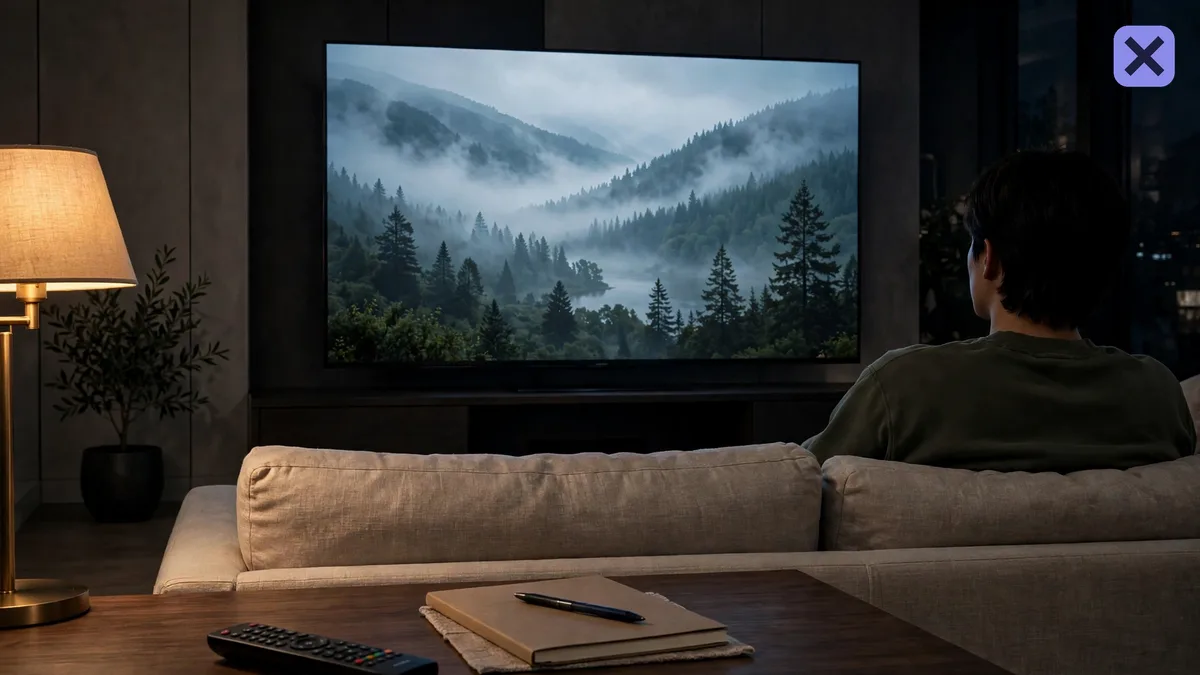
The worst comedy specials on streaming share a strange quality: they are easy to start and almost impossible to finish. You press play because the thumbnail looks promising or the algorithm insists you will love it. Ten minutes later you are checking your phone, then the fridge, then the running time. The jokes land flat, the pacing drags, and the hour ahead feels much longer than sixty minutes.
That is not a small failure. A comedy special is supposed to be the most concentrated version of a comedian, the best hour they have, filmed well and edited tightly. When it works, it feels effortless. When it does not, every weakness is magnified: a thin premise stretched too far, a crowd that will not warm up, or a set that was clearly recorded on an off night and released anyway.
This guide explains the patterns that make these specials fail, the warning signs to spot in the first five minutes, and the habits that will save your evening. The goal is simple: less time wasted on flat punchlines, and more time spent on comedy that actually earns its hour.
Key takeaways
- The worst comedy specials on streaming usually fail in the first ten minutes, so trust your early instincts and stop watching without guilt.
- Thin material, lazy crowd work, and tired topics are the three most reliable signs that an hour will not improve.
- A big name, a large budget, and a famous venue do not guarantee a funny special.
- Watch the trailer, read a few honest reviews, and check the running time before committing to a full hour.
- The best fix is simple: quit early, switch to something proven, and treat your evening as worth more than a sunk cost.
What Makes a Comedy Special Go Wrong
A good special feels like a conversation with a very funny person who has thought hard about every line. A bad one feels like a rehearsal that someone decided to film. The difference is rarely one terrible joke. It is usually a pile of small problems that add up until the audience stops laughing and starts waiting for the end.
The most common problem is material that is not ready. A comedian may have a strong twenty minutes and then fill the remaining forty with padding, callbacks that go nowhere, and stories that needed another year of work. On streaming, a weak stretch feels endless.
The Thin Premise Problem
Many of the worst comedy specials on streaming are built on one idea that cannot carry an hour. The performer opens with a sharp observation, the crowd responds, and then the same point is repeated in different words for the next fifty minutes. A strong premise opens doors to new angles. A thin one narrows the room until every joke sounds like a variation of the one before it.
When the Crowd Goes Quiet
Nothing exposes a weak special faster than a quiet crowd. Live laughter is honest in a way editing cannot fake for long. The worst specials lean on lazy crowd work instead: the same questions about jobs and hometowns, answered with the same tired punchlines.
The Warning Signs in the First Five Minutes
You do not need to watch a whole hour to judge a special. The opening minutes tell you almost everything, because they show the comedian at their most prepared. If the best material is at the start and it still does not land, the rest is unlikely to save it.
Watch for a performer who opens by apologising for the room, the crowd, or the material itself. A long apology usually means the comedian knows the set is shaky and is asking for patience instead of earning laughter.
Shouting Is Not Energy
Volume is the easiest trick in comedy, and the least effective. Some of the worst comedy specials on streaming feature performers who mistake loudness for confidence, pacing the stage and shouting punchlines that would be weak at any volume. Real energy comes from rhythm, not noise.
Tired Topics, Tired Jokes
Every era has its overused subjects, and streaming is full of specials that arrived years too late to them. The same observations about airports, phones, and dating apps appear again and again, told as if no one had ever made them before. The problem is a joke that adds nothing new.
Why Big Names and Big Budgets Do Not Help
It is tempting to assume that a famous comedian, a famous venue, and a large production budget must add up to a good special. Streaming platforms clearly hope you will think so, which is why the thumbnails are so polished and the trailers are cut so carefully. But fame and money solve production problems, not writing problems.
A beautiful stage can make a weak set look important for a few minutes. Then the jokes have to do the work, and no amount of camera work can write a punchline. The same is true of reputation: a comedian who was brilliant ten years ago may now be coasting on old habits.
How Streaming Changed the Comedy Special
Streaming changed comedy in two ways that matter here. First, it made specials easy to find and easy to start, which means more of them get made. Second, it changed how we watch them: at home, often alone, often late at night, with a phone nearby and a long list of alternatives one click away.
That second change is the harder test. A joke that works in a packed theatre can fall flat on a sofa, where the audience is not laughing together or warmed up by an opening act. Streaming also rewards volume, so more specials reach the screen before the material is truly ready.
The Habits of the Worst Specials
After watching enough disappointing hours, the patterns become hard to miss. The worst comedy specials on streaming do not all fail in the same way, but they share habits that show up again and again, and spotting one habit is often enough to predict the rest.
The first habit is padding: a special that should be forty minutes long is stretched to seventy. The second is repetition, where the same joke returns in slightly different clothes. The third is cruelty without a point, where the performer mistakes shock for insight. The fourth is the overlong opening, where ten minutes pass before the first real joke arrives.
Shock Without Substance
Shock can be a legitimate tool, but only when it leads somewhere. The worst specials use shock as a substitute for a joke: a crude line dropped in with no setup and no payoff. Remove the shocking word and ask whether anything funny remains. In a weak joke, the answer is no, because the shock was the whole joke.
A Quick Comparison: Weak Specials Versus Strong Ones
A weak special and a strong one may share the same stage and running time, yet watching them feels completely different.
| Feature | Weak special | Strong special |
|---|---|---|
| Opening | Slow, apologetic, or shouty | Confident and funny within minutes |
| Material | One thin idea, repeated | Fresh angles and real surprises |
| Pacing | Drags, with long dead stretches | Tight, with jokes landing steadily |
| Crowd | Quiet, polite, or faked-up | Warm, loud, and genuinely engaged |
| Ending | Unearned big finish | Closes a thread the hour built |
| Afterwards | Forgotten by morning | Quoted the next day |
That last row matters most. A strong special stays with you. You remember a line, a story, or a way of looking at something ordinary. A weak special leaves almost nothing behind, which is why it is so easy to finish one and immediately forget what it was about.
How to Choose Better Next Time
Choosing a good comedy special is a skill, and it improves with a few simple habits. First, watch the trailer properly, not just the thumbnail. A trailer that shows only reaction shots and applause, with no actual jokes, is telling you something. A trailer that includes two or three real punchlines is a much better sign.
Second, read a few honest reviews from people who like the genre rather than from fans of the performer. Third, check the running time: a special well over an hour needs to justify every minute.
It also helps to know your own taste: a special can be well made and still wrong for you. The worst picks often come from choosing what is popular rather than what you enjoy. The worst streaming services for value show the same trap in a different form: a big catalogue does not help if the thing you actually want is buried or missing.
A Smarter Way to Sample a Special
Give every special ten honest minutes, without your phone, and see whether you laugh out loud at least once. After ten minutes, make a decision: either it has earned the next fifty minutes, or it has not. There is no prize for finishing a bad hour.
Checklist: Spot a Weak Special Before You Commit
- Watch the trailer: if it shows applause but no real jokes, be cautious.
- Read two or three honest reviews from people who like stand-up, not just fans of the performer.
- Check the running time: anything over an hour must justify every minute.
- Give it ten phone-free minutes and count how many times you actually laugh out loud.
- Listen for repetition: the same idea told three ways is a sign the material is thin.
- Quit without guilt if the first ten minutes fail; your evening is worth more than a sunk cost.
Frequently Asked Questions
Why do so many comedy specials on streaming feel flat?
Most feel flat because the material was not ready, the pacing is loose, or the set was built for a live room rather than a camera. At home, without a shared audience, any weak stretch becomes much more obvious.
Should I finish a special I am not enjoying?
No. Give it ten honest minutes, then stop if it has not earned your attention. A good special will make you want to keep watching.
Does a famous comedian guarantee a good special?
No. A well-known performer may be coasting on old material or releasing a set recorded on an off night. The first ten minutes are a far better guide than the name on the poster.
Are long specials worse than short ones?
Not always, but length raises the bar: a seventy-minute special needs seventy good minutes, and many performers do not have that much strong material ready.
Why do trailers sometimes make a bad special look good?
Trailers show the best moments and loudest laughs, often without the jokes that produced them. One that relies on reaction shots rather than real punchlines suggests the editor could not find enough strong jokes to fill two minutes.
What is the best way to find a comedy special I will actually like?
Start with comedians you already enjoy, then sample new voices in short clips before committing to a full hour. Trust your own taste over popularity. The worst TV shows that pretend to be about love are a useful reminder that a popular premise does not guarantee an honest or satisfying hour, and the same is true when a special promises more than it delivers.
The Bottom Line
The worst comedy specials on streaming are hours built on thin material, stretched past their natural length, and released before the jokes were ready. They hide behind big names and polished trailers, but none of that survives ten honest minutes of watching. Learn the warning signs, trust the first ten minutes, and quit early without guilt. The culture of hype explains why so many of these hours arrive with more noise than substance, and why the smartest move is often the simplest one: turn it off, and watch something that actually makes you laugh.