Worst Documentaries About War 2026
The worst documentaries about war in 2026 are not the cheap, forgotten films gathering dust in a streaming menu. They are the glossy, expensive productions with sweeping music, famous narrators and hours of archive footage, and then they waste all three. Our guide to the worst documentaries about history found the same faults across the wider genre, but war documentaries fail in their own ways, through mislabelled archive, wartime propaganda shown without context, one-sided national stories, gore used as spectacle, and veterans wheeled out to bless a film they did not make.
This guide ranks the seven worst types of war documentary, judged on the same measures a viewer actually feels: how honest the film is about its sources, how fairly it treats the people in it, how much of the story is genuinely new, and how much of your evening it respects. A good war documentary leaves you quieter and better informed than before. A bad one leaves you excited, angry, or misled, and that is the worst outcome of all for a film about real war.
Key takeaways
- The worst war documentaries mislabel archive footage, showing film from one war, one year or one country as if it were another.
- Wartime propaganda is often re-released as documentary, with no warning that the original film was made to mislead.
- One-sided national stories turn a complex war into a simple tale of heroes on one side and villains on the other.
- Veterans are sometimes used as props: their testimony is edited to support a conclusion they never agreed with.
- A good war documentary is easy to spot: it labels its sources, shows more than one side, and treats the dead with more respect than the drama.
How we ranked the worst war documentaries
We ranked each type on five measures that matter to a viewer. Source honesty came first: does the film label its archive footage, its re-enactments and its sources, or does it pass one thing off as another. Fairness was second, covering whether the film shows more than one side of a war, or only the version one country wants told. Respect for the people in it was third, from veterans whose words are used carefully to civilians whose suffering is shown with dignity. A film that fails on three or more of these measures earns its place on our worst list.
The worst war documentary types at a glance
| Type | Main fault | Warning sign | Time wasted | Harm score |
|---|---|---|---|---|
| The mislabeled archive | Wrong war, wrong year | No archive credits | High | 8/10 |
| The propaganda re-run | Old lies shown as fact | No context given | Medium | 9/10 |
| The veteran as a prop | Testimony twisted | One veteran, one view | Medium | 7/10 |
| The victors cut | One side only | No enemy voices | High | 8/10 |
| The gore spectacle | Shock instead of sense | Close-ups, no context | Medium | 7/10 |
| The map-and-general lecture | Arrows, no people | Maps and medals only | High | 4/10 |
| The declassified hype machine | Secrets that are not secret | Secret files claim | Very high | 6/10 |
The worst documentaries about war 2026
1. The mislabeled archive
The mislabeled archive is the most common worst type, and the easiest to fall for. It takes genuine footage from one war and presents it as another: film from one decade shown as the next, a battle in one country labelled as a battle somewhere else, or training film passed off as combat. Nothing in the footage is fake, which is what makes it so misleading. Watch for the warning signs: no archive credits, no dates on the footage, and battle scenes that look suspiciously clean or modern for the war being described. If a film cannot tell you where its pictures came from, it has not done the work, and you should not trust its conclusions either.
2. The propaganda re-run
The propaganda re-run takes a film made during a war to persuade, frighten or recruit, and shows it again as if it were a documentary. Shown without context, it misleads a modern viewer completely. A new voiceover is added, the original purpose is never mentioned, and the audience is left believing they have seen history when they have seen advertising. The same trick appears in other genres too, and our guide to the worst documentaries about crime shows how old police and news footage can be reused to tell a story it never told. A good war documentary shows propaganda, labels it clearly, and explains what it was for. If a film shows wartime footage without ever saying who made it and why, switch it off.
3. The veteran as a prop
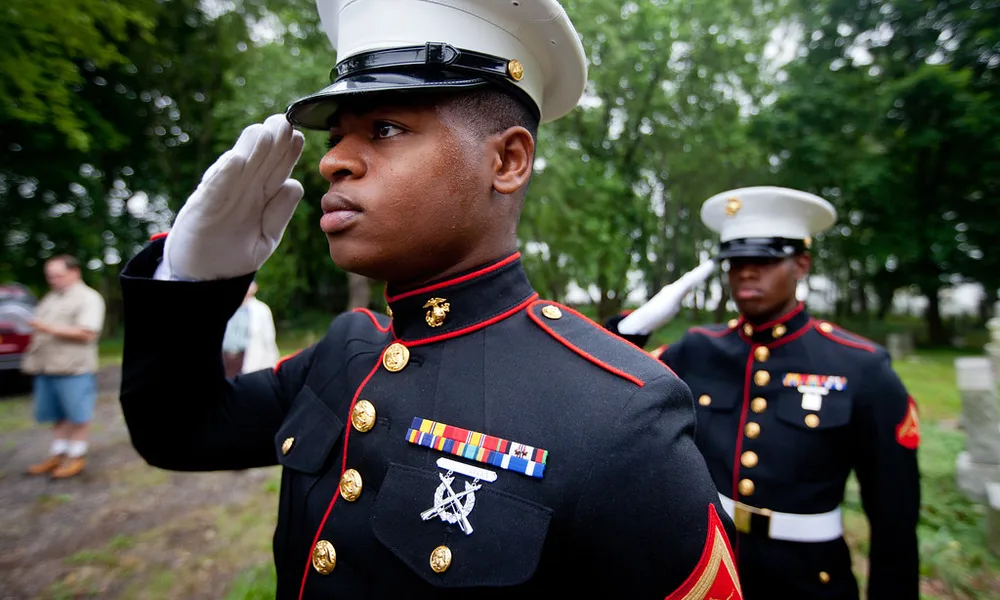
The veteran as a prop is the most disrespectful type on this list, because it uses real people to bless a film they did not make. An old soldier is interviewed, often briefly, and his words are cut, rearranged and placed under a narration that says something he never said. The film gets the authority of his service without the honesty of his views, and the viewer is told that a real veteran agrees with the argument, when the veteran may never have heard it. A good war documentary lets veterans speak at length, in their own words. If a film shows you a veteran for ten seconds and then talks over him for ten minutes, the veteran is not the subject. He is the cover.
4. The victors cut
The victors cut tells a war from one side only, and it tells it as a simple story: our side was brave, their side was evil, and the outcome was inevitable. The other side appears only as an enemy, never as people with reasons, fears and families of their own. This is not history. It is a national story dressed up as a documentary, and it leaves the viewer less informed than before they watched. The best war documentaries interview people from every side, show the cost of the war in every country it touched, and let the viewer judge for themselves. If a film has no voices from the other side at all, it is not a documentary. It is a memorial with a camera.

5. The gore spectacle
The gore spectacle treats the worst moments of war as entertainment. Long, lingering close-ups of wounds, bodies and destruction fill the screen, while the narration talks about sacrifice and heroism in the background. The images are real, which makes the effect worse: real people are reduced to shock value. A serious film shows what is needed to tell the truth, gives the viewer a warning, and spends its time on the causes and the consequences, not on the close-ups. If a film keeps showing you the worst images it can find while explaining nothing new, it is not informing you. It is using the dead as a special effect.
6. The map-and-general lecture
The map-and-general lecture is the dullest type on this list, and the one most likely to be praised by people who have never watched it properly. It is built from the same parts in every episode: a retired general, a map with moving arrows, and a list of divisions, dates and medals. The film is accurate in its own narrow way, and it is completely lifeless, because wars are not fought by arrows on a map. Maps and strategy have their place, and a good film uses them to explain a battle clearly. But when the whole film is arrows and medals, it is a lecture with pictures, and it will teach you the dates of a war without ever teaching you what it meant.
7. The declassified hype machine
The declassified hype machine promises secrets, and it delivers them in every episode, whether they are secret or not. Each instalment opens with the claim that newly released files finally reveal the truth, and then it reveals something historians have known for decades, or a minor detail dressed up as a revelation. Real archive research is slow, careful work, and it rarely produces a shock a week. A good war documentary is honest about what is genuinely new and what is already known, and it does not need a secret to keep you watching. If a film promises a revelation in every episode, the revelation is the format, and the history is the filler.
How to spot a bad war documentary in five minutes
Watch the first five minutes and ask three questions. First, does the film label its footage, with dates, places and archive credits, or does it show battle scenes with no information at all. Second, does it show more than one side of the war, or only one country’s version of events. Third, does it treat the people in it with respect, or does it use them for shock, for tears, or for authority it has not earned. The same faults sink other film genres too, and our guide to the worst war movies shows how fictional war films fail for many of the same reasons: scale without sense, and drama without honesty. Five minutes of checking will save you an evening of bad history, and the good war documentaries are worth the search.

War documentary viewer checklist
- Check the archive credits: a film that never names its sources has not done the work.
- Look for more than one side of the war, including voices from the other side.
- Skip films that show wartime propaganda without explaining who made it and why.
- Avoid films where veterans appear for seconds and the presenter talks for minutes.
- Watch for the warning signs of hype: a secret revealed in every episode, and a mystery that never ends.
- Unsubscribe fast from any series that uses graphic images as a substitute for explanation.
Frequently asked questions
Are the worst war documentaries always inaccurate?
No. Some are accurate in their facts and still bad, because they show only one side or stretch a thin idea across too many episodes.
How can I tell archive footage from a re-enactment?
Look for the labels. Honest films mark re-enactments clearly, on screen, every time they appear. If actors in costume, slow motion and dramatic music appear without a label, assume you are watching a reconstruction, not the real thing.
Are long war documentary series always bad?
No. Some of the best run for many hours because the subject needs it. The problem is length without substance.
Should I trust a war documentary with a famous presenter?
Not on the name alone. Judge the film by its sources, its fairness and its honesty, not by who reads the script.
What is the most harmful type of bad war documentary?
The propaganda re-run, because it presents wartime lies as modern fact, and the victors cut, because it teaches viewers that wars have only one side. Both leave people worse informed than when they started.
Where can I find good war documentaries instead?
Start with films made with archive institutions, museums and universities. A film that credits its sources and interviews people from every side is almost always worth your evening.
The bottom line
The worst documentaries about war in 2026 all make the same mistake: they forget that the footage is real, the people in it really lived, and the audience really needs to understand what happened. Pick films that label their sources, show more than one side, and spend their time on causes rather than shock and secrets. Five minutes of checking will save you an evening of bad history, and the good war documentaries are worth the search.