The worst first dates at restaurants rarely fail in one dramatic moment. They fail slowly, as small discomforts pile up: a table too close to the kitchen, a menu that feels like homework, a bill that arrives at the wrong second.
A first date at a restaurant is supposed to make conversation easy. You sit down, you order something, you talk. In practice, the restaurant adds pressure that a walk or a coffee never would. There is a waiter waiting for your order and a clock ticking on how long you may sit there. When the setting is wrong, two people who would get on well can leave thinking the chemistry was missing, when really the restaurant was the problem.
This guide covers the worst first dates at restaurants: the venues that sabotage conversation, the ordering traps, and the small decisions that decide whether you leave wanting a second date.
Key takeaways
- Pick a restaurant for conversation first: quiet corners and space between tables matter more than a famous name.
- Choose a place with a short menu so ordering takes minutes, not a long silence.
- Arrive early, request a good table, and agree a plan for the bill before it arrives.
- Keep the first date short: one course and a drink is enough.
- When the venue is wrong, move the date, or end the evening early with grace.
Why Restaurants Make First Dates Harder Than They Look
Restaurants are the default first-date venue for a reason. They feel grown-up, they give the evening a clear shape, and they signal effort. Yet they combine almost everything that makes a first meeting awkward: forced face-to-face seating, long silences, and nowhere to go when the conversation stalls. On a walk, a pause feels natural. At a table, a pause feels like a verdict.
The second problem is time. A coffee lasts twenty minutes; a meal can stretch past two hours. If the conversation is flowing, that is a gift. If it is not, every additional course feels longer than the last. Many bad restaurant dates are not bad because of anything anyone said. They are bad because two people who knew within twenty minutes that there was no spark had to sit together for another ninety.
The third problem is money. An expensive restaurant raises the stakes: the person who suggested it worries about looking cheap, the other worries about looking greedy, and both wonder who is supposed to pay. A first date should feel light, not like a quiet calculation.
The Worst First-Date Restaurant Mistakes
Most bad restaurant dates are not caused by bad luck. They are caused by a handful of avoidable choices, made before anyone sits down.
Choosing a Restaurant That Is Too Loud, Too Dark, or Too Crowded
Noise is the most common killer of restaurant first dates. A room so loud that you must lean across the table and repeat yourself turns conversation into hard work. You stop asking interesting questions because every answer costs effort. Darkness is nearly as bad: a candlelit room sounds romantic until you cannot read the menu or the other person’s face. Crowding completes the problem: tables pushed together mean your conversation has an audience.
Picking a Fancy Restaurant for a First Meeting
A grand, formal restaurant feels like a generous gesture, but on a first date it is often a trap. Formal dining comes with rules neither person may know, so both spend the evening worrying about doing something wrong. A tasting menu can also run for three hours, with no polite way to leave halfway through. For a first meeting, a comfortable mid-range restaurant is almost always better. Guests who want to avoid the classic traps of formal dining can learn from the worst fine dining mistakes guests make, many of which show up on first dates too.
Ordering Food That Is Hard to Eat or Takes Forever
Some dishes are simply wrong for a first date. Spaghetti that needs twirling, ribs that need both hands, and anything with bones or shells all demand attention that should be going to the conversation. Eating messily in front of a stranger is stressful, and watching someone struggle with a difficult dish is awkward. Slow food is the same problem in reverse: a dish that takes forty minutes to arrive leaves a long gap with nothing to do but wait. The best first-date dishes are simple and quick.
The Table by the Kitchen, the Toilet, or the Front Door
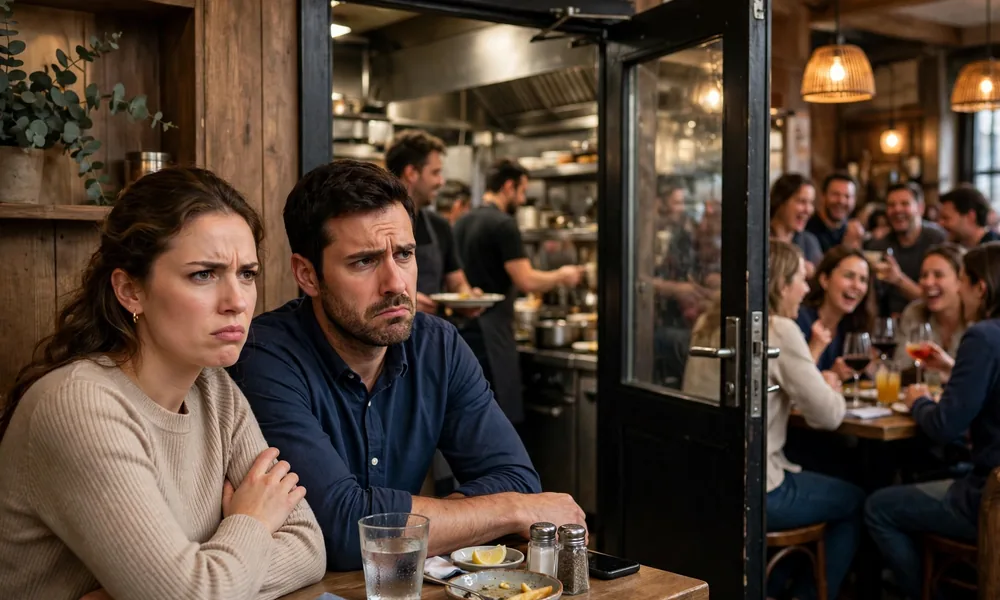
Where you sit matters as much as where you eat. The worst tables are near the kitchen door, the toilets, or the entrance, and first dates seem to land in them with remarkable regularity. A table by the kitchen means waiters brushing past and a draught every time the door swings open. A table by the toilets means strangers passing your conversation. Arrive early and ask for a better table, because a bad one is hard to escape once you have sat down.
Letting the Bill Become the Main Event
Few moments are as loaded as the arrival of the bill. It sits on the table like a question nobody wants to ask: who pays? Reach for it too quickly and you may seem controlling; hesitate and you may seem ungenerous. The worst version is the surprise bill: a restaurant far more expensive than either person expected, with a total that makes someone wince. Decide before the date, not at the table. Whoever suggested the restaurant can offer to pay, and the other can offer to get the next round.
How to Spot a Bad First-Date Restaurant Before You Book
The best time to rescue a restaurant first date is before it starts. Start with recent reviews, looking for words like loud, cramped, rushed, dark, and slow. A review that praises the food but mentions shouting across the table is a warning, not a recommendation. Look at photos taken by diners rather than the restaurant’s own polished shots: real photos show the true lighting, the real table spacing, and the real size of the room.
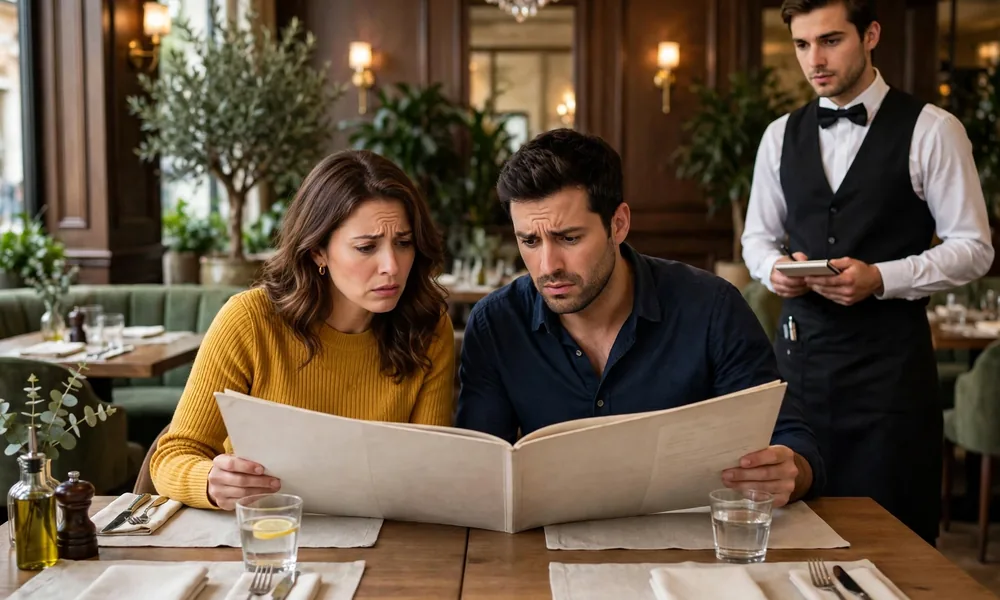
Check the menu before you book. A good first-date menu is short enough to read in a minute, with clear prices and easy dishes. When a menu is too long, even deciding what to eat becomes a small test of character. The problem of menu overload is real, and it hits first dates especially hard, because neither person wants to be the one who takes ten minutes to choose a starter.
| Mistake | Why it ruins the date | What to do instead |
|---|---|---|
| Very loud restaurant | You shout and stop asking good questions | Pick a quiet room, book early |
| Long tasting menu | Three hours, no polite way to leave | Choose a short menu, one course |
| Messy or fiddly food | Eating becomes a performance | Order simple dishes |
| Table by kitchen or door | Noise, draughts, passing strangers | Arrive early, ask for a corner table |
| Ignoring the bill | Money becomes the climax | Decide who pays beforehand |
What to Do When the Date Goes Wrong at the Table
Even with careful planning, some restaurant dates go wrong. The food is late, the table is terrible, the conversation stalls, or you realise within minutes that there is no connection. Stay calm and kind: your date is probably feeling the same awkwardness, and blame only adds tension. If the table is bad, ask politely to move. If the food is slow, order a drink and keep talking. If the conversation stalls, ask a genuine question.
Give the evening a graceful exit. You do not owe a stranger three hours because you booked a restaurant. If the date is clearly not working, end it early and politely rather than sitting through a long meal in silence. Finish your drink, thank them, and leave with warmth. If the date is going well but the restaurant is not, suggest moving: a short walk or a drink somewhere quieter can rescue the evening.

Your First-Date Restaurant Checklist
Use this checklist when you plan your next first date at a restaurant. It takes five minutes and prevents most of the mistakes in this guide.
- Choose a restaurant you have eaten at before, so there are no surprises about noise or lighting.
- Book an early table on a quieter night, away from the kitchen and the front door.
- Check the menu in advance: short, fairly priced, with simple dishes that arrive quickly.
- Keep the date short: plan for one course and a drink, with the option to continue if things go well.
- Decide the bill plan before you arrive, and pick prices comfortable for both of you.
- Have a graceful exit ready: a nearby bar or a short walk.
Better Ways to Plan a First Date at a Restaurant
The best restaurant first dates are planned around conversation, not cuisine. Most people plan them the other way round: they pick the most impressive restaurant they can think of and hope the conversation follows. It rarely does. Start with the kind of evening you want — relaxed, easy, with room to talk — and then find a restaurant that fits it. Consider a restaurant with a bar: meeting for a drink first takes the pressure off the meal.
Think about the cuisine too. Some of the worst restaurant trends of recent years have made first dates harder: sharing plates that force negotiation over every dish, tasting menus that remove all choice, and concept restaurants where the experience matters more than the company. A straightforward restaurant with a clear menu is a better setting for getting to know someone than the latest trend.
Frequently Asked Questions
Is a restaurant a good place for a first date?
It can be, if chosen for conversation rather than impressing. A quiet restaurant with a short menu and fair prices works well. A loud, formal, or very expensive one usually makes a first date harder. For many people, a drink first is an easier start.
How long should a first date at a restaurant last?
About ninety minutes: a drink, one course, and time to talk. Shorter is fine if the connection is not there, and longer is fine if it is. The mistake is booking a meal that forces a three-hour stay before you know whether you enjoy each other’s company.
Who should pay on a first date at a restaurant?
There is no single rule. The person who suggested the restaurant often offers to pay, and the other may offer to split or get the next round. Avoid a public debate at the table: decide before the date and state it lightly.
What should I order on a first date at a restaurant?
Order something simple and familiar: a dish you have enjoyed before, that arrives quickly and is easy to eat. Avoid messy food, dishes with bones or shells, very spicy food, and anything you have never tried.
What if the restaurant is too loud or the table is bad?
Ask to move: a polite request for a quieter table is completely normal. If there is no better table, cut the meal short and suggest a drink or a walk somewhere quieter. Staying at a bad table for two hours helps no one.
How do I end a bad restaurant date early without being rude?
Be warm, honest, and brief. Finish your drink, thank them, and say you enjoyed meeting them but do not think there is a romantic connection. Do not invent an excuse. Most people prefer a kind, early ending to a long evening of forced politeness.
The Bottom Line
The worst first dates at restaurants are rarely ruined by bad food or bad people. They are ruined by bad choices: a room too loud for conversation, a menu too long to read, a meal too long to escape, and a bill nobody planned for. Choose a quiet room, a short menu, simple food, a good table, and a fair price. The restaurant should be the background of your first date, not the main event.