Worst Kayaks 2026: Seven Boats That Tip, Wander and Wear Out
The worst kayaks of 2026 are not bad because kayaking is hard. A good kayak is one of the simplest boats there is: you sit low, you paddle with a double-bladed paddle, and the boat goes where you point it. The worst kayaks are bad because they were built for the wrong water, loaded with the wrong gear, or shaped in a way that fights the paddler on every stroke. This guide ranks the worst kayaks by discipline, from sea touring to whitewater to fishing, so you can match the boat to the water you actually paddle instead of buying a boat built for someone else’s trip.
Key takeaways
- A kayak is paddled seated with a double-bladed paddle, which is what separates it from a canoe, where the paddler kneels or sits high and uses a single blade, and from a paddleboard, where the paddler stands.
- This guide ranks kayaks by discipline, not by how forgiving they are for a first-timer: the learning curve is already covered in our guide to the worst kayaks for beginners.
- Tracking decides whether a kayak is pleasant or exhausting: a boat that will not hold a line turns every trip into a workout.
- Weight is a kayak fault, not a feature: a fishing kayak loaded with gear, or a pedal-drive boat you cannot paddle properly, is a burden at the launch and on the water.
- Check the hull for straightness, the hatches for sealing and the outfitting for fit before you buy, and paddle the exact boat on the water it was built for.
How the worst kayaks of 2026 were chosen
Every type below was scored on five measures. Tracking comes first: does the boat hold a straight line with relaxed strokes, or does it wander and force constant correction? Stability is second, judged on the water the boat was built for, because a whitewater kayak and a sea kayak need different kinds of steadiness. Fit and outfitting are third, because a seat, footrests and thigh braces that do not fit the paddler make even a good hull feel wrong.
Two notes before the list. First, this guide ranks kayaks by the discipline they were built for, so the same hull shape can be a good boat in one section and a bad boat in another: a surf kayak is a joy in waves and a misery on a flat lake, and that is the point. Second, standing up changes everything, which is why paddleboards are a different craft altogether: our guide to the worst paddleboards for beginners covers the standing side of paddle sport, and a kayak that tries to be a paddleboard usually fails at both.
Comparison table: the worst kayaks of 2026
| Rank | Kayak type | Main fault | Who gets hurt most |
|---|---|---|---|
| 1 | Sea touring kayak that will not track | Wanders in wind and chop | Coastal paddlers |
| 2 | Whitewater kayak with trapping outfitting | Cockpit you cannot escape | River paddlers |
| 3 | Overloaded fishing kayak | Too heavy to paddle or carry | Anglers |
| 4 | Tandem kayak built for two | Two paddlers, one argument | Couples and families |
| 5 | Folding kayak with flexing frame | Leaks at the joints, folds in waves | Travelling paddlers |
| 6 | Pedal-drive kayak with a jamming drive | Useless when the drive fails | Hands-free paddlers |
| 7 | Surf kayak used on flat water | No tracking anywhere else | All-round paddlers |
The worst kayaks of 2026
1. Sea touring kayak that will not track: the boat to avoid first
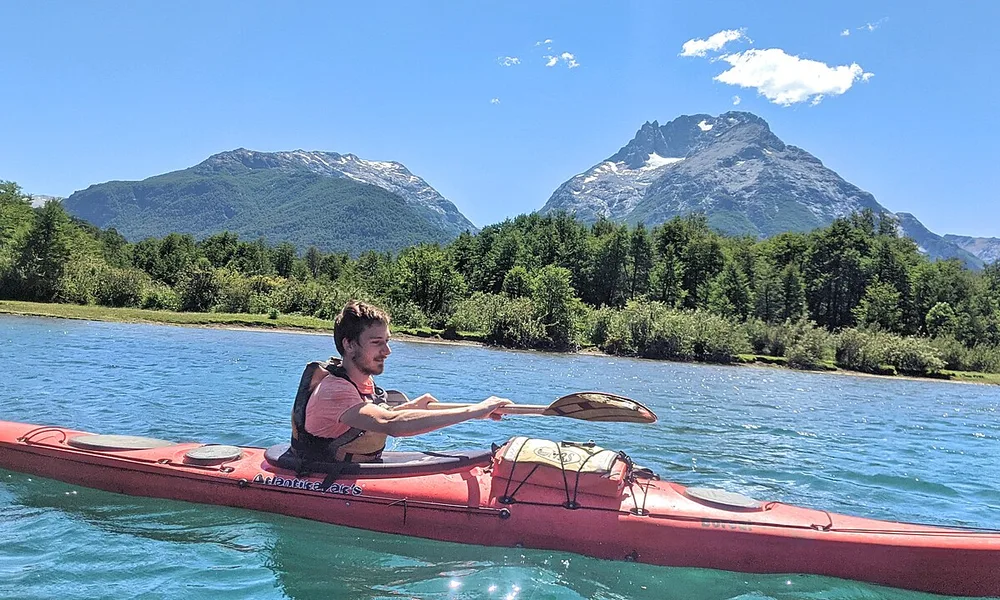
A sea kayak has one job above all others: it must go straight. On open water you are often a long way from the shore, the wind is pushing the bow sideways, and the trip is measured in hours, so a hull that will not hold a line turns a pleasant paddle into a grind. The worst sea kayaks have hulls that are too short for their width, with a flat bottom and no keel line, so every stroke pushes the bow off course and the paddler spends the trip sweeping the paddle like a rudder just to stay on a bearing.
2. Whitewater kayak with trapping outfitting: fast water, no way out
Whitewater kayaking is the one discipline where the boat can genuinely hurt you, and the worst whitewater kayaks make the danger worse. A whitewater kayak is meant to be a tight fit, with thigh braces, a backrest and footrests that lock the paddler in so the boat responds to every hip movement. The worst boats take this too far: a cockpit so small that the paddler cannot get out quickly after a capsize, thigh braces set so tight that the legs go numb, and a seat so low that the paddler cannot roll the boat back upright.
3. Overloaded fishing kayak: a floating tackle shop that will not move
Fishing kayaks start as good boats and get worse with every accessory. The base hull is usually wide and stable, which is exactly what an angler needs, but then the rod holders, the fish finder, the live well, the anchor trolley, the crate and the cooler all get bolted on, and the boat that was stable becomes a barge.

4. Tandem kayak built for two: twice the paddlers, half the harmony
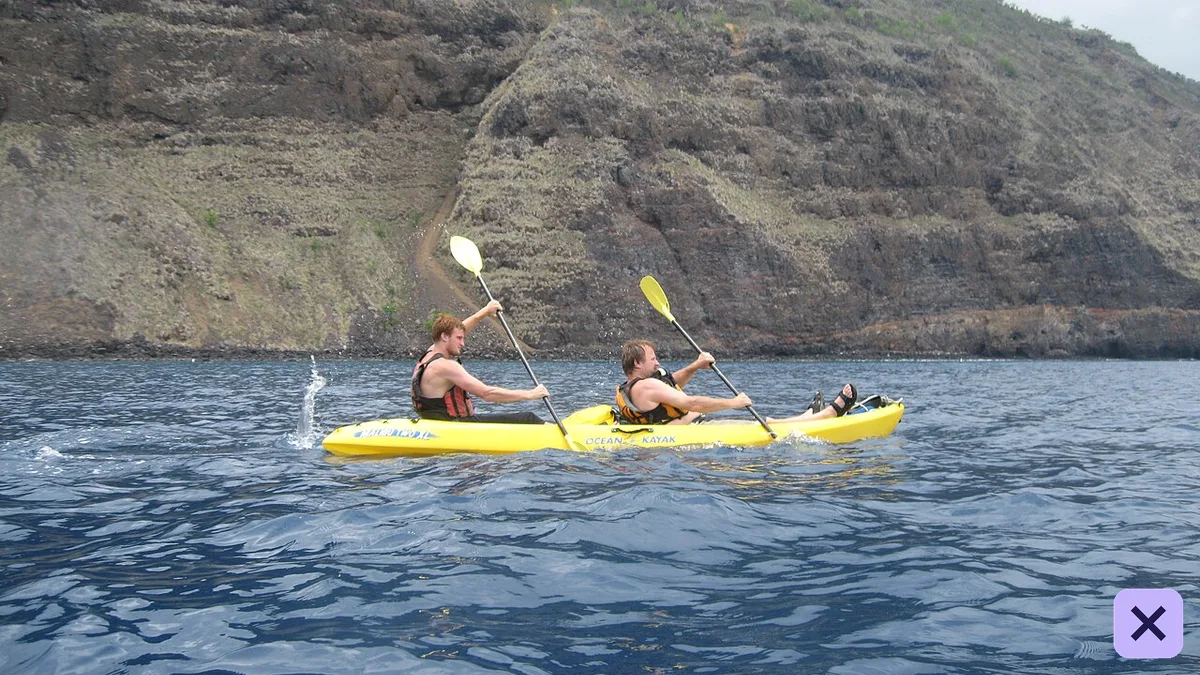
A tandem kayak is often sold as the romantic option: two people, one boat, a shared adventure. In practice it is the hardest kayak to paddle well, because it needs two paddlers stroking in time, steering together and agreeing on where to go. The worst tandems make this harder by being too short for two adults, so the paddlers sit close enough to clash paddles on every stroke, or too wide and heavy for one person to paddle alone when the other gives up.
5. Folding kayak with flexing frame: a boat that comes apart at the seams
A folding kayak promises the best of both worlds: a proper sea kayak that packs into a bag and fits in a car boot or on a plane. The worst folding kayaks deliver the worst of both instead. The frame is made of aluminium or plastic ribs joined by hinges and clips, and after a few assemblies the joints develop play, so the hull flexes in waves and the skin wrinkles where the frame no longer holds it tight.
6. Pedal-drive kayak with a jamming drive: hands free, boat stuck
Pedal-drive kayaks sell on a simple promise: pedal with your legs, keep your hands free for fishing, and go faster than paddling. When the drive works, that is true. The worst pedal-drive kayaks are the ones where the drive is the only way the boat moves properly, because the hull is wide, heavy and shaped around the drive unit, so paddling it with a normal paddle feels like pushing a barge.

7. Surf kayak used on flat water: brilliant in waves, hopeless everywhere else
A surf kayak is a specialist, and specialists make terrible all-rounders. Built short, with a flat planing hull and fins, a surf kayak is designed to catch a wave, turn sharply on its face and ride it to the beach, and in surf it is one of the most exciting boats there is. On flat water it is a disaster: the short flat hull has no keel line and no length to hold a course, so it spins, wanders and needs constant correction just to go in a straight line.
What to avoid when buying a kayak
The most common kayak regret is not a bad boat but a wrong match: a surf kayak bought for a lake, a pedal-drive boat bought for a weedy river, or a sea kayak that was never tested in wind. Avoid the trap by checking three things before you pay: the hull’s straightness, checked by sighting down the keel line; the hatches, opened and closed several times to test their seals; and the fit, tested by sitting in the boat and rocking gently to feel whether it settles or keeps tipping. The paddle matters as much as the boat, and our guide to the best kayak paddles shows how a heavy or flexible paddle can ruin a good hull. Remember that a kayak is paddled seated with a double-bladed paddle: if the boat only works standing up, it is a paddleboard, not a kayak, and it should be judged as one.
Checklist: buying a kayak in 2026
- Paddle the exact boat on the water it was built for, in a breeze, before you pay for it.
- Sight down the keel line for straightness and press the hull firmly to test whether the plastic flexes like a drum skin.
- Open and close every hatch several times and check that the seal touches the rim all the way round.
- Sit in the boat, check the footrests, thigh braces and seat, and practise getting out quickly.
- Lift the boat onto your roof rack alone: if you cannot load it, you will not use it.
- Check the weight with all the fitted gear included, not the bare hull weight in the brochure.
Frequently asked questions
What is the difference between a kayak and a canoe?
A kayak is paddled seated, low in the boat, with a double-bladed paddle, one blade on each side. A canoe is paddled kneeling or sitting higher, with a single-bladed paddle on one side at a time, and it is usually open-topped. The two boats handle differently and suit different water.
Why does my kayak keep turning in circles?
Poor tracking is usually the hull’s fault: a short, flat-bottomed hull with no keel line wanders with every stroke. A jammed skeg, a stretched rudder cable or an uneven load can make it worse. A boat that will not track cannot be fixed by a better paddle.
Are inflatable kayaks any good?
Good inflatables have separate air chambers, a stiff floor and a hull shape that holds a line. Bad ones are single-chamber pool toys that fold in the middle, catch the wind and lose pressure in the sun. The difference is in the chambers and the floor, not the price tag.
How heavy is too heavy for a kayak?
If you cannot lift it onto your roof rack alone, it is too heavy for you. Fishing kayaks and pedal-drive boats are the worst offenders, since the brochure weight often excludes the gear that comes fitted to the boat.
Do I need a rudder or a skeg on a sea kayak?
On open water, yes: a skeg or rudder keeps the boat on course in wind and chop. But it must work properly, with cables that do not stretch and a skeg that does not jam with sand, or it becomes another thing to fail.
Can one kayak do everything?
No. A sea kayak, a whitewater kayak, a fishing kayak and a surf kayak are built for different water, and a boat that tries to do all four does none of them well. Buy the kayak for the water you paddle most, and hire the rest.
Bottom line
The worst kayaks of 2026 all make the same mistake in different ways: they were built for one kind of water and sold for another. The sea kayak will not track, the whitewater boat traps its paddler, the fishing kayak is too heavy, the tandem needs two perfect paddlers, the folder flexes, the pedal-drive jams and the surf kayak is hopeless on flat water.