The Worst Rings to Turn Your Back On: The Worst Sports Rings of 2026
The worst sports rings of 2026 are not the ones handed to the runner-up or the team that fell short in the final. They are the rings that disappoint the moment they are held: the band so thin it bends between two fingers, the stone that looks cloudy before the photograph is taken, the engraving so small that nobody can read what was actually won, and the fit so wrong that the ring cannot be worn at all. This guide ranks the worst types of sports ring in 2026, by the faults in the object itself.
Key takeaways
- A good sports ring has a band with real substance: if it bends or digs into the finger, the win deserves better.
- The stone is the face of the ring, not an afterthought: a cloudy stone or a loose setting ruins the whole award.
- A ring that cannot be worn has failed at its one job, whatever it cost to make.
- Engraving should say what was won, where and when, in letters big enough to read without a magnifier.
- Check the band, the stone, the size and the engraving proof before any rings are ordered.
How the worst sports rings of 2026 were chosen
Every type below was scored on five measures. Fit and comfort come first: does the ring sit on the finger all day, or does it pinch, spin, slip off or refuse to go on at all? The band and metal are second, judged on thickness, weight and whether the finish lasts past the first month. The stone and setting are third: a stone that is cloudy, loose or badly set has failed as the face of the ring. Engraving and design are fourth: readable lettering and a design that belongs to the event. Wearability is fifth: does the ring suit daily life, or does it live in a drawer?
Two notes before the list. First, no real athlete, team or competition is named as the worst anywhere here, because this guide ranks types and patterns, not people. Second, this is about the ring as an object, not the ceremony around it, and our guide to the worst trophy ceremonies of 2026 covers the presentation itself. The closest cousin of the ring is the medal, and our guide to the worst sports medals of 2026 ranks the same faults in an award worn round the neck.
Comparison table: the worst sports rings of 2026
| Rank | Ring type | Main fault | Worst moment |
|---|---|---|---|
| 1 | The Paper-Thin Band | Band bends and warps in the hand | Bending the first time it is gripped |
| 2 | The Cloudy Stone | Dull stone in a loose setting | The stone rattling in its prongs |
| 3 | The Finger-Trap Fit | Sized so wrong it cannot be worn | Stuck halfway down the finger |
| 4 | The Tarnishing Finish | Plating peels and metal dulls fast | Dull grey within a month |
| 5 | The Unreadable Engraving | Lettering too small, wrong or missing | Nobody can read what was won |
| 6 | The Cookie-Cutter Ring | Generic stock design, any event | Same ring as last year |
| 7 | The Oversized Novelty Ring | Huge, heavy and unwearable | Banging on every desk and door |
The worst sports rings of 2026
1. The Paper-Thin Band: a ring that bends
The paper-thin band is the worst type of sports ring, because it fails the first test every winner gives it: the moment it is picked up. A good ring has a band with real substance, a solid edge and a weight that feels made to last. The paper-thin version is light, hollow and flexible, and it bends if gripped too hard or worn for a full day. The signs are plain: a band you can flex between thumb and forefinger, sharp edges where the metal was rolled too thin, and a ring that goes out of round after a week on the hand. A good band is thick enough to hold its shape, and once a thin one has bent, it will never sit straight again.
2. The Cloudy Stone: a face that never shines
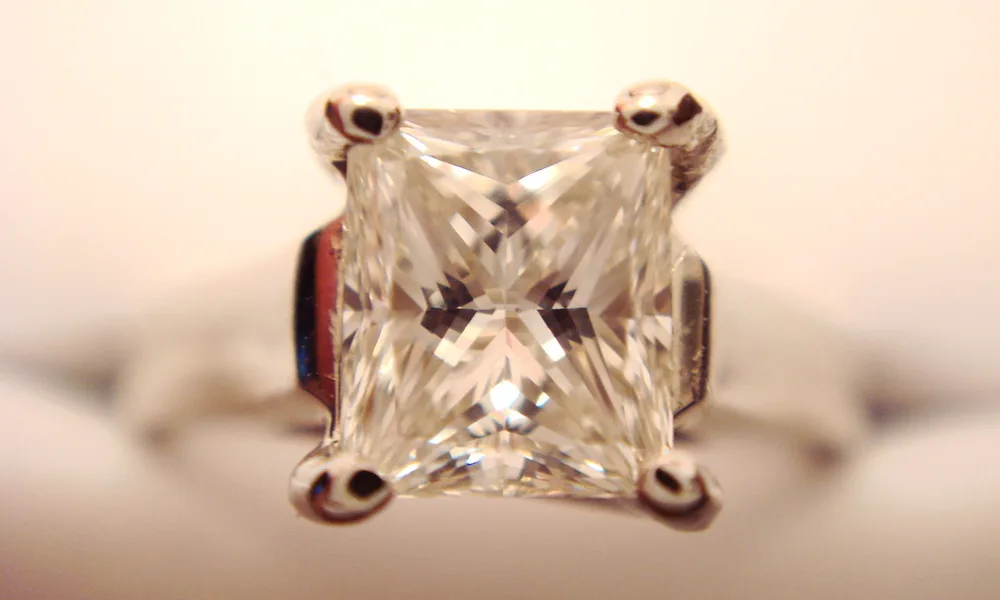
The stone is the face of the ring, and the cloudy stone fails exactly there. The stone is dull, milky or scratched, and the setting is worse: uneven prongs, a stone that rattles, and a seat so shallow the stone sits crooked. A good stone is clear and held firmly, so the ring flashes when the hand moves. The signs are plain: a stone that looks dirty even after cleaning, a rattle when the ring is tapped, and prongs that snag on clothing because they were never finished smooth.

3. The Finger-Trap Fit: sized to fail
A ring that cannot be worn has failed at its one job, and the finger-trap fit fails it completely. The ring was ordered from a guessed size, or from a size taken once on a cold morning, and it arrives too tight to pass the knuckle or too loose to stay on the finger. The winner tries it on at the presentation, it sticks halfway down, and the celebration becomes a quiet struggle in front of a crowd. A good ring is sized properly, with the finger measured more than once before the order is placed. The signs are plain: no size was ever asked for, or one size was ordered for a whole squad.
4. The Tarnishing Finish: gold that turns grey
A finish that tarnishes or peels within weeks turns a keepsake into an embarrassment, and the tarnishing finish is the ring that does it fastest. The plating is thin, the metal underneath is cheap, and after a few weeks the gold dulls to grey and the edges show the base metal beneath. A good ring is made from solid metal or plated thickly enough to last years. The signs are plain: a colour that is too yellow to be real, a surface that scratches with a fingernail, and a supplier who will not say what the ring is actually made of.
5. The Unreadable Engraving: a win nobody can read
Engraving should say what was won, where and when, in letters big enough to read without a magnifier, and the unreadable engraving fails every part of that. The letters are tiny, shallow or misspelled, or the engraving is missing entirely, so the ring could belong to anyone, from any year, for any reason. A good engraving is deep and clear, with the event, the year and the result spelled correctly. The signs are plain: no proof was ever shown before the order, the lettering is smaller than the band is wide, or the words run together where the engraver ran out of room. The winner has to explain the win instead of letting the ring say it.

6. The Cookie-Cutter Ring: the same ring as everyone else
The cookie-cutter ring is the generic stock design that could have come from any event in any year, and that is exactly why it disappoints. The face is a plain stone in a plain setting, and nothing on it says which sport was played or which year it happened. A good ring carries the event in its design, so it could belong to no other win. The signs are plain: the design appears in a catalogue with no changes, the only choice was the stone colour, and the supplier could not add a single detail from the event.
7. The Oversized Novelty Ring: too big to wear
The oversized novelty ring is huge, heavy and unwearable, and it fails because a ring is meant to be worn, not displayed on a shelf. The face is so wide it covers two knuckles, the stone is so tall it catches on everything, and the whole ring is so heavy that the finger aches within the hour. It bangs on desks and snags on doors, so the winner takes it off within minutes and never puts it back on. A good ring is bold enough to notice and small enough to live with. The signs are plain: a face wider than the finger it sits on.
What to avoid when ordering or accepting a sports ring
The most common sports ring regret is not a bad design but a bad order: a size nobody measured, a metal nobody named, a stone nobody checked and an engraving nobody proofread. Avoid the trap by checking four things before any ring is ordered or accepted: the real size of every finger, measured more than once; the metal, named plainly; the stone, seen under a light and tested for movement; and the engraving proof, read word by word before it is cut. The same checks work for any award meant to be kept, as our guide to the worst sports souvenirs of 2026 shows: cheap materials, guessed sizes and proofs nobody reads.
Checklist: ordering a sports ring worth wearing
- Measure every finger twice, on different days, and confirm the size in writing before the order is placed.
- Ask what metal the ring is made of, and get the plating thickness and the guarantee in writing.
- Check the stone under a light, shake the ring gently, and reject any stone that rattles or sits crooked.
- Read the engraving proof word by word, including the year and the event name, before it is cut.
- Try the finished ring on before the presentation, and confirm it can be resized if the fit is wrong.
- Wear the ring for a full day, and check the finish, the comfort and the weight.
Frequently asked questions
What is the worst type of sports ring?
The paper-thin band is the worst, because it fails the first time the ring is picked up. A band that bends cannot be fixed by wearing it carefully, and it makes the whole award feel cheap.
How can I tell if a sports ring will tarnish?
Ask what metal it is made of and how thick the plating is, and get both in writing. A ring that dulls within weeks was plated too thinly over cheap metal, and no polishing will save it.
Why does my sports ring not fit?
It was probably sized from a guess or a single measurement. Fingers change size through the day and with the weather, so a ring sized once on a cold morning will often be wrong.
Can a sports ring with a loose stone be fixed?
Sometimes, if the prongs can be tightened, but a stone that rattles from the start was never set properly. See a jeweller quickly: a loose stone is a lost stone.
What should a sports ring engraving say?
The event, the year and the result, in letters big enough to read without a magnifier. If the wording does not fit the band at that size, shorten the words rather than shrinking the letters.
Is a big championship ring always better?
No. A ring that is too big or too heavy to wear ends up in a drawer, and a ring in a drawer is not an award anyone sees. The best rings are bold enough to notice and small enough to wear daily.
Bottom line
The worst sports rings of 2026 are the ones that fail the hand that earned them: bands that bend, stones that cloud, fits that trap the finger, finishes that tarnish, engravings nobody can read, designs that belong to everyone, and rings too big to wear. Check the band, the stone, the size and the engraving proof before any ring is ordered, and it will be worth wearing for years instead of hiding in a drawer.