
Shun the Worst Sports Skateboards of 2026: Seven Boards That Fight You From the First Push
The worst sports skateboards of 2026 are not the boards ridden by the slowest skaters at the park. They are the boards that fight their rider from the first push: the deck that will not pop, the trucks that wobble at any speed, the wheels that stop dead on the smallest pebble, and the complete that falls apart within a month. This guide ranks the seven worst types of sports skateboard by the riding they ruin, from street tricks to downhill cruising, so you can spot a bad board before it spoils your season.
Key takeaways
- The worst sports skateboards fail on build, not on looks: soft decks, weak trucks and plastic wheels matter most.
- A board that will not pop, turn or roll straight teaches bad habits, and beginners blame themselves instead of the board.
- Match the board to the riding you actually do: a street deck for tricks, a cruiser for getting around, a longboard for hills and distance.
- Cheap complete boards cost more in the long run, because every part needs replacing within weeks of regular riding.
- Check the deck, the trucks and the wheels with your own hands before you pay, and walk away from any board that fails one of them.
How the worst sports skateboards of 2026 were chosen
Every type below was scored on five measures. Build quality comes first: is the deck layered hard maple, are the trucks solid metal, and are the wheels real urethane, or is the board built from softwood, soft metal and plastic? Ride comes second, judged on whether the board rolls straight, turns when you lean, and holds its line at speed. Pop is third, because a street or park board that will not leave the ground is not a skateboard at all. Durability is fourth: does the board survive a month of regular riding, or does it delaminate, bend or snap? Fit for purpose is fifth, covering whether it suits the riding it is sold for.
Two notes before the list. First, no single board is named as the worst here, because the same bad patterns appear on racks everywhere, and what matters is learning to recognise them in any shop. Second, this guide is strictly about skateboards as equipment: decks, trucks and wheels. The riders themselves are ranked separately in our guide to the worst skateboarders of 2026, where the faults are habits, not hardware.

Comparison table: the worst sports skateboards of 2026
| Rank | Board type | Worst at | Main fault |
|---|---|---|---|
| 1 | The toy-store complete | Every kind of riding | Plastic deck, plastic trucks, plastic wheels |
| 2 | The flat softwood deck | Street tricks, park riding | No concave, no pop, feet slide |
| 3 | The wobble-truck complete | Cruising, downhill, speed | Soft metal trucks, crumbling bushings |
| 4 | The plastic-wheel stopper | Rough park concrete, pavements | Hard plastic wheels lock on pebbles |
| 5 | The oversized longboard | Street tricks, tight turns | Too long to turn or pop, wrong discipline |
| 6 | The delaminated second-hand deck | Landings, hard riding | Dead pop, splitting layers, gritty bearings |
| 7 | The novelty mini board | Any real stance or ride | Too small for feet, a souvenir not a board |
The worst sports skateboards of 2026, ranked
1. The toy-store complete: a toy dressed as a skateboard
The toy-store complete is the worst sports skateboard of 2026 because it fails at everything at once. Sold in toy shops and supermarket aisles, brightly coloured and cheap, it has almost nothing on it that is a real skateboard part: the deck is plastic, the trucks are plastic, and the wheels are plastic. It has no concave, so your feet slide around with nothing to hold them, and barely any kick on the nose or tail, so it will not pop off the ground. Our comparison of the best vs worst skateboards makes the same point: the cheapest board costs the most in the end, because it teaches you to quit.
2. The flat softwood deck: no pop, no feel
A proper deck is seven thin layers of hard maple, pressed into shape so it has strength and spring, with a gentle concave across its width and a kicked-up nose and tail. The flat softwood deck has none of that: a few layers of pale softwood, or a single thick plank, pressed flat as a board. There is no concave, so your feet cannot feel where they are without looking down, and no spring, so pressing the tail produces a dead thud instead of a snap. For street skating and park riding, where every trick starts with a pop, that is fatal.
3. The wobble-truck complete: fast, and out of control
Trucks are the metal T-shaped parts under the deck that hold the wheels and let the board turn, and on the wobble-truck complete they are the first thing to fail. Good trucks are cast from solid aluminium, with a smooth pivot and bushings that compress evenly when you lean. Cheap ones are made from soft, porous metal that bends under a rider’s weight, and their bushings are hard plastic washers that either refuse to turn or crumble after a week. The result is a board that wobbles at any speed: it turns suddenly to one side with no warning, or refuses to turn at all until you lean so hard you lose your balance. At speed, that wobble is dangerous.
4. The plastic-wheel stopper: dead on the first pebble
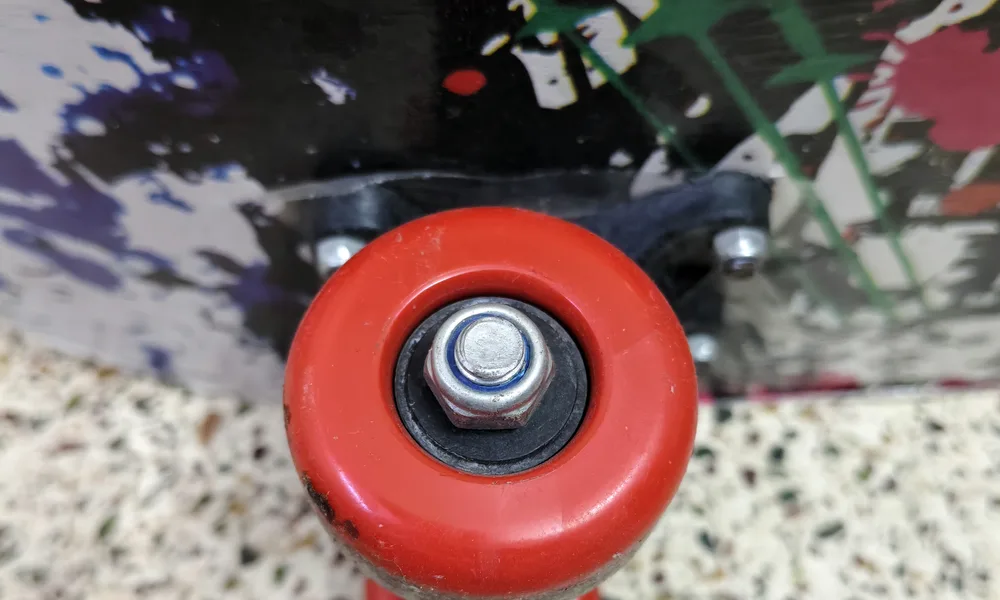
Good wheels are made from real urethane, round and true, with enough softness to roll over rough ground and enough grip to turn safely. The plastic-wheel stopper has hard plastic wheels that chatter, slide and stop dead on the smallest stone. Push one along a pavement and it rattles, judders and slows to a halt within a few metres. The most dangerous moment comes at speed, when a wheel locks on a pebble and the board stops while the rider keeps going. That is how most beginner falls happen, and it is a fault of the wheel, not the rider.
5. The oversized longboard as a street board: the wrong tool for the trick
A longboard is a fine thing for cruising and downhill, where length means stability and big soft wheels eat up rough roads. Sold as a street board, it is a disaster. A street deck needs to turn sharply, pop cleanly off the tail, and fit under a rider’s feet for flips and grinds. An oversized longboard does none of that: it is too long to turn in a tight space, too heavy to pop, and its wide stance leaves a smaller rider stretched across the deck with no control. The fault is not the longboard itself but the mismatch, and the same mismatch traps riders on powered boards too, as our guide to the worst electric skateboards shows.
6. The delaminated second-hand deck: worn out where you cannot see
A second-hand board is not bad in itself, but the delaminated one usually is in practice. A board that has been ridden hard wears in ways you cannot see from the top: the deck has lost its pop, the layers are splitting at the edges, the bushings have gone soft, and the bearings are full of grit. The danger is that the damage is hidden until the board is loaded: a deck that looks fine on the rack can split on the first hard landing, and a truck that looks solid can snap at the baseplate. A used board can be a bargain, but only if it is checked carefully, and most are not checked at all.
7. The novelty mini board: a souvenir, not a skateboard
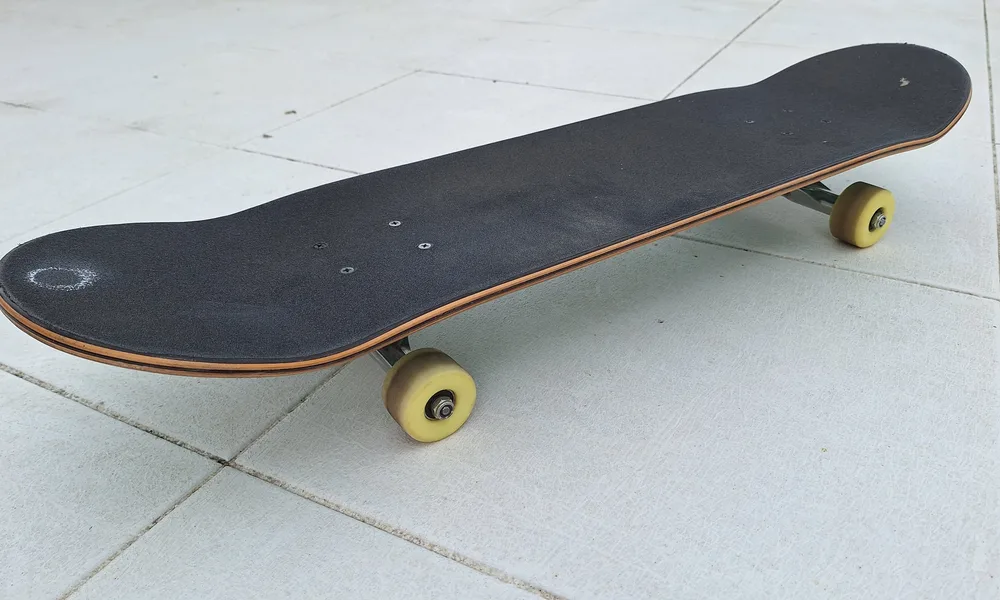
The novelty mini board is the smallest failure on this list, in every sense. It is a tiny deck, often sold as a souvenir or a desk toy, with miniature trucks and wheels that were never meant to carry a rider. An adult cannot stand on it, a child cannot learn on it, and anyone who tries discovers the same thing within seconds: there is no stance, no balance and no control, because feet do not fit on a deck built for decoration. If you are buying for a child, buy a real small complete from a skate shop, sized to their feet, with a maple deck and urethane wheels.
What to avoid when buying a sports skateboard
The most common buying regret is not a bad board but a wrong match: a longboard bought for street tricks, a toy complete bought as a first real board, or a bargain that hides softwood, soft metal and plastic wheels. Avoid the trap by checking three things before you pay: the real deck construction, not the graphic; the trucks and how they turn; and the wheels and how they spin. Look at the edge of the deck and count the layers. Stand on the board on a flat floor and lean gently from side to side; the trucks should turn smoothly and return to centre without a clunk. Spin each wheel and listen for grinding. Then be honest about your riding, and buy the board for the riding you do most.
Checklist: buying a sports skateboard in 2026
- Count the deck layers at the edge: seven clean plies of maple, not softwood or plastic.
- Press the tail and feel for spring; a dead, flat feeling means the deck has no pop.
- Stand on the board and lean side to side; the trucks should turn smoothly and return to centre.
- Spin each wheel with a finger; a good bearing spins freely for several seconds.
- Match the size to your feet and your riding.
- Check the grip tape, bolts and edges for peeling, looseness or splitting before you pay.
Frequently asked questions
What is the worst type of sports skateboard in 2026?
The toy-store complete, because it fails at everything at once: a plastic deck, plastic trucks and plastic wheels, with no pop, no turn and no roll. It puts beginners off skating for good.
How do I tell a bad skateboard deck from a good one?
Look at the edge and count the layers: a good deck has seven clean plies of hard maple. Press the tail and feel for spring, and check the concave by standing on it. A flat deck will not pop.
Why does my skateboard wobble at speed?
Almost always the trucks: soft metal that bends, or bushings that are too soft, too hard or crumbling. Do not just tighten the kingpin until the board cannot turn. Replace the bushings, or replace the trucks.
Are plastic skateboard wheels dangerous?
They are the most dangerous cheap part on a board. Hard plastic wheels stop dead on small stones and slide sideways on turns, which is how most beginner falls happen. Urethane wheels roll over rough ground instead.
Can a longboard be used for street tricks?
No, not well. A longboard is built for cruising and downhill: long, stable and slow to turn. Street tricks need a short deck that pops and turns sharply. Use the right board for the riding you do.
Is a second-hand skateboard worth buying?
Only if you check it properly. Press the tail for pop, inspect the deck edges for splitting, lean to test the trucks, and spin the wheels. If any fail, the board has already had its best riding.
Bottom line
The worst sports skateboards of 2026 share the same faults: soft decks, wobbly trucks, plastic wheels and builds that fall apart. Check the deck, the trucks and the wheels, match the board to the riding you actually do, and spend a little more on a board with a maple deck, solid trucks and urethane wheels. It will last longer, ride better, and make skating feel the way it should: fast, loose and fun, instead of a fight from the first push.


