
Why the Worst Wine Festivals of 2026 Leave a Bad Taste
The worst wine festivals of 2026 are not the small ones with a short list and a quiet field. The worst ones fail in a much more basic way: they charge a festival price for a day that never lets you taste the wine properly, eat without a battle, or leave with your palate and your wallet intact. This guide ranks the worst types, so you can spot a bad one before you pay.
Key takeaways
- A wine festival is judged on the tasting first: pour size, temperature, glass and freshness matter more than the bunting.
- Token systems are where the money disappears: count what each token buys before you buy the bundle, not after.
- Warm wine in a hot tent is a fault of storage, not of the grape: bottles left in the sun taste flat.
- Water and food are not extras at a tasting: a festival with neither turns a pleasant afternoon into a headache.
- Check the pour size, the token price, the water points and the way home before you book.
How the worst wine festivals of 2026 were chosen
Every type below was scored on five measures. The tasting comes first: pour size, temperature and freshness. Value is second: the real cost once ticket, tokens and food are added. The site is third, covering shade, seating and queues. Food and water are fourth. Pacing is fifth: slow tasting, or a push to drink fast and buy cases?
Two notes before the list. First, no individual festival is named here, because the problem is the pattern, not the place: the same seven types turn up in every wine region. Second, a wine festival is judged on what it does with wine, not on how it looks from the gate, and the same logic runs through our guides to the worst wine bars and the worst festivals, where the drink, the price and the honesty matter just as much.

Comparison table: the worst wine festivals of 2026
| Rank | Festival type | Main fault | Warning sign |
|---|---|---|---|
| 1 | The Thimble Pour | Pours too small to taste | A splash gone in one sip |
| 2 | The Sun-Baked Tent | Bottles stored in the heat | Warm reds by noon |
| 3 | The Token Trap | Tokens cost more than the wine | Leftovers worth nothing |
| 4 | The One-Queue Tasting | One queue for every stall | An hour in line for one pour |
| 5 | The No-Water, No-Food Festival | Nothing to eat or drink | Tasting on an empty stomach |
| 6 | The Bottle-Shop Disguise | A sales pitch, not a festival | Every pour ends with a hard sell |
| 7 | The Drunk-by-Dusk Crowd | No pacing, no spittoons | A tasting that turns rowdy |
The worst wine festivals of 2026
1. The Thimble Pour: the worst wine festival of all
The Thimble Pour is the worst wine festival you will ever attend, and it is not close. You pay a festival price, queue at a stall, and the server tips a splash into your glass that is gone before you have smelled it, let alone tasted it. A tasting pour does not need to be a full glass, but it needs to be enough to swirl, to smell, to sip twice and to think about. The Thimble Pour gives you one mouthful and calls it a tasting.
The maths is what makes it the worst of the lot. A bundle of tokens buys you a dozen thimbles, each costing more than a mouthful should, and the day ends with a bill that would have bought several good bottles in a shop. The Thimble Pour hides the measure and hopes nobody does the sums until they are home.
2. The Sun-Baked Tent: warm wine by noon
The Sun-Baked Tent is the wine festival held under canvas on a hot day with no plan for the heat. The bottles sit in crates in the sun, the ice runs out by midday, and every pour after that arrives warm. A red served warm tastes flat and soupy, a white served warm tastes tired and dull, and no amount of talk about the vineyard can fix a wine that has spent the morning baking in a tent. The fault is storage, not the grape.
The signs are visible before you taste anything. Look for tents with no shade on the bottles, no ice buckets in sight, and servers pouring from bottles standing open in the heat for hours. A good festival keeps its bottles cool, shades its stalls and closes a bottle that has been open too long. The Sun-Baked Tent does none of this.
3. The Token Trap: the money disappears first
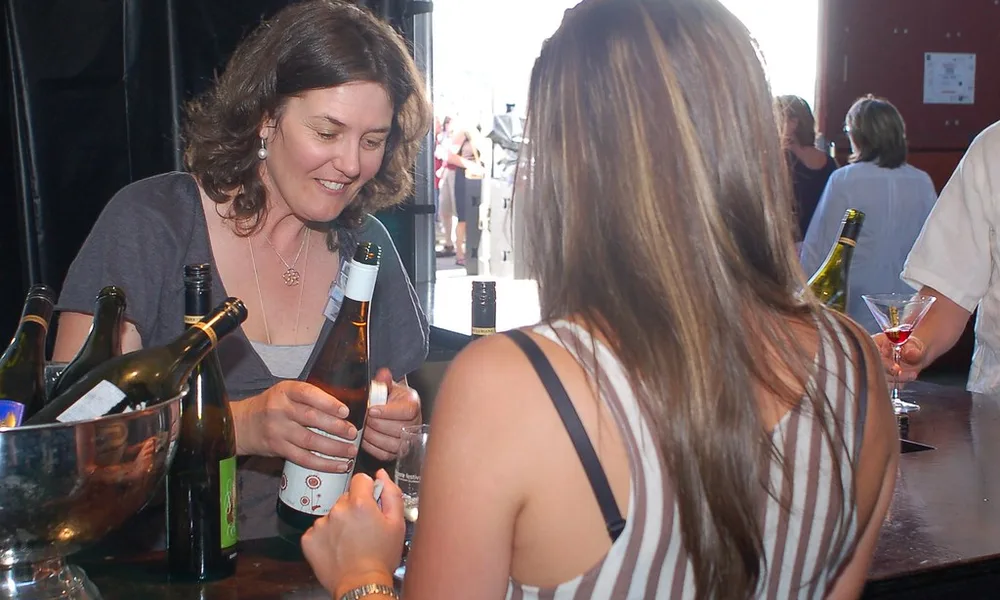
The Token Trap is the festival where the tokens cost more than the wine. You buy a bundle at the gate because the ticket page made it sound like a bargain, then learn the truth stall by stall: a small pour costs two tokens, a decent pour costs four, and the tokens left at the end are worth nothing, with no refunds. The festival has sold you its own currency, and it keeps the change.
The trap works because the prices are never shown in real money. A token sounds cheap until you divide the bundle price by the number of tokens, and then divide again by the pours each token buys. A good festival prices its pours in plain money, or sells tokens that can be refunded at the gate. The Token Trap does neither.
4. The One-Queue Tasting: an hour for one pour
The One-Queue Tasting is the festival with one entrance to the tasting area and one slow line serving every stall. You join the back of the queue, wait while the line crawls forward, and by the time you reach a stall you have spent an hour of a five-hour festival standing still. The wine might be good, but you will only taste a handful of pours all day, because the queue eats the afternoon.
The cause is simple: the festival sold more tickets than its tasting area can serve, and put too few servers behind too few stalls. A good festival spreads its stalls out, opens more than one entrance, and staggers entry so the crowd arrives in waves. The One-Queue Tasting funnels everyone through the same gate at the same hour.
5. The No-Water, No-Food Festival: tasting on empty
The No-Water, No-Food Festival gives you a day of wine and forgets that people need to eat and drink water. There are no water points, or one small tap for thousands of visitors, and the food stalls are few, expensive and closed by mid-afternoon. Tasting on an empty stomach is a bad idea: the flavours blur, the head aches, and the afternoon ends early. A festival that sells tasting as its whole product owes its visitors water and food.
The signs are plain before you book. A festival page with no mention of water, no food list and no prices is telling you what it thinks matters, and it is not your afternoon. A good festival puts free water at every stall, sells plain food at honest prices, and keeps both going until the gates close. This one treats water as an afterthought and food as a luxury.
6. The Bottle-Shop Disguise: a sales pitch with bunting
The Bottle-Shop Disguise is not really a festival at all: it is a shop with music and bunting. Every pour ends with a hard sell, every stall is staffed by someone whose job is to move cases, and the tasting notes read like a price list. You came to taste and learn; the festival came to sell you a case of something you have barely sipped. The pressure grows through the day, until saying no feels like the rude option.
A good festival separates tasting from selling: you taste, you ask questions, and if you like a bottle you can buy it without a speech. The Bottle-Shop Disguise blurs the two on purpose, so every conversation ends at the till. The warning sign is a ticket page that talks more about case discounts than about the wines. Taste first, and buy only what you would buy again at home.
7. The Drunk-by-Dusk Crowd: a tasting that turns rowdy
The Drunk-by-Dusk Crowd is the festival with no pacing and no plan for the evening. There are no spittoons, so nobody spits; there is no guidance on how many pours make a sensible day; and the pours get bigger as the afternoon goes on, because a happy crowd spends more. By dusk the tasting has turned into a drinking session, the queues get loud, the glasses get dropped, and the visitors who came to taste leave early.
A good festival paces its visitors: spittoons at every stall, water beside every pour, smaller measures in the evening, and staff who slow down anyone who has had enough. The Drunk-by-Dusk Crowd does the opposite, and the rowdy evening follows. If a festival page says nothing about spittoons, water or pacing, it has not thought ahead.
What to avoid when choosing a wine festival
The most common regret is not a bad bottle but a wrong match: a thimble pour bought as a tasting, a token bundle that outlasts the day, or a hot tent with no water. Check four things before you pay: the real pour size and price, the token rules and refunds, the water and food, and the way home. Our guide to the worst sports pubs makes the same point about prices and honesty, because the traps are the same everywhere.
Checklist: choosing a wine festival worth your ticket
- Check the pour size in plain words on the ticket page, and walk away if the festival will not state it.
- Divide the bundle price by the tokens and pours: if a small pour costs more than a glass in a bar, it is a trap.
- Check that free water is listed at the stalls, and that food is sold until the gates close.
- Look for shade on the stalls and ice on the bottles in past photos.
- Check the entry plan: staggered entry and more than one gate mean shorter queues and more tasting.
- Find the transport plan before you book; never rely on a taxi rank that may not exist.
Frequently asked questions
How big should a tasting pour be?
Big enough to swirl, smell and sip twice. A splash gone in one mouthful is not a tasting, whatever the festival calls it.
Are token systems always a bad idea?
No. Tokens work when the price per pour is clear, the bundle fits one person, and leftovers can be refunded. They fail when pours are priced in tokens with no real-money equivalent.
Does warm wine really taste that different?
Yes. A red served warm tastes flat, and a white served warm tastes dull. The heat changes the wine, which is why shade and ice matter more than the label.
Should I eat before a wine festival?
Yes, always, and keep eating through the day. Tasting on an empty stomach blurs the flavours and brings the headache forward.
How do I know if a wine festival is really a sales pitch?
If it talks more about case discounts than about the wines on pour, and every stall pushes bottles before you have tasted, it is a shop with bunting.
What should I do if the crowd turns rowdy?
Leave early, while transport is still running. A tasting that has turned into a drinking session will not improve.
Bottom line
The worst wine festivals of 2026 sell a tasting and deliver a sales pitch: thimble pours at token prices, warm bottles from sun-baked tents, one queue for every stall, no water and no food. Check the pour size, the token maths, the shade and the water before you pay, and you will get an afternoon worth the ticket instead of a day spent queuing for sips.


