Roller skating has come back in a big way: rinks are busy again, parks have smooth paths full of skaters, and plenty of parents are buying a first pair for their child. That is when the trouble starts, because the market for kids roller skates is full of pairs that look the part and do nothing well. They wobble, squeak, refuse to turn, and stop dead on the smallest bump in the floor. The worst roller skates for kids in 2026 make a child fall over, hurt their ankles, and fall apart before the summer ends, and they are still on sale in toy shops and online carts.
What Makes a Kids Roller Skate Bad
The first problem is the boot. A kids roller skate boot should hold the ankle upright, with a stiff heel counter and padding that supports without squeezing. Bad boots are made from thin vinyl that folds at the ankle the moment the child puts weight on it. A child in a floppy boot spends the session fighting to stay upright instead of learning to roll, and tired ankles make for short sessions and sore feet. A boot that cannot hold an ankle upright is not a skate, it is a shoe with wheels attached.
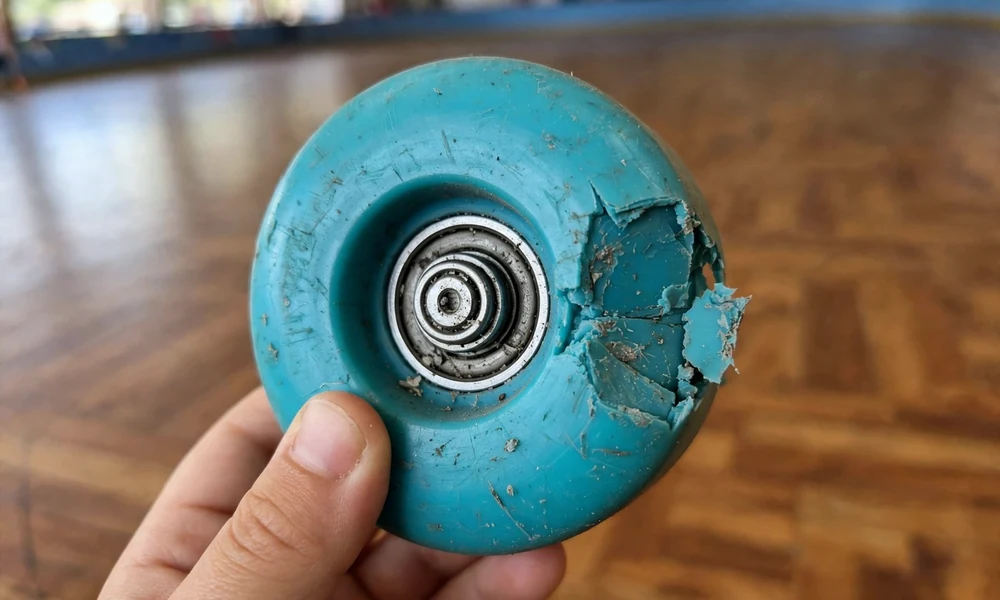
The second problem is the wheels. Good wheels are made from proper urethane, round and smooth, with enough grip to roll steadily and enough softness to absorb small bumps. Bad wheels are made from hard plastic that chatters, slides, and stops dead on rough ground. A plastic wheel has no grip at all, so the child slides sideways on every turn, and no give at all, so every crack in the pavement feels like hitting a wall. Wheels that are not round, common on cheap skates, make the skate wobble with every rotation.
The third problem is the plate and the bearings. The plate is the flat base under the boot that holds the wheels, and the bearings are the small rings that let the wheels spin. A good plate is solid metal or strong nylon, bolted firmly to the sole, and good bearings spin freely for seconds with a flick of a finger. Cheap skates use soft, porous metal or brittle plastic plates that bend or crack under a child’s weight, and bearings that grind, stick, and turn a smooth push into hard work. When the plate bends, the wheels no longer sit straight, and the skate pulls to one side.
The Main Types of Kids Roller Skate, and Where They Go Wrong
Cheap adjustable skates are the most common trap. They promise to grow with the child, with a boot that expands over several sizes, and they sound like good value. They are not. An adjustable boot is a compromise at every size: it never fits properly, the adjusting mechanism is the first thing to break, and the boot is always too loose in the heel. A child in an adjustable skate has a foot sliding around inside a boot designed to be three sizes at once, which is why so many children in them fall over constantly.
Toy skates are the next trap. They are sold in toy shops, they have bright colours and cartoon characters, and they are not skates at all. The wheels are hard plastic, the bearings are barely bearings, and the whole thing will break on the first real session outdoors. They are bought as presents and thrown away within a week, and the child who received them decides skating is not for them.
Inline skates for kids can also disappoint when they are built down to a price. The most common fault is a frame that is too long or too short for the boot, which makes the skate tip forward or backward. The other fault is wheels that are too hard for a child’s weight, so they never grip the ground properly and the child slides around instead of rolling. A child who cannot stop safely will fall, and a child who falls a lot stops wanting to skate.
Then there are the hand-me-downs and second-hand skates, which are not bad in themselves but often are in practice. A skate that has been outgrown by one child has usually been worn hard, and the boot has moulded to the first child’s foot, not the second’s. The wheels may be worn flat on one side, the bearings may be full of grit, and the stopper may be worn down to nothing. A second-hand skate can be fine, but only if it is checked carefully, and most are not checked at all.
How to Spot a Bad Pair Before You Buy
The boot tells the truth first. Pick the skate up and press the ankle area between thumb and fingers. A good boot resists and springs back, while a bad one squashes flat and stays squashed. Bend the boot where the foot flexes. It should bend smoothly and return to shape. If it cracks, stays bent, or feels like stiff cardboard, walk away. Check the stitching where the boot meets the sole: loose threads or gaps mean the boot will split within weeks.
Next, check the wheels and the bearings. Spin each wheel with a finger. A good wheel spins freely and smoothly for several seconds, with no grinding and no wobble. A bad wheel stops quickly, grinds, or wobbles from side to side. Look at the wheels themselves: they should be round, smooth, and free of chips and flat spots. Press a wheel with your thumb. It should have a little give, not feel like a rock. A wheel that is rock hard will slide on every turn and stop dead on every bump.
Finally, fit them properly. Try both skates on with the socks the child will skate in, then have the child stand, bend the knees, and walk around. The heel should stay put with every step. If the heel lifts, the skate is too big or the shape is wrong. If the toes are pressed against the front, the skate is too small. A skate that pinches or slips in the shop will feel far worse on the rink, so do not buy a pair that does not fit today.
The Most Common Faults, One by One
Ankle collapse is the fault parents notice first. The child’s ankle rolls inward with every push, the boot folds, and the child cannot stand up straight. The cause is almost always a soft boot with no structure. Children in collapsing boots spend the session sitting on the floor more than they skate, and they learn nothing except that skating hurts. A boot that cannot hold an ankle upright is a boot that should never have been sold.
Stopping dead is the second fault, and it is the most dangerous. A child rolls along happily, the wheels hit a small bump or a crack, and the skate stops dead while the child keeps going. The cause is almost always hard plastic wheels with no grip and no give, or a stopper that is worn down or missing. A child who cannot trust the skates to keep rolling is a child who skates in fear, and a child who skates in fear falls more, not less.
Pulling to one side is the third fault. The skate always drifts left or right, no matter how straight the child tries to roll. The cause is usually a bent plate, a wheel that is not round, or a bearing that has seized on one side. A skate that pulls to one side makes the child compensate by leaning the other way, and that lean becomes a habit. Months later, the child is still leaning, long after the skate is gone.
Falling apart is the last fault. Cheap skates fail at the stitching, at the plate, and at the wheels. A plate that cracks mid-session can send a child sprawling, and a wheel that comes off leaves a skate that cannot roll at all. If the stitching is loose, if the plate wobbles, or if the wheels are chipped, the skate is not safe to use.
Who Gets Hurt Most by a Bad Pair
First-time skaters suffer first. A child on skates for the first time needs a pair that helps them, not one that fights them. A bad pair makes the first session miserable, and a miserable first session is often the last. Many children who say they hate skating actually hate their skates, and they never get the chance to find out that a decent pair changes everything.
Children who are still growing suffer differently. Their feet change fast, and a skate that fitted in spring may not fit in autumn. Parents who buy a size up to save money end up with a child in a skate that is too big all season, and a child in a skate that is too big learns to skate badly. The money saved is spent on lessons that undo the bad habits the skate taught.
Children who skate a lot suffer last, because they wear a bad pair out fast. A cheap skate that is used twice a week will fall apart within a month, and the parents pay for replacements constantly. Worse, the gradual wear changes the fit little by little, and the child’s skating gets worse without an obvious cause. Many parents spend a season wondering why their child has stopped improving, when the real problem was on their feet all along.

What to Buy Instead
The fix is not to buy the most expensive skate, but to buy one with a firm boot, round urethane wheels, and smooth bearings, and to check all three before you pay. Look for a boot that resists squeezing, wheels that spin freely and have a little give, and a plate that is solid and firmly attached. Try them on with the right socks, walk in them, and trust what your child’s feet tell you. A skate that feels right in the shop usually rolls right on the rink, and one that feels wrong never improves.
Buy for where the child will actually skate. A rink skate needs smooth wheels for a polished floor. An outdoor skate needs softer wheels that can handle rough pavements and small stones. Buying the wrong type is not a disaster, but it makes learning harder, so match the skate to the surface, not to the colour. For the rest of their outdoor kit, the same rule applies: our guide to the best outdoor toys for kids of 2026 starts with the same advice, buy for the child you have, not the one in the advert.
The Bottom Line
The worst roller skates for kids in 2026 share the same faults: floppy boots, plastic wheels, grinding bearings, and fits that hurt. They are easy to spot once you know what to look for, and easy to avoid. Check the boot, the wheels, and the fit, and trust your child’s feet. Spend a little more on a skate with a firm boot, round urethane wheels, and smooth bearings, and it will last longer, roll better, and make the rink a place your child wants to go back to. Skating is supposed to be fun, and the right skates are what make it feel that way. The same care applies to their other wheels: our guides to the best balance bikes of 2026 and the best vs worst roller skates of 2026 start with the same advice, check the wheels, check the fit, and never trust a skate you have not tried on.