Salad Servers for Effortless Tossing and Serving at the Table in 2026
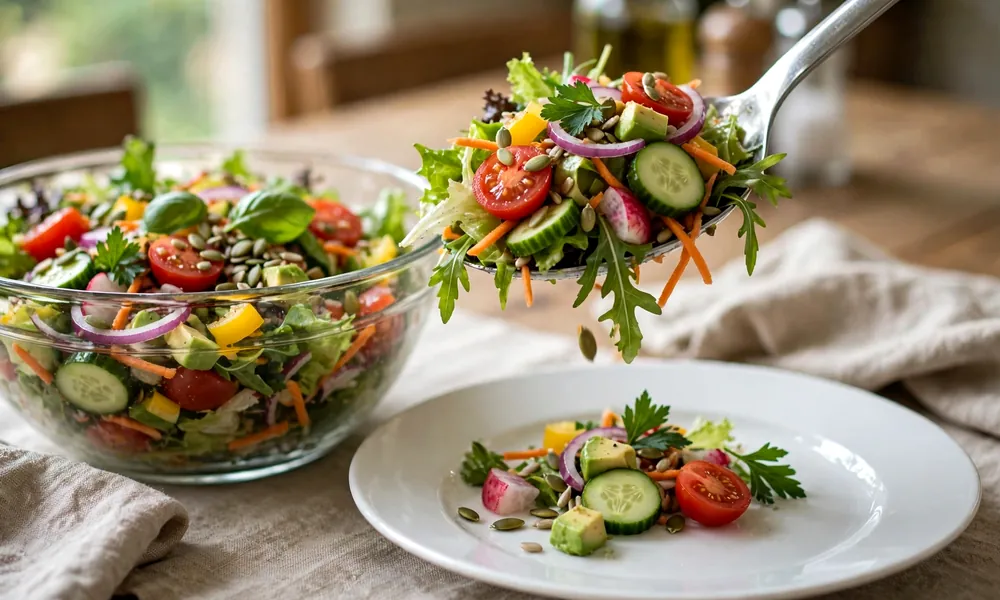
The best salad servers in 2026 are the paired fork and spoon that turn a bowl of leaves into a dish people can actually serve and eat. A good pair lifts a generous portion, tosses the salad so the dressing coats every leaf, and sets it down neatly on the plate, dressing and all. A bad pair drops half the salad back in the bowl, crushes the leaves, or slides off the rim. This guide explains what salad servers are, how the main types work, and how to choose a pair that serves well at your table.
Key takeaways
- The best salad servers in 2026 lift and toss gently, so wide, shallow bowls matter more than a crushing grip.
- A fork-and-spoon pair suits most tables best, because the spoon cradles the salad while the fork holds it in place.
- Wood servers are kind to leaves and look good on the table, while steel servers last longest and go in the dishwasher.
- Buy servers around 25 to 30 centimetres long, reaching the bottom of the bowl without your knuckles touching the salad.
- Match the servers to the bowl, because a pair that is too short or too wide for your bowl will fight you at every meal.
What salad servers actually do
Salad servers have two jobs: tossing a salad so the dressing coats every leaf, and lifting portions from the bowl onto plates. Both need the same thing, a grip firm enough to hold the food but gentle enough not to crush it. A leaf of lettuce bruises easily, and a bruised leaf wilts, darkens and tastes bitter. Salad servers solve this with wide, shallow bowls that spread the pressure across a larger area, instead of the narrow, pointed tips of cooking tongs that concentrate it in one spot.
How we judged the servers
We judged every pair the way you would actually use it: how cleanly it tossed a bowl of mixed leaves without bruising them, how neatly it lifted a portion onto a plate, and whether it felt natural in the hand after a whole meal. We checked the length against a standard serving bowl, the depth and width of each bowl, how the servers coped with heavy ingredients like tomato and cucumber as well as light leaves, and how easy they were to wash and dry. A great pair of salad servers is one you stop thinking about: it lifts a full portion in one go, it does not drip dressing down your wrist, and it sits comfortably in the bowl between servings instead of sliding to the floor.
The best salad servers of 2026 at a glance
| Server type | Best for | Length | Care | Key extra |
|---|---|---|---|---|
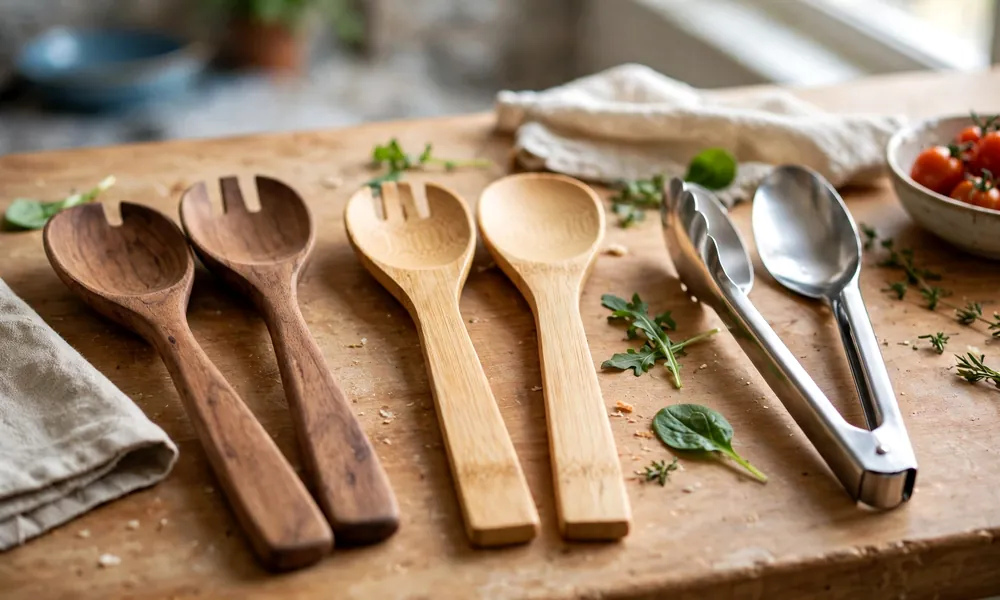
| Wood fork-and-spoon | Most tables, everyday salads | 25 to 30 cm | Hand wash, oil monthly | Kind to leaves, warm look |
| Stainless steel pair | Large salads, busy kitchens | 25 to 30 cm | Dishwasher safe | Strongest, lasts longest |
| Bamboo servers | Light salads, small budgets | 25 to 28 cm | Hand wash, dry fully | Lightest, cheapest |
| Slotted servers | Dressed salads, wet leaves | 25 to 30 cm | Dishwasher safe | Slots drain excess dressing |
| Short servers | Small bowls, side salads | 20 to 22 cm | Hand wash or dishwasher | Fit bowls a long pair cannot |
Best overall: the wood fork-and-spoon pair
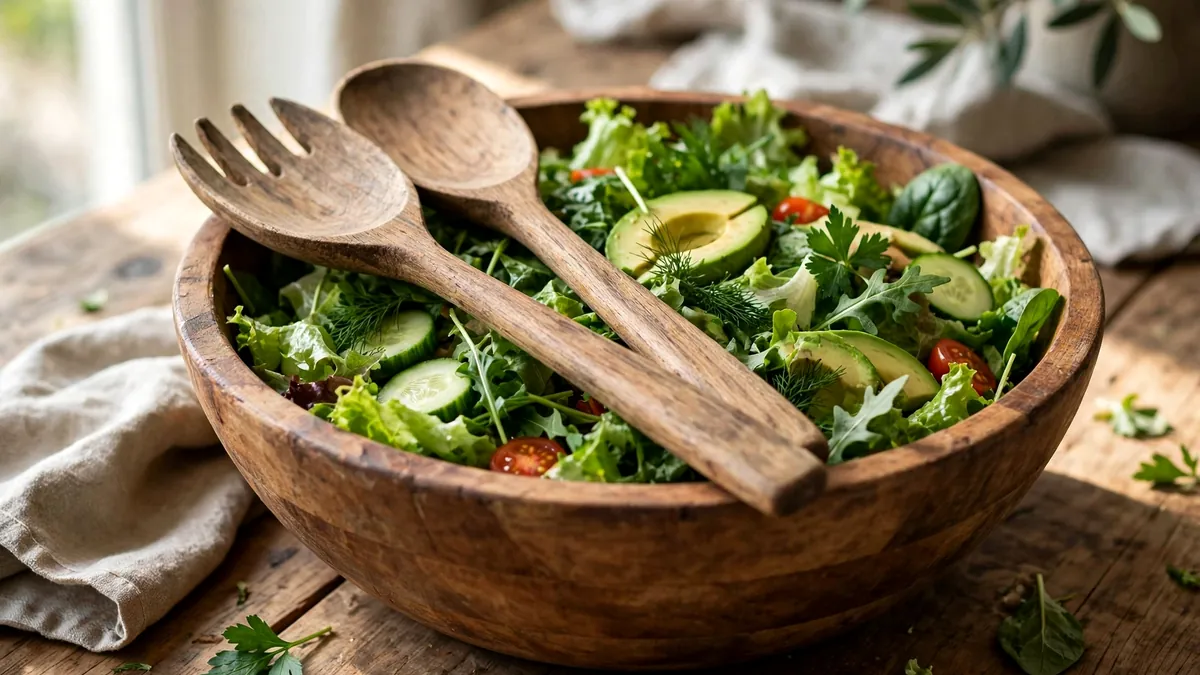
A wood fork-and-spoon pair is the best salad server overall in 2026 because it does the gentle job better than any other material. The spoon side is wide and shallow, with a smooth, oiled finish that slides under leaves without tearing them, and the fork side has broad, rounded tines that hold the salad in place without piercing it. Olive wood and acacia are the usual choices: olive is pale with dramatic figuring, acacia is darker and harder, and both develop a richer colour with use.
Best for large salads: the stainless steel pair
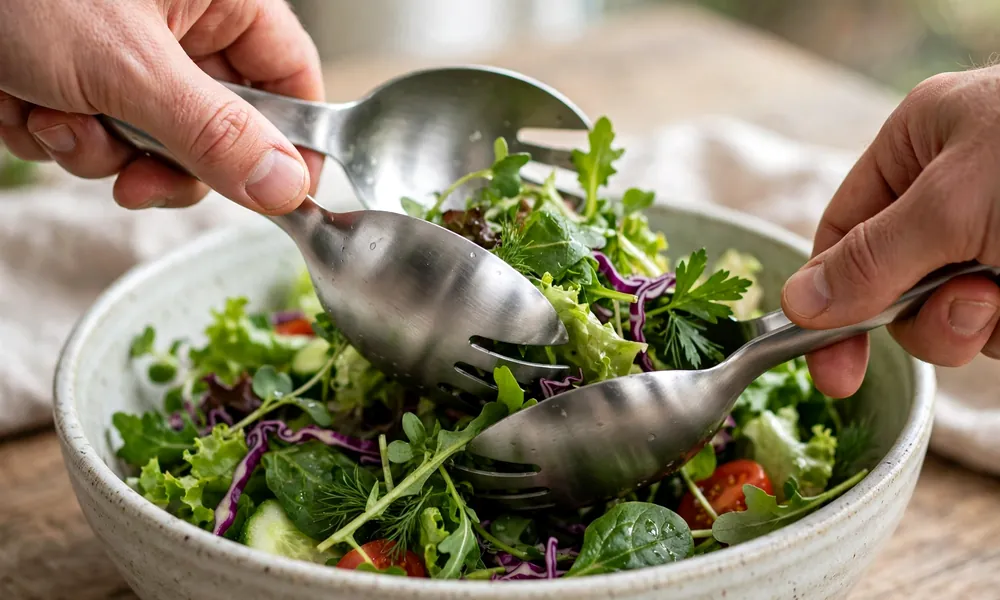
A stainless steel pair is the best salad server for large salads, because steel holds its shape under a heavy scoop that would flex a wooden pair. A solid stainless fork and spoon, around twenty-eight centimetres long, lifts a full portion of a heavy salad, tomatoes, cucumber, chickpeas and all, without bending, and it goes in the dishwasher every night and comes out looking the same as the day you bought it. The polished finish wipes clean in seconds, and steel does not absorb dressing, odours or stains, which makes it the right choice for a salad with garlic, onion or a strong vinaigrette.
Best on a budget: bamboo servers
Bamboo servers are the best salad servers on a budget, because a good pair costs very little and does the everyday job well. Bamboo is light, strong for its weight, and naturally smooth, so it slides under leaves without tearing them, and a pair around twenty-five centimetres long suits a standard serving bowl. The limits are real: bamboo is thinner than hardwood, so a pair can flex under a heavy salad, and it needs the same hand-wash-and-dry care as wood, because a pair left wet will split along the grain. Buy bamboo as a first pair, or as a second pair for picnics and barbecues, where a lost or damaged server is no tragedy.
Best for dressed salads: slotted servers
Slotted servers are the best salad servers for a heavily dressed salad, because the slots let excess dressing drain back into the bowl while the leaves stay in the spoon. A salad that has been sitting for ten minutes collects dressing at the bottom, and a solid spoon lifts a puddle with every portion, leaving the last guest with a plate of vinaigrette and a few sad leaves. A slotted spoon and a slotted fork solve this by draining as they lift, so every portion arrives dressed but not drowned. Look for slots wide enough to drain quickly but narrow enough that small leaves, peas and sweetcorn do not slip through.
Salad servers vs serving spoons: which one do you need?
The difference between salad servers and a serving spoon is the difference between tossing and scooping. A serving spoon moves food from the dish to the plate in a single deep scoop, and it is the right tool for rice, vegetables and stews. It is a poor tool for tossing a salad, because a spoon stirs rather than lifts, and stirring is what bruises leaves. Our guide to serving spoons explains the deep-bowl design that makes a spoon good at its job, and that design is exactly what makes it wrong for a salad. Salad servers do the opposite job: the fork and the spoon work together, lifting from underneath and turning the salad over, coating the leaves without pressing them down. If you serve salad often, buy the servers first and keep a serving spoon for the hot dishes.
Salad servers vs salad tongs: a gentler grip
Salad tongs and salad servers look like rivals, but they solve the same problem in different ways, and the choice comes down to how you like to serve. Tongs grip the salad from above and lift it in a pinch, which gives you precise control over a single portion, and they are the better tool for a large salad where you want to pick out exactly the leaves you want. Our guide to salad tongs covers the fork-and-spoon tongs, the scissor tongs and the wood tongs in full. Servers, by contrast, cradle the salad from underneath and lift it in a scoop, which is faster for serving a crowd and gentler on delicate leaves, because the pressure is spread across the wide spoon instead of concentrated at the tips. In practice, many kitchens own both: tongs for the precise serving of a side salad, servers for the fast tossing and serving of a big bowl at a family meal.
Matching servers to the bowl
A pair of salad servers is only as good as its match with the bowl, and the bowl is the part people forget to check. A pair that is too short for the bowl leaves your knuckles in the salad, while a pair that is too long becomes unwieldy and knocks against the rim. The rule is simple: the servers should be about five centimetres longer than the bowl is deep, so they reach the bottom with room to spare. A wide, gently sloped bowl tosses cleanly, while a tall narrow bowl traps dressing at the bottom and fights the servers at every turn. Our guide to salad bowls explains how to pick a bowl that serves a crowd, including the size, the width and the materials that work best. Wood servers suit a wood or ceramic bowl, because they will not scratch it, while steel servers suit a glass or melamine bowl. Buy the bowl first, measure it, and then buy the servers that fit it.
Caring for salad servers
Care depends on the material, and the material decides how long the pair lasts. Wood and bamboo servers need hand washing, a full dry, and a monthly oiling with a food-safe oil, and they should never go in the dishwasher, where the heat and the detergent will crack and warp them. Keep them out of the sink, where a long soak swells the grain, and store them in a drawer or a crock where the bowls do not knock against each other. Steel servers are the easy option: they go in the dishwasher, they do not stain, and they only need a quick polish if water spots bother you.
Checklist: before you buy salad servers
- Measure your salad bowl first, and buy servers about five centimetres longer than it is deep.
- Choose wood for gentle everyday serving, steel for large salads and the dishwasher.
- Check the spoon is wide and shallow enough to cradle a full portion in one lift.
- Hold the pair by the middle and check it sits level, not tipping towards the bowl.
- Look for a smooth finish with no rough edges that could tear leaves.
- Confirm the care rules suit your kitchen, especially if you hate hand washing.
Frequently asked questions
What is the difference between salad servers and salad tongs?
Servers are a fork-and-spoon pair that cradles the salad from underneath and tosses it, while tongs grip the salad from above and lift it in a pinch. Servers are faster and gentler for a crowd, tongs give more control for a single portion.
How long should salad servers be?
Around 25 to 30 centimetres for a standard serving bowl, and about five centimetres longer than the bowl is deep. A short pair of 20 to 22 centimetres suits a small bowl for a side salad.
Are wood salad servers hygienic?
Yes, if they are washed by hand, dried fully and oiled monthly. A dry, oiled wooden server does not harbour bacteria, but a server left wet or put through the dishwasher will crack and trap food.
Can salad servers go in the dishwasher?
Steel servers can, and wood and bamboo servers cannot. A dishwasher will crack and warp wood, so wash wooden servers by hand and dry them straight away.
Do I need slotted salad servers?
Only if your salads are heavily dressed. Slotted servers drain excess dressing back into the bowl, so every portion arrives dressed but not drowned. For a lightly dressed salad, a solid pair is fine.
What is the best material for salad servers?
Wood is best for most tables, because it is gentle on leaves and bowls and looks good on the table. Steel is best for large salads and busy kitchens, because it is stronger and goes in the dishwasher.
The bottom line
The best salad servers in 2026 are the wood fork-and-spoon pairs that lift a full portion gently, toss without bruising the leaves, and feel natural in the hand. Measure your bowl, buy the pair that fits it, and your salads will arrive on the plate looking as good as they did in the bowl.