A salad bowl that serves a crowd is not just a bigger version of the bowl you eat from. It is a different tool: wide enough to toss without spilling, deep enough to hold a salad for eight, and steady enough to pass around a table without wobbling. The best salad bowls for serving a crowd in 2026 get all three right, and the wrong ones fail.
Key Takeaways
- For a crowd, buy a bowl of at least 5 litres — smaller bowls force you to toss in batches and bruise the leaves.
- Width matters more than depth: a wide, gently sloped bowl tosses cleanly, while a tall narrow one traps dressing at the bottom.
- Wood and ceramic are the best materials for serving; glass shows off the salad but is heavy and slippery when full.
- A thick, flat base keeps a full bowl steady on the table; a narrow foot or a rounded bottom does not.
- Check the care rules before you buy — a beautiful bowl you cannot wash properly becomes a decoration, not a tool.
What “Serves a Crowd” Actually Means
A crowd, for a salad bowl, starts at about six people and runs up to twelve. That is the range where a normal serving bowl gives up: the salad overflows the rim, the dressing pools underneath, and half the leaves end up on the tablecloth. A bowl that genuinely serves a crowd holds the whole salad with room to spare,. The rule of thumb is simple — the bowl should be about a third larger than the salad it holds.
It also means the bowl has to travel. A crowd bowl is carried from kitchen to table, passed hand to hand, and set down among plates, glasses and serving dishes. That is why weight and grip matter as much as capacity. A bowl that is elegant when empty can be a liability when it holds two kilos of dressed salad: it needs a rim or a shape your hands can hold securely, and a base that sits flat.
Size: How Big Is Big Enough?
Salad bowls are sold by diameter, by litre, or by both, and the numbers are easy to misread. A 30-centimetre bowl sounds large, but if it is shallow it may hold only 3 litres — enough for four people, not eight. Volume is the number that matters, and most good crowd bowls sit between 5 and 8 litres. A 5-litre bowl serves six to eight comfortably.
Diameter still matters, because it decides how the salad tosses. A bowl around 33 to 38 centimetres across gives you room to turn the leaves with servers or tongs without pushing them over the edge. Go much wider and the bowl stops fitting on a normal table alongside everything else; go narrower and you are tossing in a bucket. Depth should be roughly a third of the diameter — deep enough to contain the salad, shallow enough that you can reach the bottom leaves without burying your hands. Our guide to why good mixing bowls change how you cook makes a similar point about capacity: the right size is the one that matches the job, not the biggest one in the shop.
Material: Wood, Ceramic, Glass, Melamine and Metal
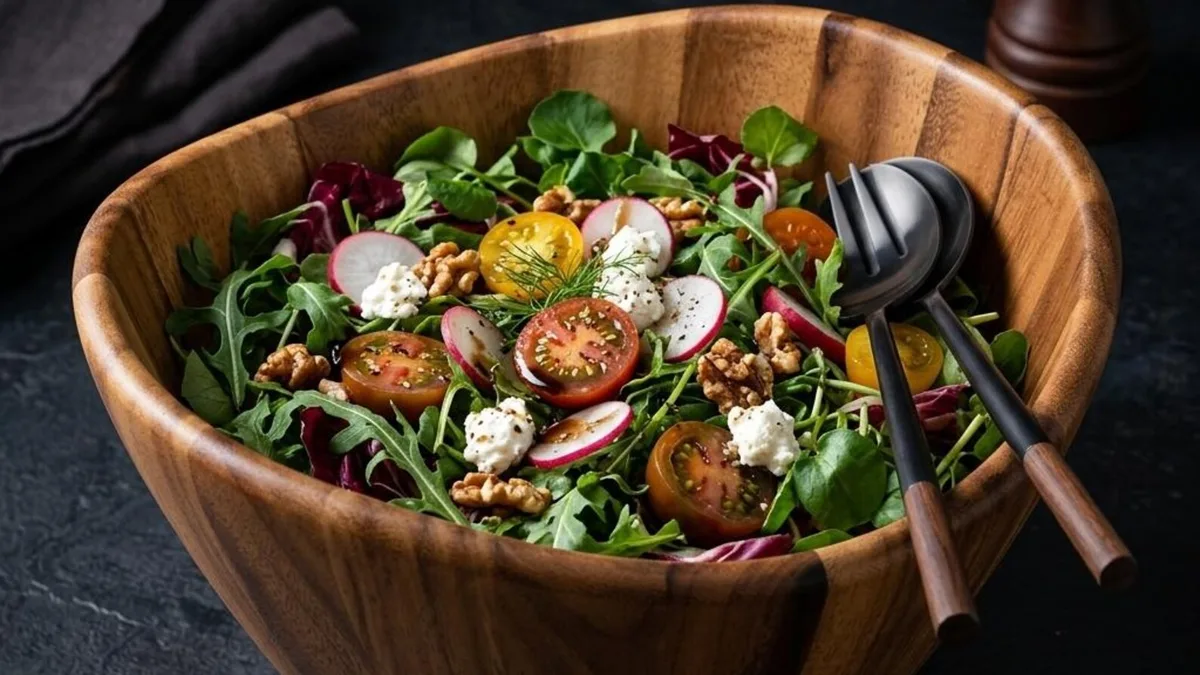
Wood is the classic crowd-bowl material, and for good reason. A wooden bowl is light for its size, warm to hold, and almost impossible to break if it is knocked off the table. Acacia and olive wood are the usual choices: acacia is hard, dark and richly grained; olive wood is paler, with dramatic figuring. Both develop a patina with use. Wood is not dishwasher-safe, and it needs occasional oiling, but a well-kept wooden bowl lasts decades and looks better every year. It is also the most forgiving material for tossing, because servers do not clatter against it.
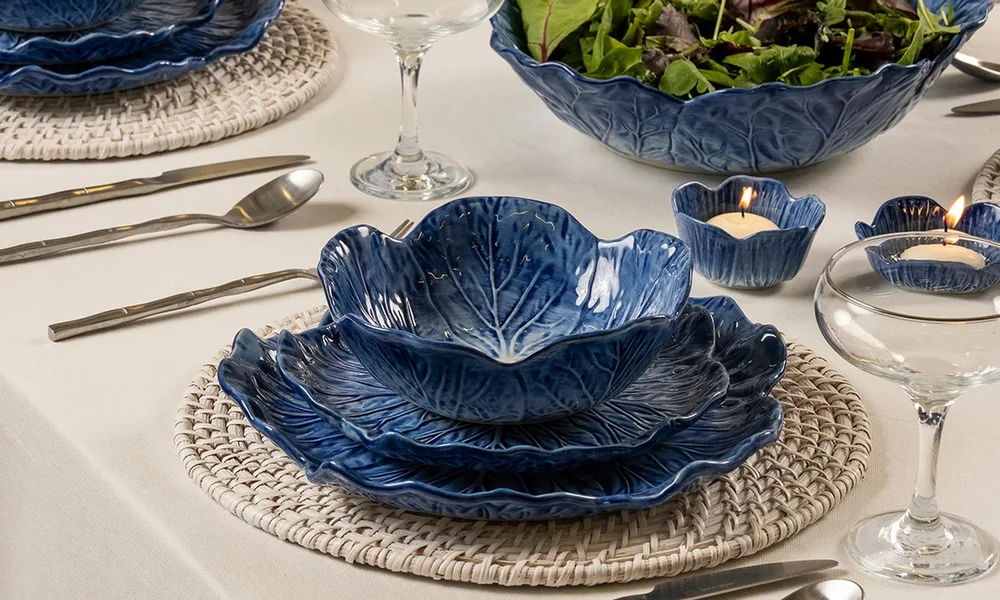
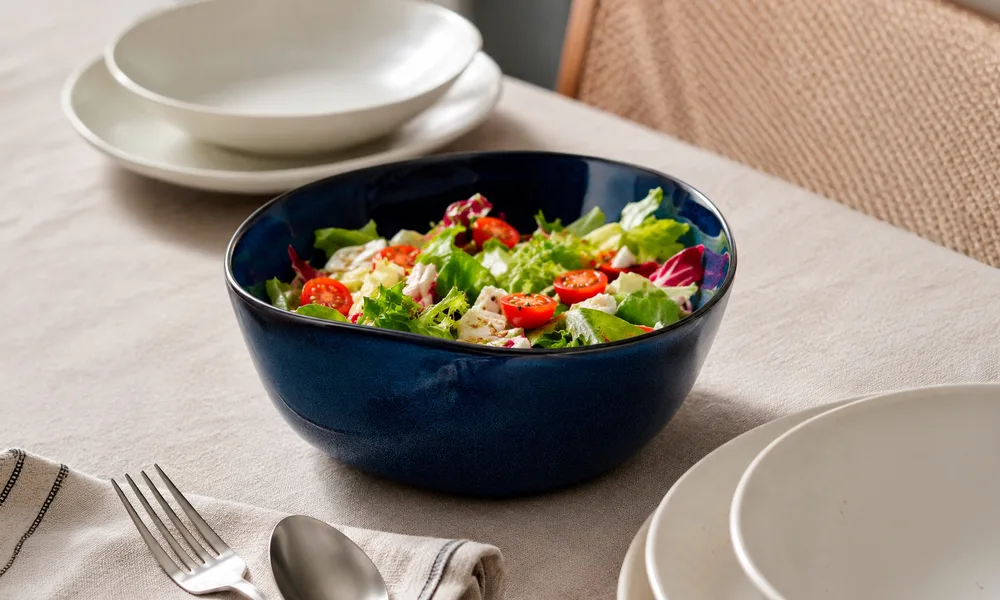
Ceramic and stoneware are the best choice if you want a bowl that matches a dinnerware set. A glazed ceramic bowl is non-porous, easy to wash, and available in any colour, and a heavy stoneware bowl sits rock-steady on the table. The drawbacks are weight and fragility: a full ceramic bowl is heavy to carry, and a chip on the rim is hard to ignore on a piece this visible. Buy ceramic with a thick, even glaze and a flat, unglazed foot ring that will not scratch the table.
Glass shows off a layered salad beautifully, and a big glass bowl makes a dramatic centrepiece. But glass is the worst material for tossing: it is heavy, slippery when wet, and it shows every fingerprint and water spot. Melamine is the practical outdoor alternative — light, unbreakable and cheap — but it scratches, stains with tomato and turmeric, and never looks quite as good as the real thing.
Shape and Depth: Why Wide Beats Tall
The best salad bowls are wide and gently curved. That shape does two things. First, it spreads the salad in a thin layer, so dressing coats evenly instead of pooling at the bottom. Second, it lets you toss with a lifting motion — servers sliding underneath the leaves and turning them over — rather than a stirring motion that crushes them. A tall, straight-sided bowl forces you to stir, and stirring is what turns a crisp salad into a bruised one.
A gently sloped side also makes serving easier. Guests can reach in with a spoon without the rim getting in the way, and the last servings do not hide in a deep well at the bottom. A flat base matters just as much: it keeps the bowl from rocking when someone serves from one side. Bowls with a small pedestal foot look elegant but are less stable when full. The rim deserves attention too. A wide, flat rim gives your hands somewhere to grip and gives servers a place to rest, while a rolled rim — the edge folded back on itself — is the most comfortable to carry and the most resistant to chipping.
Salad Bowls, Compared
| Material | Weight when full | Best for | Watch out for |
|---|---|---|---|
| Wood (acacia, olive) | Light | Everyday serving, tossing, outdoor meals | Hand-wash only; needs occasional oiling |
| Ceramic / stoneware | Heavy | Matching a dinner set, oven-to-table use | Chips; heavy to carry when full |
| Glass | Heavy | Layered salads, display | Slippery, breaks, shows every mark |
| Melamine | Very light | Outdoor eating, children, picnics | Scratches and stains; looks cheaper |
| Stainless steel | Light | Big outdoor gatherings, catering | Noisy, dents, condensation |
There is no single best material, only the best material for how you serve. And if you already own good serveware, match the bowl to it: a salad bowl that sits comfortably beside your plates and platters will get used far more than one that clashes. Our guide to serving trays that make hosting easier covers the other big piece of tableware — the tray that carries everything to the table in the first place — and our guide to the dinnerware sets that make weeknights feel special will help you match the bowl to plates that sit comfortably beside it.
Tossing Room: The Test Most Bowls Fail
The single most useful test for a salad bowl is the toss test, and you can do it before you buy. Fill the bowl about two-thirds full with dry leaves — or with crumpled paper in a shop — and try to turn them over with salad servers. If leaves spill over the rim, or you have to work slowly and carefully to keep them in, the bowl is too small or too shallow for a crowd. A good bowl lets you toss briskly, with the servers moving freely and the leaves turning in a loose, open arc.
The test also reveals the bowl’s balance. A bowl that is top-heavy when full will feel tippy as you toss; a bowl with a wide, flat base will stay planted. Dressing is the other half of the test. Pour dressing over a salad in a narrow bowl and it runs straight to the bottom, leaving the top leaves dry and the bottom leaves drowned. In a wide bowl the dressing lands across a broad surface, and a few turns of the servers distribute it evenly. This is why wide beats tall for every kind of salad, from leafy greens to grain salads.
Serving, Storage and Care
A crowd bowl is a large object, and storage is a real consideration. Measure your cupboard before you buy: a 38-centimetre bowl needs a shelf at least 40 centimetres wide and 15 centimetres high, and it will not nest inside anything. Some people store a big salad bowl on top of a cupboard or on an open shelf, where it doubles as decoration. That is a good solution, provided the shelf is sturdy and the bowl is not going to be knocked down by a passing elbow.

Checklist: Before You Buy
- Choose at least 5 litres for six to eight people, and 7 to 8 litres for ten to twelve.
- Pick a wide, gently sloped shape with a flat base — wide tosses cleanly, and a flat base stays put.
- Do the toss test before you buy: fill it two-thirds full and turn the contents without spilling.
- Match the material to how you serve — wood or ceramic indoors, melamine or steel outdoors.
- Check the care rules and your storage: a bowl that will not fit your cupboard or your dishwasher is a bowl you will resent.
- Run your fingers around the rim and press opposite edges to check for sharp spots and rocking.
Frequently Asked Questions
What size salad bowl do I need for 10 people?
A bowl of 7 to 8 litres, around 36 to 38 centimetres across, is the right size for ten people. It holds the whole salad with room to toss, which is the part most people underestimate.
Is wood or ceramic better for a salad bowl?
Wood is lighter, warmer to hold and almost unbreakable, but it needs hand-washing and occasional oiling. Ceramic is heavier and can chip, but it is easy to wash, matches a dinner set, and sits very steadily on the table. For a crowd, wood wins on weight and handling; ceramic wins on matching and easy care.
Can I put a wooden salad bowl in the dishwasher?
No. Dishwasher heat and prolonged soaking dry out the wood, crack it and lift the grain.
How do I stop salad dressing pooling at the bottom of the bowl?
Use a wide bowl, dress the salad in layers rather than all at once, and toss just before serving. A wide bowl spreads the dressing over a broad surface so it coats evenly, while a tall narrow bowl sends it straight to the bottom.
What is the best salad bowl for outdoor eating?
Melamine or stainless steel. Both are light, unbreakable and easy to wash, and neither minds being carried across a garden. Melamine looks more like tableware; steel is tougher and lasts longer. Wood also works outdoors, but it needs more care after a meal in the sun.
How should I store a large salad bowl?
On a wide shelf where it sits flat, or on top of a cupboard as a display piece. Measure the shelf before you buy — a 38-centimetre bowl needs a clear 40-centimetre space.
The Bottom Line
The best salad bowl for serving a crowd in 2026 is a wide, flat-based bowl of 5 to 8 litres, in wood or ceramic, with a rim you can grip and room to toss. Buy it for the gatherings you actually host, test it with a toss before you commit, and wash it promptly after the meal. Get that right and the bowl will do its job quietly for years.