What Makes Great Exfoliating Gloves in 2026?
Exfoliating gloves are the simplest tool in the bathroom that most people have never tried, and in 2026 they are quietly becoming the favourite way to get smooth skin without buying another bottle. An exfoliating glove is a mitt you wear on your hand, made from a rough woven fabric, that lifts away dead skin while you wash. You slip it on, wet it, and wash with your own hand doing the work. The result is skin that feels properly smooth after a normal shower.
Key takeaways
- Exfoliating gloves work through woven fabric, not bristles, so the weave decides everything: a tight, rough weave exfoliates firmly, a soft weave polishes gently.
- Fit matters more than brand: a glove that is too loose slides around, while a glove that is too tight cuts off circulation and tires your hand.
- Use exfoliating gloves on warm, wet, soapy skin with light, even strokes, never on dry skin and never pressed hard.
- Two or three times a week is enough for most skin, and once a week is plenty for sensitive skin.
- Wash the gloves after every use and machine-wash them weekly, because a damp glove left in a corner is a glove that will smell within days.
What exfoliating gloves actually do
Your skin sheds dead cells all the time, but the process slows down with age, cold weather and dry air, and the dead cells pile up instead of falling away. That build-up is what makes skin look dull and feel rough, and it stops moisturiser from sinking in properly. An exfoliating glove speeds up the shedding by lifting that top layer with a textured fabric, so the fresh skin underneath shows through. Because the glove is on your hand, you can feel exactly how much pressure you are using.
The glove does two jobs at once: the fabric lifts dead cells away, and the washing action spreads soap evenly. A good glove leaves your skin soft the moment you rinse. A poor one does nothing at all, because the fabric is too smooth to grip the skin, or it scratches, because the weave is too harsh.
The fabrics: kese, ramie, silk and dual texture
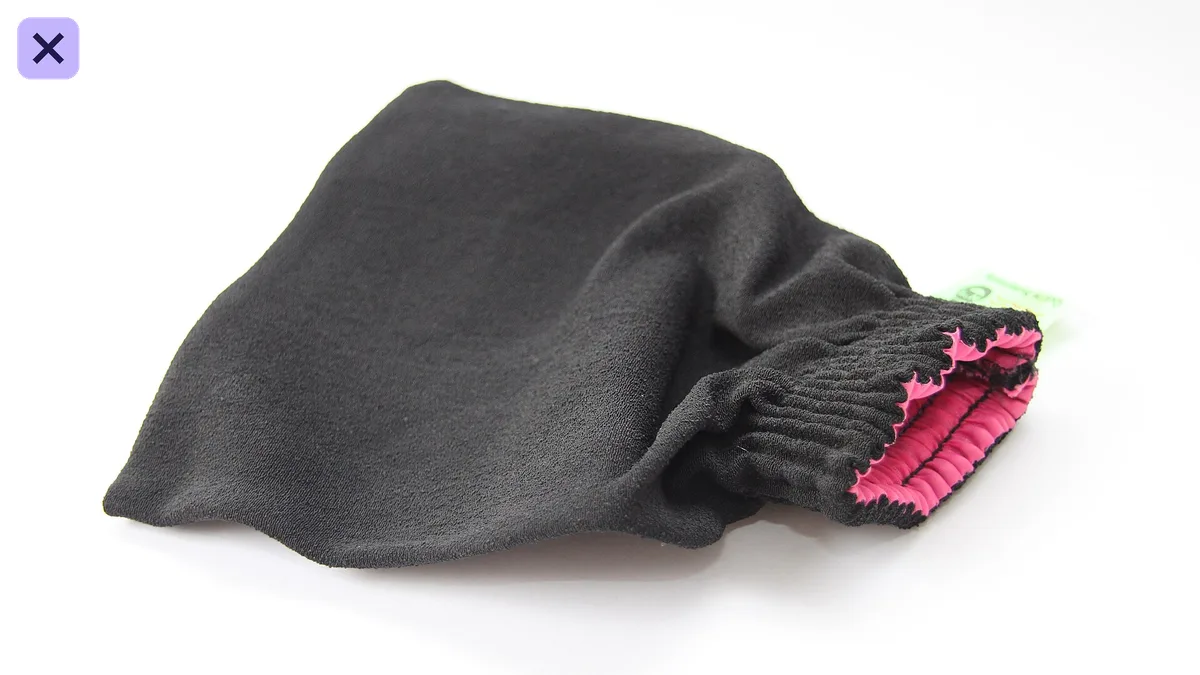
Not all exfoliating gloves are made from the same cloth, and the fabric is the single most important thing about them. The classic is the Turkish kese, a mitt woven from viscose or silk, traditionally used in a hammam after a long steam. The fabric is rough and slightly stiff when dry, and it softens a little when wet without losing its grip. A kese is the firmest of the common gloves, and the best choice for a genuinely deep exfoliation. It is also the glove that demands the most respect: use it too often or press too hard and it will leave your skin red.
The Korean Italy towel is the other classic, a smaller, thinner mitt made from viscose that has been a staple of Korean bathhouses for decades. It is thinner and more flexible than a kese, it dries faster, and it gives a firm but even exfoliation that suits most skin. If you have never used an exfoliating glove before, an Italy towel is the safest starting point: it is cheap, effective and forgiving.
Ramie is a plant fibre, similar to linen, woven into a glove that is firm, breathable and quick to dry. Ramie gloves sit between a kese and an Italy towel in strength, and they suit people who want a firm scrub with a natural fibre. Their weakness is that the fibre can feel scratchy on very sensitive skin, so test one on your forearm first.
Silk gloves are the gentlest option, made from a fine, soft weave that polishes the skin rather than scrubbing it. They suit sensitive skin and anyone who wants a light exfoliation without any risk of redness. Dual-texture gloves are the modern compromise: one side is rough for exfoliating, the other side is soft for washing, so you flip the glove instead of switching tools.
Fit: the detail most people ignore
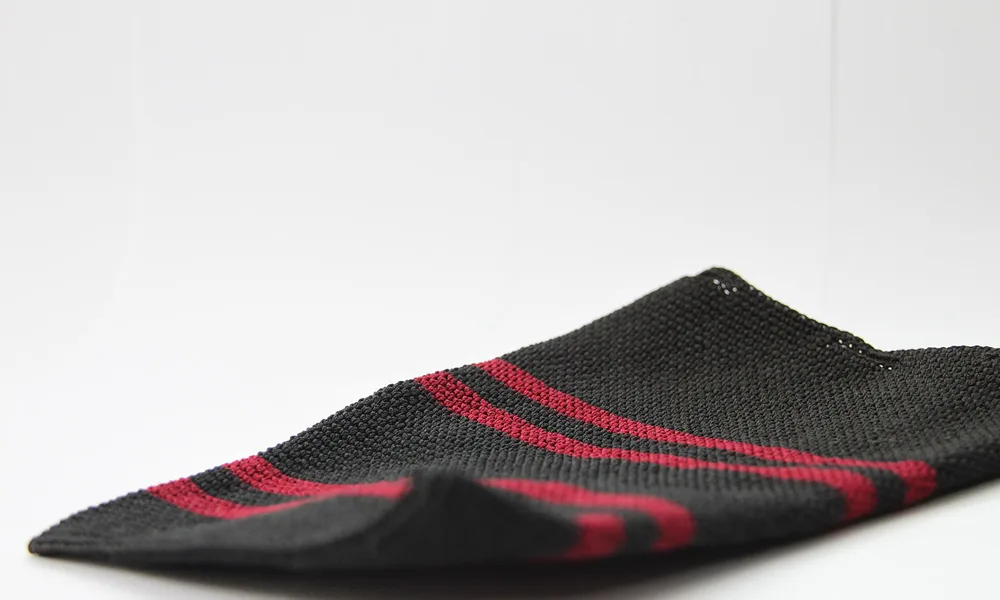
A glove that does not fit is a glove that does not work. A glove that is too loose slides around on your hand, so the fabric bunches up and the pressure lands in the wrong places. A glove that is too tight cuts off circulation and tires your hand within a minute. The right fit feels like a snug sock: the fabric sits flat against your palm and fingers, the elastic cuff holds it on your wrist without digging in, and you can make a fist comfortably.
Most gloves come in one size, but if your hands are very small or very large, look for a sized pair or one with a stretchy cuff. The cuff is what keeps the glove on when it is wet and soapy: a good one is wide, soft and elastic, and it holds without leaving a mark on your wrist. A hanging loop on the cuff lets you hang the glove to dry in the open air.
How to use exfoliating gloves properly
The technique is simple, but it is worth getting right, because the two most common mistakes are using a glove on dry skin and pressing too hard. Think of it as a washcloth that fits your hand.
Stand under warm water for a minute or two before you pick up the glove. Warm water softens the skin and the fabric, and it lets the glove glide. Never use an exfoliating glove on dry skin: dry fabric on dry skin drags, catches and irritates. Wet the glove, add a little body wash or soap, and work it into a light lather. Our guide to the best body washes for every skin type covers which formulas are kindest to freshly exfoliated skin.
Wash your arms, legs and torso in light, even strokes, using the weight of your hand rather than pressure from your arm. Let the fabric do the work, and do not go over the same spot repeatedly. Rinse the glove under the shower, rinse your skin, pat dry, and moisturise while your skin is still slightly damp.
Gloves are for the parts of your body you can reach comfortably: arms, legs, chest and stomach. They are not a tool for your back, because a gloved hand cannot reach the middle of it, and that is the one job where a handled tool wins. If back reach is what you need, a long-handled brush is the better buy, and our guide to shower brushes that clean without the scrub explains how to choose one.
Exfoliating gloves vs the alternatives
| Tool | How it exfoliates | Best for | Reach | Upkeep |
|---|---|---|---|---|
| Exfoliating gloves | Woven fabric, hand-worn | Arms, legs, torso | Poor, hands only | Machine wash weekly |
| Shower brush | Bristles on a handle | Back reach, daily washing | Excellent | Rinse and hang dry |
| Bath brush | Bristles, dry or wet use | Dry brushing, firm scrub | Good | Rinse and hang dry |
| Body scrub | Grains in a cream | Deeper exfoliation, rough patches | Hands only | None, use and rinse |
| Loofah | Natural fibre mesh | Whole-body exfoliation | Poor | Replace often |
A glove wins on control and on care: no other exfoliating tool lets you feel the pressure through your own hand, and no other one goes in the washing machine. A brush wins on reach: no glove will ever clean your back properly. A body scrub that actually works wins on depth, because grains can shift rough patches that fabric alone cannot.
Matching gloves to your skin type
Skin type matters more than brand, and the wrong firmness is the most common buying mistake. If your skin is dry, flaky or rough on the shins and forearms, a kese or a ramie glove will do the most good, used two or three times a week with light pressure. If your skin is sensitive, easily reddened or prone to eczema, start with a silk glove or the soft side of a dual-texture pair, and test it on the inside of your forearm first.
Oily or combination skin sits in the middle: a Korean Italy towel works well, especially on the back of the arms and the legs. If you have acne on your back or chest, keep the glove gentle and clean, and never scrub an active breakout hard. If your skin is sunburned, broken or irritated, skip the glove entirely until it settles.
Keeping your gloves clean
An exfoliating glove lives in the wettest room in the house, and it holds dead skin in its weave, so care is not optional. After every use, rinse the glove under clean water, squeeze it out, and hang it by its loop in the open air. Never leave it balled up in a puddle on the shower floor, and never store it in a closed cupboard while it is still damp.
Once a week, machine-wash the gloves with your towels on a warm cycle, and let them dry completely before the next use. A glove that smells even after washing has had it, and so has a glove whose fabric has gone thin, smooth or holey. A good pair lasts one to three months of regular use, and buying two pairs at a time means one is always clean and dry while the other is in use.

Checklist: buying and using exfoliating gloves
- Choose the fabric for your skin: kese or ramie for firm exfoliation, Italy towel for a good all-rounder, silk for sensitive skin.
- Check the fit: snug like a sock, cuff that holds without digging in, and a hanging loop.
- Use the gloves on warm, wet, soapy skin with light, even strokes, never on dry skin and never pressed hard.
- Plan for two or three times a week at most, and once a week if your skin is sensitive or dry.
- Rinse the gloves after every use, squeeze them out, and hang them in open air to dry completely.
- Machine-wash weekly, and replace the gloves every one to three months, or sooner if the fabric thins or smells.
Frequently asked questions
Can I use exfoliating gloves every day?
Most people should not. Daily use with a firm glove strips the skin barrier and leaves it dry and irritated. Two or three times a week is enough, and a silk glove is the only type that suits gentle daily use.
Are exfoliating gloves good for sensitive skin?
Yes, with the right fabric and a light touch. Choose silk or the soft side of a dual-texture glove, and never use it over eczema, sunburn or broken skin.
How are exfoliating gloves different from a shower brush?
A glove is a woven fabric you wear on your hand, with no handle and no bristles, while a shower brush is bristles on a handle. The glove goes in the washing machine, but it cannot reach your back.
Can I use exfoliating gloves on my face?
No. Facial skin is far thinner than body skin, and even a silk glove is too rough for it. Keep the gloves for the body.
Do exfoliating gloves help with ingrown hairs?
They can help, because regular gentle exfoliation lifts the dead skin that traps hairs under the surface. Use the glove a day before you shave, not on the same day.
How do I stop my exfoliating gloves from smelling?
Rinse them after every use and hang them in open air so they dry completely. Machine-wash them weekly. If a glove still smells after a proper wash, it is time to replace it.
The bottom line
The best exfoliating gloves in 2026 are the ones whose fabric matches your skin and whose fit matches your hand: a kese or Italy towel for most skin, a silk glove for sensitive skin, and a snug cuff with a hanging loop every time. Wear them on warm, wet, soapy skin, use light strokes two or three times a week, and keep them rinsed, hung and machine-washed between uses.