
Why Good Mixing Bowls Change How You Cook in 2026
Good mixing bowls change how you cook because they change how you work. A good mixing bowl is wide enough to whisk without splashing, heavy enough to stay put while you stir, and shaped so a spatula reaches every curve. A bad bowl is narrow, light, and slippery, so batter climbs the sides, dough sticks in the corners, and the bowl skates across the counter the moment you pick up a whisk. The bowl is the most used tool in most kitchens, and it is the one most people never think about until they use a good one.
This guide explains what makes a mixing bowl genuinely good in 2026, how the main materials compare, which sizes cover real cooking, and how to choose a set still in daily use a decade from now.
Key Takeaways
- The best mixing bowls are wide and shallow rather than tall and narrow, because a wide mouth gives your whisk, spoon, and hands room to work.
- Stainless steel is the most versatile material: light, unbreakable, easy to clean, and safe for everything from whisking egg whites to melting chocolate over a water bath.
- A three-bowl set in 1.5, 3, and 5 quart sizes covers about 90 percent of home cooking, from beating two eggs to kneading a full batch of bread dough.
- A non-slip base or silicone ring matters more than it looks: it stops the bowl spinning while you whisk and keeps it still on a wet counter.
- Glass and ceramic bowls have real strengths for serving and for watching dough rise, but they are heavier, breakable, and worse for vigorous whisking.
The Bowl Is Your Workbench
Think of a mixing bowl as a workbench, not a container. Everything you make passes through it: pancake batter, salad dressing, bread dough, cake mix, marinades, whipped cream. A good workbench is stable, roomy, and easy to clean. A bad one fights you at every step. Cooks who upgrade their bowls often say the same thing afterwards: they did not realise how much effort their old bowls were costing them until the effort disappeared.
The numbers tell the story. A standard whisk needs about 20 cm of width to move freely. Most cheap sets top out at 18 cm for their largest bowl, which is why batter splashes and egg whites take twice as long to whip. A bowl with a 26 cm opening gives the whisk full range, and the same motion that took ninety seconds in a narrow bowl takes forty in a wide one.
Stability is the other half of the equation. A bowl that weighs under 200 grams empty will slide when you whisk, because the whisk pushes the bowl as hard as it pushes the batter. A bowl with a flat, slightly weighted base or a silicone ring grips the counter and stays where you put it. Some cooks solve this with a damp tea towel under the bowl, which works, but a bowl that holds itself still is a better tool.
How We Compare Mixing Bowls
We judged mixing bowls on six criteria, weighted for real kitchen use. Working width counted for 25 percent, because a bowl you cannot whisk in is a bad bowl. Stability counted for 20 percent, material quality and durability for 20 percent, ease of cleaning for 15 percent, versatility for 10 percent, and value for the final 10 percent.
The Comparison at a Glance
| Feature | Stainless steel | Glass | Ceramic | Plastic |
|---|---|---|---|---|
| Weight (5 qt bowl) | 400–500 g | 1.2–1.5 kg | 1.5–2.0 kg | 250–350 g |
| Breakability | Almost unbreakable | Breaks on tile | Chips and cracks | Almost unbreakable |
| Microwave safe | No | Yes | Yes, usually | Sometimes |
| Water bath / double boiler | Excellent | Good | Poor | No |
| Whisking egg whites | Excellent | Good | Good | Fair |
| Dishwasher safe | Yes | Yes | Yes | Yes, top rack |
Stainless steel wins the most categories, which is why it is the default for a first good set. Glass wins for visibility and microwave use, ceramic for beauty and serving, and plastic for price and weight.
Stainless Steel: The Workhorse
Stainless steel is the material professional kitchens choose, and the reasons are practical rather than fashionable. A steel bowl is light enough to hold in one hand while you pour with the other, strong enough to survive a fall onto tile, and smooth enough that dough releases cleanly. It does not react with acidic ingredients like tomatoes or citrus, so a vinaigrette made in a steel bowl tastes the same as one made in glass. And steel whisks egg whites faster than any other material, because the fine surface gives the whisk something to grip.
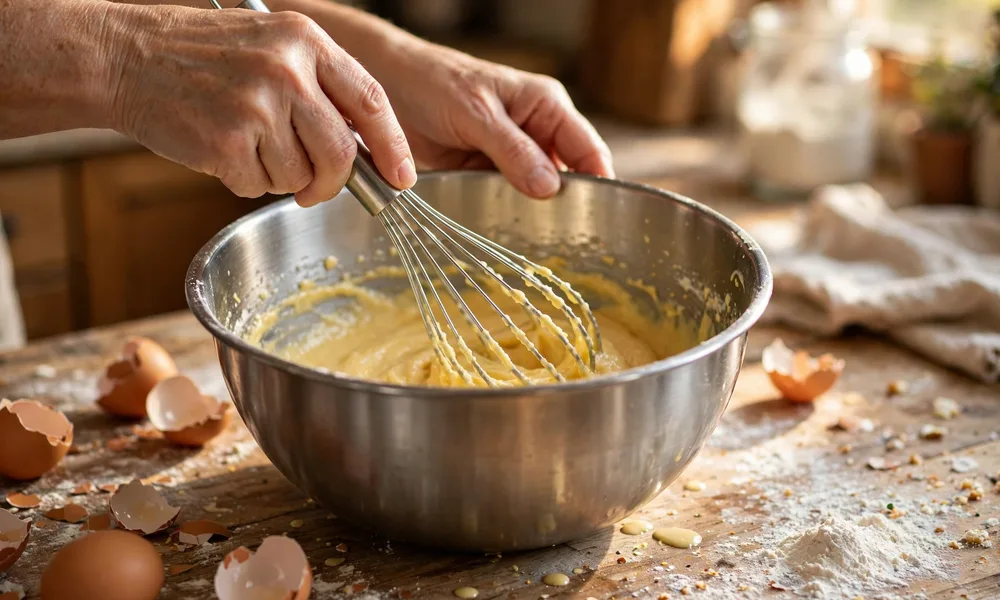
The best steel bowls have a few details that cheap ones skip. The rim should be rolled, not sharp, so it is comfortable to grip and pour from. The base should be flat and wide, or fitted with a silicone ring, so the bowl does not spin. The steel should be 18/8 or 18/10 food-grade, which resists rust and staining. And the bowl should nest: a good set stacks inside itself so three bowls take up the space of one in the cupboard.
Glass, Ceramic and Plastic: Where Each One Wins
Glass bowls are the best choice when you need to see what is happening inside: watching dough rise, checking a sauce, or melting butter in the microwave. A heavy glass bowl is also naturally stable. The cost is weight, a large one can weigh 1.5 kg empty, and glass breaks, leaving a mess that takes half an hour to clean safely.

Ceramic bowls are the most beautiful, and beauty matters when a bowl goes from the kitchen to the table. A glazed ceramic bowl holds heat well, so bread dough rises evenly in it, and it looks right serving a salad at dinner. But ceramic is heavy, it chips, and a chipped rim can cut a hand or flake glaze into food. It is a serving and rising bowl first, and a workhorse second.
Plastic bowls are light, cheap, and nearly unbreakable, which makes them popular for families with children and for outdoor cooking. The trade-off is longevity. Plastic scratches, and scratches hold bacteria and stains. Tomato sauce and turmeric leave marks that never fully wash out, and a plastic bowl that has held garlic will smell of garlic for weeks. If you buy plastic, choose BPA-free, thick-walled bowls with a non-slip base, and expect to replace them every few years.
Size: The Three Bowls That Cover Everything
Bowl sets come in many sizes, but three cover nearly all home cooking. A small bowl of about 1.5 quarts handles beating eggs, whisking a dressing, melting butter, and holding chopped ingredients while you prep. A medium bowl of about 3 quarts is the everyday workhorse: pancake batter, cookie dough, tossing a salad, marinating chicken. A large bowl of about 5 quarts takes bread dough, double batches, big salads, and mixing a full bowl of popcorn or pasta.
The mistake is buying a set where the largest bowl is too small. A 3-quart bowl as the largest in a set looks generous on the shelf and feels cramped the first time you fold whipped egg whites into a cake batter, because folding needs space above the mixture. If you bake bread or cook for a family, make sure the large bowl is at least 5 quarts.
Nesting matters as much as size: a set that nests tightly takes up one shelf slot, while one that does not takes up three. Check that bowls nest without sticking, and consider a set with lids, since a bowl with a lid becomes storage.
What a Good Bowl Changes in Practice
The difference a good bowl makes shows up in small moments. Whisking cream in a wide steel bowl takes half the time it takes in a narrow one, because the whisk can move in full circles instead of short choppy strokes. Folding batter in a large bowl keeps the mixture inside the bowl instead of on the counter. Kneading dough in a heavy bowl means the bowl stays put instead of chasing you around the worktop.
The pairing matters too. A good bowl set works best alongside the tools that fill it: a stand mixer does the heavy kneading while bowls handle prep, a food processor speeds up chopping, and every ingredient starts on a cutting board.
Cleaning, Storage and Longevity
Stainless steel is the easiest to clean: hot soapy water and a sponge handle almost everything. Glass is nearly as easy but heavier at the sink. Ceramic cleans well unless food has baked into an unglazed foot ring. Plastic is hardest over time, because scratches trap grease and smells.

What to Avoid
Skip bowl sets where the largest bowl is under 4 quarts, unless you cook only for yourself and never bake. Skip bowls with a sharp, unrolled rim, which is uncomfortable to hold and hard to pour from. Skip very light steel bowls, under 300 grams for a large bowl, because they are made from thin steel that dents easily and spins on the counter.
Checklist: 6 Things to Check Before You Buy
- Width: the large bowl should be at least 26 cm across at the rim, so a whisk moves freely without hitting the sides.
- Stability: a flat wide base or a silicone non-slip ring, so the bowl stays put while you whisk on a wet counter.
- Material: stainless steel for the main set, plus one glass bowl if you bake bread or melt things in the microwave.
- Sizes: a 1.5, 3, and 5 quart set covers most cooking; make sure the large bowl is at least 5 quarts if you bake.
- Nesting: bowls should stack inside each other without wedging, so the whole set takes one shelf slot.
- Rim and weight: a rolled rim for comfortable pouring, and enough weight that the bowl does not spin when you whisk.
Frequently Asked Questions
What is the best material for mixing bowls?
Stainless steel is the best all-round material: light, unbreakable, easy to clean, and safe for every ingredient. Glass is best when you need to see inside or use a microwave, ceramic for serving and bread rising, and plastic is cheapest but wears out fastest.
What size mixing bowls do I need?
A three-bowl set of 1.5, 3, and 5 quarts covers about 90 percent of home cooking. The small bowl handles eggs and dressings, the medium handles batters and salads, and the large handles bread dough and double batches.
Are stainless steel bowls safe for acidic foods?
Yes. Food-grade 18/8 and 18/10 stainless steel does not react with acidic ingredients like tomatoes, citrus, or vinegar.
Can mixing bowls go in the dishwasher?
Most steel, glass, and ceramic bowls are dishwasher safe, and plastic should go on the top rack. Hand washing is gentler on silicone rings and decorative finishes, and keeps steel looking new for longer.
Why do my bowls slide around when I whisk?
The bowl is too light, too smooth on the base, or both. A silicone ring or a damp tea towel underneath fixes it immediately. When buying, look for a flat wide base or a non-slip ring, and a large steel bowl that weighs at least 400 grams empty.
Do I need a mixing bowl set with lids?
Lids are useful but not essential. A lid turns a bowl into storage, which saves washing up and keeps leftovers fresh. If you often have half a bowl of dough or salad left over, lids are worth paying for. If not, a plate or some cling film does the same job.
Bottom Line
Good mixing bowls change how you cook because they remove friction from every recipe: a wide steel bowl that stays put, a size for every job, and a set that nests neatly and lasts for decades. Buy the steel set first and add a glass bowl for rising and microwaving.


