
Ottomans That Add Comfort Without Eating the Room in 2026
Ottomans are the quietest upgrade a living room can get. They give tired feet a place to land, hide the blankets nobody folds, and turn a firm armchair into a proper reading spot, all without demanding the floor space of another chair or a full coffee table. The best ottomans of 2026 do that job so well you stop noticing them, which is exactly the point: they add comfort while the room still feels open, walkable and calm. A bad one does the opposite.
This guide judges ottomans the way a real household would: by how they feel after an hour with your feet up, how much they actually hold, whether they slide across the floor, and whether the room still works once they are in it. It covers storage ottomans, footstools, poufs and cube ottomans, the sizes that fit real rooms, and the mistakes that turn a useful piece into clutter.
Key Takeaways
- An ottoman should sit at roughly the same height as your chair seat, about 40 to 48 centimetres, so your knees rest at a comfortable angle.
- Storage ottomans earn their footprint twice: they hide blankets, remotes and games while doubling as a footrest or an extra seat.
- Measure the walkway, not just the ottoman: leave at least 75 centimetres of clear space to walk past it comfortably.
- Firm, resilient filling beats soft and squashy every time, because a footrest that sinks under your legs is no rest at all.
- Legs, light colours and a slim profile make an ottoman look smaller in the room, even when the measurements are the same.
What an Ottoman Actually Does
An ottoman is a low, upholstered seat without a back or arms, built to be used in several ways at once. At its simplest it is a footrest, a padded platform that lifts your feet to the height of your chair seat and takes the pressure off your knees and lower back. That alone changes how a chair feels: a good armchair with a matching ottoman can feel like a different piece of furniture, because your legs are supported along their full length instead of dangling. The difference shows up after twenty minutes, when your legs would otherwise start to ache.
But the modern ottoman does more than hold feet. A storage ottoman opens to reveal space for throws, magazines, chargers and board games, which makes it one of the few pieces of furniture that reduces clutter instead of adding to it. A large, flat-topped ottoman with a tray on top becomes a coffee table that is safe for small children and kind to bare shins.
Ottoman Types at a Glance
| Type | Best for | Footprint | Watch out for |
|---|---|---|---|
| Storage ottoman | Small rooms and clutter | Medium, rectangular | Heavy lids, weak hinges |
| Footstool | Reading chairs, light use | Small, easy to move | Too low or too soft |
| Cube ottoman | Extra seating | Compact, square | Can look boxy |
| Pouf | Casual rooms, children | Small and round | Sinks under weight |
| Bench ottoman | End of a bed, long sofas | Long and low | Needs a long, clear space |
| Coffee-table ottoman | Replacing a hard table | Large, flat-topped | Needs a tray for drinks |
There is no single best ottoman, only the best one for a particular room and job. A storage ottoman is the right answer in a small flat where every piece must work twice as hard, while a simple footstool is better in a reading corner where the only job is comfort. A pouf suits a casual family room where children drag it around, but it is a poor choice if you want firm support for your legs. Knowing the type you need before you shop saves you from the most common mistake: buying the ottoman that looks best in the shop and discovering at home that it does the wrong job.
The Storage Ottoman: Comfort That Hides Clutter
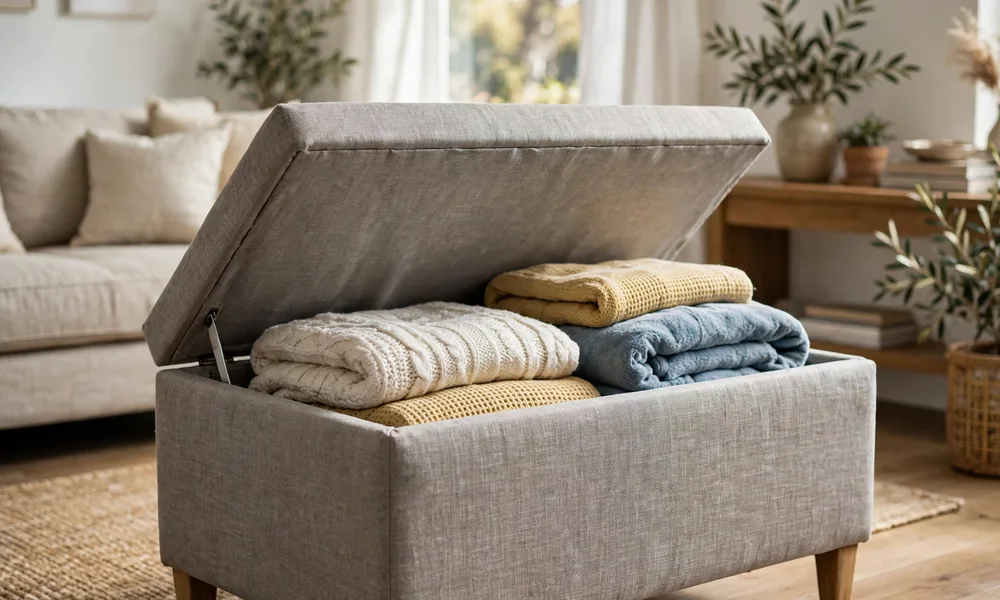
The storage ottoman is the hardest-working type, and the one most people should buy first. It looks like a simple upholstered box, but the lid lifts on hinges to reveal a surprisingly deep compartment, and that compartment solves a problem almost every living room has: the pile of things that belong in the room but have nowhere to live. Throws, remote controls, chargers, children’s toys and magazines all fit inside, and the room looks calmer the moment the lid closes. A room without visible clutter feels larger.
Not every storage ottoman is built equally. The lid should open smoothly and stay open on its own while you reach inside, which means proper hinges rather than a loose flap that drops on your fingers. The base should be rigid enough that the ottoman does not wobble when you sit on it or rest your feet on it. The filling in the lid matters too: a lid that is too soft sinks under your feet, while a firm lid doubles as a comfortable footrest and a stable surface for a tray. Look for short legs or a recessed base that lets a vacuum pass underneath, and fabric that can be spot-cleaned.
Getting the Height and Size Right
Height is the measurement that decides whether an ottoman feels comfortable or useless, and it is the one most buyers get wrong. The top should sit at roughly the same height as the seat of the chair it serves, usually 40 to 48 centimetres from the floor. If it is much lower, your knees bend sharply and your feet press down instead of resting. If it is much higher, your knees rise above your hips and your lower back takes the strain. Test it in the shop: sit in your usual chair, put your feet on the ottoman, and stay there for five minutes. Your knees should feel level with your hips and nothing should ache.
Width and depth matter just as much. An ottoman about two-thirds the width of your sofa or armchair looks balanced and leaves space to get in and out of the seat. One that is too deep pushes you back from the chair and eats the walkway, while one that is too shallow leaves your heels hanging off the edge. For a reading chair, the ottoman should sit 25 to 30 centimetres from the chair. That discipline is what helps with the worst furniture buys for small spaces, where one oversized piece can decide whether a room feels calm or constantly in the way.
Fabric, Filling and Durability
An ottoman lives a harder life than it looks like it does. Feet rest on it daily, children sit on it, pets claim it, and drinks get set down on it, so the fabric and filling decide whether it still looks good in two years or gives up in six months. Tight-weave fabrics, performance weaves and leather are the most forgiving choices: they wipe clean, resist stains and do not show every mark. Loose weaves and pale velvet look luxurious in the shop and show every footprint, spill and pet hair at home. If the ottoman will sit in a sunny spot, check that the fabric is fade-resistant.
Filling is where comfort is decided. High-resilience foam holds its shape under daily use and springs back when you lift your feet, while cheap foam flattens within months and never recovers, leaving a dip that grows deeper every week. Press the top firmly with both hands and let go: it should spring back quickly and evenly, with no hollow spot in the middle. The frame matters too: a solid wood or plywood base will outlast a stapled softwood frame by years.
Ottoman vs Coffee Table: Which Earns the Space?
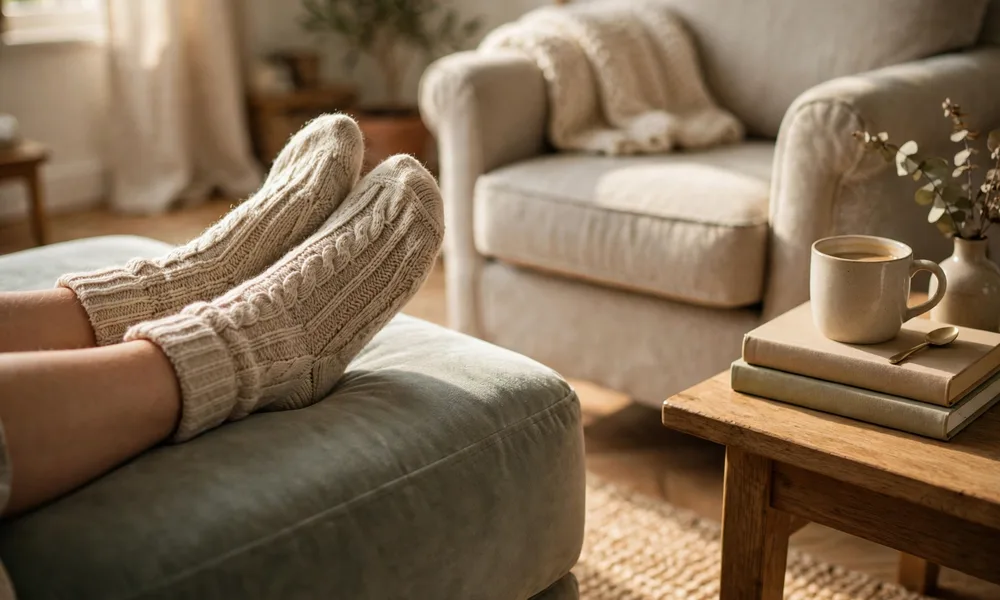
In a small living room, the ottoman and the coffee table compete for the same patch of floor. The table wins on practicality, giving you a hard, stable surface for drinks, laptops and books. The ottoman wins on comfort, giving you a footrest, extra seating and storage. Most rooms do not need both, and choosing one is better than squeezing in both and losing the walkway between them. That is why so many small-space guides recommend the ottoman with a tray: the tray gives you the hard surface for a mug, and lifting it away returns the footrest, so one piece does both jobs.
The comparison holds against the rest of the room as well. A sofa and an ottoman work together as a team, and the best and worst sofas of 2026 are judged on the same qualities that make an ottoman good or bad: a solid frame, resilient filling, and fabric that survives real life. An armchair with an ottoman is the same idea at a smaller scale, and the armchairs that make any corner feel like home are the chairs most likely to benefit from one, because a reading chair without a footrest asks your legs to do work they should not have to do.
Style and the Mistakes to Avoid
An ottoman should look like it was chosen with the room, not dropped into it. Match it to the chair it serves: the same fabric family, a colour that sits comfortably beside the sofa, and a shape that echoes the furniture around it. The most common mistakes are buying too big, buying too soft, choosing a pale velvet for a room with children or pets, and placing the ottoman where it blocks a drawer, a door or the path to the kitchen. Measure the chair, measure the walkway, tape the footprint on the floor, and choose the fabric for the life you live rather than the life in the photograph.
Ottoman Buying Checklist
- Measure your chair seat height and buy an ottoman within a few centimetres of it, usually 40 to 48 centimetres.
- Tape the ottoman footprint on the floor and leave at least 75 centimetres of clear walkway around it.
- Press the top firmly and check it springs back evenly, with no dip in the middle.
- Open a storage lid fully and check the hinges hold it open while you reach inside.
- Choose tight-weave or performance fabric that can be spot-cleaned, especially in family rooms.
- Check the underside for a solid frame and tidy workmanship, with no exposed staples or sagging fabric.
Frequently Asked Questions
What size ottoman should I buy for my sofa?
Choose one about two-thirds the width of the sofa seat. Always tape the footprint on the floor before buying.
Should an ottoman be the same height as the chair?
Yes, roughly. The top should sit at about the same height as the chair seat, usually 40 to 48 centimetres, so your knees rest level with your hips.
Are storage ottomans worth it?
In most homes, yes. A storage ottoman hides blankets, remotes and games while working as a footrest and an extra seat, so it earns its footprint twice.
Can an ottoman replace a coffee table?
It can, especially in a small room. A large, flat-topped ottoman with a tray on top holds drinks and books while doubling as a footrest.
What is the best fabric for an ottoman?
Tight-weave fabric, performance weave or leather are the most forgiving, because they wipe clean and resist stains. Avoid loose weaves and pale velvet in homes with children or pets.
How do I stop an ottoman sliding across the floor?
Choose one with enough weight and a non-slip base, or add small rubber pads under the legs. A rug underneath helps too, and protects the floor from scuffs.
The Bottom Line
The best ottomans of 2026 are the ones you forget are there: a footrest at the right height, a lid that hides the clutter, a shape that fits the room instead of fighting it. Buy the type that matches the job, measure twice, choose firm filling and forgiving fabric, and the room gains comfort without losing a centimetre of the space that matters.


