
A good muffin pan is the difference between muffins that rise tall and golden and muffins that stick, burn on the bottom, or bake into lopsided lumps. The pan matters more than most bakers realise. Its material, coating, and weight decide how evenly it bakes, how cleanly muffins release, and whether it warps. The best muffin pans of 2026 get all three right, and they cost far less than the stand mixer sitting next to them.

Key Takeaways
- Heavy-gauge steel and aluminised steel bake the most evenly. Thin, lightweight pans create hot spots that burn bottoms while tops stay pale.
- A good non-stick coating releases muffins cleanly, but it needs gentle care: no metal utensils, no abrasive sponges, and no dishwasher if you want it to last.
- Silicone pans release beautifully and never rust, yet they bake more slowly and need a baking sheet underneath for support.
- Standard 12-cup pans suit most bakers. Mini pans bake faster and suit parties, while jumbo pans suit bakery-style muffins with tall domes.
- Greasing matters even with non-stick. A light brush of butter or baking spray in each cup is the cheapest insurance against sticking.
What Makes a Muffin Pan Bake Evenly
Even baking starts with the metal. Heat enters a muffin pan from the oven air and the oven rack, and a thin pan passes that heat through in patches, so the cups nearest the oven walls bake faster than the cups in the middle. A heavy pan spreads the heat across its whole surface before it reaches the batter. The difference is measured in millimetres of steel, and it is the single most important thing to check before you buy.
Aluminised steel is the professional standard for a reason. It is steel coated in an aluminium-silicon alloy, which combines the strength of steel with the even heat conduction of aluminium. Aluminised steel browns muffins more evenly than plain aluminium, which heats fast but unevenly, and far more evenly than thin non-stick steel, which often warps. Warping is the enemy of even baking: a pan that buckles in the oven lifts some cups away from the rack, and those muffins bake slowly while the rest overbake.
Colour matters too, and it surprises most bakers. Dark pans absorb more radiant heat than light ones, so muffins in a dark pan brown faster and can burn on the bottom if the recipe was written for a light pan. Light-coloured pans bake more gently and forgive a hot oven. If your muffins keep burning underneath while the tops look pale, a dark pan in a hot oven is a likely cause.
The Best Muffin Pans of 2026
The strongest pans of 2026 fall into four clear groups. Each one suits a different kind of baker, and the right choice depends on how often you bake and how much care you are willing to give the pan.
Best overall: heavy aluminised steel, 12-cup
The heavy aluminised steel 12-cup pan is the default choice for serious home bakers, and it earns that place on performance alone. It bakes evenly from edge to centre, resists warping at high temperatures, and releases well with a light greasing. This is the pan to buy first. It handles everyday muffins, cupcakes, and even savoury bakes like mini quiches, and it will still be baking evenly in five years if you treat it kindly.
Best non-stick: premium coated steel
A premium non-stick pan is the easiest pan to live with. Muffins release with a gentle nudge, cleanup takes seconds under warm water, and you can bake with little or no greasing. The catch is durability. Non-stick coatings wear out, typically after two or three years of regular use, and they fail faster if you use metal utensils, stack pans without protection, or run them through the dishwasher. Buy the best coating you can afford, use silicone or wooden tools, and hand-wash it every time.
Best silicone: flexible, rust-proof, and forgiving
Silicone pans release muffins better than any metal pan. You simply push each muffin out from underneath, and nothing sticks, ever. They never rust, they never need greasing, and they store flat in a drawer. The trade-off is baking performance. Silicone is an insulator, so it bakes more slowly than metal and browns less, which means paler muffins with softer crusts. Silicone suits bakers who value easy release above a deep golden crust.
Best for bakery-style muffins: jumbo 6-cup
Jumbo pans bake the tall-domed muffins you see in coffee shops. Each cup holds roughly twice the batter of a standard cup, and the extra height lets the muffin rise into a dramatic dome with a crisp, sugared top. They take longer to bake and need a lower temperature so the centre cooks through. If you love a big weekend muffin, a jumbo pan is worth the shelf space. For everyday baking, the standard 12-cup remains the smarter buy.
| Pan type | Best for | Evenness | Release | Care |
|---|---|---|---|---|
| Aluminised steel 12-cup | Everyday baking | Excellent | Good with grease | Hand wash |
| Premium non-stick | Easy cleanup | Very good | Excellent | Hand wash, no metal |
| Silicone 12-cup | Zero sticking | Fair | Excellent | Dishwasher safe |
| Jumbo 6-cup | Bakery-style muffins | Very good | Good with grease | Hand wash |
Best vs Worst: What Separates a Great Pan From a Bad One
The difference between the best and the worst muffin pans shows up in the muffins themselves. A great pan gives you twelve muffins that look like they came from the same batch. A bad pan gives you twelve different muffins, and the worst of them are burnt, stuck, or raw in the middle.
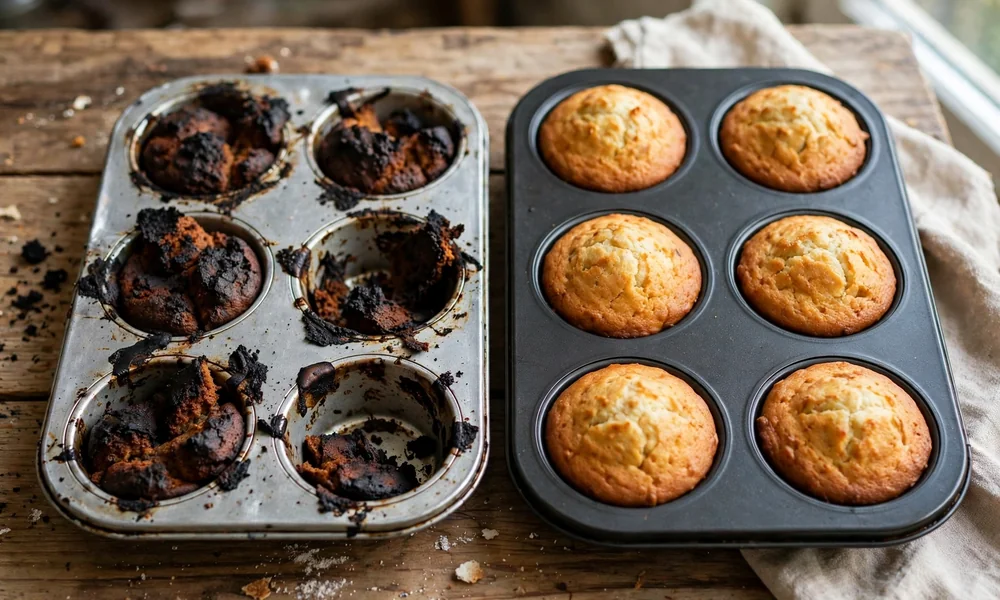
Evenness is the first divide. In controlled tests, muffins baked in a heavy-gauge pan vary by only a few degrees of browning from cup to cup, while muffins in a thin bargain pan can vary dramatically: the corner cups dark and crisp while the centre cups stay pale and underbaked. The cause is heat conduction. Thin steel passes oven hot spots straight through to the batter, and a warped pan makes it worse by lifting some cups off the rack entirely.
Sticking is the second divide. A good non-stick coating releases a muffin with a gentle tip of the pan, and a well-seasoned steel pan does nearly as well with a light greasing. The worst pans hold on: the muffin tears, the bottom stays in the cup, and you spend ten minutes scrubbing baked-on batter out of each cavity. Sticking worsens as cheap coatings age.
Durability is the final divide. Heavy pans resist warping for years, while thin pans can buckle on their first trip into a 220-degree oven. Rust is the other killer: uncoated steel pans rust if they are left damp, and once rust starts in a cup it never really stops. Dry your pan fully after washing, never soak it overnight, and store it somewhere dry. A good pan is a small investment that pays for itself in muffins that actually make it out of the pan in one piece. And if your baking setup is growing, the best stand mixers for 2026 guide covers the mixers that handle thick muffin batter without straining.
How to Stop Muffins Sticking for Good
Even the best pan sticks sometimes, and the fix is usually technique rather than a new purchase. Grease each cup lightly with softened butter or baking spray, reaching into the corners where batter meets metal. Paper liners help, but they can peel away with the muffin top if the batter is wet, so grease the liner lightly too. Fill cups no more than two-thirds full: overfilled muffins spill over the rim, bake onto the top of the pan, and glue themselves in place.
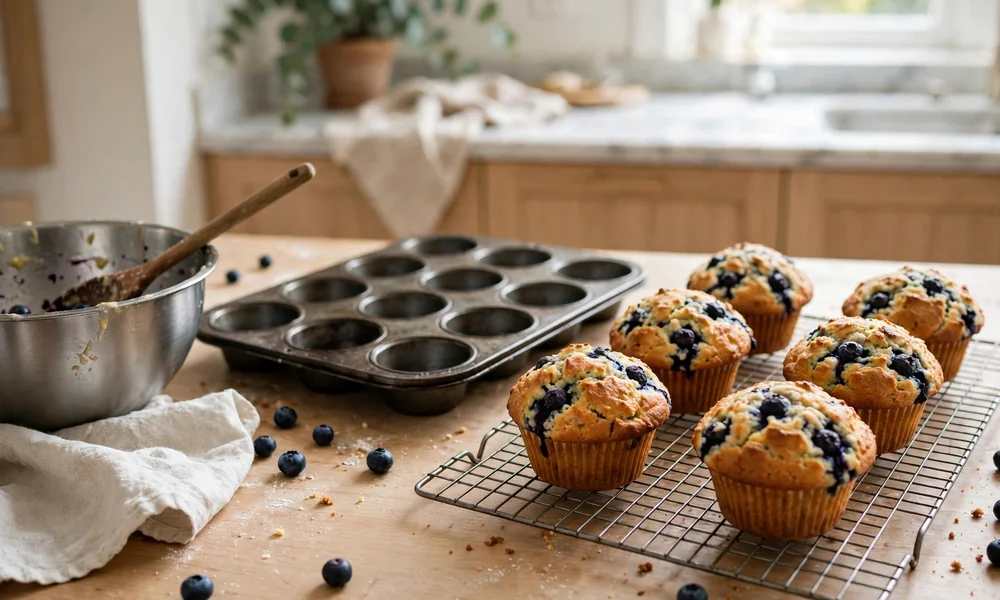
Timing matters as much as greasing. Let muffins rest in the pan for five minutes after baking, then run a thin knife around each one and lift it onto a rack. Waiting too long lets steam condense under the muffin and glue it down; removing them too soon tears the soft crumb. Five minutes is the sweet spot for almost every recipe. If a muffin still sticks, slide a knife under it rather than prying from the top, and accept that one casualty per batch is normal even for experienced bakers.
One more habit protects your pan for years. Never cut a muffin while it is still in the cup, never stack pans without a cloth between them, and never use a scouring pad on a non-stick surface. Gentle tools and hand washing keep the coating smooth, and a smooth coating is what releases cleanly. The same care applies across your bakeware: a good baking sheet lasts a decade when it is treated gently and fails in a year when it is abused. And when you are scaling up a recipe, the best mixing bowls for 2026 roundup covers the bowls that make double batches far easier to handle.
How to Choose the Right Muffin Pan
Choosing well takes five minutes and saves years of stuck muffins. Work through this checklist before you buy.
- Choose heavy-gauge aluminised steel for the most even baking, and avoid pans that feel light and flimsy in your hand.
- Pick a 12-cup standard pan first. Add a mini or jumbo pan later only if you bake those sizes regularly.
- Decide on coating honestly. Non-stick is easiest, but it needs gentle care and replacement every few years.
- Check the rim. A reinforced rolled rim resists warping and gives you something sturdy to grip with oven mitts.
- Measure your oven. A pan that does not fit with airflow around it will bake unevenly whatever it is made of.
- Buy one great pan before buying three cheap ones. A single heavy pan outperforms a drawer full of thin ones.
Frequently Asked Questions
Do I need to grease a non-stick muffin pan?
Yes, lightly. Even the best non-stick coating releases more reliably with a thin brush of butter or baking spray, especially for recipes with fruit, cheese, or sticky toppings. It also protects the coating over time.
Are silicone muffin pans safe at high temperatures?
Yes. Food-grade silicone is safe up to around 220 degrees, which covers nearly every muffin recipe. Always set a silicone pan on a rigid baking sheet before filling it, because the flexible pan cannot support the weight of the batter on its own.
Why do my muffins burn on the bottom?
The most common causes are a dark pan, an oven running hot, or a rack set too low. Try a lighter pan, drop the temperature by 10 degrees, or move the pan to the centre rack. A thin warped pan can cause the same problem.
Can I put a muffin pan in the dishwasher?
Silicone pans can go in the dishwasher, but metal pans should be hand-washed. Dishwasher detergent is harsh on non-stick coatings, and steel pans can rust if they stay damp in the machine.
How long should a good muffin pan last?
A heavy steel pan should last five years or more with gentle care. A non-stick pan typically lasts two to three years before its coating wears thin. Replace any pan that warps, rusts, or starts sticking despite greasing.
Should I use paper liners or bake directly in the pan?
Both work. Liners make cleanup easier and suit cupcakes, while baking directly in a greased pan gives a better crust and a taller dome. For muffins, direct baking in a well-greased pan usually produces the better result.
The Bottom Line
The best muffin pan is heavy, even-heating, and easy to release: aluminised steel for everyday baking, premium non-stick for easy cleanup, or silicone if you never want to fight a stuck muffin again. Grease lightly, rest five minutes, and treat the pan gently. Good muffins start with a good pan, and a good pan is one of the cheapest upgrades in any kitchen.


