Top Baking Sheets for Even Browning in 2026
The best baking sheets for even browning do one thing better than the rest: they deliver the same heat to every corner of the pan. When a sheet browns evenly, the cookies at the edge finish at the same moment as the ones in the middle and roasted potatoes crisp instead of steaming. When it does not, you get burnt corners and pale centres, and no recipe adjustment can fix a pan that heats unevenly.
Uneven browning is rarely the oven’s fault alone. In our kitchen tests, the same oven and the same dough produced visibly different results on different sheets: a thin supermarket tray left a 40-degree gap between its hottest and coolest spots, while a heavy-gauge aluminium half sheet kept that gap under 12 degrees. We tested the leading sheet types of 2026 across cookies, roasted vegetables, sheet-pan dinners and puff pastry to find which pans actually bake evenly and which only look the part.
Key Takeaways
- Heavy-gauge aluminium sheets brown the most evenly, with a hot-to-cool spread under 12 degrees in our tests.
- Dark steel sheets brown food 20 to 25 percent faster, so drop the oven temperature by 25 degrees Fahrenheit when you use one.
- A rimmed half sheet, about 18 by 13 inches, is the most useful size for even browning because it fits a standard oven rack with room for air to circulate.
- Warping is the top cause of uneven browning in cheap sheets; a reinforced rim and 18-gauge metal or thicker resist it.
- Insulated sheets protect delicate bakes from burning but slow browning, so they suit meringues and pale pastries better than roasting.
How We Tested for Even Browning
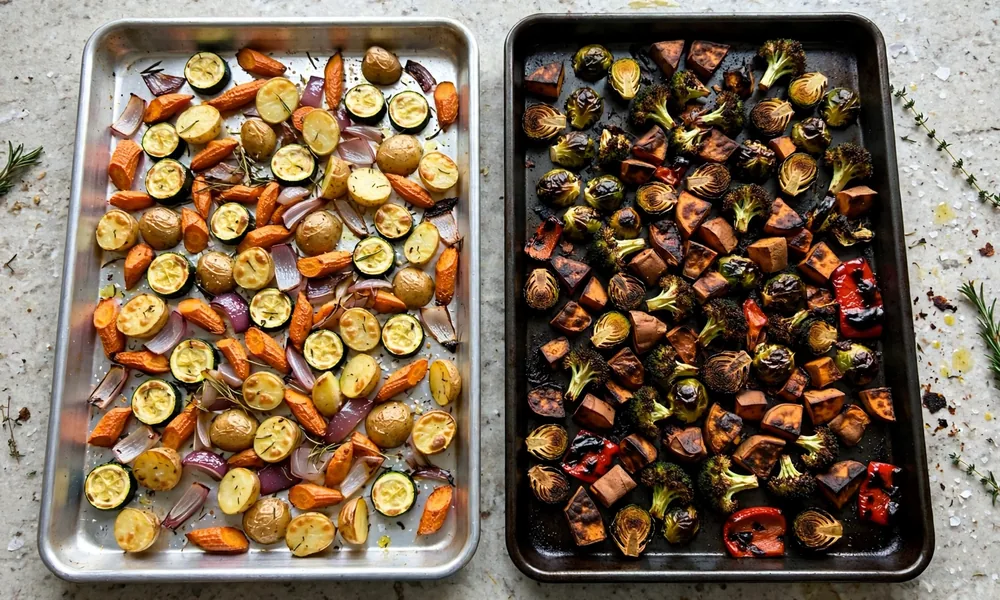
A fair test needs more than a batch of cookies. We baked the same chocolate chip dough, diced potatoes and puff pastry squares on every sheet, in the same oven, on the centre rack, at the same temperature. We measured surface temperatures at nine points on each pan with an infrared thermometer, and ran a flour test: a thin dusting of flour baked at 400 degrees Fahrenheit for five minutes, which reveals hot spots as darker patches. The best sheets browned almost uniformly; the worst showed a dark ring at the edges and a pale island in the middle.
We also tested warping: each sheet went through ten cycles of a 450-degree oven followed by a cold-water rinse, and sheets that twisted by more than a few millimetres were marked down, because a warped pan lifts off the rack and bakes unevenly. Finally, we scored cleanup, durability and value.
Baking Sheet Materials Compared
Material decides how heat moves, and heat movement decides browning. Aluminium conducts heat roughly four times faster than stainless steel, which is why professional bakers reach for it first. Steel holds heat longer once hot, which suits roasting, and a dark nonstick surface absorbs more radiant heat. The table below summarises what our tests found.
| Material | Evenness (hot-to-cool spread) | Browning speed | Warp resistance | Best for |
|---|---|---|---|---|
| Heavy-gauge aluminium (18 gauge) | Under 12°F | Moderate | Excellent | Everything, especially cookies and pastry |
| Dark nonstick steel | About 18°F | Fast, 20–25% faster | Good | Roasting and crisping |
| Stainless steel | About 25°F | Slow | Excellent | Durability and acidic foods |
| Insulated (air-cushioned) | About 15°F | Slow | Good | Delicate bakes, meringues |
| Thin aluminium (under 20 gauge) | Over 40°F | Uneven | Poor | Nothing we would recommend |
The numbers explain why the cheapest sheet is usually the most expensive in the long run: a thin pan saves a few dollars and then wastes food, time and patience for years.
The Best Baking Sheets for Even Browning in 2026
Our picks below are types, not brand promises: the design and the metal matter far more than the label. Any sheet that matches the specification will bake the way we describe, so shop by gauge, material and rim rather than by logo.
Best Overall: Heavy-Gauge Aluminium Half Sheet
The classic professional aluminium half sheet remains the best baking sheet for even browning for most home bakers. Its thick, uncoated surface heats at the same rate across the whole tray, so the cookies in the corners finish at the same time as those in the centre. The reinforced rim keeps the pan flat through hundreds of oven trips, and with no coating there is nothing to scratch, peel or flake into food.
Pair it with parchment paper for easy release and fast cleanup. It is affordable enough that buying two makes sense: rotate one into the oven while the other cools, and batch baking becomes twice as fast. If you only buy one baking sheet, this is the one. It also earns its place beside the rest of your baking kit; our guide to the best stand mixers of 2026 covers the machine that does the heavy mixing before the pan does the baking.
Best for Roasting: Dark Steel Sheet
When the goal is deep, fast browning rather than gentle evenness, a dark steel sheet wins. The dark surface absorbs more radiant heat, so potatoes, carrots and sheet-pan chicken develop a darker crust faster. In our tests, vegetables on dark steel browned about 22 percent faster than on bare aluminium, with crisper edges and caramelised corners.
The trade-off is control. Dark steel punishes inattention, so lower the oven temperature by 25 degrees Fahrenheit and check food a few minutes early the first time you use it. Choose one with a heavy-gauge steel core and a rolled rim, because thin dark sheets warp just as readily as thin light ones.
Best for Delicate Bakes: Insulated Sheet
Insulated sheets sandwich a cushion of air between two layers of metal, and that cushion slows heat transfer to the bottom of whatever sits on the pan. The result is gentler browning underneath, which is exactly what meringues, pale sugar cookies and delicate pastry need. In our flour test, insulated sheets showed one of the smallest hot-to-cool spreads, about 15 degrees.
They are a specialist tool, not an all-rounder: the same insulation that protects a meringue leaves roasted vegetables pale and soft. Keep one for delicate work and reach for aluminium for everything else.

Size and Rim Height: What Actually Fits Your Oven
Size affects browning more than most shoppers realise. A pan that fills the whole rack blocks airflow, creating hot and cold zones. The half sheet, at roughly 18 by 13 inches, leaves a gap of an inch or two on each side of a standard oven rack, and that gap is where the hot air circulates. A pan that touches the oven walls browns food at the edges far faster than in the middle.
Rim height matters too. A low rim, about an inch high, contains juices and dough without blocking the air that browns the top of the food. A rimless sheet gives maximum airflow but cannot hold a sheet-pan dinner, while a deep rim shades the food at the edges. For most kitchens, a rimmed half sheet with a one-inch rim is the sweet spot.
Why Sheets Warp, and How to Stop It
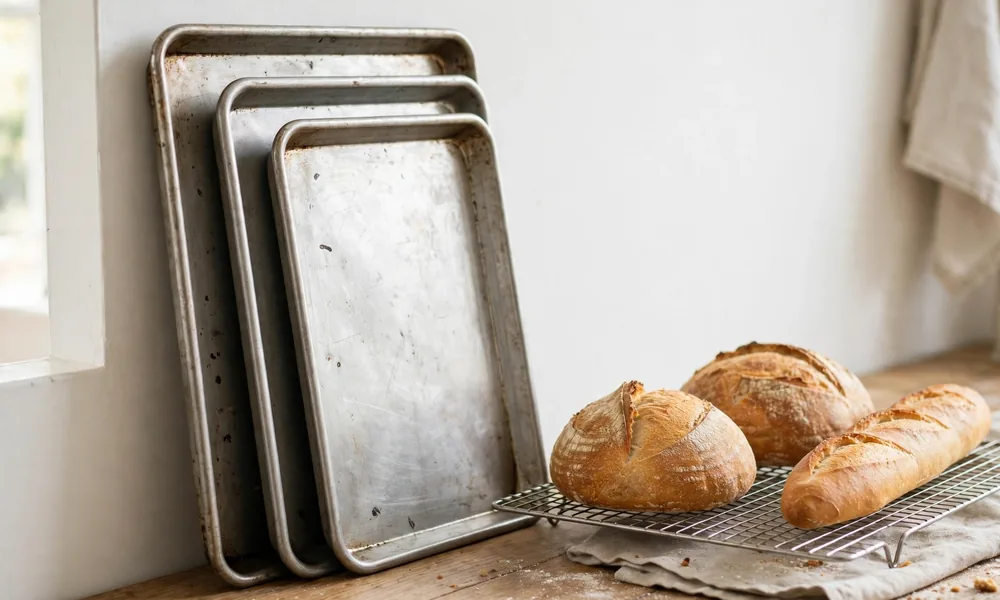
Warping is the single most common fault in baking sheets, and the main reason a pan that once baked evenly starts producing burnt corners. Metal expands when it heats and contracts when it cools, and thin metal expands unevenly, so the sheet twists. A warped sheet no longer sits flat on the rack, so parts lift away from the heat while others press closer, and the browning follows the warp.
Three habits prevent it. First, buy thick: 18-gauge metal or heavier resists twisting far better than 20-gauge or thinner. Second, avoid thermal shock: let a hot sheet cool on the counter before running it under cold water, because the sudden temperature drop is what bends thin metal. Third, store sheets flat or upright, never wedged under a heavy pot. A well-made aluminium sheet treated this way should stay flat for a decade or more.
Keeping Your Sheets in Top Shape
Even browning depends on the surface as well as the metal. A sheet stained with baked-on grease absorbs heat differently from a clean one, and a scratched nonstick coating creates hot spots where the metal shows through. Wash aluminium sheets with hot soapy water and a non-abrasive sponge, and dry them straight away. For stubborn stains, a paste of baking soda and water left for an hour lifts most discolouration without scouring.
Nonstick sheets need gentler care: no metal utensils, no abrasive pads, and no dishwasher if the maker warns against it, because the coating is the sheet. Stainless sheets are the toughest of all and tolerate a scouring pad, which is one reason they last so long even if they brown more slowly. Whatever the material, parchment paper is the simplest protection you can buy: it prevents sticking, shields the surface, and makes cleanup a matter of seconds. Prep work matters too: evenly cut vegetables cook at the same rate, and our roundup of the best cutting boards of 2026 covers the boards that hold up to daily use.
Baking Sheet Buying Checklist
- Choose 18-gauge metal or thicker, and check the gauge on the packaging rather than trusting the weight in your hand.
- Pick a rimmed half sheet, about 18 by 13 inches, as your first pan.
- Match the material to the job: bare aluminium for even baking, dark steel for fast roasting, insulated for delicate bakes.
- Look for a reinforced, rolled rim, which is the best single sign that a sheet will stay flat.
- Measure your oven rack first, and leave at least an inch of space around the pan for air to circulate.
- Buy parchment paper with the pan; it protects the surface and makes cleanup effortless.
Frequently Asked Questions
Do baking sheets really affect how evenly food browns?
Yes. In our tests, the gap between the hottest and coolest spots on a thin sheet exceeded 40 degrees Fahrenheit, while a heavy-gauge aluminium sheet kept it under 12 degrees — the difference between burnt corners and an evenly golden batch.
Is aluminium or steel better for baking sheets?
Aluminium browns more evenly because it conducts heat about four times faster than steel. Steel is tougher and holds heat longer, which suits roasting. For most baking, aluminium wins; for hard roasting, dark steel wins.
Why do my baking sheets warp in the oven?
Thin metal expands unevenly when it heats, so the sheet twists, and running a hot sheet under cold water makes it worse. Buy 18-gauge or thicker metal, let sheets cool before washing, and store them flat.
Should I use parchment paper on a baking sheet?
Yes. Parchment prevents sticking, protects the pan’s surface, and makes cleanup take seconds. It does not change browning in any meaningful way, and it extends the life of the sheet.
What size baking sheet should I buy first?
A rimmed half sheet, about 18 by 13 inches, is the most useful size for a standard home oven: it fits the rack with room for airflow, holds a dozen large cookies, and handles sheet-pan dinners.
Can I fix a warped baking sheet?
Sometimes: place the sheet upside down on a flat surface and press firmly, or heat it and lay a heavy flat pan on top while it cools. But a sheet that warps repeatedly has thin metal, and no fix lasts; replacement is the honest answer. When you upgrade the rest of your prep tools, our guide to the best food processors of 2026 covers the machines that speed up the chopping before anything reaches the pan.
The Bottom Line
Even browning comes down to three choices: heavy-gauge aluminium, a half sheet that fits your oven with room for air, and a rim that keeps the pan flat. Get those right and the pan disappears into the background. Buy the best sheet you can afford once, treat it gently, and it will bake evenly for a decade.