A good cooling rack is the most boring tool in the kitchen, and one of the few that can save a batch of baking from itself. The moment cookies, bread, or cake leave the oven, they are still cooking from their own heat, and steam is building up underneath them. Leave them on the tray and the bottoms go soft. Lift them onto a wire cooling rack and air moves around every side, the steam escapes, and the bake finishes the way the recipe intended.
Most racks look identical in a product photo: a rectangle of crossed wires with four little feet. In use, they are not. Some sag under a loaf of bread, some have gaps wide enough for a small cookie to slip through, and some rust after three washes. The best cooling rack for baking in 2026 is not the most expensive one. It is the one with the right grid, the right height, the right size for your pans, and metal that stays straight and clean for years.
Key Takeaways
- Airflow is the whole point: a cooling rack works because air reaches the bottom of the bake, so feet height and an open grid matter more than brand or price.
- Look for a tight grid with wires about a centimetre apart, so small cookies sit flat instead of tipping into the gaps.
- Stainless steel is the safest long-term buy: it does not rust, it does not flake, and it survives the dishwasher.
- Match the rack to your pan size: a half-sheet rack fits most home ovens, while a quarter-sheet rack suits small batches.
- Use the rack for more than cooling: it doubles as a roasting rack, a glazing stand, and a drying rack.
Why Cooling Matters More Than Most Bakers Think
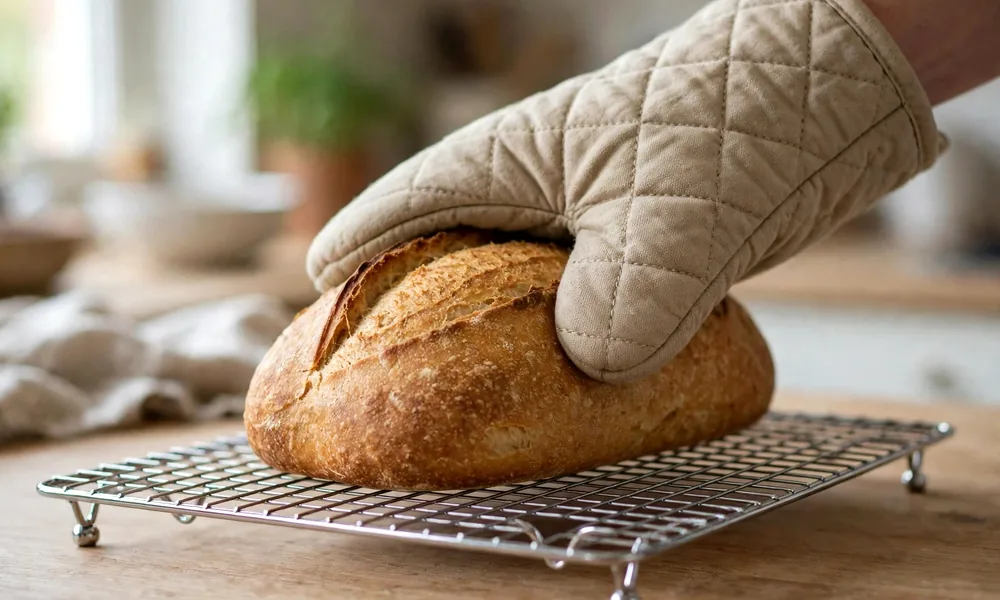
When a tray of cookies comes out of the oven, the metal is still far hotter than the dough, and moisture inside them turns to steam with nowhere to go while they sit flat on the tray. Five minutes on the tray is usually enough for cookies to set so they can be moved, but after that they should come off. On a rack, the steam escapes and the cookie firms up evenly, with a bottom that stays crisp. Bread is the same, only the stakes are higher: a loaf left in its tin traps steam against the crust, and the crust that came out crackling turns soft within the hour. Turned out onto a rack, the loaf cools evenly and the crust keeps its texture. A rack also gives you somewhere to put hot food that is not the countertop, keeping trays off surfaces that could scorch while the next batch goes in.
How to Judge a Cooling Rack
You can check most of them in seconds by looking at the grid, the feet, and the weight of the thing in your hand.
Grid spacing and wire thickness
The wires should run close together, roughly a centimetre apart in both directions, forming small squares that hold a small cookie or muffin top flat. A warm cookie sags into a wide gap and comes out with a dented bottom, and a small biscuit can drop straight through. Pick the rack up and press the middle gently: a good rack barely flexes, because thin, springy racks bend under a loaf and never sit flat again.
Feet height
The feet decide how much air moves underneath. Look for feet that lift the grid at least two centimetres off the counter: short feet choke the airflow and defeat the purpose of the rack. Tall feet also make the rack useful for other jobs, like catching drips while you glaze a cake or roasting vegetables with air circulating underneath. The feet should be welded firmly at the corners.
Material and finish
Stainless steel is the best all-round choice: it does not rust, it does not react with acidic foods, and it can go in the dishwasher. Chrome-plated steel looks the same when new and costs less, but the plating can chip after repeated washing, and the bare steel underneath rusts quickly. Non-stick coatings release food easily, but they scratch and cannot take the highest oven temperatures. Whatever the material, the welds should be smooth, with no sharp points that catch on cloths.
Size, stacking, and storage
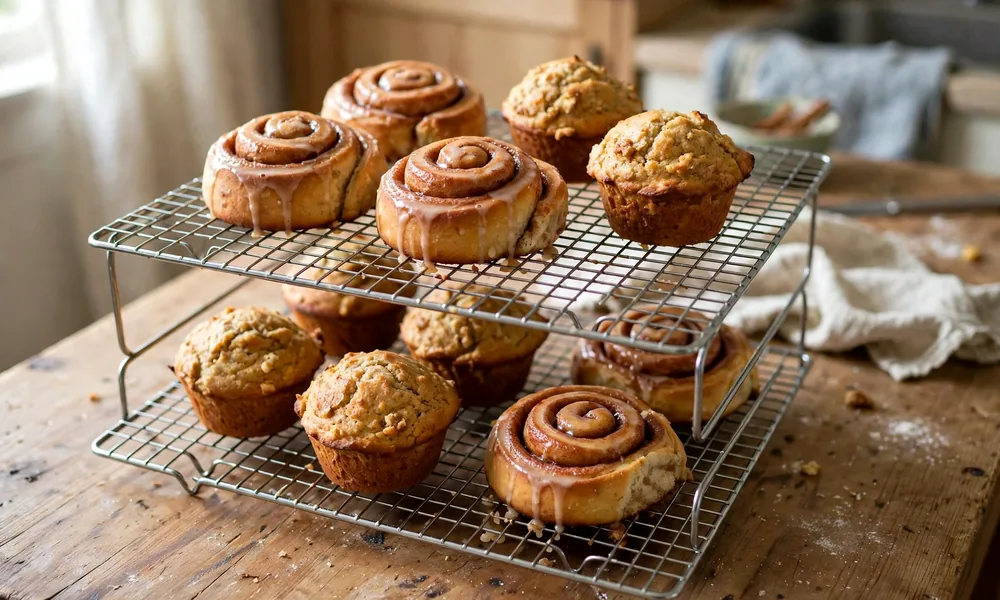
A rack is only useful if it fits the pans and the oven you own. The most useful size is the half-sheet size, roughly 45 by 33 centimetres, which matches a standard half-sheet pan and holds a full batch of cookies. A quarter-sheet rack, roughly 33 by 23 centimetres, is better for small batches and toaster ovens. Measure your largest baking sheet before you buy: a rack should be slightly smaller than the sheet it sits on. Some racks stack, with feet that slot over the frame below, so two or three live in the space of one.
The Main Types of Cooling Rack
Most cooling racks fall into four broad types, and the right one depends on what you bake most and how much space you have.
Flat single racks
The flat single rack is the classic: one rectangular grid on four feet, nothing more. It is the cheapest, the easiest to clean, and the easiest to store, sliding flat into a drawer. It suits anyone who bakes a tray of cookies or a single loaf at a time. Its only weakness is capacity: one rack holds one batch.
Stackable racks
Stackable racks come in sets of two or three, with legs that let them sit one above the other. They are the best choice for batch baking, because three layers cool three trays of cookies in the space of one. Check that the legs lock firmly: a stack that wobbles is worse than no stack at all.
Half-sheet and roasting racks
A half-sheet rack is sized to sit inside a half-sheet pan, and that pairing is one of the most useful combinations in a kitchen. Set the rack inside the pan and you have a roasting rack, a draining rack, and a glazing stand that catches every drip. These racks are usually made of heavier wire and are often oven-safe to high temperatures. If you buy only one rack, buy this size. The best baking pans follow the same logic: heavy, honest metal beats a clever coating over time.
Round and heavy-duty racks
Round racks are made for round cakes: a round rack matches the shape of the cake, so the whole base is supported evenly. A 25-centimetre round rack covers most home cake tins. Heavy-duty racks are built from thicker wire with a reinforced frame, made to carry a whole chicken or a tray of roasted vegetables, and they work in the oven as well as on the counter. Their grid is often too coarse for small cookies.
Cooling Racks Compared
| Type | Best For | Grid | Capacity | Storage |
|---|---|---|---|---|
| Flat single rack | Everyday baking | Tight | One batch | Flat, easy |
| Stackable set | Batch baking | Tight | Two to three batches | Stacks in one footprint |
| Half-sheet rack | Cooling and roasting | Medium | One pan, heavy loads | Flat, nests in pan |
| Round rack | Layer cakes | Tight | One cake | Flat, awkward shape |
| Heavy-duty rack | Roasts and big bakes | Wide | Heavy loads | Bulky |
The flat single rack is the best first buy, the stackable set is the best buy for anyone who bakes in quantity, and the half-sheet rack is the best buy for a cook who wants one tool that cools, roasts, and drains.
What Size Should You Buy?
Size is the easiest thing to get wrong, because racks are sold by overall dimensions and pans by nominal sizes that rarely match. Measure your most-used baking sheet, then buy a rack the same size or a centimetre smaller. A half-sheet pan is about 45 by 33 centimetres, and a rack of the same size is the most useful rack in a home kitchen: it holds a full batch of cookies or a large loaf, and it fits in a standard oven. A quarter-sheet rack, about 33 by 23 centimetres, is the second most useful size. A rack that matches your baking sheets turns one pan into two tools: the sheet bakes, the rack cools, and together they roast.
Using Your Cooling Rack Well
A rack only helps if you use it at the right moment. Cookies should come off the tray after about five minutes, once they are firm enough to lift with a spatula. Bread should come out of its tin as soon as you can handle it, and go straight onto the rack, crust side up. Cakes should cool in the tin for ten minutes, then be turned out onto the rack to finish cooling before icing. Leave a gap between cookies, and keep the rack clear of the wall so air can move. If you are glazing a cake, set the rack over a baking sheet lined with parchment paper, so the drips land on the paper. Rinse the rack while it is still warm, brush the grid to clear crumbs, and dry it standing up. Store racks flat, and do not stack heavy pans on top of them.
Before You Buy: The Checklist
- Grid spacing of about a centimetre, tight enough that a small cookie sits flat without tipping into the gaps.
- Feet at least two centimetres tall, lifting the grid clear of the counter so air moves freely underneath.
- Stiff, heavy wire with a reinforced rim that does not flex when you press the middle.
- Stainless steel rather than chrome plate or non-stick, unless you hand-wash carefully and never roast on it.
- A size that matches your largest baking sheet and fits your oven, sink, and dishwasher.
- Smooth welds with no sharp points, and a finish that feels solid rather than light and springy.
Frequently Asked Questions
Do I really need a cooling rack, or can I cool bakes on a plate?
A plate traps steam underneath the bake, which softens the bottom and can make cookies soggy. A cooling rack lets air reach every side, so the bake firms up evenly. For bread and crisp cookies, the difference is obvious.
How long should cookies stay on the tray before moving to the rack?
About five minutes is right for most cookies. They need that time to set so they do not break when lifted, but they should not stay longer, because the hot tray keeps cooking them. Move them with a thin spatula.
Can a cooling rack go in the oven?
Only if it is made for it. Stainless steel and heavy-duty racks are usually oven-safe, but chrome racks can discolour and non-stick racks have temperature limits, often around 230 degrees Celsius.
What is the best size of cooling rack for a home kitchen?
A half-sheet rack, about 45 by 33 centimetres, is the most useful size, because it matches a standard half-sheet pan and holds a full batch of cookies. Add a quarter-sheet rack for small batches.
How do I stop small cookies falling through the grid?
Buy a rack with a tight grid, about a centimetre between wires, and let small cookies set on the tray for five minutes before moving them. If the grid is too wide, lay parchment over the rack until the cookies are firm.
How do I clean a cooling rack properly?
Rinse it while it is still warm, brush the grid to clear crumbs, and dry it standing up. Soak stuck-on glaze in hot soapy water, and avoid steel scourers on non-stick racks.
The Bottom Line
The best cooling rack for baking in 2026 is a simple thing done well: a tight grid, tall feet, stiff stainless wire, and a size that matches your pans. Buy a half-sheet stainless rack first, add a stackable set when your baking grows, and use it every time you bake. Your cookies will stay crisp, your bread will keep its crust, and your cakes will slice cleanly.