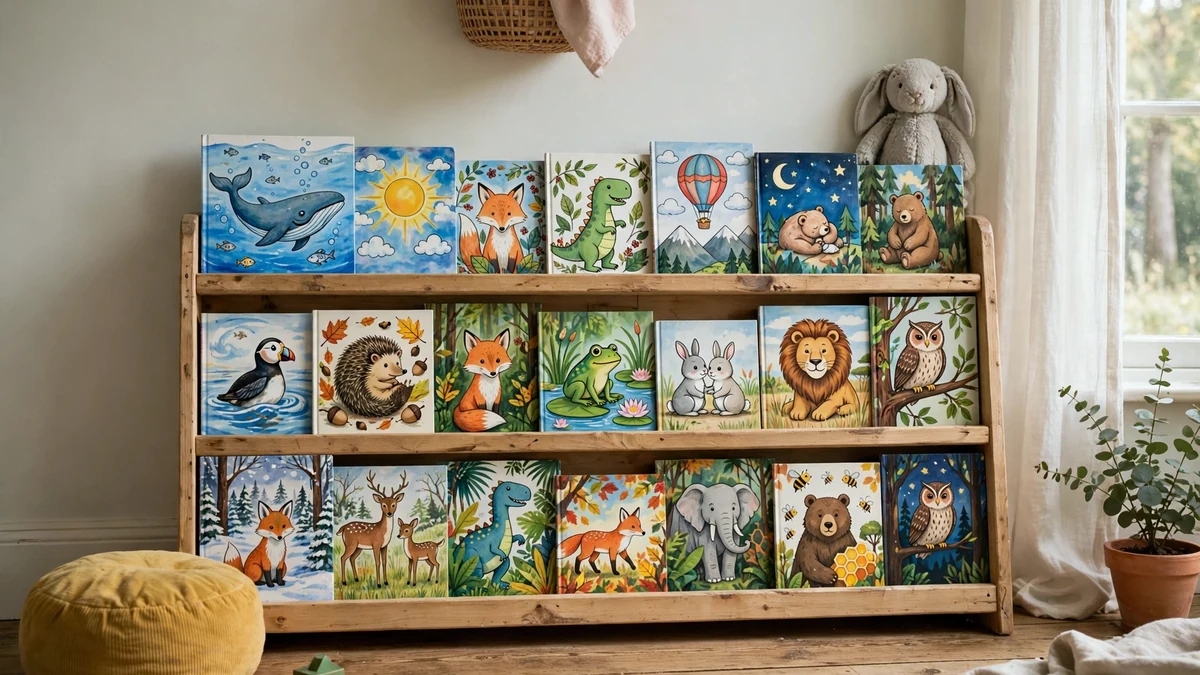
Toy storage bins are supposed to make tidy-up time easy: open bins a child can see into, reach into, and drop toys back into without a lid in the way. When they work, a playroom stays roughly tidy and a child learns where things belong. When they do not work, the bins crack, topple over, and turn tidy-up time into a bigger mess than the one they were bought to solve. The worst toy storage bins of 2026 are too flimsy for the toys they hold, too tall for the children who use them, and too unstable to stand on a shelf or a floor. A parent deserves bins that hold their shape, stay where they are put, and survive being pulled out and pushed back a hundred times a week.
What Makes a Toy Storage Bin Bad
A toy storage bin has one job above all others: it must hold toys in a shape that a child can use. A good bin is sturdy enough to keep its shape when it is full, open enough that a child can see what is inside, and low enough that a small child can reach the bottom. A bad bin is made of thin plastic that bows outwards when it is filled, so it no longer fits on its shelf, or it is so tall and narrow that a child cannot see or reach what is at the bottom. The worst bins are sold as a set that looks neat in the photograph and turns out to be a set of different sizes that do not stack, do not fit the same shelf, and do not hold the toys they are pictured holding.
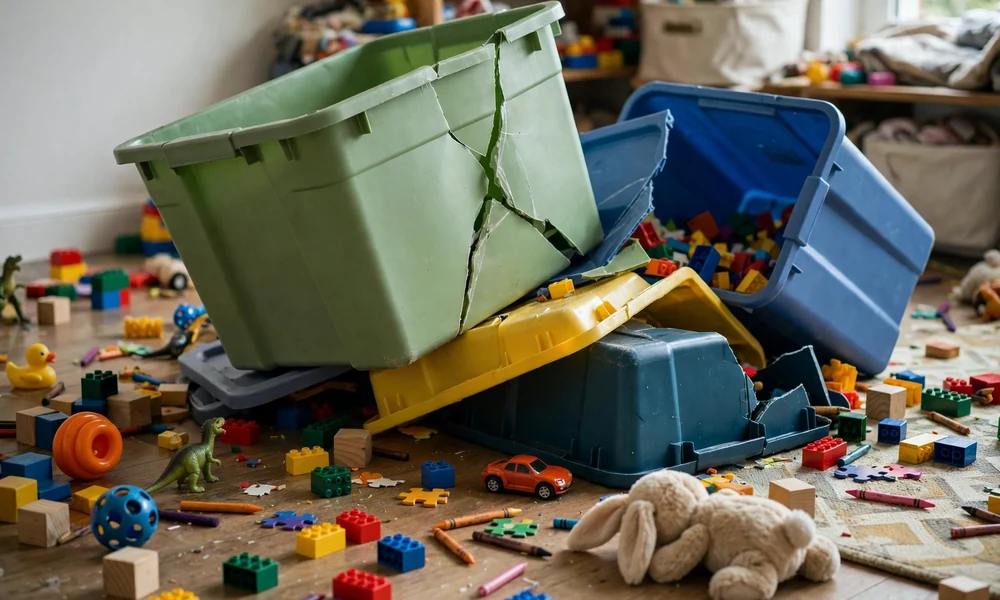
The second problem is the way the bin is used. A child does not gently place a bin back on a shelf; they pull it out, tip it over, and push it back with a foot. A good bin survives that treatment for years, with a rim that does not crack and a base that does not split. A bad bin cracks the first time it is dropped on a hard floor, and the crack runs along the side until the bin falls apart. The worst bins have sharp edges where they have cracked, which is a cut waiting to happen. A bin that cannot survive being tipped over by a child was never built for a child’s room.
The Main Types of Toy Storage Bin, and Where They Go Wrong
Stackable plastic bins are the most common kind, and they fail in the most familiar ways. A good stackable bin has a rim that locks onto the bin below, a base that sits flat, and walls thick enough to hold their shape when full. A bad one has a rim that does not line up, so the stack leans, and walls so thin that the bin bulges when it is filled with heavy toys. The worst stackable bins have no locking rim at all, so the stack topples the moment a child pulls out the bottom bin, which is the bin they always want. A stack that falls over is worse than no storage at all, because it scatters every toy in the room at once.
Fabric and canvas bins promise softness, and they fail differently. A good fabric bin has a rigid frame that holds its shape, a base that stays flat, and a cover that can be removed and washed. A bad one has no frame at all, so it collapses when it is emptied, and it cannot be cleaned when something spills inside it. The worst fabric bins are made of thin material that tears at the handles, so the bin cannot even be carried. Open-top bins without lids suit daily toys, and the bad ones are so deep that small toys vanish at the bottom, or so shallow that the toys pile up above the rim and fall out. For more on the boxes these bins are often used with, our guide to the best storage boxes of 2026 covers the lidded boxes that hold the toys that are not used every day.
The Bin That Cracks: Worst for Durability
A cracking bin is the worst kind for durability, because the damage starts small and spreads until the bin is useless. A good bin is made of thick, flexible plastic that bends rather than breaks when it is dropped. A bad bin is made of thin, brittle plastic that cracks the first time it hits a hard floor, and the crack runs along the wall until the bin splits. The worst bins crack in cold weather, or after a few months in sunlight, because the plastic was never meant to last. A bin with a crack is a bin with a sharp edge, and a sharp edge in a playroom is a cut waiting to happen.
The handles are where the cracking starts. A good bin has handles that are moulded into the body, thick and smooth, so they can take the weight of a full bin. A bad bin has handles that are cut out of the wall, leaving a thin strip of plastic that snaps the first time the bin is lifted when full. Some bins have handles that are too small for an adult hand, so the bin is carried by the rim instead, and the rim cracks next. Lift a new bin by its handles when it is full of heavy toys: if the handles flex, creak, or feel thin, they will break. A bin that cannot be carried when full is not a storage bin, it is a box that has to stay where it is, and a box that has to stay where it is will not be tidied away.
Size, Depth, and the Toys That Vanish
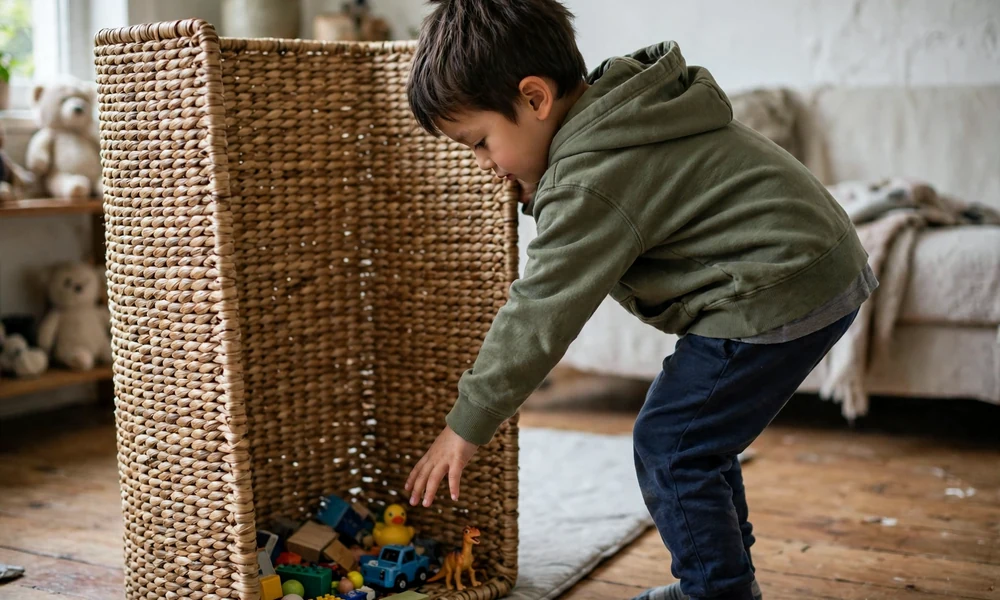
A toy storage bin has to fit the toys it holds and the child who uses it, and the bad ones get both wrong. A good bin is wide and shallow enough that a child can see everything inside it at a glance, and deep enough that the toys stay in when the bin is moved. A bad bin is tall and narrow, so the toys at the bottom are out of sight and out of reach, and the child plays with the same few toys on top while the rest are forgotten. Some bins are so large that a child cannot lift them when they are full, and some are so small that a single large toy fills them completely.
The shelf matters as much as the bin. A bin that is too wide for its shelf sticks out and gets knocked off, and a bin that is too narrow wastes the space around it. The best bins are sold with the shelves they fit, or in sizes that match standard shelving, and the worst are sold in odd sizes that fit nothing a parent already owns. Measure the shelf before you buy the bins, and measure the toys before you buy the shelf. A bin that does not fit its shelf will be left on the floor, and a bin on the floor will be tripped over, tipped over, and eventually cracked. For the shelves themselves, our guide to the best closet organizers of 2026 covers the systems that keep bins in place and within reach.

Lids, Labels, and the Tidy-Up Problem
A lid sounds like a good idea on a toy bin until it becomes the reason the bin is never used. A good bin for daily toys has no lid at all, so a child can drop a toy in without stopping to open anything. A bad bin has a lid that has to be lifted off, put down somewhere, and found again, which is three steps too many for a child who is tidying up. The worst bins have lids that do not fit, so they sit crooked and fall off, or lids that are hinged and slam shut on small fingers. A lid that gets in the way of putting toys away is a lid that guarantees the toys will stay on the floor.
Labels are the other half of the tidy-up problem. A good bin has a clear label holder, a picture label, or a colour that tells a child what goes inside, so tidy-up time is a game rather than a chore. A bad bin has no way to label it at all, so every bin looks the same and the child has to open each one to find anything. Some bins have a label slot that is too small for a picture, or a surface that stickers will not stick to. The best bins make it obvious what belongs inside, and the worst make every bin a mystery. If a child cannot tell where a toy belongs, the toy will not be put away, and no amount of nagging will fix a system that a child cannot read.
How to Spot a Bad One Before You Buy
Start with the squeeze test: press the walls of the bin firmly with both hands. A good bin flexes slightly and springs back; a bad bin feels thin, creaks, or stays dented. Then lift the bin by its handles when it is full of heavy toys, and check that the handles do not flex or feel thin. Stack the bins the way they will be used, pull out the bottom one, and see whether the stack stays up. If it topples, the rims do not lock. Measure the bin against the shelf it has to fit, and check that a child can reach the bottom without standing on tiptoe.
Buy one bin first, not a set of six, and use it for a week with the toys it has to hold. If it cracks, bulges, topples, or hides the toys at the bottom, it is the wrong bin, and a set of six will be six times the problem. For the baskets that go with them, our guide to the best storage baskets of 2026 covers the softer storage that suits the toys that are carried around the house. The verdict is simple: buy the bin that holds its shape, fits its shelf, and lets a child see and reach the toys inside, and walk past the one that only looks neat in a stacked photograph.
The Verdict
The worst toy storage bins of 2026 are the ones that crack when they are dropped, topple when the bottom bin is pulled out, and hide the toys at the bottom where a child cannot reach them. The best are the ones you stop noticing, because they hold their shape, stay on the shelf, and let a child see everything inside at a glance. Squeeze the walls, lift the handles, and test the stack before you buy, and judge a bin on a week of real tidy-up time. A good bin is used every day, and the difference between a good one and a bad one is the difference between a playroom that tidies itself and one that stays messy no matter how often it is cleaned.