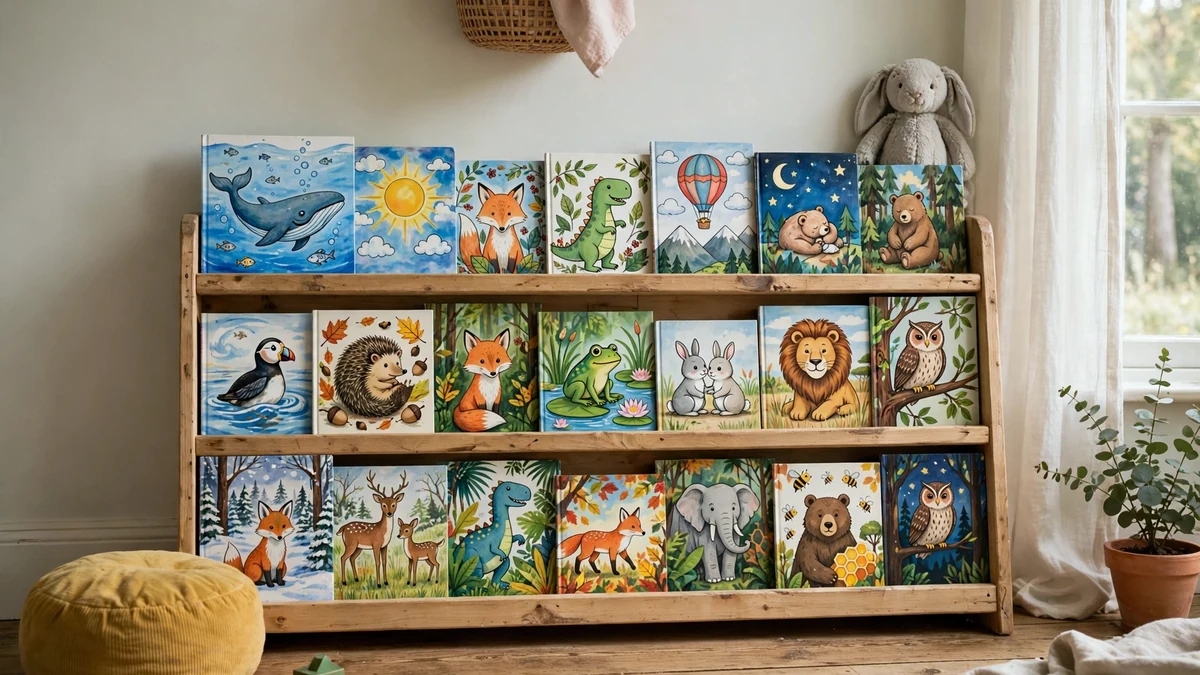
A toy box should be the simplest piece of furniture in a child’s room: a box with a lid, big enough to hold the toys, easy enough for a child to open, and safe enough to leave in a room where small children play. What nobody warns a parent about is how many ways a box with a lid can go wrong. A bad toy box slams little fingers, splits at the corners, and never holds what it promises, because the lid is too heavy, the hinges are too sharp, and the box itself is too small for the toys it is supposed to contain. The worst toy boxes of 2026 look charming in the photograph, and that is where their virtues end: they are too small, too flimsy, and too dangerous for the room they are sold for.
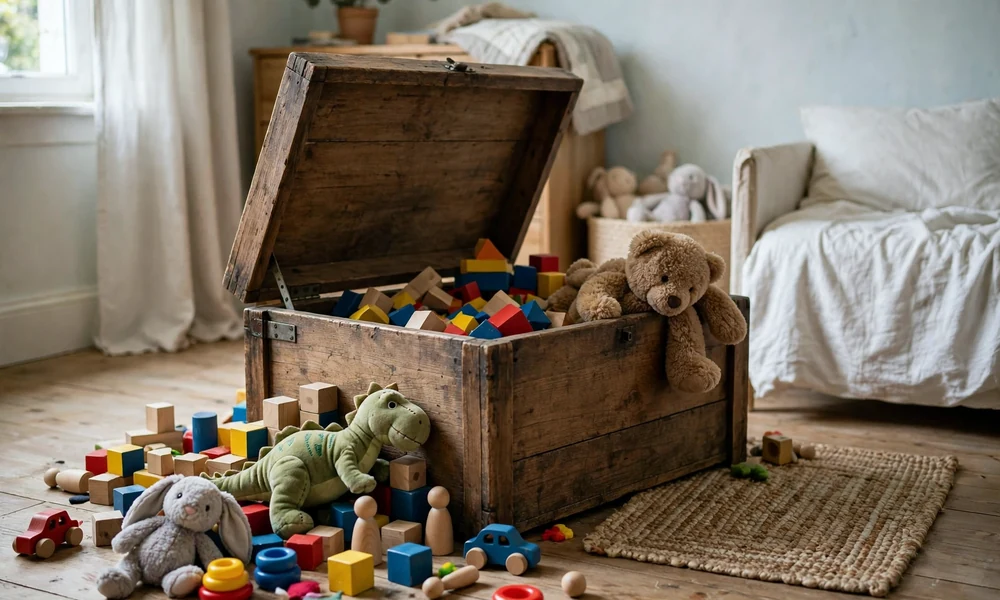
What Makes a Toy Box Bad
A toy box has one job above all others: it must store toys safely and let a child get them out and put them away without getting hurt. A good toy box has a lid that stays open when it is lifted, closes slowly when it is pushed, and never drops shut on its own. A bad box has a lid that is heavy, unhinged, or held by a hinge that gives way, so the lid falls shut on small fingers. The worst boxes have a lid that is heavier than the box itself, so the whole thing tips forward when the lid is opened, or a lid with no hinge at all, so the child lifts it off, drops it, and traps a finger underneath. A lid that can hurt a child is not a design flaw, it is a failure of the whole product.
The second problem is the size. A good toy box holds a realistic amount of toys, with room to spare, so tidy-up time actually works. A bad box is too small for the toys a child owns, so the toys pile up beside it and the box becomes a decoration rather than storage. The worst boxes are sold as holding a roomful of toys and hold barely a basketful, because the walls are thick, the base is raised, or the inside is divided into compartments that fit nothing. Measure the toys before you buy the box, not the other way around, because a box that cannot hold the toys is a box that will not be used.
The Main Types of Toy Box, and Where They Go Wrong
Wooden toy boxes are the classic kind, and they fail in the most solid ways. A good wooden box is made of sturdy panels, with smooth edges, a lid that stays open, and a finish that wipes clean. A bad one is made of thin panels that split at the corners, with rough edges that give splinters, and a lid that is held by a single cheap hinge. The worst wooden boxes have a lid that is so heavy a small child cannot lift it at all, so the toys inside might as well not exist. Some wooden boxes have a varnish that chips and peels, leaving sharp flakes where a child reaches in. A wooden box should last for years, and one that splits within months was never made properly.
Plastic and fabric toy boxes promise lighter weight, and they fail differently. A good plastic box is thick, sturdy, and has a lid that fits properly. A bad one is made of thin plastic that cracks the first time it is knocked over, with a lid that warps in a warm room and no longer fits. Fabric boxes are worse: they have no rigid structure, so they collapse when they are emptied, and they cannot be cleaned when something spills inside them. The best fabric boxes have a rigid frame and a removable, washable cover, and the worst are a bag with a picture of a box on it. For more on the storage that actually works, our guide to the best storage boxes of 2026 covers the boxes that hold their shape and their lids.

The Slamming Lid: Worst for Small Fingers
A slamming lid is the worst failure a toy box can have, because it hurts a child in the room where they are supposed to be safe. A good toy box has a lid with a slow-close hinge, a stay that holds it open, or a lid light enough that a child can lift it safely. A bad box has a heavy lid with a plain hinge, so the lid falls shut under its own weight the moment a child lets go. The worst boxes have a lid that is hinged at the back with no stay at all, so it drops like a trapdoor. A child reaching into the box has one hand on the lid and one hand on the toys, and the moment the lid hand slips, the lid comes down on the other hand.
The test is simple and worth doing before the box is used. Open the lid halfway and let go: a good lid stays where it is, or closes slowly. A bad lid drops shut. Then open the lid fully and let go: a good lid stays open, and a bad lid falls forward and tips the box. If the lid drops, the box is not safe, whatever the label says about safety hinges. Some lids can be fixed with a soft-close stay bought separately, but a box that needs fixing before it is safe should not have been sold as a toy box in the first place. A lid that can trap a finger is not a minor flaw, it is the reason to send the box back.
Corners, Splinters, and the Build Problem
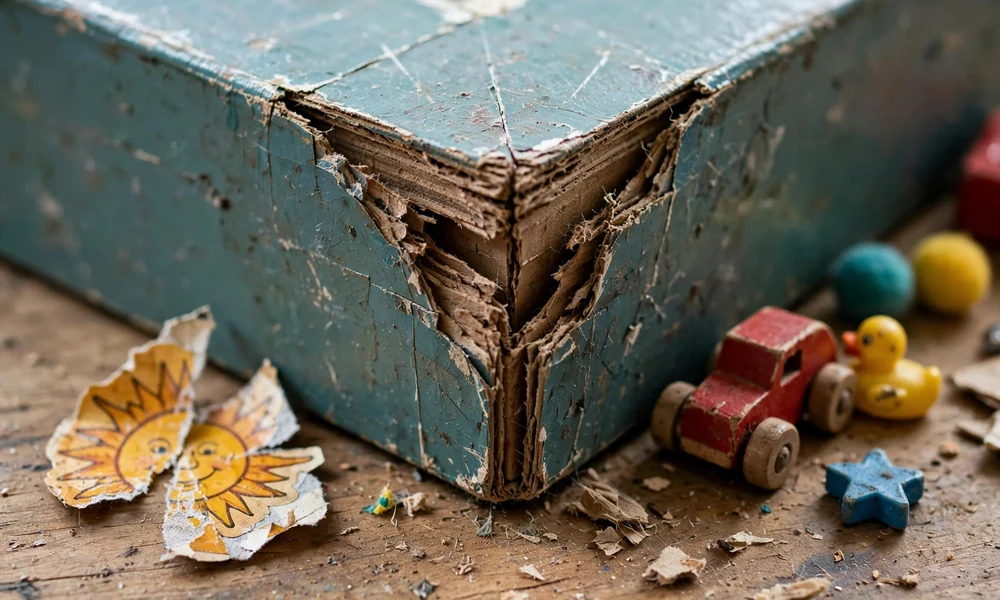
A toy box is touched by small hands dozens of times a day, and the bad ones forget that. A good box has smooth, rounded edges, a finish that stays on, and joints that hold together when the box is dragged across the floor. A bad box has sharp corners that bruise a shin, rough edges that give splinters, and panels that split at the joints after a few weeks. The worst wooden boxes are made of chipboard with a thin printed surface, which peels off in strips and leaves a rough, sharp edge underneath. A child who runs a hand along the inside of the box should feel smooth wood or smooth plastic, not a splinter or a peeling edge.
The joints are the part that fails first. A good box is joined with dowels, screws, or proper corner joints, and it stays square when it is moved. A bad box is held together with staples or a few dabs of glue, and it starts to wobble the first time it is dragged. The worst boxes arrive flat-packed with instructions that are hard to follow, and a parent who assembles it wrong ends up with a box that is out of square and a lid that does not fit. If the box wobbles when you shake it, or the lid does not sit evenly, the joints are failing. A toy box should survive being climbed on, sat on, and dragged, and one that cannot survive being assembled properly was never built for a child’s room.
Ventilation and the Hiding Problem
A toy box is also a hiding place, and the bad ones forget that children climb inside them. A good toy box has ventilation holes, a lid that cannot be closed from the inside, and a design that a child can get out of easily. A bad box is airtight, with a lid that latches shut, so a child who climbs in cannot get out and cannot breathe properly. This is not a rare worry: children climb into boxes, and a box that can trap a child is a dangerous piece of furniture. The best toy boxes have holes in the back panel, a lid that stays open, and no latch at all. The worst have a magnetic catch that holds the lid shut and no ventilation.
The hiding problem is also a cleaning problem. A box with no ventilation stays damp inside, and damp toys grow mould. A box that cannot be aired out smells stale within weeks, and a parent who opens it finds damp fabric toys and a musty smell. Check the back panel for holes before you buy, and check that the lid cannot latch. If the box has a catch that holds it shut, remove it, or do not buy the box. A toy box should be a safe place to store toys, not a place a child can get stuck in, and the cheapest boxes on the shelf are the ones most likely to forget this.
How to Spot a Bad One Before You Buy
Start with the lid: open it halfway and let go, then open it fully and let go. It should stay put or close slowly, never drop. Then check the edges with your hands: run a palm along every edge inside and out, and if anything feels sharp or rough, put the box back. Shake the box firmly: a good one barely moves, and a bad one wobbles. Check the back panel for ventilation holes and make sure there is no latch that holds the lid shut. Measure the inside against the toys it has to hold, and if the toys will not fit with room to spare, the box is too small.
Buy the box that is big enough, sturdy enough, and safe enough for a child to use alone, and judge it on a week of real tidy-up time. For the smaller storage that goes with it, our guide to the best storage bins of 2026 covers the bins that hold the overflow, and our guide to the best storage baskets of 2026 covers the baskets for the toys that are used every day. The verdict is simple: buy the toy box whose lid stays open, whose corners are smooth, and whose size fits the toys, and walk past the one that only looks charming in the photograph.
The Verdict
The worst toy boxes of 2026 are the ones whose lids slam on small fingers, whose corners split and splinter, and whose size cannot hold the toys they are sold for. The best are the ones you stop noticing, because the lid stays open, the edges are smooth, and the box holds everything with room to spare. Test the lid, check the corners, and measure the inside before you buy, and replace a box the moment its lid drops or its joints split. A box that still opens smoothly, still holds its shape, and still keeps its lid up after a year of daily use is a box that was built properly. A good toy box is used every day, and the difference between a good one and a bad one is the difference between a tidy room and a trip to the first-aid kit.