A child who sits down to draw, read, or do homework needs a chair that fits their body, not a smaller copy of an adult chair. A good kids desk chair is stable, adjustable, and comfortable for a small person sitting still for half an hour. A bad one wobbles, pinches small fingers, and makes homework a fidgety chore that ends with the child on the floor instead of at the desk. The worst kids desk chairs of 2026 look bright and cheerful in the photograph, and that is where their virtues end: they tip over, they shed parts, and they teach a child that sitting down to work is uncomfortable. A child deserves a chair that holds them steady, not one that fights them.

What Makes a Kids Desk Chair Bad
A kids desk chair has one job above all others: it must hold a child safely and steadily while they sit at a desk. A good chair has a wide, stable base, a seat at the right height for the desk, and a backrest that supports a small back without forcing it into one position. A bad chair has a base so narrow that it tips the moment a child leans to reach a crayon, a seat so high that small feet dangle in the air, and a backrest that is either too upright to lean on or too reclined to work against. A chair that tips over is not just annoying, it is dangerous, and a child who falls off a chair will not want to sit in it again.
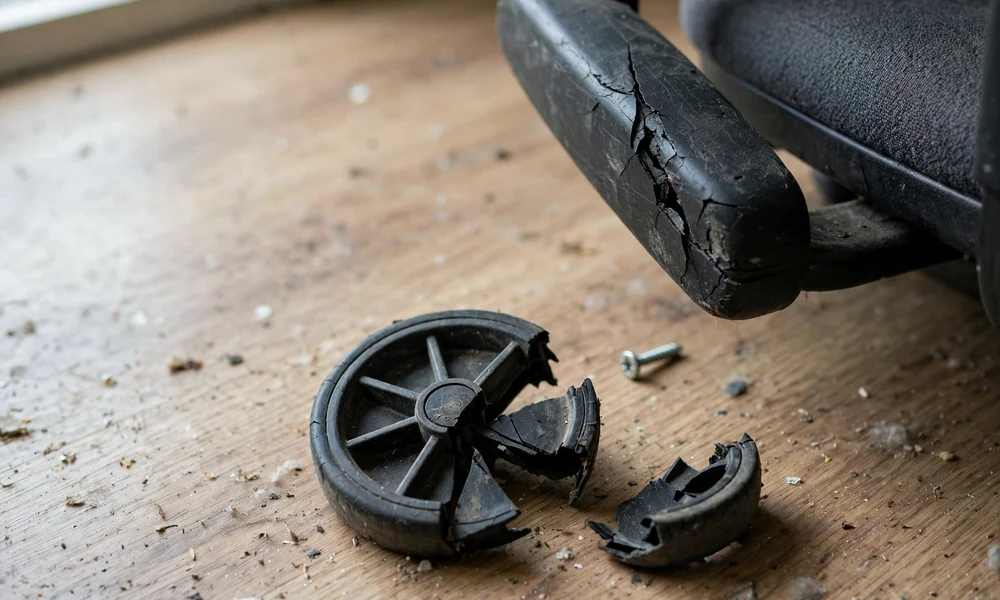
The second problem is the way the chair is made. A good chair is built to survive a child: it is climbed on, spun around, dragged across the floor, and used as a step, and it should take all of that without complaint. A bad chair is built to look good in a photograph, with thin plastic, weak joints, and screws that work loose within weeks. The worst chairs shed parts: a wheel falls off, an armrest cracks, a gas lift sinks slowly until the seat is at knee height. A chair that falls apart under normal use by a child was never built for a child, and the price is no excuse for a frame that cannot survive being sat on.
The Main Types of Kids Desk Chair, and Where They Go Wrong
Basic fixed chairs are the simplest kind, and they fail in the simplest ways. A good fixed chair is sturdy, the right height for the desk it will be used with, and heavy enough not to tip. A bad one is too light, so it slides across a hard floor every time the child moves, and too low or too high for the desk, so the child has to hunch or stretch to reach the work. The worst fixed chairs have a seat that is too deep for small legs, so the child sits on the edge and slides forward, or a seat that is too shallow, so there is nowhere to sit properly at all. A fixed chair that does not fit the child and the desk is a chair that will not be used.
Adjustable and wheeled chairs promise more, and they fail in more ways. A good adjustable chair changes height smoothly, locks firmly, and stays where it is put. A bad one has a gas lift that sinks slowly under weight, so the child ends the homework session lower than they started it, or a height lever that a small hand cannot reach or cannot press. Wheeled chairs add their own problems: wheels that roll too freely send the chair across the room, wheels that stick make the chair jerk and tip, and a five-wheel base that is too small tips the moment the child leans. The best wheeled chairs have lockable castors and a wide base, and the worst roll away at the first push. For more on the desk itself, our guide to the best desk chairs of 2026 covers the adult chairs these designs are copied from.

The Chair That Tips: Worst for Safety
Tipping is the worst failure a kids desk chair can have, because it happens suddenly and it hurts. A good chair has a base wider than its seat, so it stays upright when a child leans, reaches, or twists. A bad chair has a base that is barely wider than the seat, so the centre of gravity is high and the margin for error is tiny. The worst chairs tip when a child leans sideways to pick up a dropped pencil, which is something every child does several times in a homework session. A chair that cannot survive a child leaning is a chair that should not be in a child’s room.
The test is simple and worth doing before the chair is used properly. Put the chair on a hard floor, sit a child on it, and ask them to lean to one side as if reaching for something. A good chair stays put. A bad chair lifts a wheel or a leg off the floor, which is the moment before it tips. Then ask the child to lean back: a good chair supports them, and a bad chair tips backwards. If the chair fails either test, send it back, because the failure is in the base, and no amount of careful sitting will fix a base that is too narrow. A child should be able to move naturally in a chair without worrying about falling, and a chair that punishes movement is the wrong chair.
Height, Fit, and the Dangling Feet Problem
A chair that does not fit the child is a chair that will not be sat in properly. A good kids desk chair puts a child’s feet flat on the floor, their knees at a right angle, and their arms at desk height without hunching. A bad chair leaves small feet dangling in the air, which is uncomfortable within minutes and makes the child fidget, swing their legs, and slide off the seat. Some chairs are sold as adjustable and adjust by only a few centimetres, which is not enough to cover the difference between a five-year-old and a nine-year-old. Others adjust in big jumps, so the child is always slightly too high or slightly too low.
The desk matters as much as the chair. A chair that fits a standard desk will not fit a low table, and a chair bought for a desk that is too tall will leave the child reaching up to write. Measure the desk first, then the child, and then the chair, and make sure the three work together. The best kids chairs adjust through a wide range, so they grow with the child for years, and the worst adjust barely at all, so they fit for one school year and then become useless. A chair that cannot be adjusted to fit the child is a chair that was designed for a photograph, not for a person. For the rest of the homework corner, our guide to the best kids art tables of 2026 covers the tables these chairs are pulled up to.
Wheels That Roll Away
Wheels sound like a good idea on a kids desk chair until the chair rolls away from the desk every time the child moves. A good wheeled chair has castors that roll smoothly but not freely, so the chair moves when it is pushed and stays put when it is sat on. A bad chair has wheels that spin at the slightest touch, so the child has to hold onto the desk to stay in place, which defeats the purpose of sitting down to work. Some wheels are so free that the chair rolls across a hard floor on its own, and some are so stiff that the chair jerks and tips when it is pushed.
The floor makes the problem worse. A chair that works on carpet may roll too freely on wood, and a chair that works on wood may stick on carpet. The best wheeled chairs have lockable castors, so a parent can lock the chair in place for homework and unlock it for moving. The worst have no lock at all, and no way to add one. Some chairs have a five-wheel base that is too small for the seat, which brings the tipping problem back. If the chair is going on a hard floor, test it on a hard floor, and if it rolls away when a child sits down, it is the wrong chair. A homework chair should stay where it is put, and a chair that wanders is a distraction, not a help.
How to Spot a Bad One Before You Buy
Start with the tip test: put the chair on a hard floor, sit the child on it, and ask them to lean sideways and backwards. If a wheel or a leg lifts off the floor, the base is too narrow. Then check the height: the child’s feet should be flat on the floor, their knees at a right angle, and their arms at desk height. If the chair adjusts, move it through its full range and check that it locks firmly at every height. If it sinks slowly under weight, the gas lift is failing. Check the wheels on the floor the chair will actually be used on, and check that they lock if the chair is going to be used for homework.
Look at the joints, the screws, and the materials with your hands, not just your eyes. Shake the chair firmly: a good one barely moves, and a bad one rattles. Sit on it yourself, carefully, and feel whether it holds steady. A chair that wobbles under an adult will wobble worse under a child who moves more. For the room around the desk, our guide to the best ergonomic chairs of 2026 covers the support principles that matter at any age. The verdict is simple: buy the chair that is stable, adjustable, and wipe-clean, and walk past the one that only looks bright and cheerful in the photograph.
The Verdict
The worst kids desk chairs of 2026 are the ones that tip when a child leans, leave small feet dangling, and shed wheels and screws within weeks. The best are the ones you stop noticing, because the base is wide, the height fits the child and the desk, and the chair stays where it is put. Test the tip, the height, and the wheels before you buy, and judge a chair on a week of real homework, not on how it looks in the shop. A chair that fits today and still fits next year is the one worth keeping. A good chair is used every school day, and the difference between a good one and a bad one is the difference between a child who sits down to work happily and one who ends up on the floor.